1068
1068
 Request Call Back
 Contact
 1068
1068
It's Mid-Year - Have You Done These Basic Health Tests Yet?
Published on: Jul 17, 2026
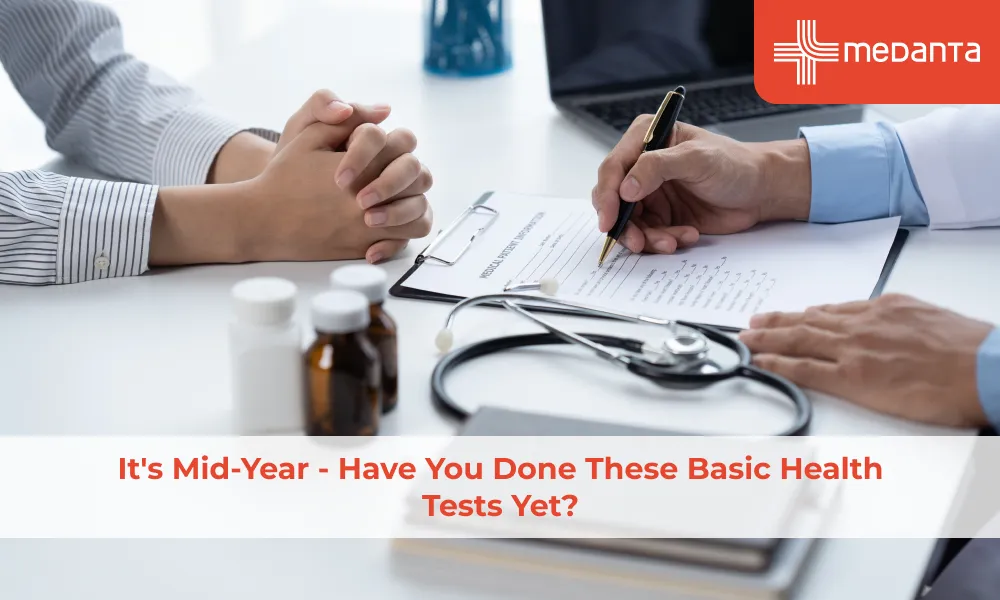
TABLE OF CONTENTS
- Why Mid Year Is the Right Time for a Health Check-Up
- Essential Health Tests Every Adult Should Consider
- Blood Tests That Help Detect Health Problems Early
- Heart Health Tests You Shouldn't Skip
- Diabetes and Cholesterol Screening: Why They Matter
- Cancer Screening Tests Based on Age and Risk Factors
- Health Check-Ups for Men vs Women
- How Often Should You Get Preventive Health Tests?
- How to Prepare for a Full Body Health Check-Up
- What to Do After Receiving Your Test Results
- FAQs
January resolutions about health checks fade quickly. By mid-year most of them still haven't happened, pushed aside by work, family and the consistent human preference for dealing with problems that have already arrived rather than looking for ones that haven't. That tendency is precisely where preventive healthcare loses most of its value and where a mid-year check-in can genuinely change outcomes.
India's burden of silent disease is substantial. According to studies hypertension, diabetes and anaemia run at high prevalence across adult populations, with a significant proportion of affected individuals unaware of their status. A few hours and a handful of blood tests change that picture entirely.
Why Mid Year Is the Right Time for a Health Check-Up
Year-end tends to be chaotic with festival season, travel and professional year-end pressures. The beginning of the year carries its own disruptions. Mid-year sits in a quieter window for many people, with leave balances still intact and no obvious reason to keep postponing. Booking a check-up now also means results and any follow-up consultations can be addressed before the end-of-year rush makes scheduling difficult again.
For working adults specifically, many corporate health insurance plans run on calendar years with OPD benefits unused until year-end panic. Mid-year is when those benefits are still fully available.
Essential Health Tests Every Adult Should Consider
Essential tests are:
Complete blood count (CBC): Checks for anaemia, infection and platelet abnormalities
Fasting blood glucose and HbA1c: The most reliable combination for detecting diabetes and prediabetes
Lipid profile: Total cholesterol, LDL, HDL and triglycerides, guiding cardiovascular risk assessment
Kidney function tests: Check serum creatinine and eGFR, often the first indication of silent kidney disease
Liver function tests: Useful for anyone with metabolic risk, prior hepatitis exposure, or alcohol use
Thyroid stimulating hormone (TSH): Thyroid disorders particularly hypothyroidism, are common and frequently undiagnosed in Indian women
Urine routine and microscopy: Catches early proteinuria, infection and other kidney-related signals.

Blood Tests That Help Detect Health Problems Early
Most conditions driving India's chronic disease burden spend years in a detectable but symptom-free phase. Blood tests are the primary tool for catching them in that window. HbA1c reflects average blood sugar over three months, harder to game than a single fasting glucose. Vitamin D and B12 levels belong in any panel given widespread deficiency across Indian populations, often behind unexplained fatigue attributed to overwork.
Heart Health Tests You Shouldn't Skip
Cardiovascular disease in India presents roughly a decade earlier than in Western populations making cardiac screening from the late thirties appropriate. A resting ECG provides a baseline and can reveal silent arrhythmias. Blood pressure measurement remains the most important single cardiovascular screen given hypertension's prevalence. A stress ECG or echocardiogram suits those with multiple risk factors or exertional breathlessness.
Diabetes and Cholesterol Screening: Why They Matter
India carries one of the largest diabetes burdens globally, with tens of millions unaware of their status. Prediabetes is reversible with dietary change and activity that window closes once diabetes is established and complications accumulate. A fasting blood sugar and HbA1c together identify where on that spectrum a person sits.
Most people with dangerously elevated LDL feel nothing. Plaque accumulates in artery walls for years before causing an event - waiting for chest pain is not a substitute for a periodic lipid panel.
Cancer Screening Tests Based on Age and Risk Factors
Screening tests according to the age are:
Cervical cancer: Pap smear every three years for women from age 21; combined with HPV testing every five years from age 30
Breast cancer: Clinical breast examination annually from the twenties; mammography from age 40 or earlier with family history
Colorectal cancer: Stool occult blood testing or colonoscopy screening from age 45 or earlier with family history
Oral cancer: Visual examination at dental visits, important given India's tobacco prevalence
Cancer screening doesn't find every cancer - it finds a meaningful proportion early enough to make treatment simpler and outcomes significantly better.
Health Check-Ups for Men vs Women
Core metabolic and cardiovascular screening including blood pressure, blood sugar, cholesterol, and kidney function applies equally to both. Beyond that, differences emerge.
Women benefit from thyroid screening more frequently as hypothyroidism prevalence is higher in them. Men past 50 should discuss prostate specific antigen (PSA) testing with their doctor (though PSA interpretation requires clinical context) but PSA is not recommended as a universal screening tool without shared decision making.
Bone density testing becomes relevant for women around menopause and for men past 65 or with risk factors.
How Often Should You Get Preventive Health Tests?
Annual visits covering blood pressure, blood sugar, lipids and routine bloodwork suit most adults from age 30 onward. Pap smears and mammograms follow their own longer intervals once a baseline is established. Some tests like ECG, bone density and colonoscopy are repeated every three to ten years depending on initial result and risk profile. Higher-risk individuals may need more frequent monitoring on specific parameters, which their doctor recommends based on the baseline result rather than a generic schedule.
How to Prepare for a Full Body Health Check-Up
Preparation includes:
Fast for eight to twelve hours before the appointment - water is fine but no food, juice, or tea
Bring a list of current medications and supplements, as some affect test results
Avoid strenuous exercise the morning of the visit, since this can temporarily alter certain blood markers
Carry any previous test reports if available.
What to Do After Receiving Your Test Results
Results need clinical assessment, not just a search engine. A slightly elevated fasting glucose in a healthy 35-year-old is a different story from the same number in a 55-year-old with family history and high BMI. Abnormal results prompt follow-up, not alarm - most need monitoring and repeat testing before decisions are made. Normal results establish a personal baseline against which future changes are measured.
FAQs
Which health tests should I get every year?
Blood pressure, fasting blood glucose or HbA1c, lipid profile,and a complete blood count form the core annual panel for most adults from 30 onward. Kidney function, liver function, TSH, and vitamin levels round out a comprehensive annual picture.
At what age should I start regular health check-ups?
Around 30 for most adults. Earlier in the mid-twenties for anyone with a family history of diabetes, heart disease or hypertension, or those already using tobacco or managing obesity.
Can I get a full body check-up without symptoms?
Yes, and this is exactly the point of preventive screening. Many conditions like hypertension, prediabetes, and elevated cholesterol produce no symptoms for years. Screening in the absence of symptoms is when it has the most value.
Is fasting necessary before a health check-up?
For blood sugar and lipid tests, an eight to twelve hour fast is standard for the most reliable results. A few specific tests, like TSH and CBC, don't require fasting. The appointment centre will advise based on the panel ordered.
How long does a preventive health check-up take?
Blood collection takes 15 to 20 minutes; the full visit including the clinical examination runs one to two hours at most centres. Results for routine blood tests return within 24 to 48 hours at most hospitals.
Which blood tests are included in a full body check-up?
Packages vary by centre but standard comprehensive panels typically include CBC, fasting blood glucose, HbA1c, lipid profile, kidney function, liver function, TSH, urine routine and often vitamin D and B12.
Does insurance cover preventive health check-ups?
Many health insurance plans in India include annual preventive health check up benefits though the coverage amount and included tests vary by policy. Checking the policy document or calling the insurer before booking clarifies what's covered.
How often should healthy adults get a health check-up?
Annually for core metabolic and cardiovascular markers from age 30. Some tests repeat every two to five years depending on initial results. Higher risk individuals may need more frequent specific monitoring as their doctor advises.
What is the best time of year for a health check-up?
Mid year (roughly June to August) works well for most working adults in India. It avoids festival season and year-end professional pressure with insurance benefits still fully available and scheduling easier than during peak periods.
Can a routine health check-up detect serious diseases early?
Yes. Early-stage diabetes, hypertension, dyslipidaemia, thyroid disorders, anaemia, kidney disease, and pre-cancerous changes all of which feel like nothing in their early phases are routinely caught through standard screening panels and clinical examinations.