1068
1068
 Request Call Back
 Contact
 1068
1068
What Are Blemishes? Types, Causes and Proven Ways to Clear Your Skin
Published on: Jul 31, 2026
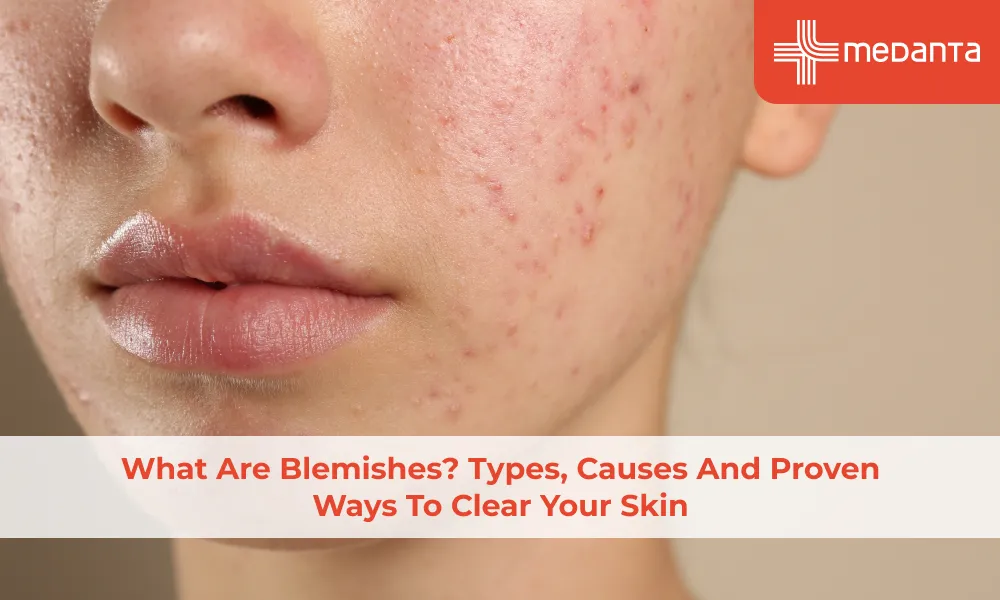
TABLE OF CONTENTS
- Types of Blemishes
- Hormonal Blemishes vs Environmental Blemishes
- Best Skincare Ingredients for Blemish-Prone Skin
- Daily Skincare Routine for Blemished Skin
- Home Remedies That Actually Work
- Foods That Support and Worsen Blemishes
- When to See a Dermatologist
- How to Prevent Future Breakouts
- Makeup Tips for Covering Blemishes Safely
- Myths About Blemishes Busted
- Conclusion
- FAQs
Blemish is a catch-all term for any mark or discolouration disrupting otherwise even skin. Acne lesions, dark spots, blackheads, whiteheads, and shallow scars all sit under this umbrella. Treatment that works for one type does nothing for another. Getting the classification right is where effective treatment begins.
Types of Blemishes
Different types are:
Blackheads: Open comedones where trapped sebum oxidises and darkens on exposure to air; the pore remains open and the surface appears black or grey
Whiteheads: Closed comedones where the pore opening is blocked, trapping sebum and dead cells beneath a thin layer of skin without oxidisation
Papules and pustules: Inflammatory acne lesions; papules are red and tender without pus, pustules are the classic "pimple" with a visible white or yellow centre
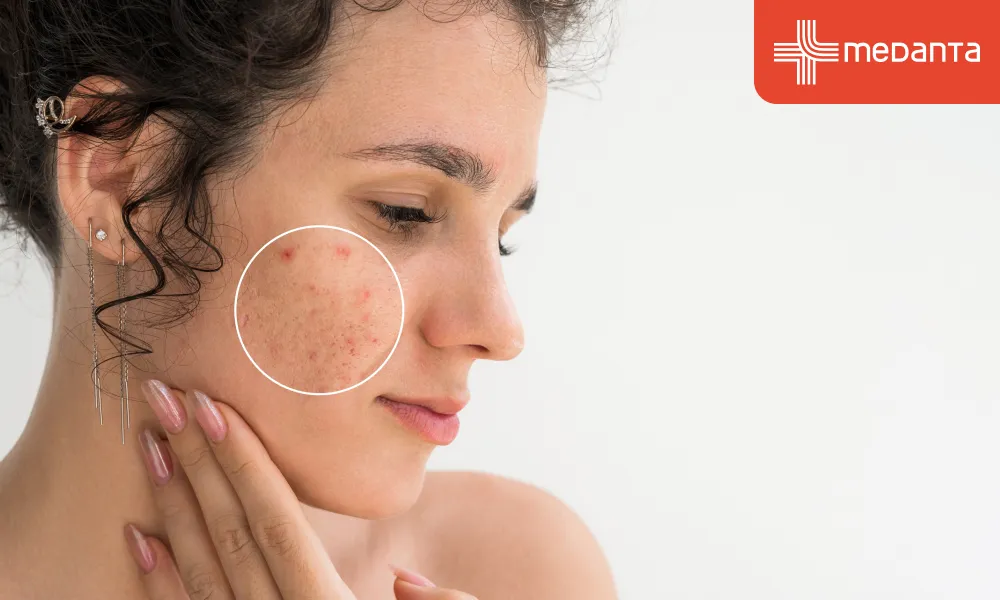
Post-inflammatory hyperpigmentation (PIH): Flat dark spots left behind after an acne lesion heals, more prominent in darker skin tones common in the Indian population
Acne scars: Structural changes to the skin from deep inflammation: icepick, rolling, and boxcar depressions or raised keloid and hypertrophic scars
True acne scars need professional intervention. PIH fades with topical treatment and sun protection - distinguishing the two prevents applying scar treatments to flat spots.
Hormonal Blemishes vs Environmental Blemishes
Hormonal blemishes follow predictable patterns - cyclical chin and jaw breakouts before menstruation, acne worsening at puberty or during pregnancy or new adult-onset acne coinciding with stopping oral contraceptives. These lesions are typically deep, tender and slower to resolve than surface-level comedones.
Environmental blemishes include comedones from comedogenic products used in humid Indian conditions, mechanical acne from phone screens pressed against the cheek, friction from tight clothing and pollution-induced oxidative stress. Identifying which category predominates guides treatment.
Best Skincare Ingredients for Blemish-Prone Skin
Salicylic acid (BHA): Penetrates into pores and dissolves the sebum plugs behind comedones; ideal for blackheads and whiteheads
Benzoyl peroxide: Kills C. acnes bacteria directly; effective for inflammatory papules and pustules but can bleach fabric and over-dry the skin
Niacinamide: Reduces sebum production, minimises pore appearance and fades post-inflammatory hyperpigmentation; well tolerated across skin tones
Retinol or prescription tretinoin: Speeds cell turnover, prevents comedone formation and fades PIH; requires gradual introduction and consistent sunscreen use
Azelaic acid: Antibacterial and anti-inflammatory; particularly effective for PIH and rosacea-related blemishes, gentle enough for sensitive or pregnant skin
Sunscreen prevents PIH from darkening further and protects skin during retinoid use - the most important single product in any blemish-prone routine.
Daily Skincare Routine for Blemished Skin
Morning: Gentle cleanser, niacinamide or azelaic acid serum, oil-free moisturiser and SPF 30 to 50 broad spectrum sunscreen.
Evening: Double cleanse to remove sunscreen and pollution (micellar water or oil cleanser, then foaming cleanser), actives like salicylic acid or tretinoin and a simple non-comedogenic moisturiser.
Less is more - layering multiple actives creates irritation rather than faster results. Salicylic acid and retinol are best used on alternate evenings when starting out.
Home Remedies That Actually Work
Many natural remedies show effectiveness in fading blemishes. They are:
Aloe vera gel soothes inflammation and delivers mild barrier support without clogging pores.
Avoid from the popular home remedy list: toothpaste on pimples (irritates and worsens redness), lemon juice (photosensitising), baking soda (disrupts the acid mantle) and coconut oil on the face (highly comedogenic, worsens acne in most people).
Foods That Support and Worsen Blemishes
High-glycaemic index foods like maida products, sugary drinks and packaged snacks spike insulin and IGF-1, both of which stimulate sebaceous glands. Dairy particularly skimmed milk, has a moderate evidence base linking it to acne severity in susceptible individuals.
Zinc-rich foods (pumpkin seeds, rajma), omega-3 sources (flaxseed, walnuts, mustard oil) and antioxidants (amla, colourful vegetables) support clearer skin. They aren't magic treatments but keeping blood sugar stable and reducing systemic inflammation supports all other approaches.
When to See a Dermatologist
Moderate to severe acne, cystic lesions, PIH unresponsive to three to four months of niacinamide and sunscreen and any form of acne scarring all need dermatological assessment. Acne scars require procedures including chemical peels, microneedling, fractional laser or subcision beyond what topicals can achieve.
How to Prevent Future Breakouts
Effective preventive measures are:
Remove all makeup and sunscreen thoroughly every evening as residue left overnight is the most consistent trigger for comedone formation
Change pillowcases every two to three days; the sebum and bacteria they accumulate transfer back to the skin
Keep phone screens clean; the contact between screen and jawline or cheek is a recognised acne trigger
Managing stress and sleep are hormonal interventions that reduce cortisol-driven sebum production as directly as any topical product.
Makeup Tips for Covering Blemishes Safely
Non-comedogenic, oil-free formulations don't block pores. A green colour corrector neutralises redness from papules whereas orange or peach offsets grey-brown tones in PIH on darker skin. Primer first creates a smoother surface and reduces the product quantity needed - less product in pores is always better for blemish-prone skin.
Micellar water or an oil cleanser removes makeup and sunscreen more completely than water alone, reducing overnight pore-clogging.
Myths About Blemishes Busted
Myth: Blemishes mean your skin is dirty.
Reality: They result from a specific inflammatory process involving sebum, bacteria and follicular obstruction.
Myth: Tanning clears acne.
Reality: UV exposure temporarily masks redness but accelerates PIH formation and long term skin damage.
Myth: Popping speeds healing.
Reality: It pushes bacteria deeper, worsens inflammation and directly causes the post-inflammatory scarring and hyperpigmentation people are trying to avoid.
Conclusion
Managing blemishes effectively comes down to three key things: correctly identifying what type of blemish you're dealing with, staying consistent with sun protection and introducing active ingredients gradually rather than all at once.
Not all blemishes are the same, and treating them as if they are is often where people go wrong. That's why getting the diagnosis right matters just as much as the treatment itself. Most blemishes, treated correctly, improve significantly within three to four months.
FAQs
How do I get rid of blemishes fast?
For active pimples, a benzoyl peroxide or salicylic acid spot treatment reduces inflammation within 24 to 48 hours. For PIH consistent niacinamide and SPF produce noticeable improvement over weeks.
Can blemishes go away on their own?
Many surface blemishes fade without treatment given time and sun protection. PIH takes six to twelve months without active treatment. Acne scars need professional intervention.
What's the difference between acne and blemishes?
Acne refers specifically to the condition involving comedones, papules, pustules and cysts. Blemishes are broader and include any skin imperfection including dark spots and scars remaining after acne clears.
How long does it take for skin blemishes to fade?
Active pimples resolve in one to two weeks. PIH fades in two to six months with niacinamide and SPF but without sun protection it can persist over a year.
Can sunscreen help prevent blemishes?
Yes UV exposure darkens PIH significantly. Daily SPF is the single most effective action for preventing dark spots from worsening, independent of any other treatment.
Do acne scars and blemishes mean the same thing?
No. Acne scars involve structural skin damage including textural changes, depressions or raised tissue. Blemishes include flat dark spots (PIH), active lesions and scars. The distinction determines whether topical or professional treatment applies.
Can oily skin cause more blemishes?
Excess sebum contributes directly to comedone formation and provides the environment C. acnes thrives in. Oily skin doesn't inevitably cause acne but creates more favourable conditions.
Why do I keep getting blemishes in the same spot?
Recurring blemishes in a fixed location indicate a consistent trigger like phone contact, a strap over the jaw, a comedogenic ingredient in a product applied there or hormonal acne with a predictable pattern.
Which skincare ingredients work best for blemishes?
For active acne: salicylic acid, benzoyl peroxide and prescription tretinoin.
For PIH: niacinamide, azelaic acid and vitamin C.
For all types: consistent broad-spectrum SPF, which prevents existing blemishes from darkening further.
When should I see a dermatologist for blemishes?
Moderate to severe acne, cystic lesions, PIH unresponsive to three to four months of topical treatment, any scarring or blemishes causing psychological distress all need professional assessment.
Are blemishes contagious?
No acne is not contagious. C. acnes bacteria live normally on everyone's skin - it's the conditions that allow them to proliferate within a blocked follicle that cause blemishes, not transfer from another person.
Do laser treatments permanently remove blemishes?
Laser treatments produce significant improvement, varying by skin type, blemish type and laser used. Results aren't always permanent - sun exposure can darken treated areas and new acne produces new blemishes regardless of prior treatment.