1068
1068
 Request Call Back
 Contact
 1068
1068
Gond Katira: Benefits, Uses, Side Effects and How to Use for Health
Published on: May 01, 2026
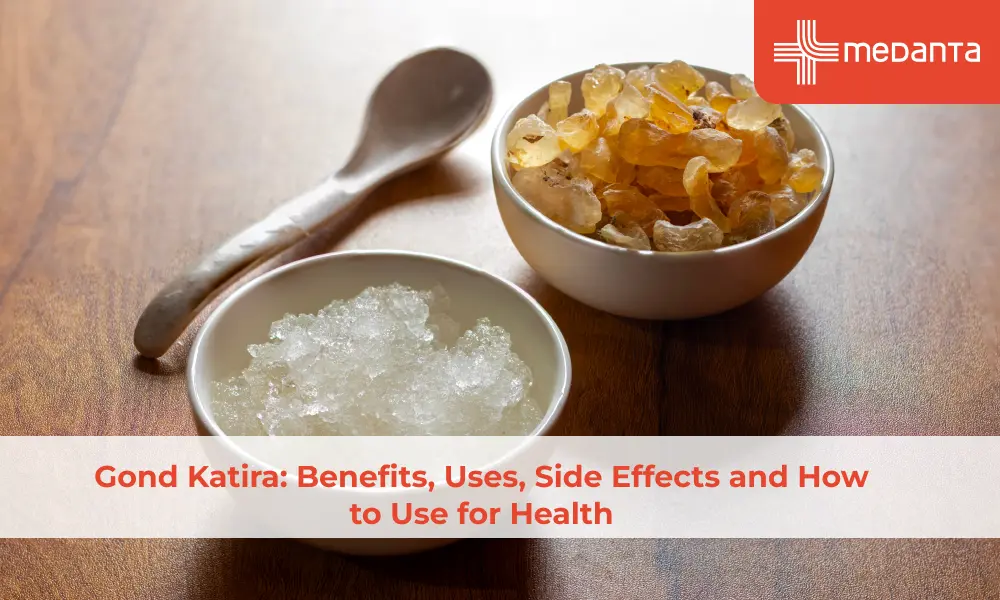
TABLE OF CONTENTS
What Is Gond Katira?
Gond katira is the dried resinous exudate of Astragalus gummifer and related Astragalus species - thorny shrubs native to the mountainous regions of Iran, Turkey, and parts of western Asia. Known internationally as tragacanth gum, it has been used in Indian households for centuries as a cooling agent, particularly during summer months, and features in both Ayurvedic practice and traditional Unani medicine. The gum is harvested by making incisions in the plant stem; the sap that seeps out dries into pale, ribbon-like or flake-like pieces that swell substantially when soaked in water overnight. Commercially it is used as a stabiliser and thickener in food manufacturing, pharmaceuticals and cosmetics.
Nutritional Value of Gond Katira
Like most plant gums, gond katira contributes negligible energy at culinary quantities. It is almost entirely polysaccharide in composition. The gum consists of two primary fractions:
Bassorin (60-70% by weight): A water-insoluble component that absorbs water and swells without dissolving
Tragacanthin (30-40%): A water-soluble fraction that forms a colloidal sol.
No significant vitamins or minerals are present at dietary doses. The clinical value of gond katira lies in its physicochemical behaviour (water-binding capacity and viscosity) rather than conventional nutrient content.
Health Benefits of Gond Katira
Gond katira benefits are:
Demulcent effect: The high-viscosity gel formed after soaking coats the gastrointestinal mucosa, reducing irritation from acidity and providing symptomatic relief in gastritis and peptic discomfort
Prebiotic activity: The bassorin and tragacanthin polysaccharides resist human digestive enzymes and reach the colon largely intact, serving as fermentation substrate for Lactobacillus and Bifidobacterium species
Bulk laxative effect: Water absorbed by the swollen gum increases faecal bulk and softens stool through a physical rather than pharmacological mechanism
Plasma lipid modulation: Studies show tragacanth gum reduces total cholesterol and LDL by binding bile acids in the intestinal lumen, reducing reabsorption and prompting hepatic conversion of cholesterol to new bile acids
Blood glucose attenuation: According to a study the high soluble fibre content slows gastric emptying and reduces postprandial glucose peak
Topical wound and skin use: The gel layer provides a moist barrier over minor wounds and burns.
Gond Katira for Cooling the Body
The cooling property is the most widely recognised traditional use in Indian households. Ayurvedic texts classify gond katira as having sheet virya (cold potency) meaning it is considered to reduce internal heat under classical doshic theory. The physiological basis is more plausible than it might appear. Soaked overnight, the gum absorbs up to 50 times its dry weight in water. Consuming this hydrated gel in summer drinks provides a concentrated vehicle for fluid delivery alongside mucosal soothing.
Gond katira does not lower core body temperature directly, but the hydration load and gastrointestinal coating effect on a heat-irritated digestive tract explain its enduring reputation as a summer remedy. Sharbat and rose water-based drinks containing soaked gond katira remain among the most consumed traditional cooling preparations during Indian summers.
Ways to Use Gond Katira in Foods and Drinks

You can add gond katira as:
Summer sharbat: Soak 5-10 g overnight in a glass of water until fully expanded and mix with rose water, mishri (rock sugar), and chilled water. Lemon juice can be added
Milk-based drinks: The soaked gel blends into cold milk with cardamom and a pinch of saffron - used traditionally as a tonic for fatigue and heat exhaustion
Lassi and buttermilk: A small quantity of soaked gond katira added to lassi increases viscosity and adds mucosal-coating benefit without altering flavour
Sherbet-e-badam: Soaked gond katira combined with almond paste, milk, and mishri (a traditional restorative preparation used during convalescence and periods of physical weakness)
Halwa (winter use): dry gond katira is used whole or ground in North Indian and Rajasthani halwas during winter; this is a different preparation from summer soaking and involves cooking.
Recommended Intake
No formal RDA exists for gond katira. Traditional practice and safety data support 5-10 g of dry gum per day for adults, soaked overnight before consumption. Starting at 5 g in a large glass of water is advisable for new users, as higher initial doses can cause bloating while gut microbiota adapts to increased fermentable substrate. Children above age five can use 2-3 g daily in diluted preparations. The gum must always be consumed in its fully expanded, soaked state as dry or partially soaked pieces carry a real oesophageal obstruction risk.
Possible Side Effects
Bloating and flatulence are most common when intake starts high. Other complications are:
Oesophageal obstruction from dry or undersoaked gum (avoidable entirely by ensuring full overnight soaking before consumption)
Slows gastric emptying and reduces the absorption rate of many oral medications
IgE-mediated hypersensitivity to Astragalus gum proteins.
Conclusion
Gond katira is a traditional cooling remedy with genuine benefits. Its polysaccharide composition explains its mucosal coating, prebiotic, bulk-laxative, and glycaemic-attenuating properties through mechanisms that are well understood from the broader dietary fibre literature. The cooling benefit is real in the sense of improved hydration delivery and gastrointestinal soothing, though it involves no direct thermoregulatory action. At culinary doses in its soaked form, the safety profile is good for most adults. As with any supplement used medicinally rather than merely as a food ingredient, individuals on medications or with gastrointestinal conditions should seek guidance from a clinician before using it therapeutically.
FAQs
What is gond katira and what is it used for?
Gond katira is the dried resin of Astragalus gummifer and is also known as tragacanth gum internationally. In Indian households it is primarily used as a summer cooling agent (soaked in drinks). Therapeutically it acts as a demulcent, bulk laxative, prebiotic substrate, and topical wound-healing agent in Ayurvedic and Unani practice.
What are the health benefits of gond katira?
Gastrointestinal mucosal soothing, bulk laxative effect through water retention, prebiotic fermentation supporting Lactobacillus and Bifidobacterium growth, postprandial blood glucose attenuation via slowed gastric emptying and modest LDL reduction through bile acid binding in the intestinal lumen are the most evidence-supported benefits.
How should gond katira be consumed for health benefits?
Soak 5-10 g overnight in a full glass of water. The pieces expand into a soft translucent gel by morning. Consume in chilled water, milk, rose water sharbat, or lassi. Never consume dry or undersoaked.
Can gond katira help reduce body heat in summer?
It does not lower core temperature directly. The soaked gel delivers a high water load supporting hydration, and the mucilage coats and soothes the gastrointestinal mucosa irritated by heat. Both effects contribute meaningfully to heat-related discomfort relief without any direct thermoregulatory action.
Is gond katira good for skin and hair?
Topically the gel forms a moist protective barrier over minor burns and skin irritation, with limited in vitro data supporting mild antimicrobial activity consistent with its Unani wound-dressing use. For hair it coats the shaft, improving manageability temporarily - a traditional setting and conditioning application.
Can gond katira help with digestion?
Through two mechanisms: the mucilaginous gel soothes gastric mucosa and reduces acid irritation relevant to gastritis and reflux, and the indigestible polysaccharide fractions reaching the colon support Lactobacillus and Bifidobacterium growth, improving microbial composition over regular consumption.
What are the side effects of gond katira?
Common complications are:
Bloating and flatulence
Oesophageal obstruction risk from dry or undersoaked consumption
Slowed drug absorption requiring a two-hour gap from medications
Rare IgE-mediated allergy in sensitised individuals.
Is gond katira safe during pregnancy?
Culinary-dose use is broadly regarded as safe - it features in traditional Indian postpartum preparations. No human trial data exists specifically for pregnancy. High-dose supplemental use should be discussed with an obstetrician before continuing.
Can gond katira help with weight loss?
Indirectly the expanded gel increases gastric volume and promotes satiety with minimal caloric contribution, and viscous fibre slows gastric emptying and reduces postprandial hunger. These effects support caloric restriction adherence rather than driving fat loss independently.
How often should gond katira be consumed?
Daily consumption of 5-10 g soaked overnight is the standard guideline for adults. Daily use in summer drinks is typical during hot weather. Year-round daily use at culinary doses is generally safe for healthy adults; those on regular medications or with gastrointestinal conditions should seek medical guidance before using it as a consistent supplement.