1068
1068
 Request Call Back
 Contact
 1068
1068
Saffron Benefits: Health Uses and Side Effects
Published on: May 11, 2026
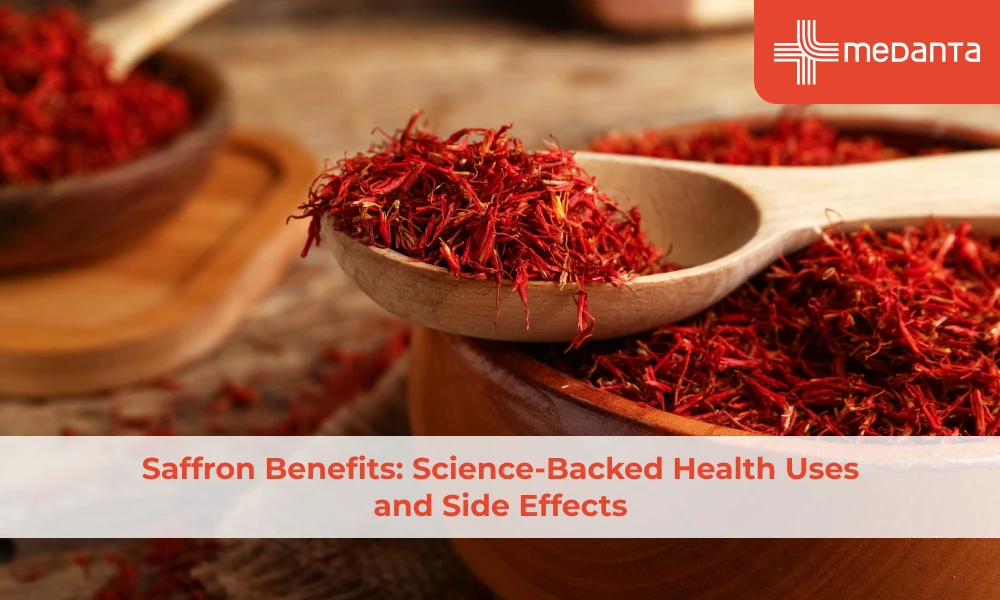
TABLE OF CONTENTS
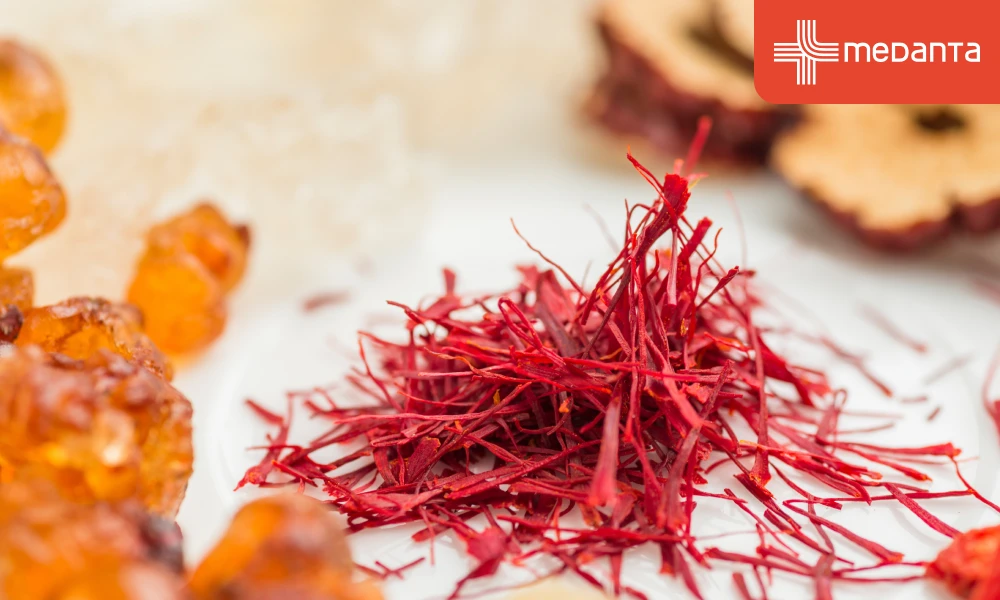
Saffron comes from Crocus sativus L. - specifically the three thin stigmas inside each flower, picked entirely by hand. The spice contains several biologically active compounds. Crocin and crocetin give it the golden colour and account for most of the antioxidant activity. Safranal is the volatile compound behind the aroma, while picrocrocin is the bitter-tasting precursor that safranal breaks down from.
Nutritional Value of Saffron
At culinary doses (0.5-1 g per day), saffron contributes negligible macronutrients. Its clinical value derives entirely from phytochemical density:
Crocin concentrations in dried stigmas range from 6-16% by dry weight
Safranal constitutes 60-70% of the volatile oil fraction.
The meaningful dosing unit in clinical trials is the standardised extract (typically 3.5% safranal) administered at 15-30 mg twice daily, not interchangeable with raw spice quantities.
Top Health Benefits of Saffron
Mood and mental health: Crocin and safranal both act on serotonin and dopamine reuptake pathways and help in mild-to-moderate depression
Antioxidant activity: Crocin and crocetin neutralise reactive oxygen species and reduce the risk of chronic diseases
Inflammation control: Crocetin reduces NF-κB signalling and lowers circulating inflammatory markers
Blood sugar: According to a study 30 mg/day for 8 weeks cut fasting glucose and HbA1c in pre-diabetic individuals and crocin appears to inhibit α-glucosidase, slowing post-meal glucose absorption
Eye health: Crocetin reaches the retina across the blood-retinal barrier and helps preserve photoreceptor integrity
Cognition: Taking saffron 30 mg daily reduces amyloid-β aggregation and improves mild cognitive conditions.
Saffron for Skin and Beauty
Saffron has been used in Ayurvedic skin preparations for centuries, and some of that traditional use has laboratory backing. Crocetin inhibits tyrosinase (the enzyme that controls melanin production) and topical saffron extract at 0.5-1% in cream reduced melanin in patients with hyperpigmentation. Collagen synthesis is also affected, which supports skin structural integrity. Crocin adds a photoprotective dimension by quenching UV-generated free radicals at the skin surface.
How to Use Saffron in Daily Life
Culinary use: 1-2 strands (approximately 20-30 mg dried stigma) steeped in 2 tablespoons of warm water or milk for 15 minutes before adding to food or beverages - steeping releases water-soluble crocins more effectively than dry addition
Saffron milk (kesar doodh): 4-5 strands in 200 mL warm full-fat milk with a pinch of cardamom - a traditional preparation that also enhances crocin bioavailability via fat-soluble co-absorption
Standardised supplements: 15 mg twice daily of an extract standardised to 3.5% safranal is the dose used in the majority of depression and PMS clinical trials
Culinary applications: Rice dishes (biryani, paella), soups, and saffron-infused water for cooking - dissolving strands in warm liquid before incorporation maximises pigment and flavour release.
Recommended Daily Intake
Culinary saffron at 0.5-1.5 g/day (approximately 20-75 strands) is considered safe for adults. Clinical trials have used standardised extract at 30 mg/day (as 15 mg twice daily), equivalent to approximately 1 g whole stigma, for periods of 6-24 weeks without significant hepatotoxic or haematological signals in safety-monitored studies. Supplementation beyond 1.5 g/day whole stigma or beyond the clinically validated extract dose should not be undertaken without medical supervision.
Possible Side Effects and Precautions
At recommended culinary and therapeutic doses, saffron is well tolerated. Doses above 5 g/day carry risk:
FAQs
What are the health benefits of saffron?
The most rigorously evidenced benefits at 30 mg standardised extract daily are mood support, antioxidant protection, reduced inflammatory signalling, lower post-meal blood glucose, retinal protection, and comparable performance to donepezil in mild cognitive impairment trials.
Can saffron improve mood?
Yes, 30 mg/day of standardised saffron extract significantly improves mild-to-moderate depression. The mechanism involves serotonin reuptake inhibition by crocin and GABA-A receptor modulation by safranal.
Is saffron good for skin?
Crocetin competitively inhibits tyrosinase and stimulates collagen synthesis. Topical saffron extract at 0.5-1% reduced melanin index scores for hyperpigmentation in controlled trials and its radical-scavenging properties offer modest photoprotective benefit.
How much saffron is safe daily?
According to studies up to 1.5 g/day of whole stigma or 30 mg/day of standardised extract is safe for adults. Doses above 5 g/day carry toxicity risk; supplementation beyond validated clinical doses requires medical supervision.
Can saffron help with PMS symptoms?
Saffron 15 mg twice daily for two menstrual cycles significantly reduced emotional and behavioural PMS scores, attributed to combined serotonergic activity and progesterone-modulating effects of crocin.
Does saffron boost immunity?
Saffron contains naturally occurring compounds that carry antioxidant & anti-inflammatory properties. This supports general immune health and reduces inflammation.
Can saffron help with blood sugar?
Supplementation at 30 mg/day for 8 weeks significantly reduced fasting glucose and HbA1c in pre-diabetic individuals with crocin's α-glucosidase inhibitory activity identified as the primary mechanism; it is not a substitute for antidiabetic pharmacotherapy.
Are there side effects of saffron?
At therapeutic doses, mild nausea, headache, and dry mouth occur in some users. However doses above 5 g/day cause abdominal cramping and vomiting, and very high doses (≥10 g) carry haemorrhagic risk. Potentiation of antihypertensive medications warrants blood pressure monitoring.
Is saffron safe during pregnancy?
Culinary quantities (1-2 strands daily in food) are generally regarded as safe. Doses exceeding culinary levels activate uterotonic oxytocin receptor pathways & stimulate myometrial contractility making supplemental saffron contraindicated throughout pregnancy.
Can saffron help with weight loss?
A randomised trial found saffron extract supplementation significantly reduced snacking frequency and appetite scores in overweight women over 8 weeks, attributed to serotonergic satiety signalling; it produces modest appetite suppression rather than direct lipolytic or thermogenic effects.
How to use saffron in a daily diet?
Steep 4-5 strands in 2 tablespoons of warm water or milk for 15 minutes before adding to rice, soups or warm milk. This pre-infusion step maximises water-soluble crocin extraction. Standardised supplements (15 mg twice daily) deliver consistent phytochemical doses independent of culinary variability.