1068
1068
 Request Call Back
 Contact
 1068
1068
Sperm Count Test: Normal Values and Male Fertility Insights
Published on: May 26, 2026
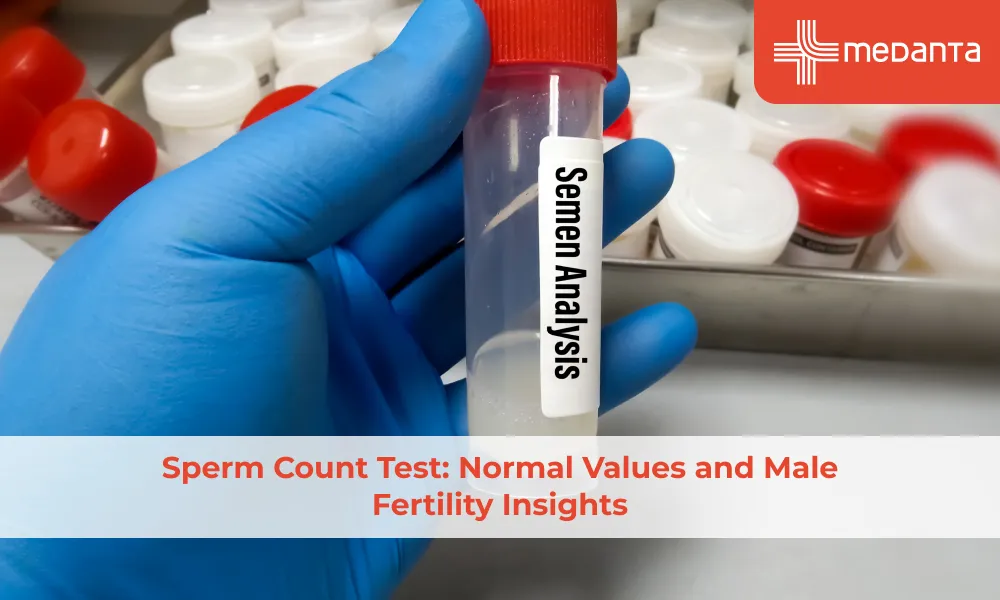
TABLE OF CONTENTS
- Why Is a Sperm Analysis Test Important for Male Fertility?
- When Should You Take a Sperm Test?
- How to Test Sperm Count
- How Is a Sperm Count Test Done?
- Home Sperm Count Test: How It Works
- How to Prepare for a Sperm Analysis Test
- Understanding Sperm Test Results
- Normal Sperm Count Values
- Normal vs. Abnormal Sperm Count: WHO Reference Values
- What Causes Low Sperm Count?
- Sperm Count & Age: Does It Decline Over Time
- Tips to Improve Sperm Count Naturally
- When to See a Doctor
- FAQs
A sperm count test ot semen analysis quantifies and characterises multiple seminal parameters within a single ejaculate. It calculates concentration (millions per mL), total count, progressive motility, morphology under Kruger strict criteria, semen volume, pH, and vitality. Semen analysis is the primary diagnostic tool in male infertility workups guiding treatment decisions from pharmacotherapy to advanced reproductive techniques like intracytoplasmic sperm injection (ICSI).
Why Is a Sperm Analysis Test Important for Male Fertility?
Male factor infertility contributes to approximately half of all infertile couples globally. Semen analysis establishes whether sufficient morphologically normal, motile sperm are available for natural conception, intrauterine insemination (IUI), or in vitro fertilisation (IVF), and determines which technical pathway is most appropriate. A single abnormal result does not constitute a definitive diagnosis; two samples collected 4–12 weeks apart are recommended before clinical conclusions are drawn.
When Should You Take a Sperm Test?
Indications include:
Failure to conceive after 12 months of unprotected intercourse (6 months if the female partner is over 35)
History of orchitis or undescended testes
Prior chemotherapy or prolonged anabolic steroid use
Post-vasectomy azoospermia confirmation
Pre-fertility preservation banking.
Men with occupational exposure to ionising radiation, heat, or gonadotoxic compounds may benefit from baseline analysis without a presenting fertility concern.
How to Test Sperm Count
Sperm count is measured via semen analysis on a freshly collected sample - produced by masturbation into a sterile, non-cytotoxic container at the laboratory or within 30–60 minutes of home collection under correct transport conditions. Point-of-care home kits using lateral flow immunoassay for seminal protein SP-10 detect concentration above or below 15–20 million/mL but provide no data on motility, morphology, or pH.
How Is a Sperm Count Test Done?
After the semen sample is collected, it is kept for a short period to allow it to liquefy naturally (at 37°C). A trained lab specialist then examines the sample under phase contrast microscopy to assess sperm quality.
The test measures:
Concentration: The number of sperm present.
Motility: How well the sperm move.
Morphology: The size and shape of the sperm.
Some laboratories use computer-assisted analysis for a more detailed evaluation of sperm movement.
Home Sperm Count Test: How It Works
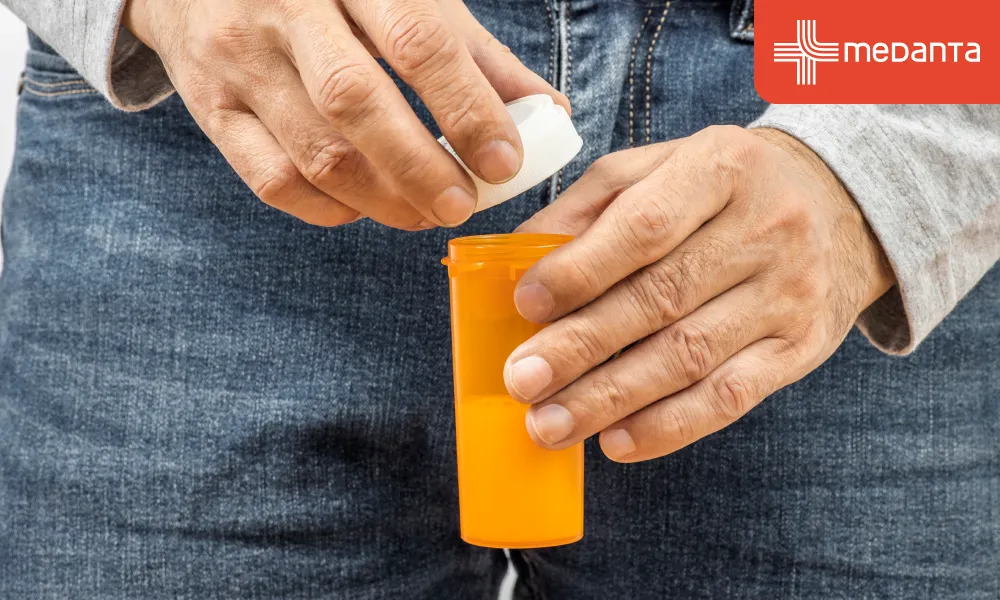
Home sperm count tests are designed to estimate whether sperm concentration falls within a normal range. Home sperm tests detect certain proteins - SP-10 (acrosin-binding protein) via lateral flow immunoassay yielding a threshold concentration readout.
However these tests do not assess important factors like sperm movement, shape or overall fertility potential. A normal home test result does not always mean fertility is normal. Home kits can be a useful first step but a detailed laboratory semen analysis is still needed for a complete fertility evaluation.
How to Prepare for a Sperm Analysis Test
Abstinence of 2–7 days is required as fewer than two days reduces count.
Avoid alcohol, cannabis and anabolic steroids for at least 3 months before testing.
Refrain from saunas & prolonged cycling 72 hours before the test.
Tell your doctor about all your ongoing medications as certain medicines like SSRIs, alpha-blockers, and calcium channel blockers affect semen parameters.
Understanding Sperm Test Results
Results are interpreted against WHO 6th Edition (2021) reference limits. A result below the 5th percentile for any parameter identifies men in whom spontaneous conception is less likely, not men who are definitively infertile. Isolated abnormalities require correlation with hormonal profile (FSH, LH, testosterone, prolactin) and clinical history before management is determined.
Normal Sperm Count Values
According to WHO standards:
Concentration ≥16 million/mL
Total count ≥39 million per ejaculate
Progressive motility ≥30%
Total motility ≥42%
Morphology ≥4% normal forms under the Kruger criteria
Semen volume ≥1.4 mL
Vitality ≥54% live sperm.
Normal vs. Abnormal Sperm Count: WHO Reference Values
Parameter | Normal Value (WHO 2021) | Clinical Significance |
Sperm concentration | ≥16 million/mL | Below threshold = oligospermia |
Total sperm count | ≥39 million/ejaculate | Total output per sample |
Progressive motility | ≥30% | Forward-swimming sperm fraction |
Total motility | ≥42% | Progressive + non-progressive |
Morphology (Kruger) | ≥4% normal forms | Strict criteria; < 4% = teratozoospermia |
Semen volume | 1.4–7.6 mL | Low volume may indicate ejaculatory duct obstruction |
Vitality | ≥54% live | Dead sperm ≥ 46% = necrozoospermia |
pH | 7.2–8.0 | Acidic pH may suggest seminal vesicle dysfunction |
What Causes Low Sperm Count?
Aetiology is categorised as pre-testicular (hypogonadotrophic hypogonadism, hyperprolactinaemia), testicular (varicocele, cryptorchidism, Klinefelter syndrome 47,XXY, orchitis, gonadotoxin exposure), and post-testicular (ejaculatory duct obstruction, epididymal blockage, vasectomy). Idiopathic oligozoospermia (reduced concentration without identifiable cause) accounts for approximately 30% of cases and likely reflects polygenic susceptibility combined with exposure to endocrine-disrupting chemicals such as phthalates and bisphenol A.
Sperm Count & Age: Does It Decline Over Time
Sperm concentration, motility, and morphology each decline approximately 0.2–0.9% annually after age 35 in cross-sectional studies. With age sperm DNA fragmentation index also rises correlating with increased paternal-age-related de novo mutations and modestly elevated miscarriage rates. Men over 45 in assisted reproduction cycles show statistically lower live birth rates per cycle independent of female partner age.
Tips to Improve Sperm Count Naturally
Maintain body weight: Obesity elevates scrotal temperature and increases oestradiol via peripheral aromatisation.
Cease tobacco use: Smoking is associated with a reduction in sperm concentration and elevated DNA fragmentation.
Limit alcohol: Higher alcohol intake suppresses testosterone.
Supplement zinc (66 mg/day) and folic acid (5 mg/day): Clinical studies support modest improvement in concentration and morphology.
Treat varicocele surgically if grade II–III with confirmed oligozoospermia. It improves parameters in many men.
Avoid anabolic steroids and exogenous testosterone, as they suppress spermatogenesis.
When to See a Doctor
Seek specialist evaluation if conception has not occurred within 12 months of regular unprotected intercourse or earlier with known risk factors like varicocele, orchitis, undescended testes or prior gonadotoxic therapy. Bilateral azoospermia or severe oligozoospermia (<5 million/mL) needs karyotyping and Y-chromosome microdeletion analysis before assisted reproduction, as certain genetic causes are transmissible to male offspring via ICSI.
FAQs
What is a semen analysis test?
This is a multi-parameter laboratory investigation that assesses sperm concentration, motility, morphology, semen volume, pH, and vitality - the standard first-line investigation in male fertility evaluation.
How is semen analysis performed?
Following ejaculate liquefaction at 37°C, an andrologist evaluates the sample under phase-contrast microscopy and applies WHO 6th Edition reference criteria to each parameter.
What are normal sperm count levels?
Normal levels are:
Concentration ≥16 million/mL
Total count ≥39 million/ejaculate
Progressive motility ≥30%
Morphology ≥4% normal forms
Volume ≥1.4 mL
Vitality ≥54%.
What exactly does a sperm count test measure?
Test measures concentration, total ejaculate count, progressive and total motility, morphology under Kruger strict criteria, semen volume, pH, and vitality. Advanced CASA additionally quantifies VCL and VSL velocity parameters.
What does low sperm motility mean?
Progressive motility below 30% (asthenozoospermia) indicates insufficient forward-swimming sperm to traverse cervical mucus reliably reducing fertilisation probability in natural and assisted conception cycles.
Can medications lower sperm count?
Yes anabolic steroids, exogenous testosterone, sulfasalazine, nitrofurantoin, calcium channel blockers, SSRIs and certain antifungals have adverse effects on concentration, motility, or DNA integrity.
How to prepare for a semen analysis test?
Abstain from ejaculation for 2–7 days; avoid alcohol, cannabis and anabolic steroids for 3 months; skip saunas and cycling 72 hours before; collect the complete ejaculate into the provided sterile container.
What causes abnormal semen results?
Varicocele, orchitis, cryptorchidism, Klinefelter syndrome, gonadotoxin exposure, hypogonadotrophic hypogonadism, ejaculatory duct obstruction, and idiopathic oligozoospermia account for the majority of cases.
Are at-home sperm count tests accurate?
Home tests reliably detect concentrations above or below 15–20 million/mL but provide no data on motility, morphology, or DNA fragmentation. They function as a screening prompt, not a diagnostic conclusion.
Can lifestyle affect sperm quality?
Yes obesity, smoking, alcohol excess, anabolic steroids and scrotal heat exposure each independently impair sperm parameters in ways that are partially reversible within one to three spermatogenesis cycles after cessation.
How long does it take to get results?
Standard semen analysis results are available within 24–48 hours. While advanced testing (DNA fragmentation index, sperm antibody assay) may require 3–5 working days.
Is semen analysis painful?
Semen analysis is non-invasive and painless; sample collection by masturbation is standard. Electro-ejaculation under anaesthesia is reserved for men with spinal cord injuries or anejaculation.
When should a man get a fertility test?
After 12 months of unprotected intercourse without conception (6 months if the female partner is over 35), with known risk factors such as varicocele or prior orchitis, or as pre-conception baseline assessment in men over 40.