1068
1068
 Request Call Back
 Contact
 1068
1068
Period Pain Relief: Home Remedies for Menstrual Cramps
Published on: May 28, 2026
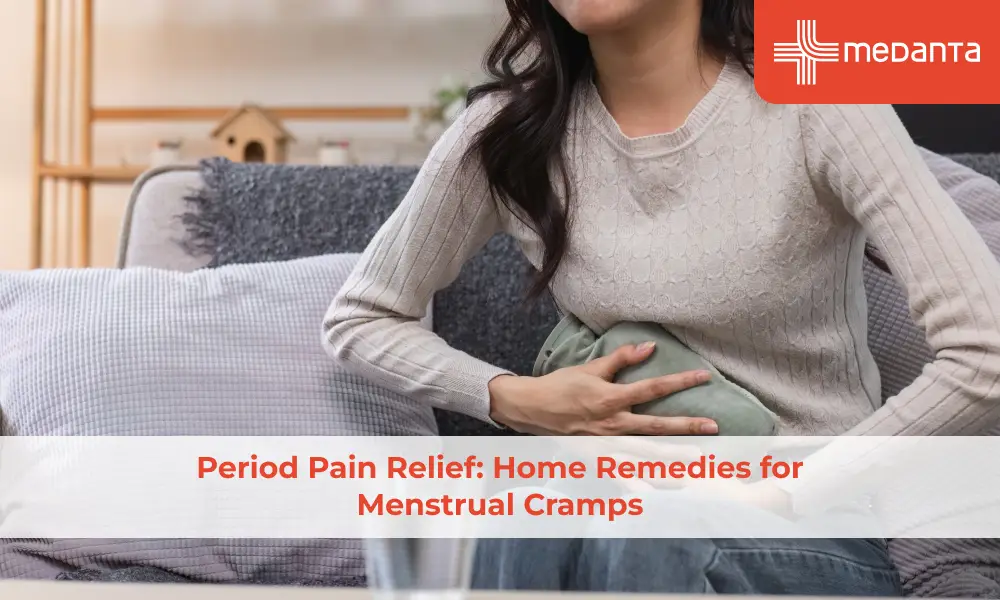
TABLE OF CONTENTS
- Symptoms of Period Pain
- How to Stop Period Pain Immediately at Home
- Best Home Remedies for Period Pain
- Natural Period Cramp Remedies That Work Fast
- Period Pain Relief Tips
- Foods That Help Reduce Period Cramps
- Massage Techniques for Menstrual Cramp Relief
- Magnesium, Omega-3 & Other Supplements That Help
- Exercises and Yoga for Period Pain Relief
- Lifestyle Changes to Reduce Period Pain
- When to See a Doctor for Severe Period Pain
- FAQs
What Causes Period Pain?
Dysmenorrhoea or severe period pain arises primarily from excessive endometrial prostaglandin synthesis at menstruation onset, causing sustained myometrial contractions that reduce uterine blood flow and generate ischaemic pain. Primary dysmenorrhoea occurs without identifiable pelvic pathology typically beginning 6–24 hours before flow and peaking within 48 hours. Secondary dysmenorrhoea caused by endometriosis, adenomyosis, uterine fibroids, or pelvic inflammatory disease starts earlier in the cycle and persists beyond the first two days of menstruation.
Symptoms of Period Pain
Colicky or pressure-like lower abdominal cramping radiating to the lower back, sacrum, or upper thighs via shared lumbosacral nerve pathways is the defining feature. Associated symptoms include nausea, vomiting, diarrhoea, headache, and fatigue; vasovagal syncope occurs in severe cases. Pain beginning premenstrually or persisting post menstrually distinguishes secondary from primary dysmenorrhoea and needs gynaecological evaluation.
How to Stop Period Pain Immediately at Home
Heat applied to the lower abdomen reduces uterine spasm and increases pelvic blood flow that relieves pain. Combining heat with a single NSAID dose produces additive relief within 30–60 minutes. Transcutaneous electrical nerve stimulation (TENS) at high-frequency (80-100 Hz) applied suprapubically reduces cramping within 15 to 20 minutes.
Best Home Remedies for Period Pain
Heat therapy: Sustained 39–40°C via adhesive heat patch, heated pad or towel-wrapped hot water bottle reduces primary dysmenorrhoea pain.
Ginger: Meta-analyses show that a 750–2000 mg/day ginger supplement for the first three days reduces period pain.
TENS at suprapubic electrodes: Reduces pain within one session.
Chamomile tea: Apigenin and luteolin in Matricaria chamomilla inhibit COX-2 reducing pain.
Magnesium glycinate or citrate in the luteal phase: reduces prostaglandin induced spasm independently of uterine relaxation.
Natural Period Cramp Remedies That Work Fast
Heat and TENS act within 15–30 minutes via neurophysiological mechanisms, making them effective when medication is unavailable.
Peppermint oil (Mentha piperita) diluted to 2–4% in a carrier oil and applied topically to the lower abdomen activates TRPM8 cold-receptor channels producing counter-irritant analgesia within minutes.
Diaphragmatic breathing (4-second inhale and 6-second exhale) activates the parasympathetic nervous system & reduces sympathetically driven uterine vasospasm.
Period Pain Relief Tips
Several effective tips are:
Start NSAIDs 24 hours before expected menstrual onset
Apply heat continuously for 8+ hours with an adhesive patch rather than intermittent hot water bottle use
Maintain hydration as it prevents vasopressin-mediated vasoconstriction that worsens uterine ischaemia
Sleep in lateral decubitus (foetal) position with a pillow between knees to reduce uterosacral ligament tension
Avoid caffeine 48 hours before menstruation.
Foods That Help Reduce Period Cramps
Dark leafy greens (spinach, kale): Magnesium and iron support smooth muscle function and replenish menstrual losses
Fatty fish (salmon, mackerel, sardines): EPA and DHA reduce PGF2α synthesis; 2–3 portions weekly exert a cycle-wide anti-inflammatory effect
Turmeric: Curcumin inhibits NF-κB-mediated COX-2; bioavailability increases 20-fold with piperine (black pepper)
Ginger: Gingerols and shogaols inhibit COX and LOX pathways; 1–2 g fresh ginger tea from day one of menstruation has as strong a trial base as any single herbal option
Limit: Alcohol, high-sodium processed foods, and trans fats - all upregulate prostaglandin synthesis or worsen fluid retention.
Massage Techniques for Menstrual Cramp Relief
Effleurage - clockwise, circular, light-pressure strokes on the lower abdomen stimulate cutaneous mechanoreceptors and activate descending pain inhibition via the periaqueductal grey. Firm bilateral circular pressure on the sacral dimples decompresses the uterosacral ligaments and reduces referred back pain within 10–15 minutes.
Magnesium, Omega-3 & Other Supplements That Help
Magnesium functions as a physiological calcium antagonist in smooth muscle; deficiency correlates with more severe dysmenorrhoea. Magnesium glycinate or citrate 300–360 mg/day across the luteal phase reduces cramping intensity. Omega 3 fatty acids (1000–2000 mg/day) competitively inhibit arachidonic acid's conversion to PGF2α at the COX enzyme shifting prostaglandin balance toward less vasoconstrictive forms. Vitamin D3 1000–2000 IU/day reduces dysmenorrhoea severity in deficient individuals.
Exercises and Yoga for Period Pain Relief
Moderate aerobic exercise at 60–70% maximum heart rate for 30 minutes stimulates endorphin and endocannabinoid release, raising pain thresholds within a single session in mild-to-moderate dysmenorrhoea. Effective yoga asanas include Supta Baddha Konasana (pelvic floor stretch), Balasana (sacral decompression) and Viparita Karani (reduces pelvic congestion via venous drainage). High-intensity exercise is best deferred past the heaviest flow days, as it may transiently increase prostaglandin release.
Lifestyle Changes to Reduce Period Pain
Stress reduction: cortisol increases prostaglandin synthesis so regular mindfulness or progressive muscle relaxation reduces dysmenorrhoea severity across cycles
Sleep hygiene: melatonin exerts anti-inflammatory effects on endometrial tissue; luteal-phase sleep disruption worsens pain perception via central sensitisation
Smoking cessation: nicotine-mediated vasoconstriction is an independent risk factor for more severe dysmenorrhoea
Low-fat, high-fibre diet: reduces circulating oestrogen via faecal excretion of oestrogen metabolites, decreasing endometrial prostaglandin production over multiple cycles
When to See a Doctor for Severe Period Pain
Secondary dysmenorrhoea should be excluded when pain worsens progressively across cycles, begins before menstrual flow, persists beyond day three, is associated with dyspareunia or abnormal uterine bleeding, or is unresponsive to two cycles of adequate NSAID dosing. Medanta's Gynaecology team evaluates secondary dysmenorrhoea via history, pelvic examination, transvaginal ultrasound, and where indicated, diagnostic laparoscopy.
FAQs
What are the best home remedies for period pain relief?
Sustained heat at 39–40°C, ginger extract 750–2000 mg/day, high-frequency TENS at suprapubic electrodes, magnesium glycinate 300–360 mg/day across the luteal phase, and lavender-clary sage abdominal massage carry the strongest non-pharmacological evidence for primary dysmenorrhoea.
Why do menstrual cramps occur during periods?
Endometrial PGF2α and PGE2 released at menstruation onset drive myometrial contractions that reduce uterine perfusion, generating ischaemic pain.
How can I reduce menstrual cramps naturally at home?
Sustained heat combined with diaphragmatic breathing and hydration provides fast relief; across the cycle, magnesium, omega-3 supplementation, and a low-fat high-fibre diet progressively reduce prostaglandin synthesis and cramping severity.
Does drinking hot water help relieve period pain?
Hot fluids reduce vasoconstriction and support hydration; ginger or chamomile tea delivers additional COX-2-inhibitory phytochemicals, making both preferable to plain hot water.
Which foods help reduce menstrual cramps?
Fatty fish, dark leafy greens, ginger, turmeric with piperine and walnuts reduce prostaglandin synthesis. Alcohol, high-sodium processed foods and trans fats exacerbate symptoms and should be limited perimenstrually.
Can exercise help relieve period pain?
Yes moderate aerobic exercise raises endorphin and endocannabinoid levels that reduce mild to moderate period pain. Supta Baddha Konasana, Balasana, and Viparita Karani are particularly effective yoga asanas.
Are heating pads effective for menstrual cramps?
Trial data confirm that sustained heat at 39–40°C produces analgesia; adhesive continuous-heat patches applied for 8+ hours outperform intermittent hot water bottle use in primary dysmenorrhoea.
What herbal remedies help with period pain relief?
Ginger, chamomile, fennel seed extract and clary sage essential oil have the strongest evidence among herbal interventions for primary dysmenorrhoea.
Does magnesium really help period cramps?
Yes magnesium glycinate or citrate 300–360 mg/day taken across the luteal phase reduces myometrial hypercontractility via calcium channel antagonism and demonstrably lowers cramping intensity in clinical trials, particularly in those with dietary deficiency.
10. When should you see a doctor for severe menstrual cramps?
Seek evaluation if pain worsens progressively across cycles, starts before menstrual flow, persists beyond day three, is associated with dyspareunia or abnormal bleeding, or fails to respond to two cycles of adequate NSAID dosing.
How can you prevent menstrual cramps naturally?
Magnesium and omega-3 from mid-cycle, a low-fat high-fibre dietary pattern, maintaining BMI 20–25 kg/m², smoking cessation, and consistent aerobic exercise each have cycle-wide preventive evidence for reducing dysmenorrhoea severity.