1068
1068
 Request Call Back
 Contact
 1068
1068
Role of Protein and Healthy Fats in the Inverted Food Pyramid
Published on: Jun 04, 2026
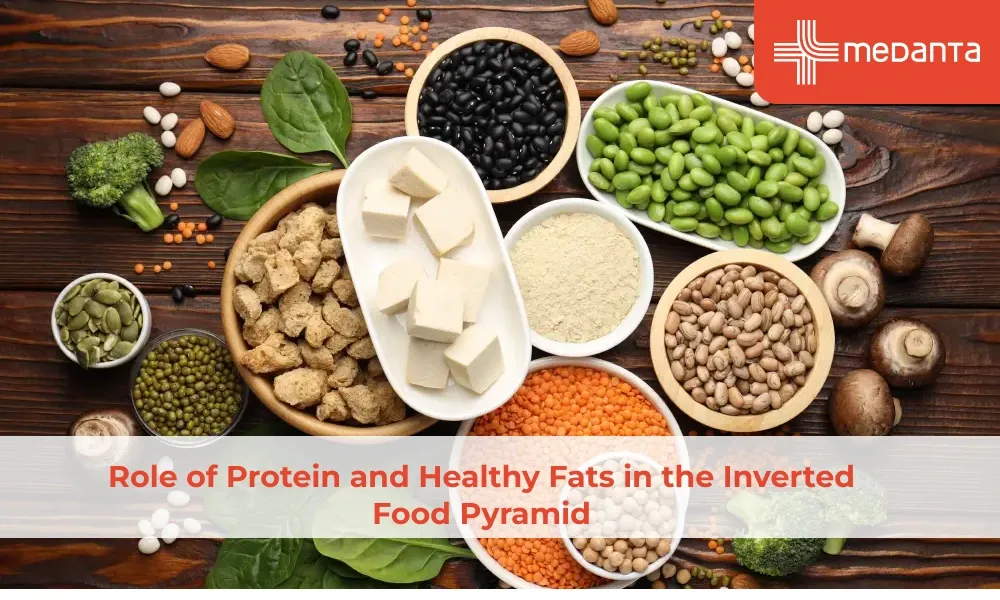
TABLE OF CONTENTS
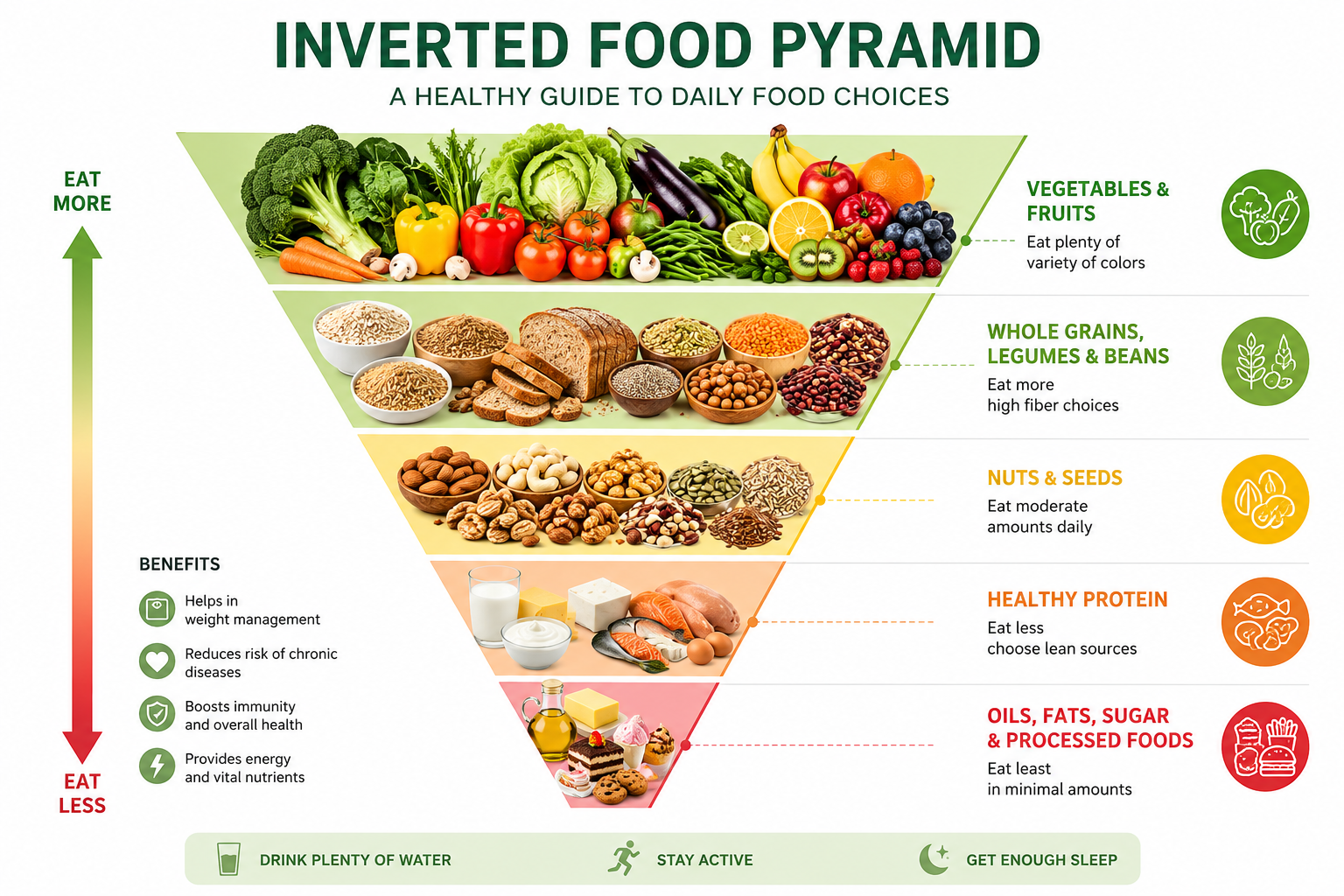
The traditional food pyramid has been inverted, substantially transforming dietary recommendations for millions. Then, this new food pyramid urges people to increase daily protein consumption from 0.36 grams per pound of body weight to between 0.54 and 0.73 grams per pound. The updated guidelines emphasise eating more protein at every meal and including full-fat dairy, while cutting out ultra-processed foods. Meanwhile, the approach towards added sugars has become stricter. Recommendations state that no amount is part of a wholesome eating plan. This new approach marks a major shift in the way we think about nutrition. The roles of protein and beneficial fats help people make informed choices about their daily meals.
Introduction to the Inverted Food Pyramid
Picture turning a pyramid upside down. The previous food pyramid placed grains at the broad base, recommending 6-11 daily servings. That foundation has changed. Protein and vegetables now occupy the widest section at the top, while whole grains appear at the narrow bottom. This visual flip sends a clear message about what deserves priority on your plate.
Understanding Protein in the Inverted Pyramid
Your Plate, Flipped: Protein Is Now the Star
Protein takes top billing in this redesigned structure. The guidelines recommend consuming between 1.2 to 1.6 grams per kilogram of body weight each day. Animal-derived sources receive emphasis, marking a departure from previous plant-forward approaches. Meats, dairy and eggs are the foundations of this approach, with nuts and beans added.
Key Benefits of a Protein Rich Diet
Protein Does the Heavy Lifting Even While You Rest
Eating more protein helps with weight loss while protecting your muscle mass even when you are eating less. The macronutrient increases hormones that make you feel full (like GLP-1 and CCK) while reducing ghrelin, the hormone that makes you feel hungry. Your body actually burns 20–30% of protein's calories just by digesting it, far more than the 5–10% for carbohydrates or the 0–3% for fats. This heat-generating process gives your metabolism a natural boost.
Healthy Fats Explained
Fat Is Not the Enemy. The Wrong Fat Is.
Healthy fats stay liquid at room temperature. You can get monounsaturated fats from olive oil, avocados, and nuts. Polyunsaturated fats, such as omega-3 and omega-6 fatty acids, are found in fish, flaxseeds, and some oils. Your body cannot make these essential fats you need to get them from your diet.
Benefits of Healthy Fats in the Diet
The Fats That Actually Fight for Your Heart
Unsaturated fats improve your cholesterol levels by lowering the harmful LDL cholesterol while keeping the protective HDL cholesterol where it should be. They help keep your heart rhythm steady and calm inflammation in your body. Fats also help your body absorb key vitamins like A, D, E, and K that it cannot take in without fat present. Omega-3 fatty acids are especially good for brain health and keeping inflammation in check.
Protein vs Healthy Fats: Finding the Right Balance
Protein + Healthy Fats: The Power Pair Your Body Needs
Fat should comprise 20 to 35% of total daily calories with less than 10% from saturated sources. Protein intake works best at 1 to 1.5 grams per kilogram body weight (it all depends on your activity levels). Combine both at meals instead of choosing between them. Grilled salmon with avocado provides complete nutrition, pairing quality protein with beneficial fats for sustained energy and satisfaction.
Practical Diet Tips
Small Swaps, Big Results: Making This Work in Real Life
The new food pyramid can feel overwhelming when you try to apply it to your daily routine. Everything you knew about eating has flipped. Where do you even start? The answer lies in simple steps that change how you shop, cook and eat.
Plan your meals before grocery shopping. Map out protein sources for each day and build vegetables around them. Add healthy fats too. Batch cook chicken breasts, hard-boil eggs and grill salmon on Sunday afternoon. Store these in containers so grabbing a protein-rich option becomes effortless during hectic weekdays.
Your daily protein target sits between 1.2 and 1.6 grams per kilogram of body weight. Spread your protein across breakfast, lunch, and dinner rather than eating most of it at one sitting. Eat your protein first on the plate. This helps stabilise blood sugar and increases satiety hormones.
Keep these swaps in mind:
Replace sugary coffee creamers with full-fat dairy or drink it black
Add avocado slices to sandwiches instead of mayonnaise
Toss almonds into salads for crunch and healthy fats
Mix ground flaxseed into morning oatmeal
Snack on Greek yoghurt or hard-boiled eggs rather than crisps
Use herbs for flavour as you reduce sodium and added sugars
Limit added sugars to 10 grams per meal
Stock your pantry with canned fish and nuts. These shelf-stable proteins rescue you when fresh options run low.
Common Mistakes to Avoid
Watch Out for These Common Pitfalls
Enthusiasm for this healthier food pyramid explanation of each group sometimes guides people astray. You grab extra protein shakes, cut carbohydrates, and wonder why you feel worse instead of better. Several missteps can derail your progress.
High protein without increased water creates problems. Eating more protein produces more urea as a byproduct and your kidneys need extra water to flush it out. You don't drink enough and headaches follow. Fatigue sets in. Your urine turns dark, and constipation becomes an issue. Your body needs both elements working together.
You cut fibre and add protein. Digestion suffers. Protein powders contain no fibre. You replace whole foods with shakes or eliminate grains, and bloating follows. Constipation becomes a problem. The protein itself doesn't cause these issues. Low fibre combined with inadequate water does.
There's another reason to be careful. You abandon fruits and vegetables. Animal-heavy diets increase your body's acid load. Fruits and vegetables that are rich in potassium help bring that back into balance. You might experience cramps and bloating without sufficient intake. Blood pressure can become harder to control and your kidneys may face extra strain.
Processed meats deserve caution despite their protein content. They contain excess sodium and saturated fat. Research links red & processed meats to cancer development. Choose whole food sources instead and treat supplements as occasional helpers rather than primary nutrition.
FAQs
What is the role of protein in the inverted food pyramid?
Protein sits at the broad base because research links higher intake to reduced muscle loss with age and improved blood sugar control. The new food pyramid places nutrient-dense proteins with healthy fats at the foundation for daily emphasis. This elevation reflects protein's importance in muscle maintenance and metabolic health.
Why are healthy fats important in modern diets?
Healthy fats lower your risk of heart disease and improve blood cholesterol levels. They help control blood sugar while reducing inflammation. They also support the lining of your gut, helping maintain a healthy gut microbiome and a stronger immune system. Your body requires these fats to absorb vitamins A, D, E and K.
How much protein should I consume daily?
Adults need 0.8 grams per kilogram of body weight as a minimum. But the recommendation has nearly doubled for many adults, changing to 1.0-1.6g per kg for functional targets. Active individuals require 1.6g per kg, while athletes need up to 2.2g per kg.
What are the best sources of protein?
Grass-fed meats, poultry, wild-caught seafood, eggs and full-fat dairy provide complete proteins. Plant options include beans, lentils, chickpeas, nuts, seeds and soy products. Combining different plant proteins throughout the day will give you all the essential amino acids.
What are considered healthy fats?
Monounsaturated fats from olive oil, avocados and nuts qualify as healthy. Polyunsaturated fats include omega-3 and omega-6 fatty acids found in fatty fish, walnuts, flaxseeds, chia seeds and vegetable oils. These remain liquid at room temperature, distinguishing them from saturated fats.
Are all fats bad for health?
Not at all. Your body cannot function without dietary fats. Trans fats significantly raise your risk of heart disease. Saturated fats should stay under 10% of daily intake. Monounsaturated and polyunsaturated fats protect your heart and lower harmful cholesterol. The type of fat you eat matters far more than simply how much fat you eat.
Can protein help with weight loss?
Protein burns calories during digestion itself. Your body actually burns 20–30% of protein's calories just by digesting it, far more than the 5–10% for carbohydrates or the 0–3% for fats. Protein triggers fullness hormones while suppressing hunger signals. Studies show people consuming higher protein diets eat less between meals and lose weight without counting calories.
How do healthy fats support heart health?
Polyunsaturated fats lower blood pressure and reduce triglycerides. People eating the most polyunsaturated fats showed fewer strokes than those eating the least. Omega-3 fatty acids guard against irregular heartbeats. Monounsaturated fats improve blood vessel function.
What is the ideal balance between protein and fats?
On average, protein makes up around 16% of total energy intake across different populations. Fat should comprise 20-35% of daily calories. There is no single perfect ratio that works for everyone. Your activity level, health goals and personal priorities determine your optimal balance.
How can I include more protein and healthy fats in my daily diet?
Swap butter for olive oil when cooking. Eat fatty fish twice weekly. Sprinkle nuts into salads, stir ground flaxseed into yoghurt, or spread natural peanut butter on fruit. Keep hard-boiled eggs ready and add avocado to sandwiches. Choose full-fat dairy over low-fat alternatives.