1068
1068
 Request Call Back
 Contact
 1068
1068
Recognising Breathing Problems in Children: Signs, Causes and When to Seek Help
Published on: Jul 17, 2026
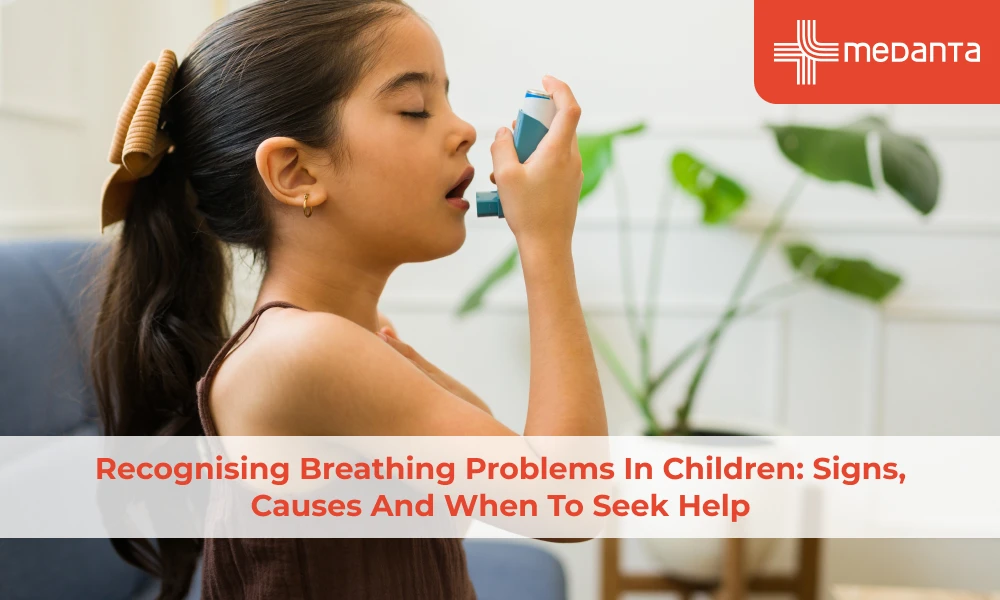
TABLE OF CONTENTS
- How Normal Breathing Varies by Age in Children
- Warning Signs of Breathing Distress in Children
- Respiratory Infections Linked to Breathing Problems
- Asthma and Allergy-Related Breathing Difficulties
- Breathing Problems Caused by Enlarged Adenoids and Tonsils
- Breathing Emergencies: Recognising Serious Symptoms
- How Doctors Diagnose Breathing Problems in Children
- Treatment and Recovery for Childhood Breathing Disorders
- Treatment Options for Recurrent Respiratory Infections in Children
- When Parents Should Seek Immediate Medical Attention
- Preventing Recurrent Respiratory Infections and Supporting Immune Health
- Conclusion
- FAQs
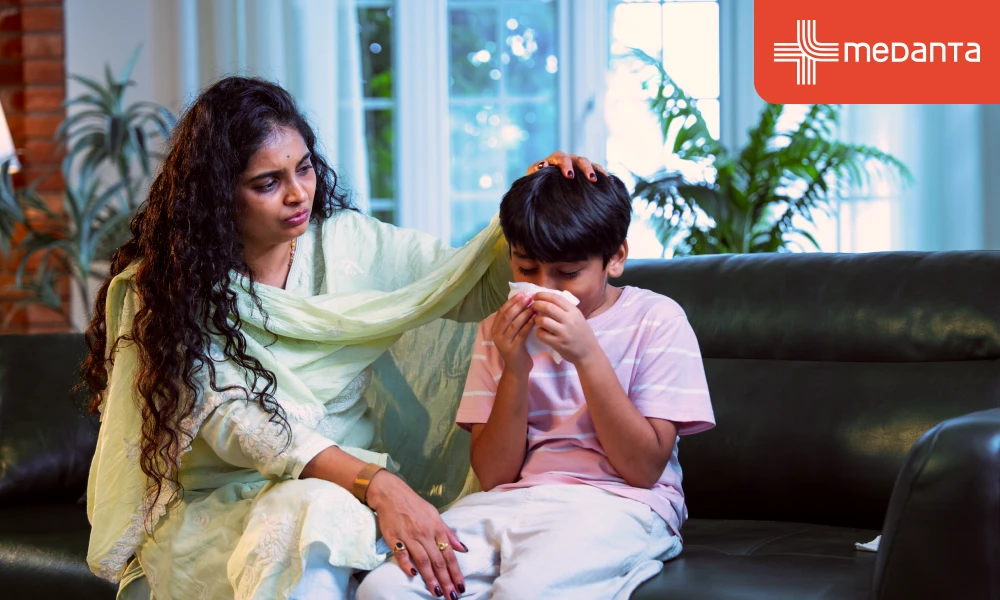
A child's breathing rate and effort shift constantly with age and activity, which makes it hard for parents to judge normal versus concerning. Most fast breathing during a cold is harmless. However some aren't and the difference often comes down to specific signs. Acute respiratory infections remain among the most common reasons Indian children under five visit a doctor. Recognising the warning signs early changes outcomes meaningfully.
How Normal Breathing Varies by Age in Children
Newborns breathe considerably faster than adults up to 60 breaths per minute is normal in the first weeks of life. That rate drops steadily through infancy and childhood, settling around 20 to 30 breaths per minute by school age, closer to 12 to 20 by adolescence. Brief pauses during sleep particularly in newborns are usually nothing to worry about, provided breathing resumes within a few seconds.
Warning Signs of Breathing Distress in Children
Your child may exhibit various warning signs. They are:
Nostrils flaring with each breath, especially noticeable in infants
Skin pulling inward between or below the ribs with every breath
A grunting sound at the end of each breath can signal real effort to keep airways open.
A bluish tint around the lips or fingertips is never normal and needs urgent attention regardless of other symptoms. Persistent rapid breathing at rest, well above the age-appropriate range, also needs intervention.
Respiratory Infections Linked to Breathing Problems
Bronchiolitis: Usually caused by RSV, it narrows the small airways in infants and is a leading cause of breathing difficulty under age two.
Pneumonia: This respiratory infection fills portions of the lung with fluid often producing fast laboured breathing alongside fever.
Croup: Causes a distinctive barking cough and stridor (a harsh sound on inhaling) from swelling around the voice box, typically worse at night.
Tuberculosis: A persistent cough lasting beyond two to three weeks more so if your child has weight loss or night sweats warrants TB screening.
Asthma and Allergy-Related Breathing Difficulties
Wheezing (a high pitched whistle on breathing out) points toward narrowed airways, commonly due to asthma or an allergic reaction. Triggers vary widely: dust, pollen, cold air, exercise and even strong incense or smoke common in many Indian households during festivals. Children with a family history of asthma or allergies carry meaningfully higher risk.
Allergic reactions occasionally escalate fast. Swelling around the lips or tongue with breathing trouble after a new food or insect sting signals anaphylaxis.
Breathing Problems Caused by Enlarged Adenoids and Tonsils
Loud snoring, mouth breathing through the day and pauses in breathing during sleep often trace back to adenoids or tonsils large enough to partially block the airway. Left untreated paediatric sleep apnoea can affect growth and school concentration in ways parents don't always connect to nighttime breathing. An ENT evaluation clarifies whether surgical removal is warranted.
Breathing Emergencies: Recognising Serious Symptoms
Some signs demand action within minutes:
A child who cannot speak or cry properly because of breathing effort
A child shows blue or grey lips
A child whose chest is heaving dramatically with each breath
A child who seems to be tiring out from the effort of breathing
A child who experience severe chest retractions and extreme lethargy alongside breathing difficulty
A child who suddenly stops making sounds after choking on something. This condition is more dangerous since it can mean the airway is fully blocked.
How Doctors Diagnose Breathing Problems in Children
A physical exam including listening to the chest, checking oxygen saturation and observing breathing pattern usually comes first and catches the most common ca uses. Chest X-rays help confirm pneumonia or rule out structural issues. Blood tests, viral swabs or allergy testing get added depending on what the exam suggests, and a sleep study may follow if adenoid-related apnoea is suspected.
Treatment and Recovery for Childhood Breathing Disorders
Treatment tracks the underlying cause closely.
Viral bronchiolitis often just needs supportive care like fluids, rest & nasal suctioning for infants (as antibiotics don't treat viruses).
Bacterial pneumonia responds to antibiotics improving within 48 to 72 hours.
Asthma management is usually 2 pronged involving a quick relief inhaler with a daily controller medicine for children with frequent symptoms.
Recovery timelines vary by diagnosis like a cold clears in days. Conditions like pneumonia can take 1 to 2 weeks before energy fully returns.
Treatment Options for Recurrent Respiratory Infections in Children
Children getting infection after infection sometimes have an underlying contributor worth investigating like undiagnosed asthma, allergies, enlarged adenoids or occasionally an immune deficiency. Addressing the root cause, rather than treating each infection in isolation, tends to break the cycle more effectively.
When Parents Should Seek Immediate Medical Attention
Any bluish discolouration, breathing that's visibly laboured at rest, a child too breathless to talk or feed normally or symptoms worsening rapidly over a few hours all justify an emergency visit. High fever paired with fast breathing in an infant under three months also needs same-day evaluation as young infants deteriorate faster than older children.
Preventing Recurrent Respiratory Infections and Supporting Immune Health
Effective preventive tips are:
Hand hygiene before meals cuts transmission of common respiratory viruses substantially
Keeping vaccination schedules on track matters more than most parents realise
Good nutrition (dal, seasonal vegetables & adequate protein) supports immune resilience generally
Avoiding secondhand smoke including from bidis or hookah used at home, reduces airway irritation considerably in young children.
Adequate sleep and reduced overcrowding during peak infection seasons help too.
Conclusion
Most childhood breathing changes resolve without problem, tracking a cold or mild allergy through its course. The signs that don't fit like bluish lips, real difficulty speaking or feeding, chest retractions or sudden silence after choking are specific enough to act on quickly. Trusting that instinct and a doctor's evaluation when uncertain, serves children better than waiting it out.
FAQs
How many respiratory infections per year are considered normal for a child?
Six to eight infections annually are typical for young children particularly those in daycare or school settings with frequent exposure. Numbers well beyond that or infections that linger unusually long need a closer look.
Can recurrent respiratory infections affect a child's growth and development?
They can especially if infections disrupt sleep and appetite. Most children catch up once the underlying cause like allergies or adenoid issues gets addressed.
How can I tell if my child is having difficulty breathing?
Watch the chest and nostrils, not just listen. Flaring nostrils, skin pulling in around the ribs, faster breathing than usual or grunting all point to genuine effort rather than ordinary congestion.
What are the earliest signs of breathing distress in children?
Subtle changes often come first like slightly faster breathing, mild nasal flaring or restlessness during feeding or play. They are easy to miss but if they persist consult a doctor.
Why is my child breathing faster than usual?
Fever, anxiety and exertion all raise breathing rate temporarily and harmlessly. Persistent fast breathing at rest, without an obvious trigger, points toward something needing medical evaluation.
Can a cold or flu cause breathing problems in children?
Yes particularly in infants and toddlers whose airways are naturally narrower. Nasal congestion alone can make breathing noisy and effortful even without deeper lung involvement.
What is the difference between wheezing and shortness of breath?
Wheezing is a specific sound. It is high pitched, usually on breathing out and caused by narrowed airways. Shortness of breath describes the broader sense of breathing being harder than normal (it can be with or without an audible wheeze).
When should I take my child to the emergency room for breathing difficulties?
Bluish lips or fingertips, visible chest retractions, inability to speak or feed due to breathlessness or sudden silence after choking all mean emergency care immediately not a scheduled appointment.
Can allergies trigger breathing problems in children?
Allergic reactions to dust, pollen, certain foods or insect stings can narrow child's airways and trigger wheezing. In severe cases anaphylaxis requires emergency treatment without delay.
How are breathing disorders diagnosed in children?
A physical exam and oxygen level check usually come first, followed by chest X-rays, blood work or allergy testing depending on what's suspected. Sleep studies get added when adenoid-related apnoea is a concern.
What should I do if my child suddenly develops breathing trouble?
Stay calm, keep the child upright rather than lying flat and seek emergency care immediately if there's blueness, severe effort, or inability to speak. Don't wait to see if it passes on its own.
Can breathing problems in children be prevented?
Not entirely but risk drops meaningfully with full vaccination, good hand hygiene, smoke free homes and prompt treatment of allergies or asthma before they escalate.