1068
1068
 Request Call Back
 Contact
 1068
1068
Blue Baby Syndrome: Causes, Symptoms, and Treatment
Published on: Jun 22, 2026
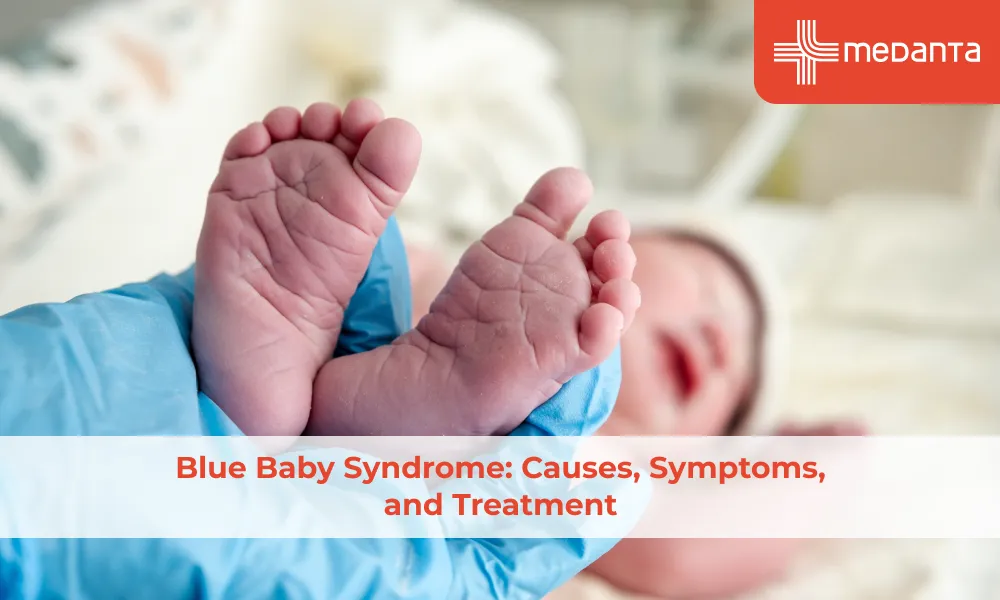
TABLE OF CONTENTS
- What Is Blue Baby Syndrome?
- Why It Is Called the Blue Baby Condition
- Causes and Risk Factors of Blue Baby Syndrome
- How Blue Baby Syndrome Affects a Baby's Body
- Signs and Symptoms of Blue Baby Syndrome
- Blue Baby Syndrome vs Blue Diaper Syndrome
- Diagnosis of Blue Baby Syndrome
- Treatment of Blue Baby Syndrome
- Prevention Tips to Reduce the Risk
- FAQs
Overview of Blue Baby Syndrome
A blue tinge to a newborn's skin is among the most alarming signs a parent can observe. Blue baby syndrome is a condition in which a baby's skin, lips or fingertips turn bluish or greyish because the blood is not carrying enough oxygen. Not a single disease, it is a clinical sign with multiple causes like structural heart defects, lung problems and environmental toxins. Untreated, severe oxygen deficiency causes brain damage, organ failure and death.
What Is Blue Baby Syndrome?
Blue baby syndrome is the informal name for infantile cyanosis that is a visible bluish skin discolouration caused by low blood oxygen. Cyanosis appears when deoxygenated haemoglobin exceeds approximately 5 g/dL. Two distinct processes produce it: reduced delivery of oxygenated blood to the tissues (from heart defects or lung problems), or reduced ability of haemoglobin to carry oxygen (from nitrate exposure). Both produce the same visible sign.
Why It Is Called the Blue Baby Condition
The name comes from the bluish tinge at the lips, fingertips, and tongue the areas where thin skin and small blood vessels lie close to the surface, making blood colour visible. When blood is poorly oxygenated, the blue-grey of deoxygenated haemoglobin shows through. In darker skin tones, cyanosis may be less visible at the skin surface but remains clear on the mucous membranes like the lips, inside of the mouth, and eyes.
Causes and Risk Factors of Blue Baby Syndrome
Congenital heart defects: The most common cause worldwide. Structural abnormalities allow deoxygenated blood to bypass the lungs. Key defects are:
Tetralogy of Fallot: The most common cyanotic defect
Transposition of the great arteries: The aorta and pulmonary artery are switched, routing deoxygenated blood around the body
Pulmonary atresia: Absent pulmonary valve, blocking lung blood flow
Tricuspid atresia: Absent right atrium-to-ventricle valve
Total anomalous pulmonary venous connection: Lung veins draining into the wrong side of the heart
Methaemoglobinaemia from nitrate exposure: Contaminated well or bore water is converted by gut bacteria to nitrite, which reacts with haemoglobin to produce methaemoglobin. Infants under 6 months are most at risk; in India, areas with heavy nitrogen fertiliser use pose a particular hazard.
Other causes: severe pneumonia, respiratory distress syndrome, and persistent pulmonary hypertension of the newborn (PPHN).
How Blue Baby Syndrome Affects a Baby's Body
When blood oxygen falls (hypoxaemia) the heart and breathing rate increase but in severe cases, this compensation fails. The brain is most vulnerable and brief severe hypoxaemia causes irreversible cell death. The heart muscle weakens; the kidneys, liver, and gut are also highly sensitive. In congenital cyanotic heart disease, poor oxygenation from birth progressively impairs growth and without surgery, most severely affected infants do not survive.
Signs and Symptoms of Blue Baby Syndrome

The bluish discolouration at the lips, tongue, fingernails, and around the mouth (Cyanosis) is the defining sign. In congenital heart disease, it may be present from birth or develop in the first days. In nitrate-induced methaemoglobinaemia, it develops after exposure, most commonly between 1 and 3 months. Additional symptoms:
Fast or laboured breathing, sometimes grunting with each breath
Poor feeding as the baby tires quickly and cannot sustain sucking
Unusual irritability or persistent crying
Lethargy, marked drowsiness or difficulty waking
Poor weight gain
Finger clubbing in older infants with chronic cyanotic disease
Chocolate-brown blood appearance on sampling is a distinctive sign of methaemoglobinaemia.
Blue Baby Syndrome vs Blue Diaper Syndrome
These conditions share a colour-related name but are entirely different. Blue baby syndrome is the bluish skin discolouration from low blood oxygen. Blue diaper syndrome is an extremely rare inherited metabolic disorder in which gut bacteria convert unabsorbed tryptophan (an amino acid) to indican, which is excreted in the urine and turns the nappy blue on contact with air. Blue diaper syndrome has no connection to oxygen levels or cyanosis.
Diagnosis of Blue Baby Syndrome
Investigations include:
Pulse oximetry (a sensor measuring blood oxygen saturation) is the first bedside test - normal above 95% and persistently below 90% needs urgent investigation.
Chest X-ray and echocardiography identify structural defects.
Blood gas analysis measures oxygen levels directly.
In suspected methaemoglobinaemia, co-oximetry measures the methaemoglobin level.
Treatment of Blue Baby Syndrome
Congenital cyanotic heart defects require paediatric cardiac surgery including staged or single-procedure repair. Supplemental oxygen stabilises any cyanotic infant while the cause is established. Methaemoglobinaemia from nitrate exposure is treated with intravenous methylene blue (1–2 mg/kg), which rapidly restores haemoglobin's oxygen-carrying ability. Most infants improve visibly within 30–60 minutes.
Prevention Tips to Reduce the Risk
Regular antenatal scans detect many congenital heart defects before birth, enabling planned delivery at a centre with paediatric cardiac facilities
Newborn pulse oximetry screening identifies cyanotic heart defects before they become critical emergencies
Water safety: Do not use well or bore water for the infant formula without nitrate testing. Indian and WHO guidelines recommend below 10 mg/L nitrates for water given to infants
Infants under 6 months: use only municipal or tested water for formula as this age group carries the highest nitrate risk
Breastfeeding: Breast milk carries no nitrate risk. Therefore exclusive breastfeeding for 6 months eliminates this route of exposure
Seek immediate hospital care for any blue or grey discolouration of a baby's lips, face, or fingertips do not monitor at home.
FAQs
Can blue baby syndrome be life-threatening if untreated?
Yes brain cell death begins within minutes; organ failure follows within hours; life threatening within days if untreated. Cyanotic congenital heart disease without surgery carries a very high infant mortality. Both forms are medical emergencies.
Is blue baby syndrome present from birth in all cases?
No. Congenital heart defects are present from birth but may become apparent only in the first hours or days as the foetal circulation closes. Nitrate-induced methaemoglobinaemia is acquired and develops after exposure to contaminated water, most commonly between 1 and 3 months. Respiratory causes may develop at any point.
Can heart defects cause blue baby syndrome?
Yes and is the most common cause. Tetralogy of Fallot, transposition of the great arteries, pulmonary atresia, and tricuspid atresia all allow deoxygenated blood to reach the body without passing through the lungs. These are cyanotic congenital heart diseases and account for most blue baby syndrome cases.
How does low oxygen affect babies with blue baby syndrome?
The brain suffers first - low oxygen causes brain cell death, developmental delay, and seizures. The heart muscle weakens. Kidneys, liver, and gut are also affected. Early treatment within the first days of life for the most severe defects significantly limits these consequences.
Can nitrate-contaminated water increase the risk of blue baby syndrome?
Yes and is the main environmental cause. Gut bacteria convert nitrates in well or bore water to nitrites, which react with haemoglobin to form methaemoglobin which is unable to carry oxygen. Infants under 6 months are most vulnerable. In India, areas with heavy nitrogen fertiliser use pose a risk to infants whose formula is prepared with untested well water.
Is blue baby syndrome the same as cyanosis?
Cyanosis is the medical term for the bluish skin discolouration that defines blue baby syndrome. Blue baby syndrome is the broader clinical picture of an infant with cyanosis and its underlying cause. Brief peripheral cyanosis (hands and feet only, resolving within hours) is normal in healthy newborns at birth and should not be confused with pathological cyanosis.
What are the early warning signs parents should watch for?
Central cyanosis includes blue or grey at the lips, tongue, or around the mouth and always requires immediate assessment. Other warning signs: fast or laboured breathing, flaring nostrils, unusual drowsiness, poor feeding, and persistent crying. Any combination needs a hospital visit without delay.
Can blue baby syndrome be treated successfully?
Yes with timely treatment. Methaemoglobinaemia responds rapidly to methylene blue and most infants recover fully. Cyanotic congenital heart defects treated surgically have excellent outcomes. Early diagnosis is the single most important factor.
Are premature babies at higher risk of blue baby syndrome?
Yes. Preterm infants have immature lungs with less surfactant (which keeps the air sacs open), making respiratory distress syndrome more likely. Their foetal haemoglobin is more easily converted to methaemoglobin. Their cardiovascular system compensates less well for low oxygen. Heart defects are also more common in preterm infants.
What steps can help reduce the risk of blue baby syndrome in infants?
Attend all antenatal scans. Ensure newborn pulse oximetry screening before discharge. Use only tested water for infant formula and avoid well or bore water in high-nitrate areas. Exclusively breastfeed for 6 months to eliminate water contamination risk. Take any blue or grey discolouration of a baby's skin to the hospital immediately.