1068
1068
 Request Call Back
 Contact
 1068
1068
HbA1c Test: Normal Range, Chart and What It Means
Published on: Aug 18, 2026
TABLE OF CONTENTS
- How HbA1c Reflects 3 Months of Blood Sugar Levels
- HbA1c Normal Range – Chart by Category
- How the HbA1c Test Is Done
- What Your HbA1c Result Actually Means
- HbA1c vs Fasting Blood Sugar – Which Is More Reliable?
- Factors That Can Affect HbA1c Accuracy
- Target HbA1c Levels for Diabetics
- How to Lower Your HbA1c Naturally
- HbA1c in Pregnant Women – Why It's Different
- How Often Should You Get the HbA1c Test?
- Conclusion + Understanding Your Diabetes Risk
- FAQs
- References
The HbA1c test measures the percentage of haemoglobin molecules in the blood with glucose attached. Because red blood cells live approximately 90 days, the proportion of glycated haemoglobin reflects average blood glucose over the preceding two to three months rather than the snapshot a fasting blood sugar provides. It is one of the most clinically useful tests in diabetes management. You can think of it as a single number summarising months of glycaemic exposure.
How HbA1c Reflects 3 Months of Blood Sugar Levels
Glucose attaches irreversibly to haemoglobin through glycation. The higher and more prolonged the blood glucose, the more haemoglobin becomes glycated. Since red blood cells are produced and destroyed over a 90-day cycle HbA1c integrates glucose exposure across all circulating red cells with the most recent month weighted more heavily, as newer cells are most abundant.
HbA1c Normal Range – Chart by Category
The table shows HbA1c ranges in both percentage (NGSP/DCCT, used in India and the US) and mmol/mol (IFCC, used in the UK):
Category | HbA1c (%) | HbA1c (mmol/mol) | Interpretation |
Normal | Below 5.7% | Below 39 | No diabetes risk |
Prediabetes | 5.7% – 6.4% | 39 – 46 | Elevated risk; lifestyle change recommended |
Diabetes | 6.5% and above | 48 and above | Diagnostic of diabetes (confirmed on repeat) |
Well-controlled (on treatment) | Below 7.0% | Below 53 | Target for most diabetic patients |
Poorly controlled | Above 8.0% | Above 64 | High complication risk; treatment review needed |
A single HbA1c of 6.5% or above is sufficient for diagnosis in symptomatic individuals; a repeat test confirms in asymptomatic individuals.
How the HbA1c Test Is Done
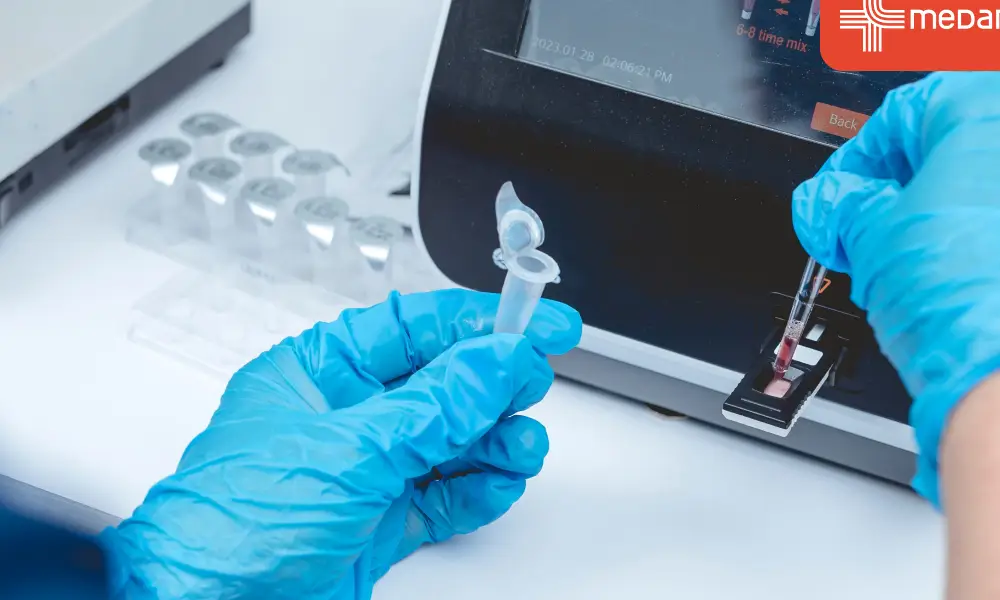
HbA1c requires a standard venous blood draw with no fasting needed. The sample is analysed by HPLC, the gold-standard method in most accredited Indian laboratories with results within 24 hours. Point-of-care devices allow finger-prick testing in clinics though their accuracy is slightly lower and they should not be used for initial diagnosis but only for monitoring.
What Your HbA1c Result Actually Means
Below 5.7% indicates consistent normal glucose with no diabetes and no significant prediabetes risk.
Between 5.7% and 6.4% is the prediabetes range where lifestyle intervention most effectively prevents progression to type 2 diabetes.
At 6.5% and above, average glucose is at a level consistent with a diabetes diagnosis.
HbA1c vs Fasting Blood Sugar – Which Is More Reliable?
Neither test is categorically superior. FBS captures point-in-time glucose and remains preferred in symptomatic patients. HbA1c is less affected by day-to-day variation or illness, more reproducible, and does not require fasting making it more practical for screening in primary care.
Discordance is common as normal FBS with elevated HbA1c (post-meal glucose peaks), or elevated FBS with normal HbA1c (transient stress hyperglycaemia). When results conflict, clinical judgement & repeat testing guide interpretation.
Factors That Can Affect HbA1c Accuracy
They are:
Anaemia and haemoglobin variants: Iron deficiency elevates HbA1c; haemolytic anaemia lowers it. Haemoglobin variants common in India (HbS, HbC, HbE) may sometimes change your test results
Pregnancy: Increased red cell turnover lowers HbA1c making it less reliable than gestational glucose tolerance testing
Recent blood transfusion: Donor red cells with different glycation histories temporarily alter the result
Chronic kidney disease: Erythropoietin deficiency shortens red cell lifespan, potentially lowering HbA1c independent of glucose levels
Ethnicity: South Asian populations may have slightly higher HbA1c values at equivalent blood glucose levels compared to Europeans, with implications for threshold interpretation.
Target HbA1c Levels for Diabetics
The standard target for most adults with type 2 diabetes is below 7.0% (53 mmol/mol), associated with significant reduction in microvascular complications like retinopathy, nephropathy and neuropathy. For older adults, those with long-standing diabetes, frequent hypoglycaemia or significant comorbidities, below 8.0% avoids over-treatment risk.
Below 6.5% may be appropriate for younger patients with short disease duration and low hypoglycaemia risk where tight control benefits outweigh risks. Individualisation of the HbA1c target is a core principle of RSSDI and ADA guidelines.
How to Lower Your HbA1c Naturally
Effective measures are:
Dietary change: Reducing refined carbohydrates (maida, excess white rice, sugary beverages), increasing fibre through dal, rajma, vegetables and millets including ragi and jowar
Physical activity: 150 minutes of moderate-intensity aerobic exercise weekly combined with twice-weekly resistance exercise has the strongest evidence for HbA1c reduction
Weight loss: 5 to 10% body weight reduction in overweight individuals with prediabetes or early type 2 diabetes produces clinically meaningful HbA1c reduction
Sleep and stress management: Chronic sleep deprivation and unmanaged stress raise blood glucose levels; addressing both alongside diet and exercise improves HbA1c outcomes.
HbA1c in Pregnant Women – Why It's Different
HbA1c is not the preferred test for gestational diabetes (GDM). Pregnancy increases red cell turnover, reducing HbA1c even when glucose is elevated making it unreliable during pregnancy. The OGTT at 24 to 28 weeks, per FOGSI and DIPSI criteria for Indian women is the standard approach.
In women with pre-existing diabetes, HbA1c is used to assess glycaemic control, with targets below 6.5% in the first trimester and below 7.0% thereafter.
How Often Should You Get the HbA1c Test?
Non-diabetic adults with no risk factors: Every three years from age 35, given the earlier age of diabetes onset in South Asian populations
Prediabetes: Annually, to identify progression while lifestyle intervention remains most effective
Well-controlled type 2 diabetes: Every six months
Poorly controlled or recently changed treatment: Every three months to assess treatment response.
Conclusion + Understanding Your Diabetes Risk
HbA1c is not simply a number for those already diagnosed but it identifies people in the prediabetes range who can still prevent or delay type 2 diabetes with lifestyle change. India has one of the world's largest diabetes burdens per ICMR data, with a significant proportion undiagnosed. An HbA1c test (no fasting, no preparation, one blood draw) is among the most accessible tools for identifying risk before it becomes disease.
FAQs
What is a normal HbA1c level for a healthy adult?
Below 5.7% (39 mmol/mol) is normal. Between 5.7% and 6.4% indicates prediabetes. At 6.5% or above, a diabetes diagnosis is supported on repeat confirmation.
What is the difference between HbA1c and regular blood sugar tests?
A fasting blood sugar measures glucose at a single point in time. HbA1c measures average glucose exposure over approximately three months. Neither replaces the other - they provide complementary information.
Can HbA1c be normal even if fasting sugar is high?
Yes a single elevated fasting blood sugar may reflect transient stress hyperglycaemia, illness or recent dietary change. HbA1c integrates three months and remains normal if the spike in your blood glucose was brief or isolated.
Does eating before the HbA1c test affect results?
No, HbA1c reflects glycation over three months and is not affected by a single meal. No fasting is required which makes it more convenient than tests requiring an overnight fast.
What HbA1c level is considered dangerous?
HbA1c above 9.0% is associated with elevated risk of acute diabetic complications including diabetic ketoacidosis and hyperosmolar hyperglycaemic state. Above 10% risk of rapid microvascular complication progression increases substantially. Urgent medication review is indicated.
How quickly can HbA1c levels drop with lifestyle changes?
With sustained dietary improvement and regular exercise you can lower HbA1c by 0.5 to 1.5 percentage points over three to six months. Medication changes produce visible effects within the same window.
Can anaemia or iron deficiency affect HbA1c readings?
Yes. iron deficiency anaemia artificially raises HbA1c - iron-deficient red cells live longer and accumulate more glycation. Haemolytic conditions lower HbA1c by shortening red cell lifespan. When haemoglobin disorders or anaemia are present, fasting glucose or continuous glucose monitoring may be more reliable.
What is the target HbA1c for a diabetic patient?
Targets are individualised:
Below 7.0% for most adults with type 2 diabetes.
Below 6.5% for younger patients with short duration and low hypoglycaemia risk.
Below 8.0% for older patients or those with long disease duration, frequent hypoglycaemia or significant comorbidities.
Is HbA1c testing necessary for non-diabetics?
Yes, for those with risk factors such as BMI above 23 kg/m² by Indian thresholds, family history of diabetes, hypertension, prior gestational diabetes or sedentary lifestyle. Annual testing for prediabetes and three-yearly testing for low-risk adults from age 35 allows early identification.
How often should someone with Type 2 diabetes get their HbA1c checked?
Every three months when treatment has recently changed or control is poor (HbA1c above 8%). Every six months when control is stable and meeting target. Frequency is determined by the treating physician based on individual response and treatment complexity.
Do I need to fast before an HbA1c test?
No fasting is required. HbA1c can be tested at any time of day. This is a practical advantage over fasting blood glucose, which requires eight hours of fasting.
References
1. American Diabetes Association. Standards of Medical Care in Diabetes - 2024. Diabetes Care. 2024;47(Suppl 1):S1–S321. https://doi.org/10.2337/dc24-Sint
2. Joshi SR, Das AK, Vijay VJ, et al; Research Society for the Study of Diabetes in India. RSSDI clinical practice recommendations for the management of type 2 diabetes mellitus 2022. Int J Diabetes Dev Ctries. 2022;42(Suppl 1):1–143. https://doi.org/10.1007/s13410-022-01074-x
3. International Expert Committee. International Expert Committee report on the role of the A1c assay in the diagnosis of diabetes. Diabetes Care. 2009;32(7):1327–34. https://doi.org/10.2337/dc09-9033
4. Sacks DB, Arnold M, Bakris GL, et al. Guidelines and recommendations for laboratory analysis in the diagnosis and management of diabetes mellitus. Diabetes Care. 2011;34(6):e61–99. https://doi.org/10.2337/dc11-9998
5. Mohan V, Seedat YK, Pradeepa R. The rising burden of diabetes and hypertension in Southeast Asian and African regions: need for effective strategies for prevention and follow up. Int J Hypertens. 2013;2013:409083. https://doi.org/10.1155/2013/409083