1068
1068
 Request Call Back
 Contact
 1068
1068
Belly Fat in Men After 35: Why It Happens and How to Actually Reverse It
Published on: Aug 17, 2026
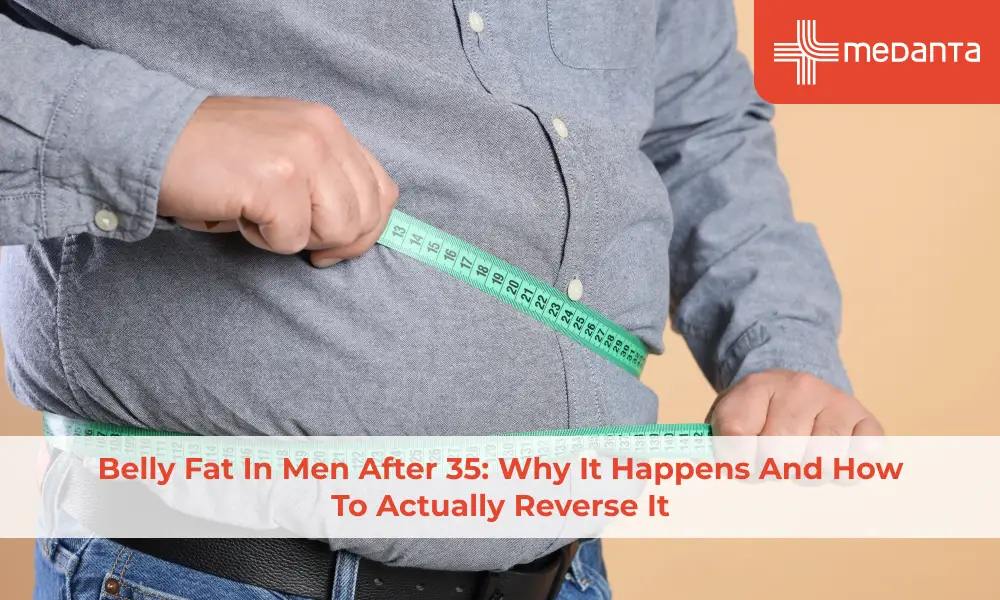
TABLE OF CONTENTS
- Why Does Belly Fat Increase After 35?
- Common Reasons for Belly Fat in Men
- Types of Belly Fat Men Should Know About
- Why Belly Fat Can Be Harmful to Your Health
- How to Reduce Belly Fat Effectively
- Best Foods to Help Reduce Belly Fat
- Exercises That Help Burn Belly Fat
- Lifestyle Changes That Support Long Term Weight Loss
- When Should You Seek Medical Advice?
- Conclusion
- FAQs
- References
Introduction
A man's body composition rarely announces a transition. It simply shifts over months and years. Trousers that fitted at 30 stop fitting at 38 without any dramatic change in diet or activity. This isn't laziness or poor discipline; it reflects genuine physiological change that begins in the mid-thirties and accelerates if not actively countered. Understanding what causes it makes reversing it considerably more simple.
Why Does Belly Fat Increase After 35?
Testosterone levels peak in the mid-twenties and decline at roughly 1 to 2% annually thereafter. Testosterone supports muscle mass (metabolically active tissue that burns calories at rest). As muscle mass gradually reduces without compensatory strength training, basal metabolic rate drops and the same caloric intake that maintained weight at 28 produces a slow surplus at 38.
Cortisol rises with the career, financial and family pressures common in the mid-thirties and specifically drives preferential fat deposition in the abdomen. Sleep debt, accumulating through this decade, compounds this by disrupting the hunger-regulating hormones leptin and ghrelin.
Common Reasons for Belly Fat in Men
Common causes are:
Declining testosterone and the resulting gradual muscle loss, reducing resting metabolic rate
Increasingly sedentary professional life with desk-based work through long hours with minimal movement
Dietary patterns that haven't adjusted to a slower metabolism with you taking the same quantities that were appropriate at younger, more active stage
Chronic stress and poor sleep, both of which elevate cortisol and drive abdominal fat storage
Alcohol consumption - common in professional socialising and a significant source of empty calories directly stored as abdominal fat
Types of Belly Fat Men Should Know About
Two distinct types of abdominal fat accumulate in the abdominal region, behave differently metabolically, and respond differently to intervention.
Subcutaneous Fat vs. Visceral Fat
Subcutaneous fat sits under the skin in the layer you can physically grasp. Stubborn but metabolically relatively inert, it poses moderate cardiovascular risk. Visceral fat deposits deep inside the abdominal cavity, surrounding the liver, pancreas and intestines. It releases inflammatory cytokines directly into the portal circulation and causes insulin resistance, elevated triglycerides and hypertension far more potently than subcutaneous fat.
Waist circumference is the practical proxy for visceral fat burden - above 90cm for Indian men signals meaningful visceral fat accumulation, a lower threshold than the Western 102cm because South Asian men accumulate visceral fat at lower BMI values than Western populations.

Why Belly Fat Can Be Harmful to Your Health
Visceral fat is effectively an endocrine organ secreting adipokines that disrupt insulin signalling, raise blood pressure and promote arterial plaque. Metabolic syndrome (hypertension, elevated blood sugar, dyslipidaemia, and abdominal obesity) is visceral fat's clearest clinical signature. Indian men are disproportionately susceptible given the tendency toward visceral deposition at lower overall body fat levels.
ICMR data consistently shows cardiovascular events in Indian men occurring a full decade earlier than in Western populations, and abdominal obesity is a primary contributor. This isn't a cosmetic concern with a health footnote - it's a health concern with cosmetic consequences.
How to Reduce Belly Fat Effectively
No intervention selectively removes abdominal fat. Spot reduction is a myth. What works is a consistent caloric deficit combined with exercise that preserves or builds muscle mass, allowing the body to draw from fat stores across the whole body with visceral fat typically reducing alongside the overall deficit.
The most effective approach combines dietary modification, resistance training, cardiovascular conditioning, sleep improvement and stress management because each addresses a different driver of abdominal fat accumulation.
Best Foods to Help Reduce Belly Fat
High-protein foods - dal, rajma, eggs, paneer & fish preserve muscle mass during a caloric deficit and reduce appetite through satiety
Fibre-rich foods - ragi, jowar, bajra, seasonal vegetables slow digestion, stabilise blood sugar, and reduce overall caloric intake naturally
Healthy fats - nuts, seeds and mustard oil in moderate quantities support hormonal function without excess calories
Foods to reduce or avoid: refined flour (maida) products, sweetened beverages including packaged fruit juices, vanaspati and trans fats, and excessive alcohol - all preferentially drive visceral fat accumulation and impair insulin sensitivity.
Exercises That Help Burn Belly Fat
Resistance training (squats, deadlifts, rows, pressing patterns) is the most metabolically effective exercise for men after 35 because it directly counteracts the muscle loss driving metabolic slowdown. Three sessions of 45 to 60 minutes weekly produce meaningful results within three to four months.
Brisk walking, cycling and swimming augment caloric expenditure without joint stress. Zone 2 training (sustained moderate-intensity effort where conversation remains possible) can reduce your visceral fat. Anulom-vilom pranayama and yoga nidra reduce cortisol.
Lifestyle Changes That Support Long Term Weight Loss
Seven to eight hours of consistently timed sleep maintains hormonal balance as cortisol, ghrelin, leptin and testosterone are all disrupted by poor sleep, each in ways that directly favour fat accumulation. Stress management through regular movement and deliberate recovery time matters alongside dietary and exercise intervention.
Alcohol is worth quantifying honestly. Two drinks an evening several nights a week adds several hundred daily calories deposited as visceral fat while suppressing testosterone and disrupting sleep. This single change, consistently maintained, produces visible abdominal change within weeks.
When Should You Seek Medical Advice?
Waist circumference above 90cm, belly fat unresponsive to three to four months of consistent intervention, or belly fat with fatigue, reduced libido or poor sleep needs hormonal assessment including testosterone, TSH, fasting blood sugar, and lipid profile. Low testosterone is treatable and directly supports fat loss in ways diet and exercise alone cannot.
Conclusion
Belly fat after 35 is not inevitable but it requires more deliberate intervention than sufficient at 25. Testosterone supports muscle; muscle supports metabolism; metabolism determines whether the same lifestyle produces accumulation or stability. Addressing that chain directly produces lasting change rather than temporary loss followed by return.
FAQs
Can belly fat increase the risk of heart disease?
Yes. Visceral fat releases inflammatory compounds that raise blood pressure, elevate LDL, lower HDL and promote arterial plaque - the mechanisms underlying most cardiovascular events.
Is it harder to lose belly fat after the age of 35?
Declining testosterone reduces muscle mass and resting metabolic rate. The same caloric intake that maintained weight a decade earlier now produces a surplus. Resistance training to preserve muscle becomes essential, not optional.
How long does it take to reduce belly fat naturally?
You can see a meaningful change in waist circumference within eight to twelve weeks of consistent deficit and exercise. Full reversal may take six to twelve months with visceral fat responding faster than subcutaneous deposits.
Can poor sleep contribute to belly fat?
Directly. Poor sleep elevates cortisol and ghrelin while suppressing leptin, increasing hunger and preferential abdominal fat storage while reducing testosterone. Sleep is a metabolic intervention, not a lifestyle luxury.
Does drinking alcohol lead to belly fat accumulation?
Yes alcohol calories are metabolised preferentially, pausing fat burning while present. It disrupts sleep and suppresses testosterone. Even moderate regular consumption adds significant caloric and hormonal impact over months.
Can hormonal imbalance cause stubborn belly fat in men?
Yes. Low testosterone, elevated cortisol, hypothyroidism, and insulin resistance all drive abdominal deposition and impair fat mobilisation. When belly fat fails to respond to diet and exercise, a hormonal workup is the appropriate next step.
Are weight loss supplements effective for reducing belly fat?
No supplement has robust evidence for visceral fat reduction. With some ingredients you can modestly augment caloric expenditure but the effect is small and temporary. Supplements don't substitute for dietary, exercise and lifestyle intervention.
How much water should I drink to support belly fat loss?
Adequate hydration including roughly 2.5 to 3 litres daily in India's climate can support metabolic function and help distinguish hunger from thirst reducing incidental caloric intake. Water itself doesn't burn fat but dehydration impairs physical performance and can be mistaken for hunger.
Can intermittent fasting help reduce belly fat?
It can, by reducing caloric intake through a smaller eating window. The 16:8 pattern suits many men who find calorie counting difficult. It doesn't work independently of total caloric intake.
What is the ideal waist size for men to maintain good health?
Below 90cm for Indian men, using Asian-specific criteria that reflect South Asian men's higher visceral fat accumulation at lower BMI values. Above 90cm signals metabolic risk; above 100cm carries substantially elevated cardiovascular and metabolic disease risk.
Which type of belly fat is most dangerous?
Visceral fat is the deep abdominal fat surrounding internal organs. It carries far greater health risk than subcutaneous fat. It is metabolically active, releases inflammatory compounds, drives insulin resistance and is more strongly linked to cardiovascular disease, type 2 diabetes and metabolic syndrome than subcutaneous fat at the same volume.
References
1. Harman SM, et al. Longitudinal effects of aging on serum total and free testosterone levels in healthy men. J Clin Endocrinol Metab. 2001;86(2):724–731. DOI: 10.1210/jcem.86.2.7219
https://doi.org/10.1210/jcem.86.2.7219
2. Epel ES, et al. Stress and body shape: stress-induced cortisol secretion is consistently greater among women with central fat. Psychosom Med. 2000;62(5):623–632. DOI: 10.1097/00006842-200009000-00005
https://doi.org/10.1097/00006842-200009000-00005
3. WHO Expert Consultation. Appropriate body-mass index for Asian populations and its implications for policy and intervention strategies. Lancet. 2004;363(9403):157–163. DOI: 10.1016/S0140-6736(03)15268-3
https://doi.org/10.1016/S0140-6736(03)15268-3
4. Després JP, Lemieux I. Abdominal obesity and metabolic syndrome. Nature. 2006;444(7121):881–887. DOI: 10.1038/nature05488
https://doi.org/10.1038/nature05488
5. Westcott WL. Resistance training is medicine: effects of strength training on health. Curr Sports Med Rep. 2012;11(4):209–216. DOI: 10.1249/JSR.0b013e31825dabb8
https://doi.org/10.1249/JSR.0b013e31825dabb8
6. Gupta R, Mohan I, Narula J. Trends in coronary heart disease epidemiology in India. Ann Glob Health. 2016;82(2):307–315. DOI: 10.1016/j.aogh.2016.04.002