1068
1068
 Request Call Back
 Contact
 1068
1068
How to Stop Blisters and Treat Them Properly at Home
Published on: Aug 17, 2026
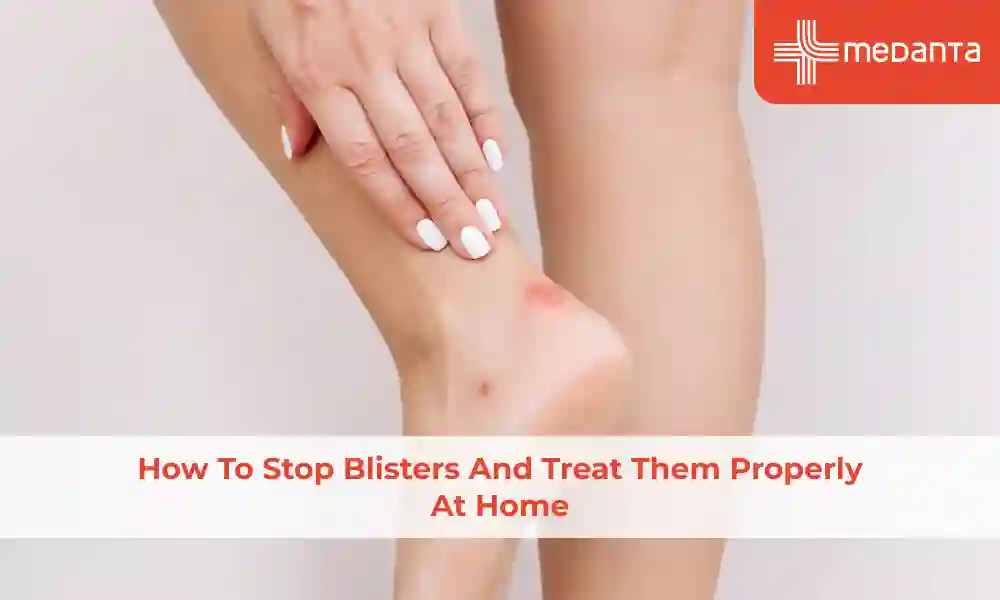
TABLE OF CONTENTS
- Causes of Foot Blisters and Shoe Bites
- How to Stop Shoes from Causing Blisters: Practical Tips
- Does the Type of Sock You Wear Really Prevent Blisters?
- How to Treat a Foot Blister at Home Without Popping It
- Should You Pop a Blister or Leave It Alone?
- How to Safely Drain a Blister If It Is Too Painful to Leave
- Best Home Remedies for Soothing Painful Foot Blisters
- How to Avoid Shoe Bite When Breaking in New Shoes
- Signs That a Blister Has Become Infected and Needs Medical Attention
- Conclusion
- FAQs
- References
A blister forms when repeated friction separates the dermis from the epidermis. The gap fills with clear serum protecting deeper layers. The blister roof is intact skin acting as a biological dressing, sealing the wound & preventing infection while skin heals. Blood blisters form when friction or impact ruptures small dermal blood vessels. On the feet, friction is the most common trigger. They can also result from burns, extreme temperatures, allergic reactions or certain skin conditions. Most foot blisters heal on their own with proper care. However large, painful or infected blisters require medical attention especially in people with diabetes or poor circulation.
Causes of Foot Blisters and Shoe Bites
Common causes are:
Ill-fitting footwear: Shoes too narrow, wide, or long generate localised friction with every step
New or stiff shoes: Unbroken uppers rub persistently against the heel, lateral fifth toe and dorsum of the foot
Heat and moisture: Sweaty feet during Indian summers increase friction; macerated skin tears more easily
Prolonged walking or running: Multiplies friction cycles, eventually exceeding skin tolerance even in well-fitting shoes
Thin or cotton socks: Non-wicking fabrics hold moisture against skin, worsening maceration and blister risk
Barefoot sandal use: Traditional kolhapuris, chappals, and flip-flops create friction at the toe post and strap edges, causing blisters between the toes and across the dorsal forefoot.
How to Stop Shoes from Causing Blisters: Practical Tips
Fit is the most important variable. Shoes should be fitted in the afternoon because feet swell half a size for many people. The little toe should not contact the upper with lateral pressure. A thumb's width of clearance between the longest toe and the shoe tip prevents blisters.
Preventive tape or friction-reducing inserts applied before blisters form are far more effective than treating them after. Moleskin changes friction dynamics before damage occurs. Petroleum jelly on known friction points is inexpensive and evidence-supported. A double-sock system - thin liner inside a thicker outer sock transfers friction from skin to the sock interface.
Does the Type of Sock You Wear Really Prevent Blisters?
Sock choice has a measurable effect on blister incidence. When skin is wet, the friction coefficient between skin and shoe increases markedly. Synthetic moisture-wicking fibres (polyester, Coolmax, nylon blends) pull moisture away from the skin and lower blister rates.
Seam placement matters too; seams across the toe box produce repeated micro-friction. Seamless or flat-seam construction reduces this risk. Padding in high-friction zones provides additional protection. Merino wool combines moisture management with antimicrobial properties.
How to Treat a Foot Blister at Home Without Popping It
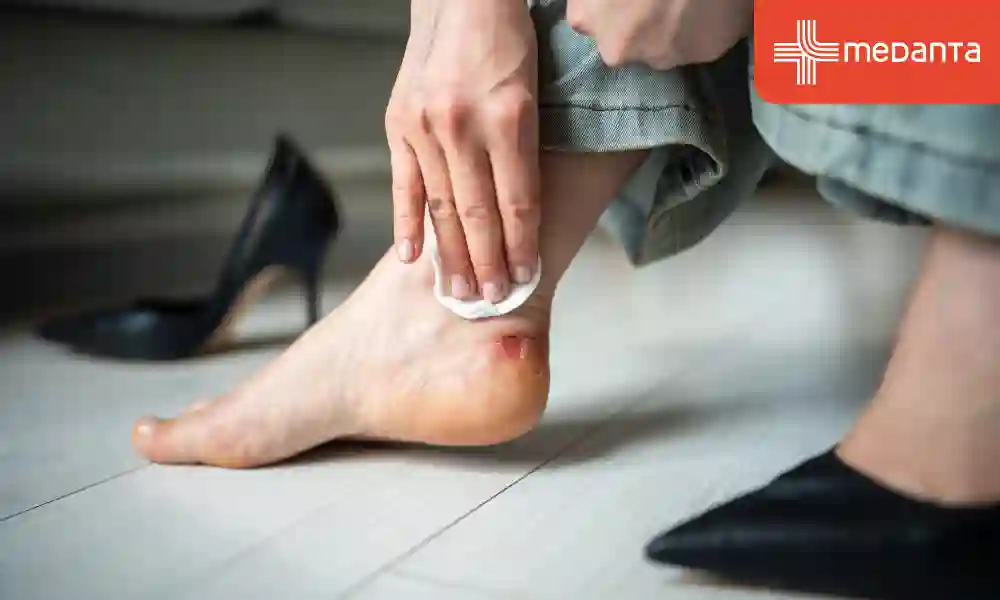
An intact blister is the best treatment for itself. Clean with mild soap and water then apply a hydrocolloid dressing. These protect from friction and maintain a moist healing environment. Avoid petroleum based ointments on the blister roof as they soften it and risk premature rupture. Elevate the foot.
Should You Pop a Blister or Leave It Alone?
Leave it alone if small and not restricting movement - the blister roof is sterile skin acting as a natural dressing. Drain only when pressure under the heel or ball makes walking painful. Use a sterilised needle at the blister edge and preserve the roof. Spreading redness, increasing pain or cloudy fluid requires medical assessment.
How to Safely Drain a Blister If It Is Too Painful to Leave
Wash hands and clean the blister with povidone-iodine (Betadine). Use a sterilised needle, cool it and pierce the blister edge with one or two punctures. Press gently to drain fluid without removing the roof. Cover with a hydrocolloid pad and change the dressing daily. If the roof tears, clean the area, apply antiseptic and cover with a sterile non-adherent dressing. Although it’s not recommended to drain at home as it can cause infection.
Best Home Remedies for Soothing Painful Foot Blisters
Effective remedies are:
Aloe vera gel around an intact blister provides a mild anti-inflammatory and cooling effect.
Calendula cream from Ayurvedic pharmacies has similar mild properties safe on intact blister skin.
Cold compresses reduce discomfort but do not apply ice directly to macerated skin.
Turmeric paste on intact skin around a blister has mild antiseptic properties.
For painful plantar blisters, a foam donut pad with a central hole relieves pressure more effectively than any topical remedy.
How to Avoid Shoe Bite When Breaking in New Shoes
Break in new shoes gradually and never wear a new pair for a full day on first use. Start with one to two hours of indoor wear and extend. Apply moleskin or a gel pad to the heel counter and forefoot before wearing and petroleum jelly to high-risk foot points. Thick socks buffer friction. Stuffing shoes overnight with damp newspaper also conforms the upper.
Signs That a Blister Has Become Infected and Needs Medical Attention
Normal healing takes five to seven days for a small blister, up to two weeks for a large one. The following signs indicate infection requiring clinical assessment:
Fluid changing from clear to cloudy, yellow, or green
Redness advancing beyond the blister margin indicating cellulitis
Pain that increases rather than improves after the first 24 hours
Red streaking up the foot or ankle indicating lymphangitis
Fever, chills, or feeling systemically unwell
People with diabetes require particular care as neuropathy can blunt pain awareness, and a blister may enlarge before causing discomfort. Any diabetic foot blister should be assessed by a doctor or podiatrist, as superficial infections can progress rapidly.
Conclusion
Most foot blisters are preventable with attention to footwear fit, moisture management and friction reduction. When they form, an intact blister is best left under a hydrocolloid dressing. Drain only when pressure makes walking impossible and preserve the blister roof. Cellulitis and lymphangitis require medical attention without delay. Diabetics should treat any foot blister as a medical concern.
FAQs
What causes blisters on feet from shoes?
Repeated friction separates skin layers and creates a serum-filled pocket. Ill-fitting shoes, moisture, prolonged walking and non-wicking socks all contribute. In Indian summers, heat and moisture lower the threshold.
Should you pop a blister or let it heal on its own?
Leave it if small and not impeding movement as the intact roof protects healing tissue below. Drain only if pressure makes walking genuinely painful, using a sterilised needle at the edge and preserving the roof.
How do you stop shoes from rubbing and causing blisters?
Apply petroleum jelly to high-risk points, moleskin pads at pressure zones and wear moisture-wicking socks. Shoes should be fitted in the afternoon when feet are largest. Break in new shoes gradually.
What is the fastest way to heal a blister on the foot?
Apply a hydrocolloid dressing and leave it until it lifts at the edges typically three to five days. These create the optimal moist healing environment. Avoid repeatedly removing the dressing, which disrupts healing.
What type of socks help prevent blisters?
Moisture-wicking synthetic socks like polyester, nylon, or Coolmax blends outperform cotton by keeping skin drier. Seamless construction reduces toe-box friction. Padded heels and ball-of-foot zones add further protection.
Can a blister on the foot become infected?
Yes if it ruptures and exposed skin is not kept clean. Signs include cloudy fluid, spreading redness beyond the blister margin, increasing pain and red streaking up the foot. Diabetics should seek medical review for any blister.
How do you treat a blister under the foot that is painful to walk on?
Drain at the blister edge with a sterilised needle and press gently to expel fluid without removing the roof. Cover with a hydrocolloid dressing. A foam donut pad aligned with the blister offloads pressure. Wear cushioned shoes.
What home remedies help soothe a painful foot blister?
A cold compress reduces discomfort. Aloe vera gel around the blister provides mild cooling. A foam donut pad relieves walking pressure more effectively than any topical. Elevating the foot reduces fluid accumulation. Turmeric paste applied to intact surrounding skin (not open skin) has mild antiseptic properties.
How long does a foot blister take to heal on its own?
A small blister heals in five to seven days as fluid is reabsorbed. Larger blisters or those on weight-bearing surfaces like the heel and ball of the foot may take up to two weeks to heal. Infection or repeated trauma extends healing time.
How do you break in new shoes without getting blisters?
Wear new shoes for one to two hours at home initially and extend gradually. Apply moleskin or gel pads to friction points like back of the heel. Use moisture wicking socks. Petroleum jelly on the feet reduces friction.
References
1. Knapik JJ, Reynolds KL, Duplantis KL, Jones BH. Friction blisters: pathophysiology, prevention and treatment. Sports Med. 1995;20(3):136–47. https://doi.org/10.2165/00007256-199520030-00002
2. Knapik JJ, Hamlet MP, Thompson KJ, Jones BH. Influence of boot-sock systems on frequency and severity of foot blisters. Mil Med. 1996;161(10):594–8. https://doi.org/10.1093/milmed/161.10.594
3. Benikhlef R, Khalfaoui S. Pathophysiology of friction blisters and preventive strategies. Dermatol Reports. 2021;13(1):8800. https://doi.org/10.4081/dr.2021.8800
4. Vlahovic TC, Dunn SP, Kemp AA. The use of a hydrocolloid dressing in the treatment of plantar blisters. J Am Podiatr Med Assoc. 2007;97(4):324–7. https://doi.org/10.7547/0970324
5. Bus SA, Lavery LA, Monteiro-Soares M, et al. IWGDF guideline on the prevention of foot ulcers in persons with diabetes. Diabetes Metab Res Rev. 2020;36(Suppl 1):e3269. https://doi.org/10.1002/dmrr.3269