1068
1068
 Request Call Back
 Contact
 1068
1068
Intestinal Worms: Symptoms, Causes and Effective Home Remedies
Published on: Mar 20, 2026
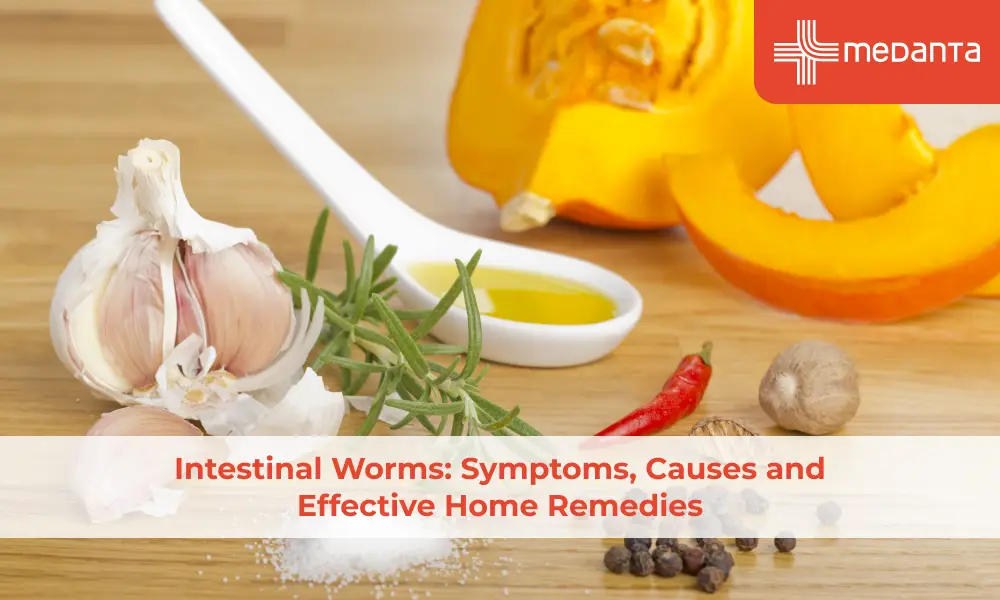
TABLE OF CONTENTS
- What Are Intestinal Worms?
- Common Types of Intestinal Worms
- Causes of Intestinal Worm Infestation
- Symptoms and Signs of Worm Infestation
- Complications if Worms Are Left Untreated
- Home Remedies to Treat Intestinal Worms Naturally
- Preventive Measures to Avoid Worm Infestation
- Role of Hygiene and Sanitation in Prevention
- Medical Treatments for Severe Cases
- When to See a Doctor for Intestinal Worms
- FAQs
Intestinal worms affect around one-fourth of people worldwide. Children are especially vulnerable, given that playgrounds and sandpits become unexpected sources of infection when hand washing is forgotten. Pinworm is the most common infection worldwide, though several other types pose health risks. Recognising the symptoms of intestinal worms early makes treatment straightforward, especially since most cases respond well to intervention.
This article explains the types of intestinal worms, their causes, clear symptoms to watch for, effective home remedies for intestinal worms and preventive measures.
What Are Intestinal Worms?
Parasitic worms, known as helminths, take up residence in the digestive system and feed off nutrients meant for their host. These multicellular organisms remain visible to the naked eye once they grow. Helminths lay thousands of eggs each day that exit through faeces, unlike single-celled protozoa that multiply inside humans. The eggs contaminate soil, water and surfaces. This creates a cycle of transmission.
Common Types of Intestinal Worms
Several worm species inhabit human intestines.
Roundworms (Ascaris): Large parasitic worms that live in the intestines and spread through contaminated food, water, or soil
Pinworms (Enterobius vermicularis): Tiny white worms often infect kids and make the area around the anus itchy during the night
Tapeworms (Taenia species): Flat ribbon-like worms with segments that enter the body when someone eats meat that isn't cooked
Hookworms: These parasites get into the body through the skin from dirty soil and attach to the intestine
Whipworms (Trichuris trichiura): Thin parasites live in the large intestine and spread by consuming polluted food or water.
Each species varies in size and transmission method. All cause digestive disturbances when left untreated.
Causes of Intestinal Worm Infestation
Worm infections stem from ingesting microscopic eggs present in contaminated environments. You can also get infected by:
Touching objects with worm eggs
Consuming unwashed vegetables
Drinking contaminated
Walk barefoot on contaminated soil
Eating undercooked beef, pork, or freshwater fish containing larvae
Poor sanitation facilities and inadequate handwashing compound these risks, especially in tropical and subtropical regions where sanitation remains limited.
Symptoms and Signs of Worm Infestation
Many infected individuals experience no symptoms at first. Symptoms are:
Nausea
Unexplained weight loss
Intense anal itching
Roundworm infections trigger dry cough and fever
Hookworms lead to wheezing and fatigue.
Children may show irritability, poor sleep, bedwetting and teeth grinding.
Some people notice worms in their stool. They appear as white threads or earthworm-like shapes.
Complications if Worms Are Left Untreated
Untreated infections cause chronic health issues. Worms consume vital nutrients, then cause malnutrition, iron-deficiency anaemia and vitamin B12 deficiency. Heavy infestations block the intestines and require surgical intervention. Children suffer impaired physical and mental growth. Severe cases damage organs when larvae migrate to the brain, liver or lungs. Weakened immune systems make individuals vulnerable to more infections.
Home Remedies to Treat Intestinal Worms Naturally
Several home remedies have been proven effective for intestinal worms. These are:
Garlic contains allicin that helps fight intestinal parasites.
One study showed that papaya seeds combined with honey cleared parasites in many cases.
Eating fresh coconut or using coconut oil can help lower intestinal parasites.
Pumpkin seeds contain certain compounds that may paralyse worms.
Preventive Measures to Avoid Worm Infestation
Simple daily habits cut infection risk by a lot:
Wash hands really well before eating and after toilet use
Cook beef and pork to 71°C, whole cuts to 62.8°C
Wash all fruits and vegetables before consumption
Wear shoes outdoors on soil
Deworm pets on a regular basis
Avoid raw or undercooked meat and fish
These practises create barriers against eggs that enter the body through contaminated surfaces or food.
Role of Hygiene and Sanitation in Prevention
Access to proper sanitation halves worm infection risks. Hand washing with soap also prevents transmission cycles. Around the world, millions of people practise open defecation and this increases exposure risk. Clean lavatory access also lowers infection risk by a lot.
Medical Treatments for Severe Cases
Doctors prescribe targeted antiparasitic medicines. These are:
Albendazole for hookworm
Mebendazole for threadworms and roundworms
Pyrantel pamoate treats pinworms.
Treatment lasts one to three days in most cases. Entire households require treatment for pinworms at the same time, as they are highly contagious.
When to See a Doctor for Intestinal Worms
Contact a doctor if you experience:
Blood or pus in stool
Vomiting
Elevated temperature
Extreme fatigue
Severe watery diarrhoea
Unexplained weight loss
Dizziness & confusion.
Symptoms that persist beyond two weeks.
FAQs
What are the common types of intestinal worms?
Several parasites can invade your digestive system. These are:
Roundworms like Ascaris lumbricoides
Hookworms (Ancylostoma duodenale and Necator americanus)
Whipworms (Trichuris trichiura)
Pinworms, known as Enterobius vermicularis
Tapeworms from undercooked meat and threadworms (Strongyloides).
How do people get intestinal worm infections?
Transmission happens through contaminated food, water or soil contact. You can swallow microscopic eggs when you touch contaminated surfaces and then your mouth. Hookworm larvae penetrate skin when you walk barefoot. Tapeworm larvae enter your body if you have raw or undercooked beef, pork and freshwater fish. Faecal-oral transmission occurs when infected individuals don't wash hands after toilet use.
What are the biggest symptoms of intestinal worms?
Common symptoms are:
Digestive issues like abdominal pain, bloating, diarrhoea, and nausea
Pinworms trigger intense anal itching at night
You might notice unexplained weight loss, fatigue, or bloody stools.
Children often show irritability and sleep disturbances.
Can children and adults get worms easily?
Children face a higher infection risk through playground exposure and inconsistent handwashing. School-aged youngsters, institutionalised people and household members of infected persons get worms most frequently. Adults travelling to high-risk regions or those with weakened immunity remain vulnerable.
Are there natural remedies to get rid of worms?
Garlic, pumpkin seeds, thyme, and probiotics may help, though evidence remains insufficient. Doctor-prescribed antiparasitic medicines remain the quickest elimination method.
Can intestinal worms cause serious health problems?
Yes especially when you have infections that remain untreated or occur in vulnerable groups. This may cause:
Intestinal obstruction
Inflammation of the bile ducts
Malnutrition
Anaemia develops from chronic blood loss, especially with hookworms
Tapeworm larvae can migrate to your brain, eyes or muscles and cause seizures and permanent damage.
How can hygiene prevent worm infestation?
You need to wash hands with liquid soap for at least 20 seconds. Alcohol-based sanitisers don't kill parasite eggs, so soap and water remain irreplaceable. Clean yourself before you handle food, after toilet visits and after contact with soil. Households that maintain clean bathrooms show lower infection rates. Short fingernails prevent egg accumulation under your nails.
When should I take medication for worms?
Preventive deworming every six months protects children in high-risk areas. Medication becomes necessary after symptoms appear like anal itching, appetite loss, or visible worms. Avoid deworming during fever above 38°C, acute illness or pregnancy's first trimester.
Can diet help in preventing worms?
Cook meat to proper temperatures to stop larval transmission. Wash fruits and vegetables to remove surface eggs. Fibre-rich foods support regular bowel movements and create less hospitable environments for parasites. Probiotics strengthen gut bacteria and enhance natural defences.
How long does it take to get rid of intestinal worms?
Treatment lasts 1-3 days. Symptoms begin to improve within several weeks after medication. Complete parasite elimination requires follow up testing since reinfection occurs without continued hygiene practises.