1068
1068
 Request Call Back
 Contact
 1068
1068
Pain in the Back of Your Head? Causes, Symptoms & When to Worry
Published on: May 07, 2026

TABLE OF CONTENTS
- Common Causes of Pain in the Back of the Head
- Back Head Pain Symptoms to Watch For
- Different Types of Headaches That Cause Pain in the Back of the Head
- What Causes Pain in the Back of the Head?
- How to Relieve a Headache in the Back of the Head
- Home Remedies for Back Headache Relief
- When to Worry About Pain in the Back of Your Head
- When to See a Doctor for Back Head Pain
- FAQs
Posterior head pain - anatomically arising from the occipital and suboccipital zones - draws from C1–C3 nerve root distributions, the greater and lesser occipital nerves, and cervico-cranial muscular attachments (In plain terms: Pain in the back of the head has several causes — muscle tension, nerve irritation, posture, or occasionally something more serious.). Intracranial vasculature contributes when vascular causes are in play. What distinguishes posterior from frontal or temporal headache is the frequency with which craniocervical junction pathology, rather than intracranial disease, underlies the symptom. This distinction redirects both investigation and management entirely. Red-flag features, not location, determine urgency.
Common Causes of Pain in the Back of the Head
Several factors can cause the pain in the back of the head. These are:
Tension Headache and Back Head Pain: Bilateral, non-pulsating pressure characterises episodic and chronic tension-type headache (TTH), with radiation commonly extending from the frontal region rearward to the occiput or concentrating across the posterior scalp. Pericranial myofascial tenderness - most pronounced in the suboccipital, trapezius, and sternocleidomastoid groups on manual palpation - is the clinical hallmark.
Occipital Neuralgia: A Possible Cause of Back Headache: Lancinating, paroxysmal pain along the greater or lesser occipital nerve distributions (shooting from the suboccipital notch toward the vertex or retro-orbital space) defines occipital neuralgia. Unilateral presentation is typical. Tinel's sign elicited at the occipital notch supports the clinical suspicion.
Cervicogenic Headache and Neck-related Pain: Structural disease at the upper cervical spine like spondylotic facet change at C2–C3, atlanto-axial instability, and myofascial dysfunction refers pain ipsilaterally to the occiput and posterior scalp, occasionally extending anteriorly. Cervicogenic Headache International Study Group criteria demand ipsilateral neck or shoulder pain, provocation through cervical movement or sustained posture, restricted range of motion, and pain resolution with diagnostic blockade of the responsible cervical structure. Where craniocervical instability is clinically suspected, MRI is non-negotiable.
Poor Posture and Muscle Strain: At 60 degrees of anterior head translation, the effective gravitational load transmitted to cervical extensor musculature reaches approximately 27 kg compared with 5 kg in neutral alignment. Chronic loading at this magnitude shortens the suboccipital muscles (rectus capitis posterior major and minor, obliquus capitis superior and inferior), generating periosteal traction at the occipital attachment and referred posterior cranial pain.
Back Head Pain Symptoms to Watch For
Specific patterns demand urgent rather than routine clinical assessment:
Thunderclap onset - maximal pain intensity within 60 seconds - is subarachnoid haemorrhage until CT angiography or lumbar puncture proves otherwise
Fever combined with neck rigidity, photophobia, and Kernig's sign points to bacterial meningitis or meningoencephalitis requiring immediate CSF examination
Morning-predominant headache worsening over weeks, aggravated by Valsalva
New posterior headache beyond age 50 with temporal artery tenderness
Diplopia, dysphagia, ataxia, or hemiparesis concurrent with occipital pain necessitates emergency MRI of the posterior fossa.
Different Types of Headaches That Cause Pain in the Back of the Head
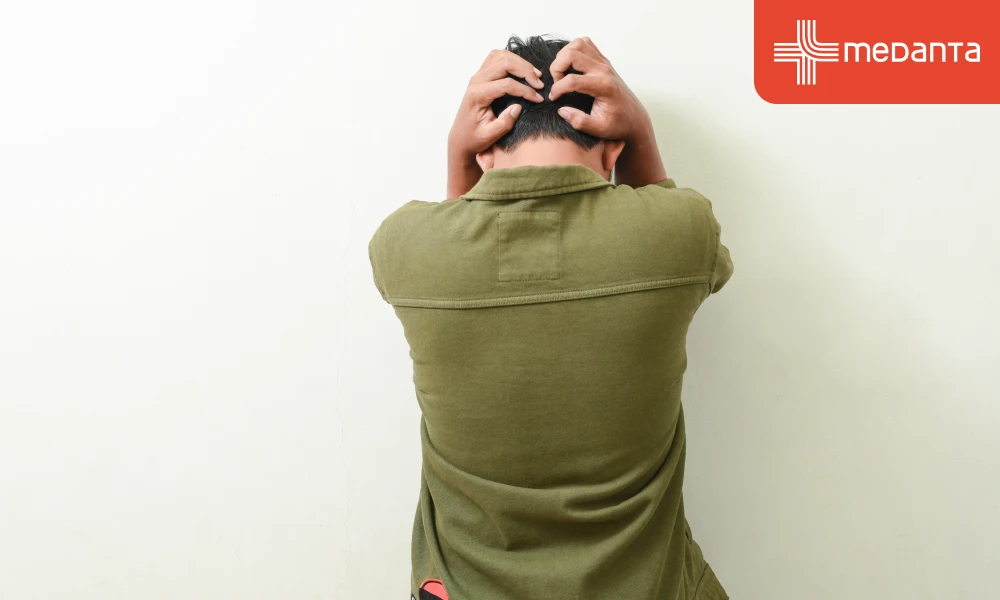
Posterior cranial pain is not nosologically uniform. Tension-type headache, occipital neuralgia, cervicogenic headache, and cervical spondylotic myelopathy occupy overlapping distributions but have sharply divergent treatment pathways. Basilar-type migraine (ICHD-3 1.2.2) involves the posterior circulation, producing brainstem aura - vertigo, diplopia, dysarthria - alongside occipital headache; this presentation is frequently misattributed to tension-type. Posterior fossa mass lesions, whether meningioma, haemangioblastoma, or metastatic deposits, generate a position-dependent and progressively worsening pattern that primary headache disorders do not.
Why Is My Back Head Pain?
Recurrent posterior pain traces most often to tension-type headache or cervicogenic headache - both mechanistically rooted in sustained muscular contraction or upper cervical joint dysfunction. Screen-heavy sedentary work, sleep disruption, psychological stress, and inadequate fluid intake collectively reduce the headache threshold. Diastolic blood pressure exceeding 110 mmHg is a recognised and underappreciated driver of occipital morning headache; blood pressure measurement belongs in the initial assessment of any acutely presenting posterior headache.
How to Relieve a Headache in the Back of the Head
Diagnosis precedes treatment selection.
Tension-type headache responds acutely to paracetamol 1 g four times daily or NSAIDs and chronic TTH requires amitriptyline prophylaxis.
Greater occipital nerve blocks deliver 4–12 weeks of relief in occipital neuralgia and a subset of cervicogenic presentations.
Cervicogenic headache is managed through Maitland mobilisation, McKenzie exercises, and deep cervical flexor retraining under physiotherapy supervision.
Occupational and postural triggers require concurrent modification; hydration of 2–2.5 litres daily and scheduled postural breaks at 30-minute intervals supplement pharmacotherapy across most primary subtypes.
Home Remedies for Back Headache Relief
Cold pack application to the suboccipital region attenuates acute periarticular inflammation
Heat applied to the cervical paraspinals addresses chronic myofascial tension.
Sustained cervical extensor and suboccipital stretching (30 seconds per position, three repetitions) produces measurable short-term relief when done consistently
Magnesium glycinate reduces tension headache frequency
Restricting screen exposure in the two hours before sleep reduces nocturnal sympathetic arousal and next-day headache burden.
None of these measures substitutes for clinical evaluation when symptoms recur.
When to Worry About Pain in the Back of Your Head
Red flags are:
Sudden-onset severe posterior headache described as the worst-ever headache (subarachnoid haemorrhage) is a neurological emergency.
Occipital pain with ipsilateral ptosis and diplopia
Progressive nocturnal headache that is unresponsive to analgesics,
After any trauma posterior pain raises the possibility of epidural haematoma, unstable cervical fracture, or vertebral artery dissection.
When to See a Doctor for Back Head Pain
Consult a doctor when you have:
New-pattern posterior head pain
Headache frequency exceeding three episodes weekly
Pain doesn't respond to 48 hours of over-the-counter analgesia
At Medanta, neurology and neurosurgery work together to deliver structured headache evaluation, advanced MRI including posterior fossa sequences, and interventional procedures for cases beyond the reach of pharmacotherapy alone.
FAQs
What Is Pain in the Back of the Head?
Discomfort arising from occipital, suboccipital, or upper cervical structures - spanning conditions from tension-type headache and occipital neuralgia to vascular emergencies and posterior fossa masses. Onset character, associated features and neurological status determine the investigation pathway.
What Is Occipital Neuralgia?
Greater or lesser occipital nerve irritation or entrapment produces shooting, electric-quality unilateral pain from the suboccipital notch to the vertex.
What Is Cervicogenic Headache?
Unilateral posterior cranial pain referred from C2–C3 facet joints or the atlanto-axial articulation, worsened by neck movement or prolonged posture. MRI of the craniocervical junction and fluoroscopy-guided medial branch blocks confirm the diagnosis.
Can Poor Posture Cause Back Head Pain?
Anterior head translation to 60 degrees multiplies the effective cervical extensor load to approximately 27 kg, shortening suboccipital muscles and generating occipital referred pain. Deep cervical flexor strengthening and ergonomic correction resolve the mechanical cause.
What Symptoms Indicate a Serious Back Head Pain Condition?
Thunderclap onset, fever with meningism, focal neurological deficits, papilloedema, progressive nocturnal worsening and temporal artery tenderness in patients over 50 are symptoms of serious back headache. Each of these demands urgent imaging and specialist evaluation.
What Types of Headaches Cause Pain in the Back of the Head?
Tension-type headache, occipital neuralgia, cervicogenic headache, basilar-type migraine, and posterior fossa pathology each cause posterior pain through distinct mechanisms. Clinical history and neurological examination direct the appropriate diagnostic test.
Why Does the Back of My Head Hurt?
Postural muscular loading and upper cervical joint dysfunction are the most common substrates. Uncontrolled hypertension, intracranial pathology, and infectious causes must be excluded whenever pain is new, progressive, or accompanied by systemic features.
How Can I Relieve a Headache in the Back of the Head?
NSAIDs or paracetamol for tension-type; occipital nerve blocks for neuralgia; cervical physiotherapy for cervicogenic presentations. Hydration and postural modification support management across all subtypes.
What Home Remedies Help with Back Headache?
Suboccipital cold packs for acute inflammation, cervical paraspinal heat for chronic myofascial pain, and consistent extensor stretching with 30-second holds. Magnesium glycinate 300–400 mg nocte has level B evidence for tension headache. These are not substitutes for evaluation in recurrent presentations.
When Should I Worry About Pain in the Back of My Head?
Thunderclap onset, neurological deficits, fever with neck stiffness, progressive nocturnal worsening, or post-traumatic posterior head pain each require same-day neurological assessment and emergency neuroimaging.
When Should I See a Doctor for Back Head Pain?
New-pattern posterior headache, frequency above three per week, or non-response to 48 hours of OTC analgesia warrant assessment. At Medanta, neurology and neurosurgery jointly deliver structured headache workup, advanced MRI, and fluoroscopy-guided interventional procedures for complex cases.