1068
1068
 Request Call Back
 Contact
 1068
1068
Heavy Periods in Women: Home Remedies That Work Naturally
Published on: Mar 16, 2026
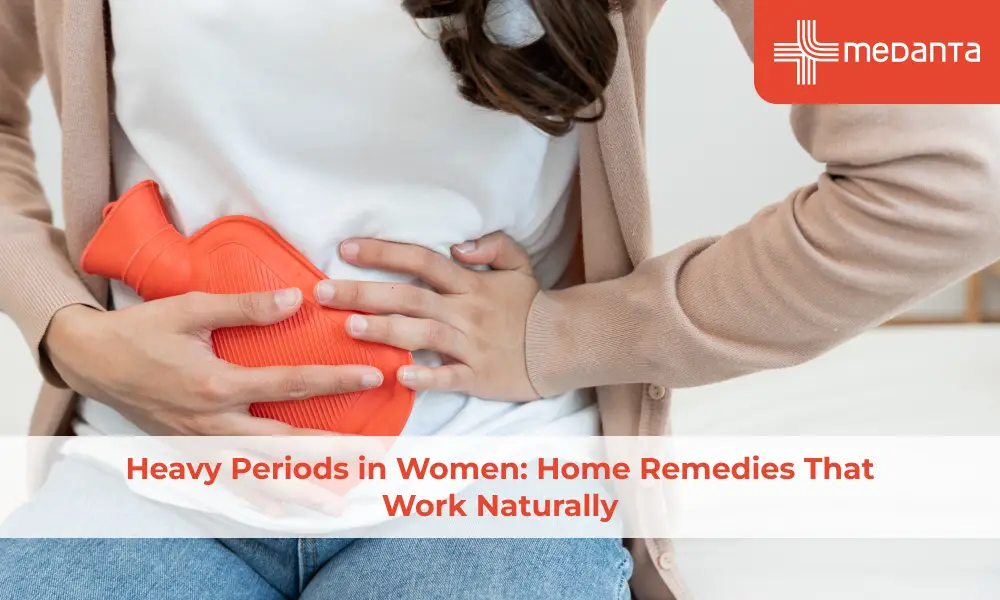
TABLE OF CONTENTS
- What is Menorrhagia?
- Common Causes of Heavy Menstrual Bleeding
- Symptoms That Indicate Excessive Bleeding
- How Diet Can Influence Menstrual Flow
- Herbal and Natural Supplements That Help
- Lifestyle Tips to Manage Heavy Bleeding
- When Heavy Periods Require Medical Intervention
- Relationship Between Stress and Heavy Periods
- Tips to Track Menstrual Health and Flow
- FAQs
Heavy periods called menorrhagia mean very heavy or long-lasting menstrual bleeding. Many women searching for home remedies to stop heavy bleeding during periods feel frustrated when excessive flow disrupts their daily routines. Finding natural solutions becomes necessary.
This guide explains practical strategies including how to control heavy bleeding in periods through dietary changes and how to reduce period flow naturally.
What is Menorrhagia?
Menorrhagia refers to menstrual bleeding that lasts more than seven days or exceeds 80 ml of blood per cycle. Women with this condition often soak through pads or tampons within one to two hours. The challenge lies in recognising the problem. Blood loss can be difficult to measure at home. Roughly half of menstruating individuals experience this condition, yet only about one-third seek treatment.
Common Causes of Heavy Menstrual Bleeding
Hormone imbalances with oestrogen and progesterone trigger excessive bleeding. Other causes are:
Anovulation prevents hormone regulation
Structural problems include fibroids, polyps, adenomyosis and endometrial hyperplasia.
Thyroid disorders, even with subclinical hypothyroidism cause menorrhagia
Bleeding disorders like von Willebrand disease also contribute.
Certain medicines like blood thinners
Medical conditions such as polycystic ovary syndrome play a role.
Symptoms That Indicate Excessive Bleeding
Blood clots larger than a small coin signal concern. Needing double protection or changing products overnight are warning signs. Other symptoms are:
Fatigue
Shortness of breath
Pale skin (anaemia from blood loss)
Severe cramping
Disruption to daily activities.
How Diet Can Influence Menstrual Flow
Women with menstrual disorders consume less protein, vitamin K, B3, B5 and sodium. They eat more high-sugar foods due to mood fluctuations. If you are taking excessive processed and sugar sweetened foods they can disrupt your hormone regulation and thicken the uterine lining. Inadequate nutrient intake worsens symptoms, particularly iron deficiency.
Herbal and Natural Supplements That Help
Natural approaches provide relief if pharmaceutical options overwhelm you or remain unavailable.
Ginger: This anti-inflammatory root reduces menstrual blood loss. Take 300mg two times daily for seven days during menstruation. Steep fresh ginger in hot water for a soothing tea.
Cinnamon: According to various studies cinnamon can decrease bleeding duration and severity of pain. Add 1/2 teaspoon to warm water and drink two to three times daily (during your cycle).
Turmeric: It has curcumin (this compound lowers inflammation and improves menstrual health). You can drink warm milk mixed with turmeric or boil half a spoon of turmeric in water to make herbal tea.
Probiotics: You can use fermented foods or supplements to maintain gut health and also help regulate hormones.
Omega-3 Fatty Acids foods: Omega-3s lower inflammation and can lessen menstrual pain and heavy bleeding in certain women. Add flaxseed, chia seeds, fatty fish (like salmon), or fish oil capsules.
Boswellia: When combined with pain-relief medication, this herb reduces bleeding duration and improves quality of life. Consult a doctor before you start supplementation.
Chasteberry: This traditional herb supports hormonal balance by acting on the pituitary gland. Effects appear after four to six months of consistent use.
Iron & B-complex vitamins: Heavy periods can lead to or make anaemia worse. B-complex vitamins and iron are essential to maintain energy and proper blood levels. Include iron-rich foods such as spinach, lentils, beans, red meat, and fortified cereals. Pair iron with vitamin C (like citrus fruits) to improve absorption.
Lifestyle Tips to Manage Heavy Bleeding
They are
Regular exercise: Moderate physical activity regulates hormones and improves circulation. Yoga poses help balance hormonal fluctuations.
Stress reduction: Long term stress can disrupt ovulation patterns. Therefore practise meditation or deep breathing to manage stress & stabilise your cycle.
Heat therapy: Apply a heating pad or warm water bottle to your lower abdomen. Warmth relaxes uterine muscles & eases cramping pain.
Adequate rest: Heavy bleeding causes fatigue. So take frequent breaks throughout the day and aim for 7-9 hours of sleep each night.
When Heavy Periods Require Medical Intervention
Knowing when home remedies fall short can protect your health.
Contact your doctor if:
Bleeding lasts longer than seven days
You soak through pads hourly for several hours in a row
Clots larger than a coin
You have fainting episode
Lose consciousness.
Relationship Between Stress and Heavy Periods
Stress alters your hormonal world in profound ways. Elevated cortisol levels can disrupt ovulation timing and also trigger heavier bleeding. Stress linked to major life events affects menstrual flow more than everyday pressures. High stress raises the frequency of heavy bleeding among women. Your body prioritises survival over reproduction during stressful periods. This causes menstrual cycle irregularities.
Tips to Track Menstrual Health and Flow
Recording cycle patterns helps identify problems early. Log some of the details monthly. They are:
Start and end dates of bleeding.
Flow intensity (light, moderate, heavy).
Pad or tampon changes per day
Clot size and frequency.
Associated symptoms like cramping or fatigue.
Menstrual tracking apps simplify this process. They offer graphs and reminders. Share records with your doctor to help accurate diagnosis.
FAQs
What counts as heavy bleeding during periods?
You have heavy bleeding if your period lasts beyond seven days or you soak through pads hourly for several hours in a row. Passing blood clots larger than a quarter or needing double protection overnight also indicates excessive flow.
Can home remedies reduce menstrual flow?
Yes certain remedies show promise. Ginger reduces menstrual blood loss when taken over time. Cinnamon decreases bleeding duration and intensity. But these work best when combined with good nutrition and stress management rather than as standalone solutions.
Which foods help manage heavy periods?
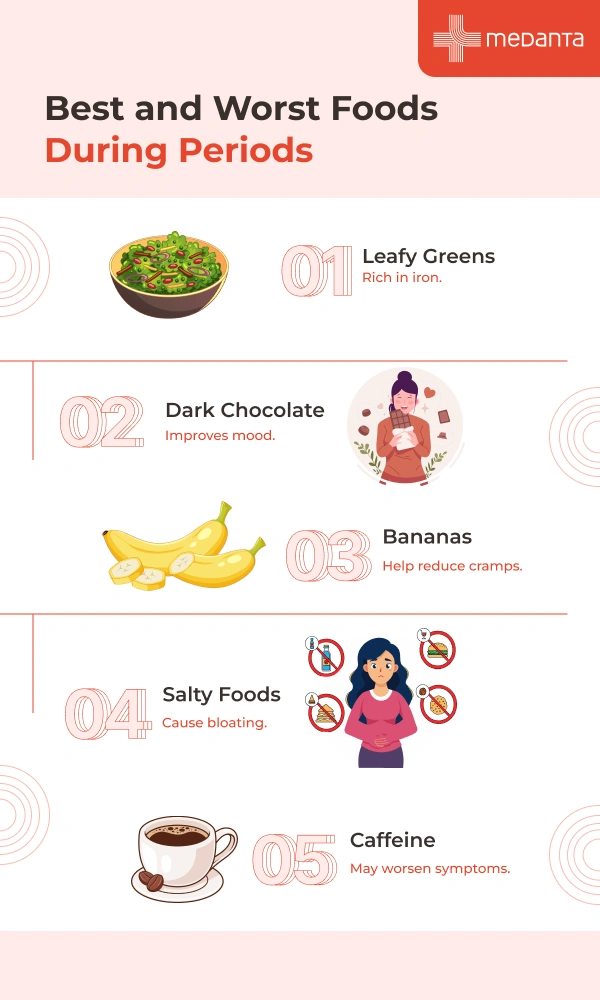
Go for iron rich options like spinach, lean beef and beans to get back your lost nutrients. With the help of vitamin C (you can get this from oranges & broccoli) your body can absorb iron better. Avoid excessive salt, sugar and caffeine (they can worsen bloating and cramping).
Are there exercises that can help with heavy periods?
Low-impact activities like yoga and swimming reduce cortisol levels. Exercise releases endorphins that ease discomfort while improving circulation. Avoid strenuous workouts during peak flow days.
Can stress cause heavier periods?
Stress linked to major life events triggers heavier flows. High stress increases bleeding frequency among women. Cortisol disrupts your hormonal balance and affects ovulation timing and flow intensity.
At what point should I see a doctor for heavy bleeding?
You should immediately go to your doctor if you have below mentioned symptoms in addition to bleeding. They are:
Bleeding continues beyond seven days.
You need pad changes every hour for two to three consecutive hours
You pass large clots repeatedly.
Weakness, dizziness and breathlessness.
Do herbal remedies like ginger or cinnamon work for heavy periods?
Research confirms cinnamon reduces bleeding duration, pain, nausea and vomiting associated with menstruation. Ginger acts as a natural anti-inflammatory and helps regulate blood flow. These remedies work best if you incorporate them throughout your cycle consistently rather than during emergencies.
Can anaemia occur due to heavy periods?
Heavy bleeding causes iron-deficiency anaemia in many women and makes it the leading cause. Your body cannot produce enough red blood cells to replace what's lost if you lose excessive blood monthly. Symptoms include chronic fatigue, weakness, poor concentration and shortness of breath.
How long does a typical heavy period last?
Normal menstrual bleeding lasts between two and seven days. Anything exceeding seven days signals abnormal patterns that require evaluation.
Can heavy periods affect fertility?
Heavy bleeding itself does not directly prevent pregnancy. But the mechanisms causing the bleeding (these can be fibroids, endometriosis or hormonal imbalances) can interfere with ovulation and implantation.