1068
1068
 Request Call Back
 Contact
 1068
1068
7 Ways to Get Rid of Blackheads
Published on: Jan 16, 2025

TABLE OF CONTENTS
Blackheads develop when dead skin cells and excess oil accumulate and clog a pore, leaving sebum at the pore's entrance. The pore expands and opens up as the dirty sebum pushes through and enlarges the aperture. The accumulation of oils and dead skin cells causes a chemical reaction that turns the area black once it is exposed to the air. The creation of blackheads on the face is widespread and has the ability to impact individuals of all ages, from teenagers to adults. However, there are certain steps you can take to create blackhead-free skin.
What Are Blackheads?
Blackheads are tiny, dark patches on the skin that often form on the face, especially around the nose and cheek area. The spot might seem brown or black, and its diameter is usually between one and three millimetres. Blackheads might be elevated slightly or remain flat and often create a roughness on the skin.
At first, you might think that blackheads are dirt, but if you attempt to remove the blackhead by scrubbing, the appearance of the patch can deteriorate. Blackheads are a non-inflammatory form of acne, unlike other forms like pustules or papules.
How Are Blackheads Formed?
When dead skin cells and oil clog the skin pores, blackheads appear, and if they are not removed quickly, the blackheads keep expanding in size. Blackheads are called open comedones because they disrupt the skin's surface. A closed comedo, often known as a whitehead, is a comedo with its surface intact. However, if whiteheads enlarge the pores, blackheads may appear in that place.
If either of your parents had acne, you may be more susceptible to blackhead-causing acne. If your skin is oilier, you may also be more prone to blackheads and other forms of acne. This situation often occurs when you go through hormonal changes brought on by puberty. Excessive perspiration, rubbing your skin frequently, and using greasy makeup products can all contribute to oilier skin and create blackheads.
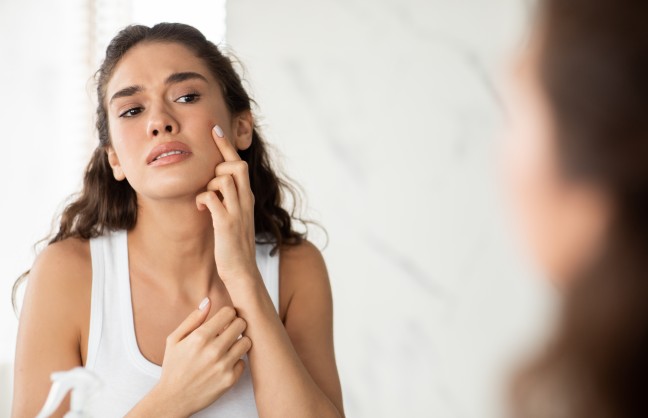
How to Remove Blackheads?
There are multiple types of treatment that can help you remove blackheads, but you should select the treatment depending on the size of the blackhead. Let us discuss the various types of treatment you can opt for.
1. Salicylic Acid
Salicylic acid is a common over-the-counter component that is present in a lot of skin cleansers. It eliminates excess oil and dead skin cells before they block your skin pores and create blackheads.
Pay close attention to the ingredient labels when you visit the drugstore because products with salicylic acid ranging in potency from 0.5% to 6% are available. Some people's skin may be adversely affected by the acid, so instead of using it daily, you might choose to use it every other day to observe how your skin responds.
2. Retinoid Creams
Lotions and creams containing retinoid, a vitamin derivative, help clear your pores and also support the skin's natural renewal process. While some retinoids are available without a prescription at pharmacies, the majority require one. Use these lotions and creams at nighttime, preferably before bed, because retinoids increase your skin's sensitivity to UV radiation.
3. Extraction Method
Blackhead extraction is a manual procedure used to eliminate blackheads and is done in a dermatologist's office. Extractions are safe treatments that don't leave any scars when done properly. Generally speaking, extractions are only advised in cases where over-the-counter remedies have failed.
A tiny puncture of the skin is made using a needle or surgical blade during the process, and mild to medium pressure is given to the blackhead using an extractor until all of the dirt and blocked dead skin cells are removed.
4. Chemical Peels
Chemical peels are another procedure opted for by a dermatologist, and the outer layer of the skin is removed during the process to promote collagen formation. [5] High quantities of salicylic acid and other beta-hydroxy acids are used in the therapy. Although side effects from chemical peels are usually well tolerated, they might include slight pain, redness, or skin lightening or darkening after treatment.
Chemical peels are regarded as a supplementary therapy. They are not frequently utilized as an initial course of treatment for blackheads and other forms of comedones because there are more gentle acne treatments that individuals may try first.
5. Skin Brush
Acne-causing particles can be removed with the use of a skin brush; in addition, it can lessen ageing symptoms. After using a skin brush, you should always moisturize your skin again. You can purchase an assortment of skin brushes, and if utilizing one is something you should consider, your dermatologist can advise you on the type of brush. They can also advise you on the proper type and manner of use. However, these can exacerbate acne if you don't utilize them properly.
6. Medications
In the event that over-the-counter therapy fails to remove the blackheads to give you clear skin, your physician can recommend using stronger prescription drugs. Vitamin A-containing medications encourage a faster turnover of skin cells and prevent plugs from developing in hair follicles.
These drugs, which include tretinoin, tazarotene, and adapalene, are administered topically to the skin, and your doctor could also recommend a different kind of topical antibiotic and benzoyl peroxide prescription. This kind of treatment could be especially beneficial if you also have acne cysts or pimples in addition to blackheads.
7. Laser Therapy
Tiny, powerful light beams are used in laser therapy to kill germs and reduce the formation of sebum in the pores that create blackheads. In order to cure blackheads and acne without harming the skin, lasers penetrate the skin's surface without harming the outer layer.
How to Prevent Blackheads?
Adopting a consistent skincare routine and healthy habits can help keep your pores clean and reduce the chances of blackhead formation.
Regularly Wash Your Face
Blackheads are not caused by dirt on the skin, but before using a moisturizer, it's crucial to wash the face with a gentle cleanser. Select non-oily products to prevent further clogging of the pores that may lead to the formation of blackheads. Cleaning the skin more than twice a day should be avoided as it might irritate and create redness.
Eating Healthy
Although there is confusion over the association between nutrition and skin issues, such as the formation of blackheads, many medical practitioners think there is a significant connection between these two. Acne may be exacerbated by dairy products, zinc deficiencies, and high glycemic loads, which may lead to blackhead formation.
Exfoliate the Skin
To help get rid of the dead skin cells that cause blackheads, use an exfoliating scrub on your skin once a week. The skin's general look may also be enhanced with a scrub that will give you clear skin. If using a scrub leaves the skin feeling dry or painful, stop using it, and to avoid dry skin, always rinse off scrubs completely and moisturize your skin afterward.
Wrapping Up
A blackhead is a little dark patch that appears on the skin due to blocked pores containing dead skin cells and excess oil. A blackhead's dark appearance is caused by a chemical reaction when the oil accumulation pushes through pore openings and is exposed to air. Blackheads can be treated in a variety of ways, such as using topical acne treatments like retinoids and medicated acne face wash products.
Consult with an expert dermatologist to explore further treatment options, like an extraction procedure, if you are experiencing difficulties getting rid of blackheads at home.
FAQs
What exactly is removing blackheads from the nose?
Removing blackheads from the nose refers to clearing clogged pores caused by oil, dead skin cells, and dirt. These clogged pores appear as small dark spots on the skin and are a common form of mild acne.How do I know if I have blackheads on my nose?
You may have blackheads if you notice tiny black or dark-colored spots on your nose that are not painful or swollen. The skin may feel slightly rough, especially around the nose area.What are the early warning signs of blackheads?
Early signs include oily skin, enlarged pores, and small bumps that gradually turn dark as the pore gets clogged and exposed to air.What usually causes blackheads on the nose?
Blackheads are caused by excess oil production, buildup of dead skin cells, clogged pores, hormonal changes, use of heavy skincare or makeup products, and poor skin cleansing habits.Are blackheads serious or life-threatening?
No, blackheads are not serious or life-threatening. They are a common skin concern. However, if left untreated, they can sometimes lead to acne or skin irritation.What tests are done to diagnose blackheads?
No specific tests are needed. Blackheads are usually diagnosed through a simple skin examination by a doctor or dermatologist.What are the best treatment options for removing blackheads?
Effective treatments include:Gentle cleansing twice daily
Exfoliation with salicylic acid or mild scrubs
Using pore strips occasionally
Topical creams like retinoids
Professional treatments such as chemical peels or extraction by a dermatologist
Can blackheads be cured completely?
Blackheads can be effectively controlled and reduced, but they may come back if proper skincare is not maintained. Regular cleansing and skincare routines are important for prevention.What complications can happen if blackheads are untreated?
If not managed, blackheads can worsen into acne, cause enlarged pores, or lead to skin inflammation and scarring in some cases.When should I consult a doctor for blackheads?
You should see a doctor if blackheads are persistent, worsening, spreading, or turning into painful acne. A dermatologist can suggest stronger treatments and proper skincare guidance.
Citations
10 skin care habits that can worsen acne. (n.d.). https://www.aad.org/public/diseases/acne/skin-care/habits-stop
Arif, T. (2015). Salicylic acid as a peeling agent: a comprehensive review. Clinical Cosmetic and Investigational Dermatology, 455. https://doi.org/10.2147/ccid.s84765
Mathew-Steiner, S. S., Roy, S., & Sen, C. K. (2021). Collagen in wound healing. Bioengineering, 8(5), 63. https://doi.org/10.3390/bioengineering8050063
Mukherjee, S., Date, A., Patravale, V., Korting, H. C., Roeder, A., & Weindl, G. (2006). Retinoids in the treatment of skin aging: an overview of clinical efficacy and safety. Clinical Interventions in Aging, 1(4), 327–348. https://doi.org/10.2147/ciia.2006.1.4.327
Pappas, A. (2009). The relationship of diet and acne. Dermato-Endocrinology, 1(5), 262–267. https://doi.org/10.4161/derm.1.5.10192
Sutaria, A. H., Masood, S., Saleh, H. M., & Schlessinger, J. (2023a, August 17). Acne vulgaris. StatPearls - NCBI Bookshelf. https://www.ncbi.nlm.nih.gov/books/NBK459173/
Sutaria, A. H., Masood, S., Saleh, H. M., & Schlessinger, J. (2023b, August 17). Acne vulgaris. StatPearls - NCBI Bookshelf. https://www.ncbi.nlm.nih.gov/books/NBK459173/
VanBuren, C. A., & Everts, H. B. (2022). Vitamin A in Skin and hair: An update. Nutrients, 14(14), 2952. https://doi.org/10.3390/nu14142952