1068
1068
 Request Call Back
 Contact
 1068
1068
7 Months Pregnancy: Common Symptoms and Fetal Development
Published on: Jul 16, 2026

TABLE OF CONTENTS
- Weeks and Trimester Details of 7 Months Pregnancy
- Common Symptoms and Body Changes During the 7th Month
- Baby Development, Growth, and Position in the 7th Month
- Ultrasound and Medical Checkups During the 7th Month
- Diet and Nutrition Tips for the 7th Month of Pregnancy
- Care, Precautions and Lifestyle Tips During the 7th Month
- When to Consult a Doctor During the 7th Month
- FAQs
The seventh month marks the beginning of the third trimester. By this point the uterus has risen well above the navel that pushes the abdominal organs upward to make room. This shift puts increasing pressure on the diaphragm, bladder and lower spine. Movements that felt entirely manageable just a few weeks ago now require noticeably more effort.
Fetal development shifts from organ formation to maturation and weight gain. Lungs, brain and immune system undergo rapid refinement. Let's understand what the seventh month of pregnancy features.
Weeks and Trimester Details of 7 Months Pregnancy
The seventh month spans weeks 28 to 31 that is the opening month of the third trimester:
Week 28: Baby weighs approximately 1 kg; eyelids open for the first time; REM sleep begins
Week 29: Muscles and lungs continue maturing; hiccups felt as rhythmic jolts
Week 30: Bone marrow takes over red blood cell production; brain surface begins folding
Week 31: Approximately 41 cm crown-to-heel; sucking reflex established; weight approaches 1.5 kg
Roughly 200-250 grams are added per week from this point. Fundal height should correspond approximately to gestational week in centimetres.
Common Symptoms and Body Changes During the 7th Month
During the 7th month Braxton Hicks contractions (irregular, painless uterine tightenings) become noticeable from week 28. They are distinct from true contractions: no increase in frequency, duration or intensity. Shortness of breath arises as the uterus pushes the diaphragm upward by up to 4 cm. Other symptoms are:
Frequent urination occurs as the growing uterus compresses the bladder
Heartburn
Pelvic girdle pain as the relaxin hormone loosens the pelvic ligaments for delivery
Leg cramps more common at night
Ankle and foot swelling from reduced venous return
Physical discomfort, urination, and fetal movement disrupt sleep
Early milk (colostrum) production is normal when present
Stretch marks over the abdomen, breasts and thighs.
Baby Development, Growth, and Position in the 7th Month
At 28 weeks the brain undergoes gyrification - the smooth surface folds into the ridges of a mature brain, underpinning rapid increases in neural connectivity. The cerebellum, governing coordination, grows particularly fast this month.
The lungs produce surfactant (preventing alveolar collapse between breaths) from around week 28, though production is not complete until weeks 34-36. This is why premature babies born this month often need respiratory support. The kidneys produce urine continuously, maintaining amniotic fluid volume.
Most babies are still shifting position between weeks 28-31; breech presentation is common and not yet a concern so position is monitored from 32 weeks.
Ultrasound and Medical Checkups During the 7th Month
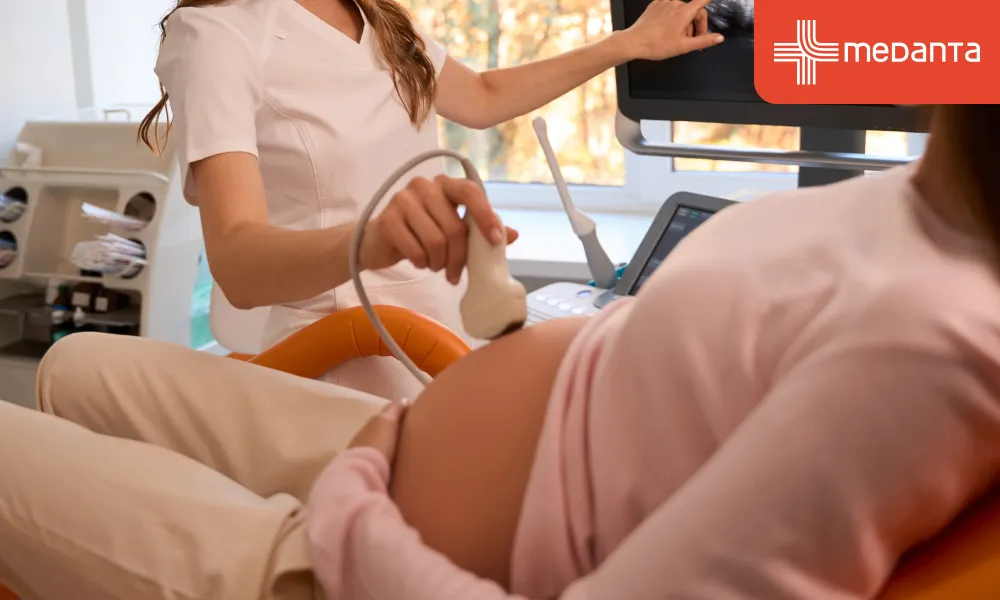
A growth scan between weeks 28 and 32 measures biparietal diameter, femur length, abdominal circumference, and estimated fetal weight against standard growth curves. Amniotic fluid index and placental position are also assessed; placenta praevia is confirmed or excluded at this stage.
Doppler flow studies may be added if growth restriction is suspected. The 28-week appointment includes a glucose challenge test if gestational diabetes screening was deferred, and a haemoglobin check as anaemia affects many pregnant women in India.
During the 7th month a pregnant woman receives:
Tdap vaccine: Recommended between 27 and 36 weeks
Anti-D immunoglobulin: Given at 28 weeks to Rh-negative women
Blood pressure monitoring: Readings above 140/90 mmHg need urgent review for pre-eclampsia.
Diet and Nutrition Tips for the 7th Month of Pregnancy
Third-trimester caloric requirement increases by approximately 450 kcal per day. Iron demand peaks this month as the baby accumulates stores for the first six months of postnatal life.
Iron: Include dal, rajma, methi leaves, and fortified cereals; pair with vitamin C-rich foods (amla, guava); avoid tea within an hour of iron-rich meals
Calcium: Ragi (finger millet), sesame seeds, low-fat dairy and soya
Omega-3 fatty acids: Flaxseed (alsi), walnuts, and mustard oil support fetal brain development; rohu and catla are acceptable fish sources
Protein: 75-100 g daily from dal, paneer, eggs, chicken and legumes
Fibre: Jowar, bajra, and whole wheat rotis prevent constipation worsened by iron supplementation
Avoid vanaspati, high-sodium processed foods, and raw meat. Drink at least 2.5 litres daily as concentrated urine increases UTI risk.
Care, Precautions and Lifestyle Tips During the 7th Month
Left lateral sleeping improves blood flow through the inferior vena cava to the placenta. A pillow between the knees and another under the abdomen reduces pelvic pressure overnight.
Walk 20-30 minutes daily unless contraindicated as walking reduces oedema and maintains cardiovascular fitness
Avoid prolonged standing or sitting; shift position every 30-45 minutes
Wear supportive footwear
Kegel exercises: 3 sets of 10 contractions daily to maintain pelvic floor strength
Attend antenatal classes; breathing and relaxation techniques reduce labour anxiety
Air travel generally permissible before 32 weeks with a doctor's clearance; wear compression stockings
Sexual activity is safe in uncomplicated pregnancies unless the obstetrician advises otherwise.
When to Consult a Doctor During the 7th Month
Consult your obstetrician or the nearest emergency facility if any of the following occur:
Vaginal bleeding of any amount
Fluid leaking from the vagina
Severe or sudden headache with visual disturbance or upper abdominal pain
Fetal movements significantly reduced from the previous day's pattern
Fever above 38°C
Sudden, severe swelling affecting the face and hands.
FAQs
How active is the baby during the 7th month of pregnancy?
Movements like kicks, rolls, stretches, and hiccups are all perceptible. Most women feel 10 or more movements within 2 hours. A sustained reduction in movement compared with the previous day should be reported promptly.
Is abdominal tightening normal during the 7th month of pregnancy?
Braxton Hicks contractions (irregular tightenings lasting 30-60 seconds) are normal and increase through the third trimester. They ease with rest, hydration or a position change. Regular, painful or intensifying tightenings need clinical assessment to exclude preterm labour.
Can sleeping positions affect comfort in the 7th month?
Left lateral sleeping from 28 weeks optimises blood flow through the inferior vena cava to the placenta. Lying flat compresses this vessel, reducing placental circulation. A body pillow behind the back helps maintain the position through the night.
What changes may occur in appetite during the 7th month of pregnancy?
Uterine compression of the stomach reduces capacity. Six small, nutritionally dense meals daily are better tolerated than three large ones. Include iron-rich foods given high third-trimester iron demands.
How often should fetal movements be monitored at 7 months pregnant?
Daily kick counting from 28 weeks is recommended: count after a meal until 10 movements are felt, which should occur within 2 hours. If 10 movements are not felt in 2 hours, or movement seems markedly reduced, contact the obstetrician rather than waiting for the next appointment.
Can travel be considered safe during the 7th month of pregnancy?
Short road and rail journeys are generally safe in uncomplicated pregnancies. Air travel is permitted by most airlines before 32 weeks with a medical certificate. Take regular movement breaks, wear compression stockings and carry antenatal records during long journey.
What are common emotional changes during the 7th month of pregnancy?
Anxiety about labour and parenting intensifies as the due date becomes real. Sleep deprivation also increases emotional lability. If you experience persistent low mood over two weeks consult your doctor.
How important is hydration during the 7th month of pregnancy?
At least 2.5 litres of fluid daily supports amniotic fluid volume, reduces constipation from iron supplements, lowers UTI risk and helps manage Braxton Hicks as dehydration is a common trigger. Coconut water, nimbu pani, and buttermilk are good alternatives to plain water.
Can mild swelling be normal in the 7th month of pregnancy?
Dependent oedema of the feet and ankles, worsening through the day and improving with overnight elevation, is normal in the third trimester. Swelling involving the face or hands with headache and visual changes may indicate pre-eclampsia and needs same-day evaluation.
What signs may indicate preterm labor during the 7th month?
Warning signs:
Regular contractions more than 4 times per hour
Persistent low back pain unlike usual pregnancy discomfort
Pelvic pressure pushing downward
Watery or bloody vaginal discharge
Fluid leaking from the vagina.