1068
1068
 Request Call Back
 Contact
 1068
1068
Understanding Inflammation and Its Effects on Health
Published on: Jan 09, 2026

TABLE OF CONTENTS
- Benefits of an Anti-inflammatory Diet
- Key Foods to Include in Your Diet
- Foods to Avoid for Reducing Inflammation
- Anti-inflammatory Meal Plan (Daily)
- 21-Day Anti-inflammatory Meal Plan Overview
- Tips for Meal Prep and Consistency
- Monitoring Progress and Adjusting Your Diet
- Conclusion: Achieving Long-term Health Through Anti-inflammatory Eating
- FAQs
Inflammation is how your body tries to protect you. If you get hurt or catch a cold, it jumps in to help you heal. But sometimes, inflammation persists and doesn’t stop when it should. When that happens, inflammation can slowly wear you down. You might not notice it at first, but over time, it can lead to conditions like sore joints, heart problems, blood sugar troubles, stomach issues, or feeling tired all the time.
Here’s the good part: what you put on your plate every day can really help keep inflammation in check. Eating the right foods isn’t just about easing aches or pains. It can lift your energy, help your stomach feel better, and give your body a chance to heal. In this guide, we will show you how to make simple food choices, what to skip, and how to stick with a 21-day plan that actually feels doable.
Benefits of an Anti-inflammatory Diet
An anti-inflammatory diet is all about real, wholesome foods that help your body feel calmer instead of stirring things up. If you stick with it, you’ll probably notice you feel better both in your body and your mind.
Key benefits include:
Less achy joints and fewer stiff muscles
Easier digestion and a happier gut
A stronger heart and steadier cholesterol
More steady blood sugar throughout the day
More energy and less tiredness
Brighter skin and a stronger immune system
Sharper focus and a clearer mind
Key Foods to Include in Your Diet
Foods that calm inflammation include everything your body loves, like vitamins, healthy oils, and fibre. They help you stay balanced and keep those little things (that cause swelling) from causing damage.
Foods to prioritise:
Fruits: Berries, oranges, apples, cherries, pomegranates
Vegetables: Leafy greens, broccoli, cauliflower, bell peppers, carrots
Healthy fats: Olive oil, avocado, nuts, seeds
Whole grains: Brown rice, quinoa, oats, millet
Lean proteins: Fish (especially fatty fish), legumes, beans, lentils
Herbs and spices: Turmeric, ginger, garlic, cinnamon
Fermented foods: Yoghurt, kefir, sauerkraut for gut health
If you fill your plate with these, you’re already doing your body a big favour.
Foods to Avoid for Reducing Inflammation
Some foods can make inflammation worse, especially if they sneak into your meals often.
Limit or avoid:
Refined sugars and sugary drinks
Processed and packaged foods
White bread, pastries, and refined flour products
Deep-fried foods
Trans fats and hydrogenated oils
Excessive red and processed meats
Alcohol in large quantities
Cutting back on these can really help calm inflammation as time goes on.
Anti-inflammatory Meal Plan (Daily)
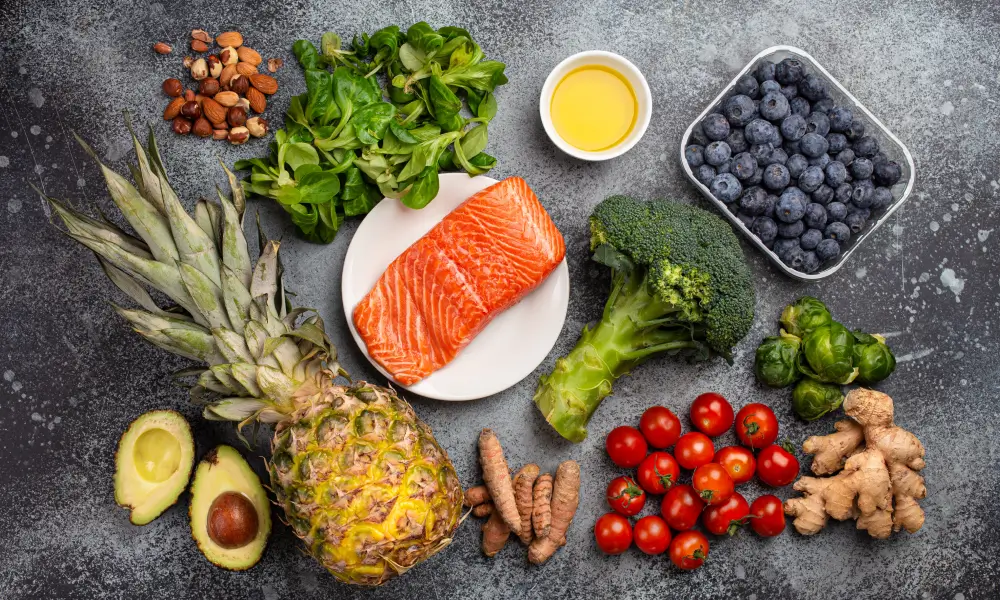
Ever wonder what a day of eating like this actually looks like? Here’s one way it could go:
Breakfast:
Oatmeal cooked with almond milk, topped with berries, chia seeds, and a drizzle of honey
Sooji or millet upma with vegetables and mustard seeds
Moong dal chilla with coconut or coriander chutney
Vegetable poha
Idli or dosa with sambhar
Mid-morning snack:
A handful of walnuts and green tea
One seasonal fruit (papaya, apple, guava, or berries)
Lunch:
Grilled salmon or lentil curry with quinoa and steamed vegetables
Brown rice with vegetable curry or small bowl of curd
Dal with turmeric and garlic tadka
A glass of buttermilk
Salad with cucumber, beetroot, and lemon
Afternoon snack:
Greek yoghurt with turmeric and flaxseeds
Roasted chana or makhana
Green tea or cinnamon-ginger tea
Dinner:
Vegetable stir-fry with olive oil, garlic, and brown rice
Multigrain rotis with lightly cooked vegetables
Vegetable khichdi with ghee
Vegetable dal or clear soup
Optional:
Herbal tea before bed Eating like this keeps your energy steady, so you don’t get those ups and downs that leave you feeling wiped out.
21-Day Anti-inflammatory Meal Plan Overview
A 21-day plan gives your body time to reset and settle into new habits. Instead of listing every meal, here’s an easy way to look at it, one week at a time:
Week 1: Reset and Reduce
Eliminate processed foods and added sugars
Focus on hydration and simple meals
Introduce more vegetables and whole grains
Week 2: Build and Balance
Add variety with different fruits, vegetables, and proteins
Include fatty fish or plant-based omega-3 sources
Experiment with herbs and spices
Week 3: Strengthen and Sustain
Improve portion control
Focus on mindful eating
Identify foods that make you feel your best
After three weeks, you might notice less bloating, a calmer stomach, better sleep, and a bit more pep in your step.
Tips for Meal Prep and Consistency
Sticking with new habits is where things start to shift. There are few tricks that make it a little easier for you and your loved ones:
Try planning your meals for the week ahead. It takes a bit of effort, but it saves so much stress later.
Cooking a big batch of grains or proteins on Sunday means you have less to worry about during busy days.
You should try to keep some healthy snacks nearby.
Simple recipes with just a few ingredients can be your go-to.
Learn to check food labels.
Stay hydrated throughout the day
The small choices you make each day really do add up over time.
Eating well is important, but pairing it with a few other healthy habits is even more important.
Helpful habits include:
Regular physical activity like walking or yoga
Adequate sleep (7–8 hours)
Stress management through meditation or breathing exercises
Limiting smoking and alcohol
Staying socially and mentally active
When you bring these habits together, you’ll probably notice even more good changes from your new way of eating.
Monitoring Progress and Adjusting Your Diet
The body of each individual behaves in a little different way when it comes to adopting new foods. Keep an eye out for changes in:
Energy levels
Digestion and bloating
Joint or muscle pain
Skin changes
Mood and focus
If something you eat does not fit right with you, it is okay to swap it out with other options. Being flexible makes it much easier to stick with these changes for good.
Conclusion: Achieving Long-term Health Through Anti-inflammatory Eating
Eating to fight inflammation is not some magic solution. It is more like learning a new way to look after yourself. At first, it might feel like a big change. But when you start adding more real food and simple habits, your body gets a chance to rest and recover. You might notice you have a bit more energy, or maybe your stomach feels calmer. Some days will be easier than others. That is normal. Just take it one meal at a time. Every small step counts, and over time, you will probably feel stronger and more balanced.
FAQs
What is an anti-inflammatory diet?
An anti-inflammatory diet is all about eating real, wholesome foods that can help calm down inflammation. It is not always easy to know where to start but choosing foods that are packed with nutrients makes a big difference.
Which foods help reduce inflammation naturally?
If you’re looking to lower inflammation, try adding more fruits, veggies, fatty fish, olive oil, and a handful of nuts or seeds to your meals. Spices like turmeric and ginger can also work wonders.
Can a 21-day anti-inflammatory diet improve chronic inflammation?
A lot of people notice they feel better—more energy, easier digestion, and less inflammation after just a few weeks. Everyone’s different, but 21 days can be enough to start seeing changes.
What foods should be avoided to lower inflammation?
Try to cut back on processed snacks, sugary treats, fried foods, and anything with trans fats. Too much alcohol can also make things worse, so it’s best to keep it in check.
How do I plan meals for an anti-inflammatory diet?
Start by building your meals around simple, whole foods. Mix things up with different colours and flavours, and if you can, prep a little ahead of time. It’s easy to forget, but skipping processed stuff really helps.
Are there supplements that help with inflammation?
Some folks find that omega-3s, turmeric or probiotics help, but it’s always smart to check with a doctor or nutritionist before adding new supplements.
How quickly can I see results from an anti-inflammatory diet?
Some improvements may be seen within 1–2 weeks, while long-term benefits develop with consistency.