1068
1068
 Request Call Back
 Contact
 1068
1068
Spicy Foods & Stomach Cancer Risk: Myths, Facts and Insights
Published on: Dec 24, 2025
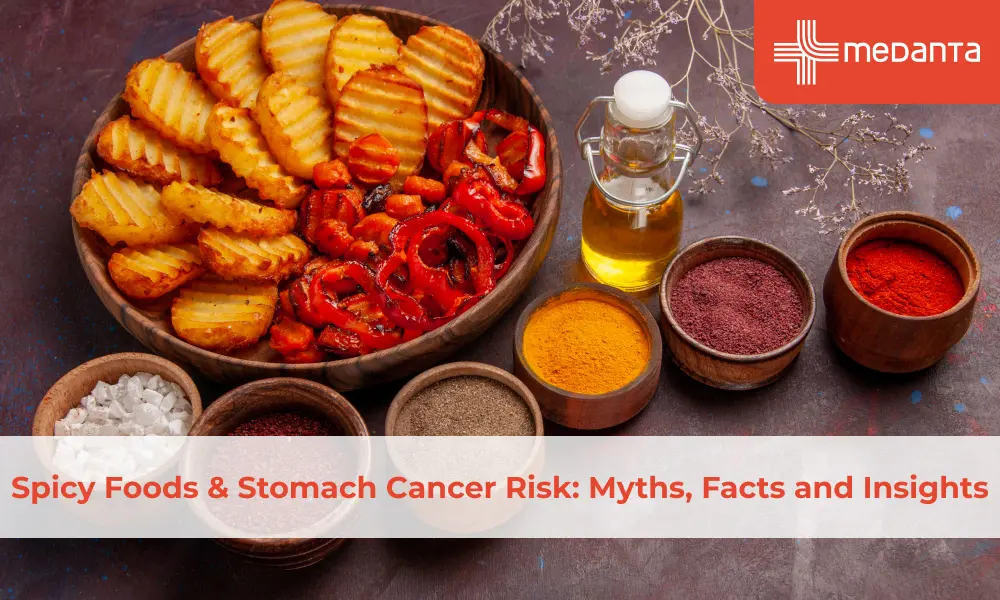
TABLE OF CONTENTS
- What Is Stomach Cancer? Key Causes and Risk Factors
- Common Spices and Their Effects on the Digestive System
- Scientific Evidence: Spicy Foods and Cancer Risk
- Role of Capsaicin: Harmful or Beneficial?
- Dietary Habits That Influence Stomach Health
- Other Risk Factors for Stomach Cancer
- Myths vs. Reality: Separating Fact from Fiction
- Tips for a Healthy, Balanced Diet Without Overdoing Spices
- Conclusion
- FAQs
People have debated the effects of spicy food for years. Many believe that fiery dishes can cause serious health issues like stomach cancer.
Scientists don't have a simple answer. Many worry that spicy food's stomach pain leads to more serious conditions. Research tells a different story. The largest longitudinal study showed that eating moderate amounts of spicy food protects against gastrointestinal cancers, especially oesophageal cancer. The risk changes with quantity - large amounts of capsaicin substantially increase stomach cancer risk. These findings emphasise why we need to learn about the downsides of eating spicy food.
Doctors agree that spicy food alone doesn't qualify as a carcinogen. The real culprits behind stomach cancer include H. pylori infection, smoking, excessive alcohol consumption, and diets rich in salt or preserved foods.
This article aims to clear the confusion about spicy food's side effects. Together let us explore scientific evidence and separate myths from facts (so that you can make better food choices).
What Is Stomach Cancer? Key Causes and Risk Factors
Stomach cancer begins when stomach cells' genetic changes trigger unusual growth and form tumours. Many people think spicy foods cause stomach cancer, but research shows several other factors are to blame.
H. pylori bacteria cause about 40% of stomach cancer cases. People can get this bacteria from contaminated food and water. The infection damages the stomach lining through inflammation that builds up over time.
Your age is a significant factor - most people get diagnosed after 60. The risk is almost double for men compared to women.
Other factors that raise your cancer risk include:
Lifestyle choices: Smokers face double the risk, and drinking more than 3 alcoholic drinks daily increases the chances by a lot
Dietary patterns: Salt-heavy, smoked or pickled foods boost risk, while fresh fruits and vegetables help protect you
Medical conditions: Chronic gastritis, GERD, pernicious anaemia
Genetic factors: A family history of stomach cancer and inherited conditions like Lynch syndrome are among the risk factors
Stomach cancer shows up more often in East Asia, Eastern Europe, and South America.
Common Spices and Their Effects on the Digestive System
Common spices seen in your kitchen have different effects:
Turmeric, ginger, and cumin help calm the digestive system. They cut down on swelling and
ease bloating.
Cinnamon might keep blood sugar steady, which can make your gut feel better too.
Capsaicin kicks your system into high gear (it stimulates gastric acid secretion and fastens your digestion).
Your stomach lining becomes more powerful if you are taking spices in moderate quantities. (But note that too much spice might irritate this protective layer causing discomfort).
Scientific Evidence: Spicy Foods and Cancer Risk
Research shows mixed results about spicy foods and cancer. Spices on their own aren't the direct cause of stomach cancer. However, if you keep irritating your stomach too much for too long, it can make existing inflammation worse. This creates an environment where your risk of cancer might go up as time passes.
A meta-analysis revealed that high spice intake leads to a higher overall cancer risk. Asian populations who eat moderate to high amounts of pepper face a higher risk of gastric cancer. The good news is that moderate consumption might lower your risk.
Role of Capsaicin: Harmful or Beneficial?
Capsaicin creates an interesting paradox. Lower doses might help improve metabolism, reduce "bad" cholesterol, and fight inflammation in the gut. Too much of it, however, might raise your risk of getting oesophageal, gastric and gallbladder cancers.
Dietary Habits That Influence Stomach Health
You can reduce irritation by eating spicy foods with dairy products or high-fibre foods. On top of that, your stomach stays healthier when you avoid too much salt, smoked foods, and processed meats.
Other Risk Factors for Stomach Cancer
Spicy foods aren't the only concern. Other risk factors include:
H. pylori infection causes about 40% of stomach cancers.
Smoking doubles your cancer risk.
Drinking three or more alcoholic drinks daily is a big deal as it means that your chances of getting cancer go up significantly.
Myths vs. Reality: Separating Fact from Fiction
People believe many things about spicy foods, but science tells a different story. Let's get into what's true and what's just a myth:
Myth | Reality |
Spicy foods cause stomach ulcers | Helicobacter pylori bacteria and long-term NSAID use cause ulcers. Research shows capsaicin might help you prevent ulcers. |
Spicy foods always cause digestive problems | Spicy foods help many people produce digestive fluids and break down food better |
Spicy foods are truly addictive | People might crave spicy food, but science hasn't found any physical addiction like caffeine or nicotine |
Spicy foods damage taste buds permanently | Chilli peppers make your mouth burn, but they won't harm your taste buds forever—the numbness goes away |
Water helps cool your mouth after spicy food | Water makes the burn worse by spreading capsaicin around. Milk or yoghurt works better because their casein protein binds to capsaicin. |
Spicy foods cause cancer | Science hasn't found any direct link between eating moderate amounts of spicy food and cancer. Moderate spice intake might even be good for your health. |
Spicy foods thin the stomach lining | H. pylori and long-term anti-inflammatory drug use thin your stomach lining, not spicy foods |
Your body's response to spicy foods is unique, so eat them in moderation among other foods.
Tips for a Healthy, Balanced Diet Without Overdoing Spices
You can enjoy hot dishes without dealing with spicy food side effects with a right approach to savour fiery flavours and protect your digestive system at the same time.
Moderation matters most. Eating very spicy meals daily, especially in big portions, isn't recommended. You should limit spicy foods to 2-3 times a week with good spacing between meals.
These practical strategies help you add heat to your diet:
Gradual introduction - Begin with mild options like bell peppers or paprika before you try hotter varieties
Smart combinations - Mix spicy ingredients with soothing foods like dairy, rice or whole grains that help buffer acidity
Timing considerations - Your stomach should never be empty when eating spicy dishes because it raises heartburn risk
Hydration habits - Regular water intake during meals helps digestion and reduces discomfort
Cooling counterparts - Add cooling foods like yoghurt, avocado, or cucumber to balance the heat
Each person has their own spice tolerance level. Pay attention to your body's signals and bring changes in your lifestyle (as needed).
If you have some conditions (inflammatory bowel disease or ongoing indigestion) you might need to avoid spicy foods completely.
Conclusion
Scientists still debate how spicy foods affect stomach cancer risk. But there are some research suggesting that eating moderate amounts of spice can prevent certain cancers while too much could raise the risk. That burning feeling after a spicy curry makes people worried, but it rarely means anything serious.
Balance might be the key lesson here. Of course, spicy foods fit well in a varied, healthy diet for most people. They're just one part of healthy eating though. Your plate needs fresh vegetables, whole grains, and lean proteins too. Your personal tolerance to spicy foods depends a lot on your taste buds.
FAQs
Can spicy food cause stomach cancer?
Studies show mixed results. Research suggests people who eat lots of spicy food have a higher risk of stomach cancer. However, a massive study discovered that eating moderate amounts of spicy food might protect against gastrointestinal cancers. The risk level changes based on how much you eat and your personal factors.
Which spices are safe for regular consumption?
Most common spices remain safe with moderate use. Cayenne pepper contains capsaicin that might help fight cancer. You can safely eat spicy foods 2-3 times each week.
Does capsaicin in chilli increase cancer risk?
Capsaicin works in two ways. Large amounts might raise your risk of oesophageal cancer. Lab studies show capsaicin can stop H. pylori bacteria growth and lower stomach acid levels.
Are people with sensitive stomachs more at risk?
If you have a sensitive stomach you might feel more discomfort (but don't necessarily face higher cancer risks). Short-term irritation is different from lasting damage depending on your tolerance (due to your genes and gut health).
Can spicy food worsen existing stomach conditions?
Yes. You should limit spicy foods if you have ulcers, IBD or chronic indigestion. Capsaicin irritates inflamed tissues and makes existing conditions more uncomfortable.
What are the biggest causes of stomach cancer?
H. pylori infection leads to about 40% of stomach cancer cases. Other major risks include smoking, heavy drinking, eating lots of salt or preserved foods, chronic gastritis and family history. Your age and gender matter too (stomach cancer peaks after 60 and affects men more often).
Is there scientific evidence linking spicy foods to cancer?
The research results don't align well. Meta-analyses reveal that high spice intake links to a higher overall cancer risk. People in Asian populations who eat moderate to high amounts of pepper face a higher gastric cancer risk. The flip side shows that capsaicin might stop certain cancer cells from growing. The amount of spice you eat seems to be the biggest factor here.
How much spice is considered safe in a diet?
The golden rule remains simple - eat in moderation. Small amounts of pepper don't increase gastric cancer risk, but large quantities do. Most people shouldn't eat spicy food daily. You can safely enjoy hot dishes 2-3 times a week if you don't have digestive problems.
Can spicy foods have health benefits for the stomach?
The answer might surprise you! Capsaicin works in several ways:
It stops acid production and might prevent ulcers
It helps kill H. pylori bacteria
Your digestion improves with moderate amounts
What lifestyle habits can reduce stomach cancer risk?
Your weight plays a vital role - extra pounds raise the risk of stomach cancers. You can lower your risk by staying active, eating lots of fruits (especially citrus) and vegetables, drinking less alcohol, and avoiding tobacco. These simple changes could prevent stomach cancer cases.