1068
1068
 Request Call Back
 Contact
 1068
1068
Saline Nasal Drops for Babies: Uses, Benefits, and How to Use Them Safely
Published on: Jun 18, 2026
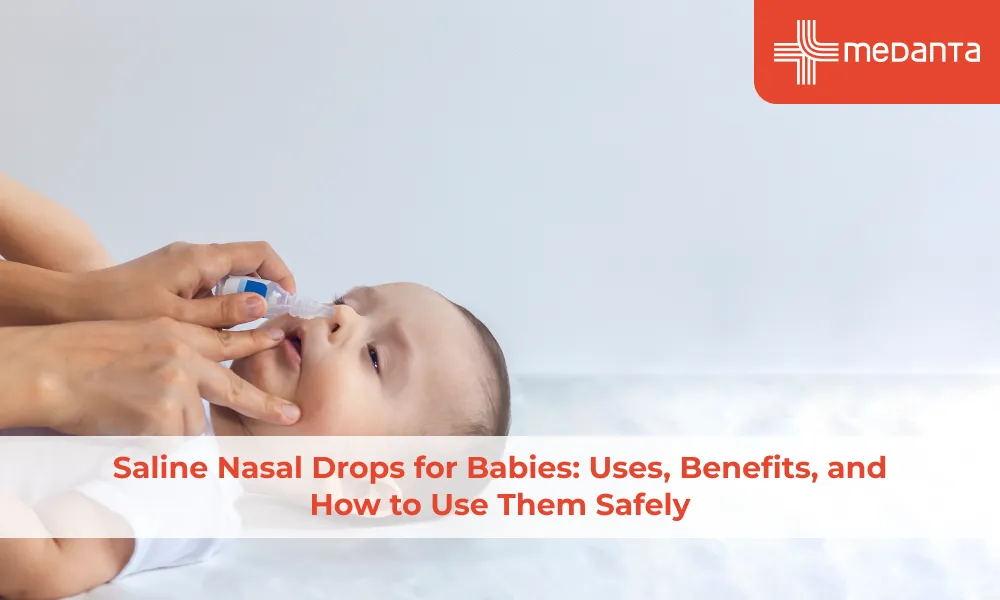
TABLE OF CONTENTS
A blocked nose makes feeding and sleeping very difficult for a baby. Unlike older children, babies cannot blow their noses and depend entirely on a clear airway while feeding. Saline nasal drops are the safest, most recommended first-line treatment for infant nasal congestion. They are non-medicated, available without prescription, and safe from birth.
What Are Saline Nasal Drops?
Saline nasal drops are a sterile solution of sodium chloride (salt) dissolved in purified water. The standard concentration used for infants is 0.9% sodium chloride. It is the same salt concentration as normal human body fluids, which is why it is sometimes called "normal saline" or "isotonic saline." At this concentration, the drops do not cause any burning, stinging, or tissue damage to the sensitive lining of a baby's nose.
They contain no decongestants, antihistamines, or any other active pharmacological ingredient. This is precisely what makes them safe for newborns and young infants, for whom medicated nasal preparations are either ineffective or carry significant safety concerns.
Why Babies May Need Nasal Drops
Newborns and young infants are obligate nasal breathers (they breathe primarily through the nose, not the mouth). The nasal passages of a newborn are very narrow (roughly the diameter of a pencil), so even a small amount of mucus significantly disrupts breathing, feeding, and sleep. Common causes of infant congestion:
Viral upper respiratory infections (the common cold) - a baby may catch 6–10 colds in the first year of life
Dry air - low humidity dries the nasal mucosa (the moist nose lining), thickening secretions; particularly relevant in India's winters and air-conditioned homes
Allergic rhinitis - nasal lining inflammation from dust mites, pet dander, pollen, or mould
Milk reflux - small amounts of milk entering the back of the nose during feeding
Irritants - tobacco smoke, strong perfumes, and cooking fumes
Benefits of Saline Nasal Drops for Infants
Benefits are:
Loosens thick mucus: Hydrates dried secretions, making them easier to drain or remove with a nasal aspirator (a small suction device)
Restores nasal moisture: Prevents the nasal lining from drying and crusting in dry environments
Improves feeding: A clear nasal passage lets the baby breathe and suck simultaneously, making feeds calmer and more effective
Improves sleep: Congestion worsens when lying flat; clearing it before sleep reduces nighttime waking
No rebound congestion: Unlike decongestant sprays, saline does not cause the nasal lining to swell further once it wears off
Safe from birth: No age restriction and isotonic saline can be used from the first days of life.
How to Use Saline Nasal Drops Safely
Wash your hands first. Lay the baby on their back, tilt the head back slightly, and instil 2-3 drops into one nostril. Hold the dropper just above the nostril (never insert it). Wait 30-60 seconds; sneezing is normal and helpful. Wipe away visible discharge, use a nasal aspirator if available, and repeat on the other side. Use drops 5-10 minutes before a feed. Avoid administering just after a feed, as lying the baby back increases reflux risk. Clean the dropper tip after each use and do not share the bottle.
Recommended Usage and Dosage for Babies
There is no formal prescription dose. General guidance:
Newborns to 3 months: 1-2 drops, up to 3-4 times daily
3-12 months: 2-3 drops, up to 4-6 times daily
Over 12 months: 3-4 drops, up to 4-6 times daily.
During a cold, every 2-3 hours is appropriate; reduce as congestion improves.
For environmental dryness, 2-3 times daily is sufficient.
Possible Side Effects and Safety Precautions
Isotonic saline has an excellent safety profile. Sneezing after instillation is a normal response and not a side effect. Temporary distress during administration is usually due to the unfamiliar sensation. Precautions:
Use only 0.9% (isotonic) saline for infants
Do not make homemade saline solutions for newborns as they cannot be reliably sterilised
Discard as directed - single-use ampoules after one use; multi-dose bottles within 30 days of opening
Avoid forceful instillation as the saline can reach the middle ear through the Eustachian tube (the canal connecting the back of the nose to the ear) if squeezed hard into the nostril, potentially contributing to ear infection
Do not use without medical clearance after recent nasal surgery or injury.
When to Consult a Paediatrician
Saline drops manage congestion; they do not treat infection. See a paediatrician if:
The baby is under 3 months with a fever above 38°C always warrants same-day review at this age
Congestion persists
Breathing is fast or laboured, or the nostrils are flaring (widening with each breath)
The baby is feeding significantly less, with fewer wet nappies
Discharge becomes thick, yellow or green with worsening fever
The baby is unusually irritable, lethargic (very difficult to rouse), or not responding normally.
FAQs
Are saline nasal drops safe for newborn babies?
Yes isotonic (0.9%) saline is safe from birth. It contains no drugs, preservatives, or active chemicals, and the salt concentration matches the body's own fluids, so it causes no irritation. Paediatricians worldwide recommend it as first-line treatment for nasal congestion in newborns.
How often can saline nasal drops be used for infants?
As frequently as needed and every 2–3 hours during a bad cold is appropriate. For routine dryness, 2–3 times daily is sufficient. There is no pharmacological reason to restrict frequency with isotonic saline, though more than 6 times daily for extended periods without clear cause is unnecessary.
Can saline nasal drops help babies sleep better during congestion?
Yes the congestion worsens when lying flat. Using saline and gently suctioning 10-15 minutes before sleep significantly improves nasal airflow. Slightly elevating the head end of the mattress with a firm rolled towel placed under it (not a loose pillow) encourages mucus drainage.
Do saline nasal drops have any addictive effects?
No the saline is a simple salt solution with no active ingredient capable of causing dependence or rebound congestion. This is its key advantage over medicated decongestant sprays, which cause rebound nasal lining swelling if used for more than 3-5 consecutive days. Saline carries none of these risks.
Can saline nasal drops be used before feeding a baby?
Yes it is the ideal time. Instilling drops 5-10 minutes before a feed clears the nasal passage so the baby can breathe through the nose while sucking.
What is the correct way to clean a baby's nose after using saline drops?
Wait 30-60 seconds after instilling the drops. Wipe visible mucus with a soft damp tissue wipe outward, never insert anything into the nostril. For deeper mucus, use a nasal aspirator: place the soft tip at the nostril opening and apply brief, gentle suction. Clean the aspirator after every use to prevent bacteria from growing inside.
Are saline nasal drops better than medicated nasal sprays for babies?
For babies under 2 years, yes. Medicated decongestant sprays are not recommended for use under age 2 due to risks including rapid heart rate, high blood pressure, drowsiness and, in overdose, breathing suppression. Saline achieves effective symptom relief without any of these risks.
Can the overuse of saline nasal drops irritate a baby's nose?
Rarely, and only with excessive use over many weeks. Mild redness at the nostril from repeated wiping or suctioning is more common than any irritation from the saline itself. Isotonic saline does not damage the nasal mucosa.
How should saline nasal drops be stored after opening?
Store multi-dose bottles at room temperature, away from sunlight and heat. Replace the cap firmly after each use. Discard 30 days after opening as bacteria can colonise the tip over time. Single-use ampoules should be discarded immediately after one use. Do not refrigerate - cold drops cause unnecessary discomfort.
What signs indicate a baby may need medical attention despite using saline drops?
Seek medical attention if the baby is under 3 months with a fever above 38°C, breathing rapidly or with visible effort (nostrils flaring), feeding much less than usual or very difficult to rouse. Thick yellow or green discharge with worsening fever suggests bacterial infection. Sudden, dramatic worsening after a period of mild illness warrants immediate assessment.