1068
1068
 Request Call Back
 Contact
 1068
1068
Nail Infections and What They Reveal About Your Overall Health: A Complete Guide
Published on: Jan 23, 2026
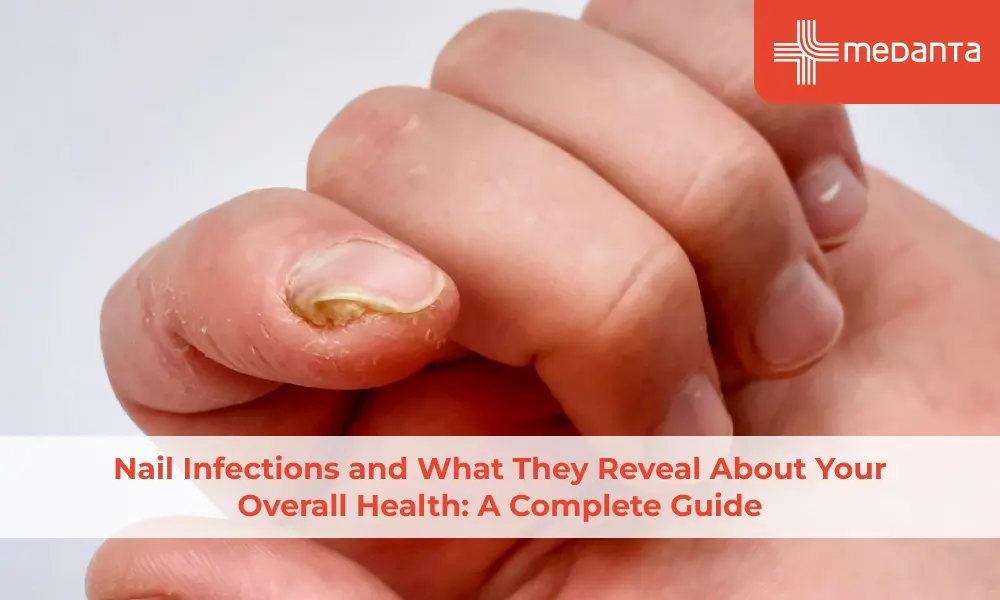
TABLE OF CONTENTS
- What Are Nail Infections and How Do They Develop
- Common Types of Nail Infections
- Causes of Nail Infections
- Symptoms of Nail Infections to Watch For
- Medical Treatments for Nail Infections
- Home Remedies and Preventive Measures for Healthy Nails
- What Nail Infections Reveal About Your Overall Health
- When to See a Doctor for Nail Infections
- Conclusion
- FAQs
Nail diseases affect the health, strength and appearance of both fingernails and toenails, often revealing deeper health issues. Research shows fungal nail infections make up about half of all nail problems. Most people focus on the cosmetic aspects of discoloured or damaged nails. These changes could signal underlying medical conditions. The nail area becomes infected as fungi, bacteria, or viruses penetrate the space around or beneath it.
This article explains what nail infections are, their warning signs, causes and treatments. Readers will learn what these conditions reveal about their overall health and know when they should ask for medical help.
What Are Nail Infections and How Do They Develop
People rarely notice nail problems in their early stages. The symptoms of nail infections develop and become visible gradually. Onychomycosis is the most widespread nail disorder globally. Microorganisms cause nail infections by invading the nail or surrounding tissue. These tiny organisms find their way through small cracks in the nail, minor injuries, or spaces between the nail and nail bed. The warm moist environment provides perfect conditions for them to multiply, which changes the nail's appearance and structure over time.
Common Types of Nail Infections
These four main types of nail problems affect people:
Fungal Infections (Onychomycosis) - This most common type and accounts for about 50% of all nail abnormalities. The infection typically affects toenails and appears as white or yellow spots that spread throughout the nail.
Bacterial Infections (Paronychia) - Redness, swelling, and sometimes pus-filled blisters develop near nail edges. Nail biting, aggressive manicures, or extended water exposure often lead to these infections.
Yeast Infections (Candidiasis) - Candida species cause these infections
Viral Nail Infections - Human papillomavirus (HPV) causes these infections, resulting in warts around or under nails.
Causes of Nail Infections
The risk of developing these problems increases due to several factors:
Walking barefoot in public showers, pools or locker rooms
Wearing tight, non-breathable footwear
Having diabetes or circulation issues
Sharing unwashed nail tools or towels
Experiencing nail injuries or trauma
Frequent exposure to moisture
Symptoms of Nail Infections to Watch For
Different types of infections show various warning signs, but some common indicators appear in most nail disorders:
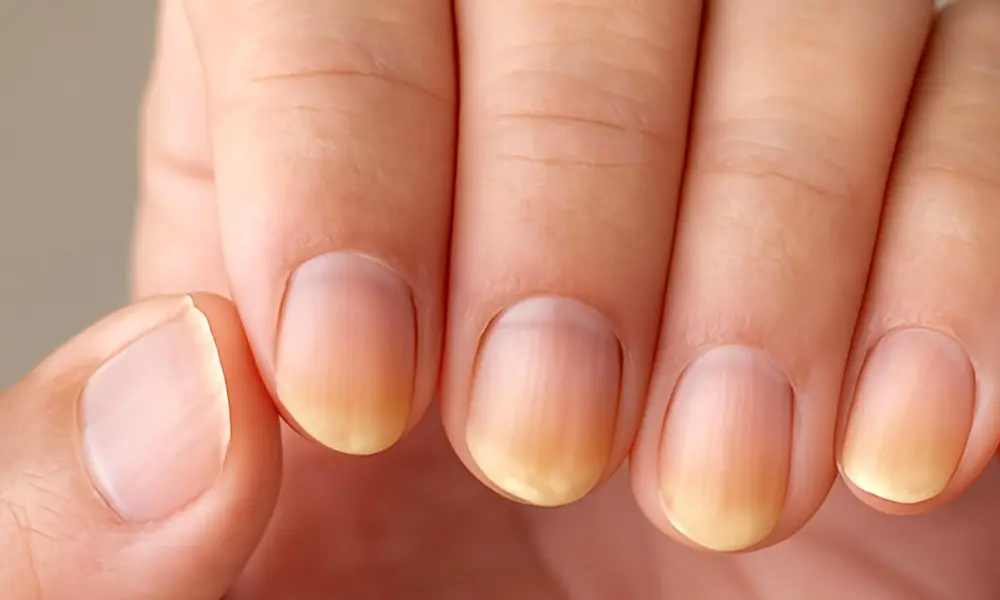
Discolouration (yellow, green, brown or white)
Thickening or brittleness
Crumbling edges
Separation from the nail bed
Pain or tenderness around the nail
Foul odour
Changes in nail shape
Medical Treatments for Nail Infections
Doctors usually recommend these approaches:
Oral antifungal medications: Terbinafine and itraconazole help grow infection-free nails. Patients take these daily for 6-12 weeks.
Topical treatments: Medicated nail polishes (ciclopirox) or creams (efinaconazole) go directly on affected areas.
Surgical options: Removing the nail lets medicine reach the infection site
Laser therapy: This works best for patients with liver or kidney conditions.
Home Remedies and Preventive Measures for Healthy Nails
Here are some effective home remedies and preventive measures to maintain healthy, strong nails:
Tea tree oil stops common fungal growth effectively.
Always keep your nails short, dry, and clean.
Breathable shoes and moisture-wicking socks help keep your nail environment dry.
Always use nail polish and removers that do not contain harsh chemicals.
While doing household chores or handling detergents always wear gloves.
What Nail Infections Reveal About Your Overall Health
Your nail's condition can point to nutritional gaps or digestive problems. Changes in how nails look might show signs of diabetes, poor circulation or immune system issues. A diet rich in whole foods gives your nails the vitamins and minerals they need. Since nails take a while to grow, they can show long term health patterns instead of quick changes. Keeping an eye on nail health can help spot wider health issues early and lead to timely medical check-ups.
When to See a Doctor for Nail Infections
Visit your doctor if you notice:
Pain or major discomfort
Brown or black nail colour changes
Nails separating from the skin underneath
You have diabetes, poor circulation, or a weak immune system
Home treatments don't work after several weeks
Conclusion
Your nails can tell you a lot more about your health than you might think. Of course, what looks like a simple beauty concern could signal deeper health issues in your body. Different types of infections - fungal, bacterial, yeast, and viral - leave their unique marks on your nails. Taking preventive steps is easier than treating an infection. You can avoid most common infections with basic habits.
The link between nail health and overall wellness might be the most important insight. When you see yellow, thick, or brittle nails, they could point to poor nutrition, bad circulation, or a weakened immune system. Treating these mechanisms is just as vital as dealing with visible symptoms. Healthy nails often mean a healthy body, and catching warning signs early can help prevent serious health problems later.
FAQs
What causes nail infections?
Nail infections develop when fungi, bacteria, or yeast enter through tiny cracks in nails or surrounding skin. Walking barefoot in damp public areas, wearing tight shoes, and having diabetes all increase the risk. Nail injuries and excessive moisture create perfect entry points for these microorganisms.
How can I treat nail infections at home?
For mild cases, tea tree oil has natural antifungal properties. Mentholated products work for some people. Apple cider vinegar soaks and hydrogen peroxide can help cleanse affected areas. Note that home remedies usually take longer to work than prescription options.
Are there medical treatments for fungal or bacterial nail infections?
Yes, oral antifungals like terbinafine and itraconazole treat fungal infections. Medicated nail polishes such as ciclopirox or creams like efinaconazole work topically. Severe cases may require nail removal to apply medicine directly to the infection site.
Can nail infections indicate underlying health issues?
Yes, nail infections point to deeper health issues. For example:
Yellow thickened nails may indicate diabetes or circulation problems.
Proximal white onychomycosis is common in people with poor immunity.
Blue nails suggest oxygen deficiency.
Half-pink, half-white nails might signal kidney disease.
How long does it take for a nail infection to heal?
Fingernails typically require 4-6 months to grow completely, while toenails need 12-18 months. Full healing occurs only after the entire infected portion grows out and gets replaced by healthy nail.
Can nail infections be prevented?
Absolutely key prevention strategies include:
Wearing flip-flops in public showers and pool areas
Keeping nails trimmed, clean, and dry
Disinfecting nail tools after each use
Avoiding sharing towels or nail equipment
Wearing breathable footwear
Are nail infections contagious?
Most nail infections spread easily through direct contact. They transfer via shared towels, nail clippers, or walking barefoot on contaminated surfaces. Fungi causing athlete's foot can migrate to toenails, and infections can spread between your own nails too.
When should I see a doctor for a nail infection?
Seek medical attention if pain increases, redness spreads, or pus appears. Anyone with diabetes, poor circulation, or a weakened immune system should consult a doctor immediately for any nail changes. On top of that, see a doctor if home treatments fail after several weeks.