1068
1068
 Request Call Back
 Contact
 1068
1068
Fungal Nail Infection: Symptoms, Causes, and Best Treatment Options
Published on: Dec 22, 2025

TABLE OF CONTENTS
- What is a Fungal Nail Infection (Onychomycosis)?
- Types of Fungal Nail Infection
- Signs & Symptoms of Fungal Nail Infection
- Causes & Risk Factors
- When to Seek a Doctor
- Complication
- Diagnosis of Fungal Nail Infection
- Treatment Options
- Prevention and home-care strategies
- How to Avoid Recurrence
- Myths & Frequently Misunderstood Facts about Fungal Nails
- FAQs
Studies reveal that fungal nail infections account for about half of all nail issues. Most people with fungal nail infections notice their toenails become brittle and discoloured. A microscopic mould called dermatophyte causes these problems by feeding on keratin - the main protein in nails. These tiny organisms are responsible for 90% of toenail fungal infections.
The infection transforms nails' appearance and turns them white, yellow, or brown. Though anyone can get this condition, it affects men and older adults more often. Age makes nails more brittle, which leads to easier cracking.
This article explains essential aspects of fungal nail infections (from symptoms and causes to the most budget-friendly treatments that work today).
What is a Fungal Nail Infection (Onychomycosis)?
A fungal infection of the nail unit is known medically as onychomycosis. The condition occurs when fungal organisms invade the nail structure, making it different from other nail problems. The infection can cause serious complications like cellulitis, tissue damage and nail loss when patients don't seek treatment.
These infections stem from three distinct types of fungi:
Dermatophytes: These fungi cause 90% of toenail & 50% of all fingernail infections.
Yeasts: The organism Candida albicans mostly affects fingernails.
Nondermatophytic moulds: Species like Fusarium and Aspergillus cause nail infections.
People experience toenail infections more often than fingernail infections. The reason lies in our footwear - shoes create warm, moist environments where fungi thrive.
Types of Fungal Nail Infection
Nail fungal infections exist in several distinct forms. Doctors categorise these infections by their starting point and their effects on the nail.
Distal and lateral subungual onychomycosis: This is the most common infection, starting at the nail's tip or sides and creating yellow or brown discolouration that moves inward. The nail becomes thicker and brittle, and it might separate from the underlying bed.
White superficial onychomycosis: This shows up as white patches on the nail's surface. These spots have distinct edges that eventually cause the nail to crumble and develop pits. Toenails face this problem more often than fingernails.
Proximal subungual onychomycosis: A rare condition begins near the cuticle. White spots appear and spread outward as the nail grows. This variant typically signals immune system issues (particularly in patients with HIV).
Endonyx onychomycosis: This causes a milky-white discolouration throughout the nail. This uncommon form differs because fungi invade the inner nail layers without causing thickening or separation.
Candidal onychomycosis: This yeast infection mainly targets fingernails. The infection's signs include cuticle redness and nail discolouration that varies from white to green or black.
Total dystrophic onychomycosis: This causes complete nail destruction.
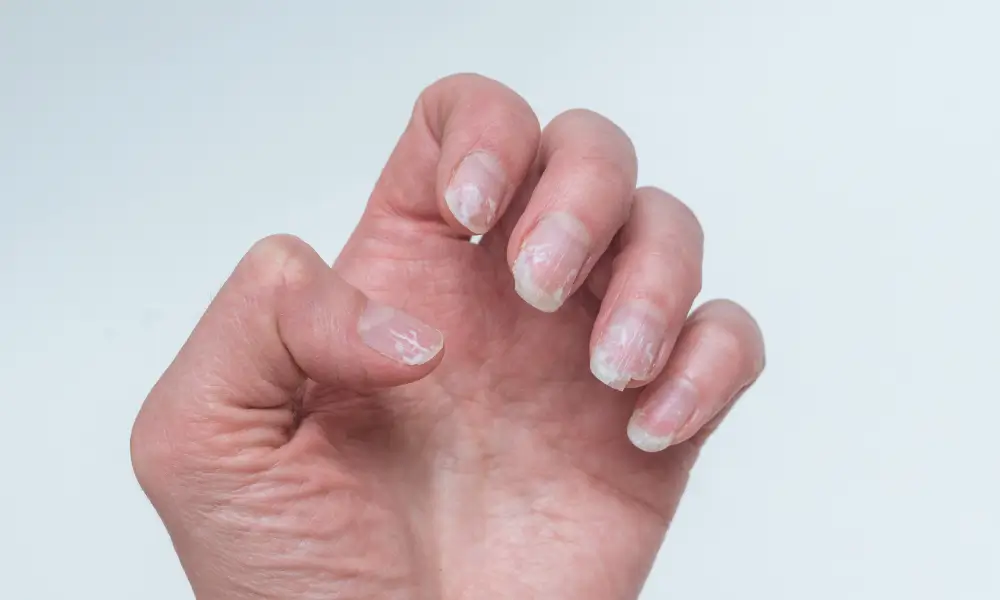
Signs & Symptoms of Fungal Nail Infection
Nail fungal infections don't show their symptoms right away. You might notice just a tiny white or yellow spot under your nail at first. The discolouration spreads to your entire nail as time passes, and your nail could turn white, yellow, green or even black.
These fungal infections usually show up on toenails, but they can affect your fingernails too. Your nails might show these changes:
They become much thicker and harder to trim
They turn brittle and break apart easily
They start curling up or down instead of growing straight
They begin to separate from the skin underneath
They give off an unpleasant smell
They look twisted or misshapen
The early stages rarely hurt, but advanced infections can make walking painful because of the pressure on affected areas. The skin around your nails might get red and sore without treatment.
These infections affect more than just your physical health. Many people feel self-conscious about how their nails look. This emotional toll hits harder if the infection affects visible fingernails rather than hidden toenails.
Causes & Risk Factors
Tiny organisms can work their way under your nail and cause fungal infections. These pesky fungi typically sneak in through small cuts or cracks in your skin or nails.
Dermatophytes cause about 90% of these infections. These moulds feed on keratin, the protein that makes nails hard. Your chances of getting this condition go up due to several factors:
Age: The risk goes up a lot with age and affects many people over 70
Medical conditions: You're more likely to get infected if you have diabetes, poor circulation, or psoriasis
Lifestyle factors: Your feet get exposed to these fungi when you walk barefoot in public showers, pools, and locker rooms
Physical factors: Your fingers or toes create perfect growing spots when they stay moist too long
Related infections: Athlete's foot makes you more than twice as likely to get infected
Body weight: Research shows that carrying extra weight increases your chance of onychomycosis by a lot
The infection hits men harder than women. Children rarely face this problem.
Living with someone who has a nail infection raises your risk substantially. Closed-toe shoes create warm, damp spaces where fungi love to grow.
The risk jumps up by a lot if you have a weakened immune system, especially with conditions like HIV.
When to Seek a Doctor
Fungal nail infections need proper treatment to avoid serious health issues beyond just appearance.
Contact your doctor if:
Your nails hurt or cause major discomfort
The nail colour changes to brown or black
Your nail starts separating from the skin underneath
Medical help becomes crucial if you have:
Diabetes - even small nail infections can be risky
A weak immune system - especially when you're getting chemotherapy or have had an organ transplant
Poor blood circulation
Complication
Leaving these infections untreated might lead to:
Cellulitis - a dangerous skin infection that needs urgent care
Lasting nail damage or deformity
Your nail falling off completely
Damage to tissue or bone infection (osteomyelitis)
Diagnosis of Fungal Nail Infection
Doctors check your nails and collect samples by scraping debris from underneath them. They test these samples in several ways:
Potassium hydroxide (KOH) smear gives quick results
Fungal culture identifies the exact cause but takes weeks
Nail clipping analysis helps confirm diagnosis
Treatment Options
Oral medications are the quickest way to see results:
Terbinafine: Daily doses last 6 weeks for fingernails or 12 weeks for toenails
Itraconazole: Doctors prescribe this in pulse therapy
Fluconazole: Doctors use this option less frequently
Topical treatments show better results in mild cases:
Efinaconazole 10% solution: Complete cure rates reach up to 17.8%
Ciclopirox 8% nail lacquer: Daily application continues for up to 48 weeks
Surgical approaches help patients when medications don't work:
Nail avulsion (partial or complete removal)
Nail debridement reduces thickness
Laser therapy delivers promising results with minimal side effects. This option works great for patients with liver or kidney conditions.
Prevention and home-care strategies
Your nails should stay short, dry, and clean.
Choose breathable footwear and moisture-wicking socks.
Antifungal powders help protect shoes and feet.
Personal items like nail tools, shoes, and towels should never be shared.
How to Avoid Recurrence
Many successfully treated patients face recurrence within a year.
You can avoid this by treating tinea pedis early, getting new footwear, using UV light or ozone to disinfect shoes and applying maintenance antifungal treatments.
Myths & Frequently Misunderstood Facts about Fungal Nails
People often misunderstand nail fungal infections, which leads to confusion about their causes, treatment, and prevention. Here's a table that separates common myths from the real facts:
Myth | Fact |
Fungal nail infection is merely a cosmetic issue | Untreated infections can cause pain, nail deformities, and other infections, especially when you have diabetes |
Only people with poor hygiene develop infections | Fungal spores exist everywhere and anyone can get an infection whatever their cleanliness level |
Home remedies work as well as medical treatments | Tea tree oil and vinegar soaks have some antifungal properties but are nowhere near as good as prescription treatments |
The infection will disappear naturally | Fungal infections usually get worse over time and rarely clear up on their own |
Fungal infections affect only elderly people | Anyone can get nail fungus, though the risk goes up with age and affects about 50% of people over 70 |
Acrylic nails protect against fungal infections | Artificial nails that aren't properly applied can trap moisture between the adhesive and nail bed, which actually increases the risk of fungal growth |
Nail fungus isn't contagious | These infections spread through direct contact and through towels, shoes, nail tools and moist surfaces |
All thickened nails indicate fungal infection | Nail trauma, tight shoes, psoriasis or diabetes can also make nails thicker |
FAQs
What causes fungal nail infections?
Tiny organisms called fungi cause nail infections. These microbes get into your nails through small cracks in your nail or skin. They love warm, moist places like swimming pools and showers. You can get these fungi by touching someone who has an infection or using their towel.
What are the common symptoms of a fungal nail infection?
The first sign is usually a small discoloured spot under your nail tip. You might notice these changes as time goes on:
Yellow, brown, or white spots that spread
Nails become thick, brittle, or crumbly
Nail shape changes
Slight odour develops
Debris collects under the nail
Nail starts separating from the nail bed in advanced cases
How can I tell if I have toenail fungus or something else?
Many conditions look like fungal infections. Nail psoriasis shows small dents on the nail surface and oil drop-like discolouration. Fungal infections start at the nail tip or sides, and your nail gets thicker and yellower over time. Psoriasis affects multiple nails at once and comes with skin symptoms in other body parts. A doctor can run tests to know for sure.
Who is most at risk of developing a fungal nail infection?
Age plays a big role - about 50% of people over 70 get these infections. Your risk goes up if you:
Are male
Have diabetes, poor circulation, or psoriasis
Walk barefoot in public showers and pool areas
Wear tight shoes that make feet sweat
Have a nail injury or bunion
Live with someone who has a fungal infection
Have athlete's foot
How are fungal nail infections diagnosed?
Doctors look at your nails and take samples from underneath. Laboratory testing analyses these samples through methods like potassium hydroxide (KOH) smear or fungal culture to identify specific fungi. Identifying the right cause is important because other conditions (psoriasis, lichen planus & nail injuries) prima facie look similar to fungal infections.
What treatments are available for fungal nail infections?
Treatment depends on how bad the infection is. Oral antifungal medications like terbinafine and itraconazole work best. These medications help grow a new, healthy nail to replace the infected part over six to twelve weeks. You can also use medicated nail polish with ciclopirox or antifungal creams. Severe cases might need temporary nail removal or laser treatments.
How long does it take for a fungal nail infection to heal?
Your body needs 12-18 months to grow a completely new toenail that replaces the infected one. The healing process moves through different stages:
Early stage: 4-6 weeks
Moderate stage: 2-3 months
Advanced stage: After 6 months
Chronic stage: Beyond 1 year
You won't see results right away. Most patients wait several months before noticing visible improvements, even with the right medication.
Can fungal nail infections come back after treatment?
In fact, about 20-25% of successfully treated patients experience a recurrence. Patients using itraconazole face more relapses compared to those using terbinafine.
How can I prevent fungal nail infections from spreading or recurring?
Regular maintenance after treatment reduces the chance of recurrence. Here's what you can do to prevent infections:
Treat athlete's foot quickly
Throw away or sanitise old shoes
Use antifungal powders as protection
Keep your feet dry and cool
Wear flip-flops at public pools and gyms
Make sure everyone at home gets treatment if infected