1068
1068
 Request Call Back
 Contact
 1068
1068
Hepatomegaly (Liver Enlargement) Symptoms in Adults: Causes, Signs, and Treatment
Published on: Mar 24, 2026
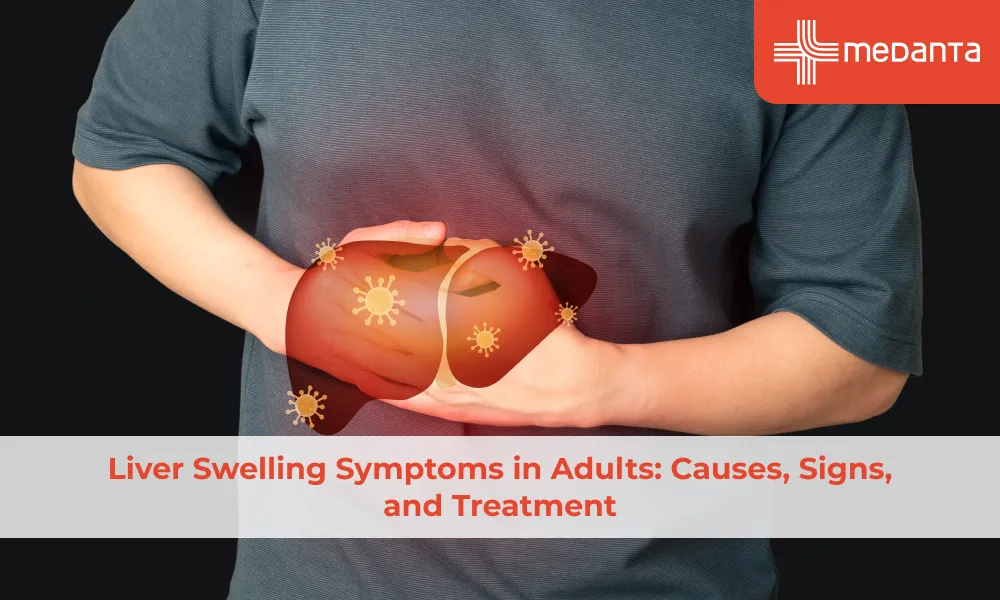
TABLE OF CONTENTS
- What Is Liver Swelling (Hepatomegaly)?
- Common Causes of Liver Swelling in Adults
- Symptoms and Early Warning Signs of Liver Swelling
- How Liver Swelling Affects Overall Health
- Diagnosis: How Doctors Detect Liver Enlargement
- Role of Blood Tests and Imaging in Liver Evaluation
- Home Care Tips and Lifestyle Changes for Liver Health
- Medical Treatment Options for Liver Swelling
- Preventive Measures to Avoid Liver Enlargement
- When to See a Hepatologist for Liver Swelling
- FAQs
Liver swelling symptoms in adults often go unnoticed until a routine medical check-up reveals the condition. Medically known as hepatomegaly, liver swelling represents an enlarged liver that exceeds its typical size. Many people experience no discomfort at first. However some people can experience abdominal fullness or swelling in the ankles and legs. Early detection matters so adults need to recognise the warning signs for timely intervention.
Adults who understand liver swelling symptoms can identify when something feels wrong.
If liver enlargement is detected, your doctor will investigate the underlying cause — including ruling out cancer. Do not delay medical evaluation
This article explains the causes behind liver enlargement symptoms and the diagnostic methods doctors use. It also covers treatment approaches that support recovery.
What Is Liver Swelling (Hepatomegaly)?
Hepatomegaly or liver swelling describes enlargement of the liver beyond its standard dimensions. A healthy adult liver measures roughly 16 cm along the midclavicular line and about 12.5 cm at the midsternal line. The organ weighs around three pounds and sits tucked beneath the rib cage. The liver extends downward when swollen and may become noticeable during physical examination.
This condition signals a problem rather than existing as a standalone disease. The liver swells due to inflammation, fat accumulation, blood congestion or abnormal growths. Physical examination can identify hepatomegaly, though palpation misses or misjudges the extent of enlargement on occasion.
Common Causes of Liver Swelling in Adults
Multiple health conditions trigger liver enlargement. These are:
Fatty liver disease: Fat builds up in liver cells and links to obesity, diabetes and high cholesterol
Viral hepatitis: Infections from hepatitis A, B and C inflame liver tissue
Alcohol-related damage: Excessive drinking causes inflammation and scarring
Heart failure: Poor heart function backs up blood into the liver
Cancers: Primary liver tumours or metastases from other organs
Genetic disorders: Hemochromatosis deposits excess iron while Wilson's disease accumulates copper.
Symptoms and Early Warning Signs of Liver Swelling
Many adults experience no symptoms at first. Liver swelling symptoms emerge over time. These include:
Abdominal discomfort in the upper right area
Fullness after eating
Fatigue
Unexplained weight loss.
Jaundice - yellowing of the skin and eyes
Nausea and vomiting
Appetite loss
Swelling in the legs and ankles
Dark urine and pale stools signal bile flow problems.
How Liver Swelling Affects Overall Health
An enlarged liver disrupts essential functions. The organ doesn't handle filtering toxins, producing proteins, or regulating metabolism very well. Long-term liver inflammation can cause cirrhosis (a liver condition where scar tissue replaces normal cells). Portal hypertension causes higher pressure in liver blood vessels, which can result in fluid buildup in the abdomen called ascites.
Hepatic encephalopathy develops when toxins reach the brain and trigger confusion and disorientation. Bleeding disorders emerge as clotting factor production declines. The risk of hepatocellular carcinoma rises with persistent liver damage.
Diagnosis: How Doctors Detect Liver Enlargement
Doctors diagnose liver enlargement with a physical examination where they palpate the abdomen to assess liver size and texture.
Diagnostic tests:
Ultrasound helps confirm suspected liver enlargement.
CT scans & MRI give detailed images of liver structure.
Role of Blood Tests and Imaging in Liver Evaluation
Blood tests measure liver enzymes, albumin proteins, and bilirubin levels. Elevated ALT and AST enzymes show liver cell damage.
Ultrasound and other imaging tests reveal steatosis, inflammation, and fibrosis
Transient elastography assesses liver stiffness
Doctors examine tissue samples through a liver biopsy when other tests fail to provide clarity.
Home Care Tips and Lifestyle Changes for Liver Health
Effective home care tips are:
A loss of 7% to 10% of body weight improves inflammation and scarring in fatty liver disease.
Physical activity reduces liver fat accumulation when done regularly.
Consuming two to three cups of coffee daily lowers the risk of liver disease.
Hydration supports toxin elimination
Stress management through meditation protects liver function.
Medical Treatment Options for Liver Swelling
Treatment targets the root condition.
Hepatitis B requires antiviral medications long-term.
Hepatitis C needs 12 to 24 weeks of direct acting antivirals
Heart failure calls for diuretics and cardiac support.
Liver transplantation may be necessary in severe cases.
Preventive Measures to Avoid Liver Enlargement
You should:
Maintain a healthy weight.
Consume a balanced diet rich in vegetables and lean proteins.
Limit alcohol intake.
Vaccination prevents hepatitis A and B infections.
Limit toxin exposure and take medicine without overusing it.
When to See a Hepatologist for Liver Swelling
Consult a doctor if you have:
Persistent abdominal pain
Symptoms of jaundice
Unexplained weight loss
Abnormal liver function tests.
Adults with risk factors like diabetes or previous hepatitis exposure just need regular monitoring.
FAQs
What are the common causes of liver swelling in adults?
Several conditions can trigger liver enlargement. These include:
Fatty liver disease
Viral infections like hepatitis B
Excessive alcohol consumption
Heart failure
Genetic disorders such as hemochromatosis and Wilson's disease.
Can liver swelling be painful?
Pain varies. Some adults notice tenderness in the upper right abdomen where the organ sits. Others feel fullness or discomfort after meals. Mild cases may produce no pain. Severe inflammation creates soreness when touched.
Is liver swelling reversible?
Reversibility depends on the mechanism. Early-stage fatty liver responds to weight loss and dietary changes. Stopping alcohol allows damaged tissue to heal if caught in time. Cirrhosis cannot be reversed, though progression stops with proper intervention. Treating infections or managing heart conditions helps restore the normal size.
Which foods help reduce liver swelling?
The following foods help:
Mediterranean-style eating benefits liver health.
Fatty fish like salmon provide omega-3 fatty acids.
Vegetables and whole grains supply fibre and nutrients.
Coffee consumption shows protective effects.
Avoiding saturated fats and processed foods supports recovery.
Does alcohol cause liver enlargement?
Yes heavy drinking ranks among the most common triggers. Alcohol metabolism produces toxins that damage cells and cause inflammation. Women face a higher risk than men. Stopping alcohol prevents further harm and allows healing.
How is liver swelling diagnosed?
Diagnosis includes:
Doctors palpate the abdomen during physical exams.
Ultrasound detects enlargement
Blood tests measure enzyme levels and liver function.
CT scans or MRI show structural changes.
Can liver swelling lead to liver failure?
Yes untreated enlargement can progress to failure over months or years. Persistent inflammation causes fibrosis, where scar tissue replaces healthy cells. Cirrhosis develops as scarring worsens and blocks liver functions. The organ loses its ability to filter toxins, produce clotting proteins and process nutrients. Acute-on-chronic failure strikes when stable patients suddenly deteriorate due to infection or continued alcohol use.
Are there home remedies to manage liver swelling?
Effective home remedies are:
Regular physical activity helps maintain a healthy weight and reduces fat buildup.
Water intake supports toxin elimination daily.
Smoking cessation prevents further damage.
Processed foods and sugary items should be avoided to lighten the metabolic load.
Adequate rest allows natural healing processes to function well.
What symptoms indicate a serious liver problem?
Certain signs need immediate medical attention. These include:
Yellow skin or eyes
Confusion or disorientation
Blood in vomit or black stools
Abdominal swelling
Fever with abdominal pain.
When should I consult a doctor for liver enlargement?
Schedule an appointment if you experience:
Ongoing tiredness despite rest
Jaundice signs
Unexplained weight loss
Upper abdominal pain that won't go away
Swelling develops in the legs and abdomen.