1068
1068
 Request Call Back
 Contact
 1068
1068
Life After Brain Tumour Surgery: Recovery And Rehabilitation
Published on: Dec 06, 2025
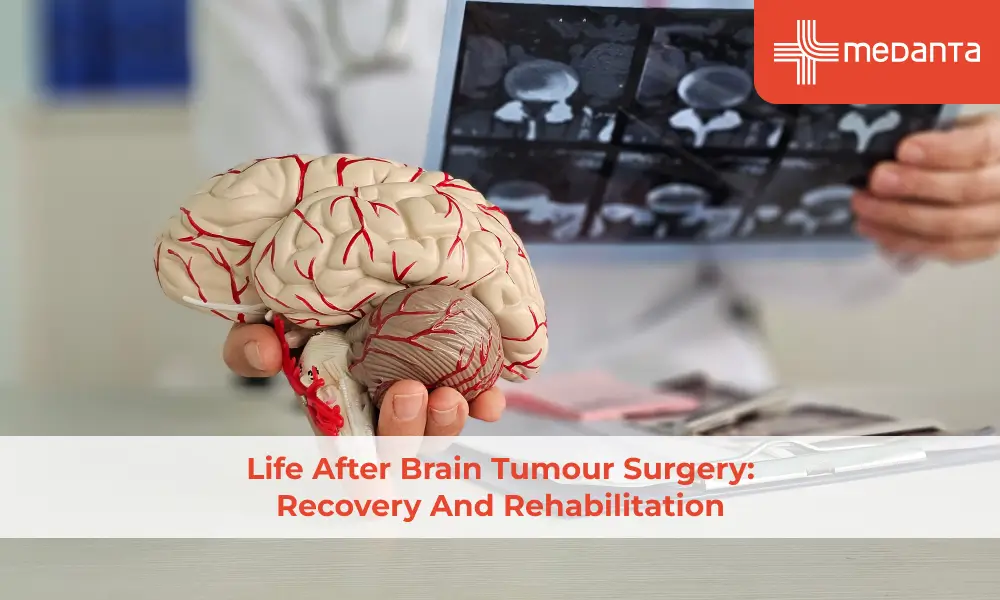
TABLE OF CONTENTS
Have you undergone a brain tumour surgery recently? Your experience can be different from others. Recovery happens gradually, and most patients see substantial improvement within 3 to 6 months. Complete healing might take a year or more. Patients typically stay in the hospital between 3 to 10 days after surgery.
The original recovery phase comes with temporary setbacks. Patients often feel worse right after surgery compared to before. They might experience tiredness, memory issues, and changes in mood. The brain works extra hard during this time. Your brain is amazing with a power to rewire & create new connections (helps the healing process).
A complete rehabilitation programme helps recovery tremendously. Physical therapy, occupational therapy and speech-language pathology services work to improve function.
The Immediate Post-surgery Phase
You need to stay in the hospital for a few days to more than a week. Simple procedures need just one or two days of care. However, patients who undergo open craniotomy might stay up to 10 days.
Recovery room staff closely monitor patients as they wake up. You may experience below mentioned affects (including but not limited to):
Headaches and discomfort
Drowsiness from anaesthesia and painkillers
Swelling and bruising of the head or face
Temporary neurological effects
Most patients need several medical attachments like oxygen masks, drips, monitoring devices, and drainage tubes. Medical teams perform regular "neuro obs" checks to track patients' alertness levels.
Postoperative swelling reaches its peak on day three after surgery. Patients often feel worse after surgery than before—this can be upsetting if they don't expect it.
Proper medication management plays a vital role during recovery. Medical teams give steroids to reduce brain swelling and anti-seizure medications to prevent seizures. Patients receive painkillers through drips until they can eat and drink normally.
Doctors start encouraging movement once it's safe. They may ask you to have breathing exercises and supported walking to speed up recovery & prevent complications.
Common Challenges During Recovery
Brain tumour surgery patients face numerous challenges during their recovery journey. Their struggles depend on where the tumour was located, the type of surgery performed and personal circumstances. This table shows the common problems patients might face:
Challenge Category | Specific Challenges | Prevalence/Notes |
Neurological Complications |
| Dysphagia (swallowing difficulties) Headaches |
Physical Challenges |
| Fatigue Some develop myopathy after 2+ weeks on dexamethasone |
Emotional & Mental |
| Many survivors struggle with emotional regulation |
Medical Complications |
| Steroid treatment often necessary to reduce swelling |
Social & Practical |
|
Symptoms typically improve with time, proper treatment, and rehabilitation. Some challenges might last longer based on the tumour's location and how extensive the surgery was.
Rehabilitation After Brain Surgery
Rehabilitation is a vital part of helping patients adapt to changes after brain tumour surgery. The brain needs specific activities to relearn functions, and unaffected areas can take over tasks from damaged regions.
Brain tumour patients typically need rehabilitation. The process happens at different times: before surgery, after the operation, during treatment, or when symptoms change. Patients can receive rehabilitation in several places:
Home-based programmes
Hospital rehabilitation units
Outpatient clinics
A team of specialists works together through this experience to provide:
Speech and language therapy—improving communication and swallowing
Occupational therapy—regaining independence in daily activities
Physical therapy—enhancing balance, strength and mobility
Neuropsychological support—addressing cognitive challenges
Research shows that cognitive rehabilitation helps memory and attention significantly. Exercise-based programmes have also shown improvements in physical fitness without negative effects.
Lifestyle Adjustments
Life after brain tumour surgery takes patience as you build your "new normal." Most patients find their rhythm within two to three years and learn to handle lasting changes effectively.
Your return to work hinges on your occupation, healing progress, and doctor's recommendations. Jobs that need mental focus or heavy machinery operation need careful consideration. By the fifth year after surgery, many people successfully resume their careers.
Getting back to driving requires good coordination and quick reactions. A thorough evaluation helps determine when you can safely take the wheel again. Air travel becomes safe about six weeks post-surgery, once your surgical wound heals.
Alcohol affects your body differently now. Some medications might rule out drinking completely.
Physical activities need some changes:
Walking and other light exercises boost your circulation and mood
Boxing, football, basketball and other contact sports should stay off limits
You can swim once your wounds heal, but someone should stay with you at first
Simple changes to your daily routine help you manage cognitive shifts better. Memory aids like diaries, phones, pill organisers and checklists make things easier.
Good medical care, lifestyle adjustments, and staying positive help restore meaning and joy to your life gradually.
Long-term Recovery & Monitoring
Recovery after brain tumour surgery extends well beyond the original healing phase and needs constant care to ensure the best outcome. Patients usually recover at home for 6 to 12 weeks and each person's experience is different.
Your body needs time to heal and regular visits to a doctor are very much important after surgery. A week after leaving the hospital, you will see your surgeon to check your progress and possibly get your stitches removed. After this first check up your ongoing care has:
Brain imaging scans (MRI or CT)
Assessment of remaining symptoms
Evaluation of medication needs
A team-based approach gives patients complete care during recovery. Physical therapists boost fitness levels, speech therapists help with communication issues, and occupational therapists guide patients through daily activities.
Patients who need radiotherapy or chemotherapy will get their oncology appointments once all test results are ready. Clinical trials studying new treatments might be available (your doctor can tell you about your eligibility).
Note that careful monitoring stays crucial even years after surgery to catch any possible recurrence early.
Emotional & Social Support
Your path to healing after brain tumour surgery includes both physical recovery & emotional wellbeing. There may be some anxiety, frustration and depression while adapting to their new normal. A neuropsychologist or counsellor can provide great strategies to handle these challenging times.
Strong social connections lead to better recovery outcomes. The support comes from several sources:
Family and friends who provide daily encouragement
Medical teams with their professional guidance
Community connections through work, religious groups, and sports teams
Fellow patients who share similar experiences
Brain tumour support groups make a real difference in patients' lives. These groups help improve emotional health by offering:
A safe space to share information
Understanding and support from others on the same path
Help with everyday challenges
Free meetings you can join in person or online
Your healthcare team can connect you with neurological rehabilitation services that combine emotional support with physical therapy.
Building a strong support network becomes vital as recovery begins.
Conclusion
Brain tumour surgery recovery just needs patience, determination and realistic expectations. Each person's healing experience is unique, though most patients see significant improvements within 3-6 months. Your brain takes time to rebuild connections and adapt to changes. Rehabilitation can get your abilities back and you can learn new ways to handle daily tasks.
Life slowly becomes a "new normal" as you adjust your work schedule, driving habits, and physical activities. The experience might take months or maybe even years, but many patients return to achieving lives with proper adjustments. Follow-up appointments and scans become part of your routine and provide peace of mind while ensuring your health. Healing happens differently for everyone. Small victories add up along the way - celebrate each milestone, even if it seems modest.
FAQs
How long does it take to recover from brain tumour surgery?
Recovery depends on individual factors. Most patients experience major improvement within 3-6 months. Complete recovery—including physical, cognitive, and emotional healing—can take up to a year or more.
What are the side effects after brain tumour surgery?
Common side effects include:
Memory loss or cognitive changes
Speech problems (aphasia)
Movement or balance difficulties
Fatigue and headaches
Confusion or mood changes
Seizures
Do all patients need rehabilitation after brain tumour surgery?
Not everyone needs rehabilitation. Studies show substantial functional improvements in both brain tumour patients who receive intensive rehabilitation and stroke patients.
Can brain tumours come back after surgery?
Recurrence remains possible. Research shows that the majority of patients with glioblastoma experience a recurrence. Patients with benign tumours also face a recurrence risk if surgeons can't remove the tumour completely.
When can I return to work or normal activities after surgery?
Your return depends on your job and recovery progress. You can resume light activities after a few weeks. Jobs that need mental skills or operating machinery take longer. Many employers offer accommodations like flexible hours or ergonomic workstations.
What complications should I watch for after brain tumour surgery?
Call your doctor if you experience any of the below mentioned:
Worsening headaches
Fever (possible infection)
Seizures
New weakness or numbness
Vision or speech changes
Extreme fatigue
Wound issues
How is post-surgery pain managed?
Most patients experience pain after craniotomy. The medical team manages pain through several methods:
A combination of Paracetamol with NSAIDs or COX-2 selective inhibitors
Scalp nerve blocks or numbing at the incision site
Dexmedetomidine during the operation
Opioids as backup pain relief
The pain usually peaks during the first two days after surgery. Patients get the best relief from combining different pain treatments that work together.
Will brain surgery affect my memory or cognitive functions?
Brain tumours can bring a change in your cognitive functions. Patients might notice changes in their memory, attention span and how they process information. The tumour's location plays a key role. Left-sided tumours tend to affect speech and language, while right-sided tumours can change how people recognise faces.
Are there dietary or lifestyle changes needed after surgery?
Good nutrition helps the healing process after brain surgery. The best foods (including but not limited to) are:
Proteins from lean sources to rebuild tissue
Brain-healthy fats
Energy-rich whole grains
Fresh fruits and vegetables in various colours
Patients should stay away from processed foods, too much sugar, salty items, alcohol, and caffeine.
How often are follow-up scans or check-ups required?
Each tumour type needs different follow-up care. High-grade tumour patients (WHO Grade 3) need MRI scans every 2-4 months for three years. After that, they need scans every 3-6 months. Regular check-ups help doctors spot any returning tumours early and see how well treatments work.
References
Renovanz M, Kim YH. Postoperative management of patients after brain tumour surgery. Neurosurg Rev. 2020;43(6):1369–1381. DOI: 10.1007/s10143-019-01083-3
https://doi.org/10.1007/s10143-019-01083-3
Brell M, et al. Factors influencing surgical complications of intra-axial brain tumours. Acta Neurochir. 2000;142(7):739–750. DOI: 10.1007/s007010070068
https://doi.org/10.1007/s007010070068
Glantz MJ, et al. Practice parameter: anticonvulsant prophylaxis in patients with newly diagnosed brain tumors. Neurology. 2000;54(10):1886–1893. DOI: 10.1212/wnl.54.10.1886
https://doi.org/10.1212/wnl.54.10.1886
Taphoorn MJ, Klein M. Cognitive deficits in adult patients with brain tumours. Lancet Neurol. 2004;3(3):159–168. DOI: 10.1016/S1474-4422(04)00680-5
https://doi.org/10.1016/S1474-4422(04)00680-5
Gehring K, et al. Cognitive rehabilitation in patients with gliomas. J Clin Oncol. 2009;27(22):3712–3722. DOI: 10.1200/JCO.2008.20.5765
https://doi.org/10.1200/JCO.2008.20.5765
Stupp R, et al. Radiotherapy plus temozolomide for glioblastoma. N Engl J Med. 2005;352(10):987–996. DOI: 10.1056/NEJMoa043330
https://doi.org/10.1056/NEJMoa043330
Sterckx W, et al. The impact of a high-grade glioma on everyday life. Eur J Oncol Nurs. 2013;17(1):107–117. DOI: 10.1016/j.ejon.2012.04.006
https://doi.org/10.1016/j.ejon.2012.04.006
Halvorsen CM, et al. Postoperative pain after craniotomy. Acta Neurochir. 2017;159(6):1087–1095. DOI: 10.1007/s00701-017-3153-4