1068
1068
 Request Call Back
 Contact
 1068
1068
Carrot Juice Benefits: Nutrition, Skin Advantages, and Daily Uses of Carrot Juice
Published on: Apr 08, 2026
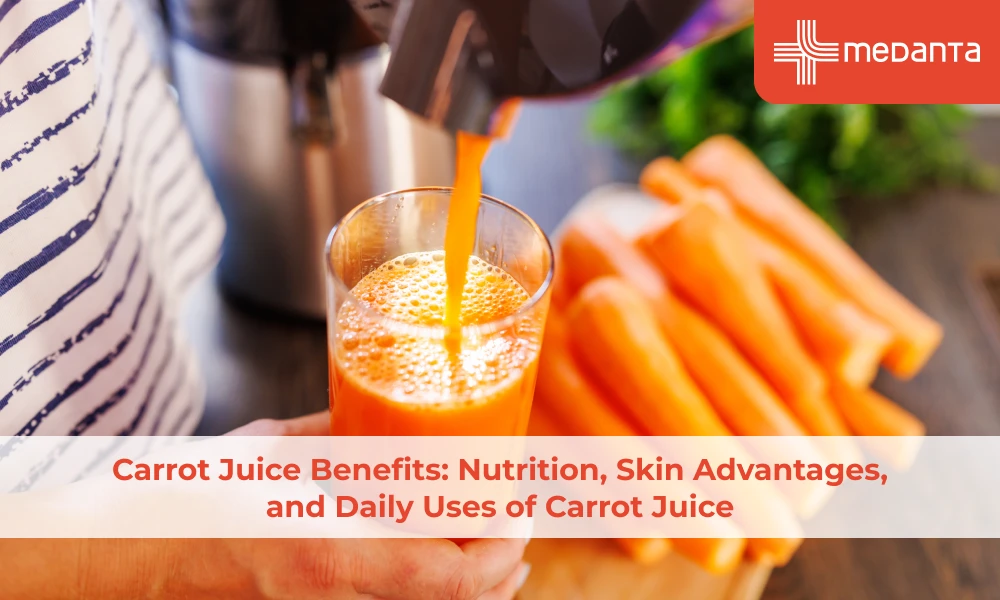
TABLE OF CONTENTS
There is something almost too simple about carrot juice. It costs little, takes minutes to prepare, and what it does for the body is genuinely worth the effort. People reach for it for glowing skin, better digestion or sharper vision. It delivers benefits not dramatically, but steadily, over weeks of regular use.
Carrots are among the richest plant sources of beta-carotene. Juicing concentrates that and their other nutrients into a form the body absorbs quickly. Let's explore what is in carrot juice, what it does, how to use it and what to watch for.
Carrot Juice Nutrition
A 240 ml glass of fresh carrot juice is built around beta-carotene. The liver converts it to Vitamin A, the nutrient behind its benefits for vision, skin, immunity and sebum regulation. Alongside that comes Vitamin C for collagen and immune support, Vitamin K for blood clotting, B vitamins for energy metabolism and potassium for blood pressure. Lutein and zeaxanthin, two antioxidants that accumulate in the eye and protect the macula, round out the profile. Low in calories, low in fat. The nutritional return per glass is high.
Health Benefits of Carrot Juice
Eye health is the most well-known benefit and for good reason. Vitamin A produces rhodopsin, the pigment the retina uses in low light. Without enough of it, night vision deteriorates. Lutein and zeaxanthin add protection against age-related macular degeneration.
Beta-carotene and Vitamin C reduce oxidative stress and support white blood cell activity. Plant flavonoids stimulate bile production and protect liver cells. For the heart, potassium manages blood pressure and antioxidants slow LDL oxidation (a process directly linked to arterial plaque). None of this replaces medication, but as a daily dietary habit, it adds up.
Carrot Juice Benefits for Skin

Skin is where the results are most visible. Vitamin A drives cell turnover, clearing the dull buildup that clogs pores. Vitamin C supports collagen production that keeps skin firm and elastic. Together they reduce pigmentation, even tone and slow early ageing. Most people notice a real difference in clarity within three to four weeks.
Beta-carotene adds mild UV protection from the inside and a warmer skin tone with consistent use. For acne-prone skin, Vitamin A regulates sebum and reduces breakouts; anti-inflammatory compounds calm existing redness. A week will not shift much. A consistent month starts to show.
Benefits of Drinking Carrot Juice Daily
Benefits of daily intake are:
It supports digestion through bile stimulation
It provides caffeine-free energy from B vitamins
It improves hydration without a sugar spike
It supports hair and nail health via Vitamin A and biotin.
Uses of Carrot and Carrot Juice
Beyond drinking it straight, carrot juice works well mixed with ginger and lemon as a morning shot, blended with apple or orange, or used as a base for soups and gravies. Mixed with honey or yoghurt it makes an effective brightening face mask. Post-workout it provides natural electrolytes without artificial additives.
How to Make Carrot Juice
Wash and peel four to five medium carrots. Cut into pieces, blend with half a cup of water, then strain through a fine mesh or muslin cloth. A cold-press juicer retains more nutrients. Add lemon or ginger for flavour and better absorption. Drink it immediately as nutrients degrade fast once juiced.
Side Effects & Precautions
Carotenemia: Over time, too much can turn the skin yellow-orange, particularly on the palms and soles. Harmless, and reverses when intake drops.
Diabetes: Natural sugars are still present. Diabetic patients should consult their doctor before starting regular consumption of carrot juice.
Blood thinners: High Vitamin K can interfere with warfarin. Check with a doctor before making it a daily habit.
Allergy: Rare but possible, sometimes linked to birch pollen cross-reactivity. Stop if any reaction occurs.
Conclusion
Carrot juice when taken consistently shows numerous benefits. The skin results are real. The eye and immune support are well backed. The key is habit, not occasional use. At Medanta, our nutrition specialists help patients incorporate evidence-based dietary choices into their health plans. If you have an existing condition, speak with a specialist before making significant changes.
FAQs
What are the key benefits of drinking carrot juice?
Eye health, stronger immunity, better skin, liver support and blood pressure regulation. Benefits are cumulative; they build over weeks, not days.
Is carrot juice good for glowing skin?
Yes. Vitamin A clears dull skin cells, Vitamin C supports collagen and beta-carotene adds warmth and mild UV protection. Most people notice a visible difference within three to four weeks of daily use.
Does carrot juice help reduce acne and pigmentation?
It helps with both. Vitamin A regulates sebum and reduces breakouts. Vitamin C slows melanin production over time. Results take a month or more of consistent use to become visible.
What nutrients are present in carrot juice?
Beta-carotene, Vitamins A, C and K, B vitamins, potassium, lutein, zeaxanthin and small amounts of calcium, magnesium and phosphorus. High nutrient density, low calories.
How much carrot juice should I drink daily?
200 to 240 ml per day is appropriate for most healthy adults. More than this regularly risks carotenemia. Those with diabetes or on blood thinners should consult a doctor first.
Is it better to drink carrot juice or eat whole carrots?
Whole carrots retain fibre, which is better for digestion and blood sugar control. Juice absorbs faster and concentrates soluble nutrients. Both have a place including each is the most complete approach.
Can carrot juice improve eyesight?
It supports eye health but does not correct prescriptions. Vitamin A maintains rhodopsin for low-light vision; lutein and zeaxanthin protect against macular degeneration. Supportive, not corrective.
What is the best time to drink carrot juice?
Morning on an empty stomach for best absorption. Post-workout for energy replenishment. Avoid late nights if natural sugars affect your sleep.
Are there any side effects of drinking too much carrot juice?
Common side effects are:
Carotenemia
Blood sugar fluctuations in diabetics
Potential interaction with anticoagulants.
One glass a day keeps all of these risks negligible for most people.
Can carrot juice help with weight loss?
Carrot juice supports a weight management plan as it is low in calories, nutrient-dense and a practical replacement for high-calorie drinks. Not a standalone solution, but a genuinely useful part of one.