1068
1068
 Request Call Back
 Contact
 1068
1068
Zero-Calorie Foods: Complete List, Weight Loss Benefits, and Foods That Don't Break Intermittent Fasting
Published on: Apr 08, 2026
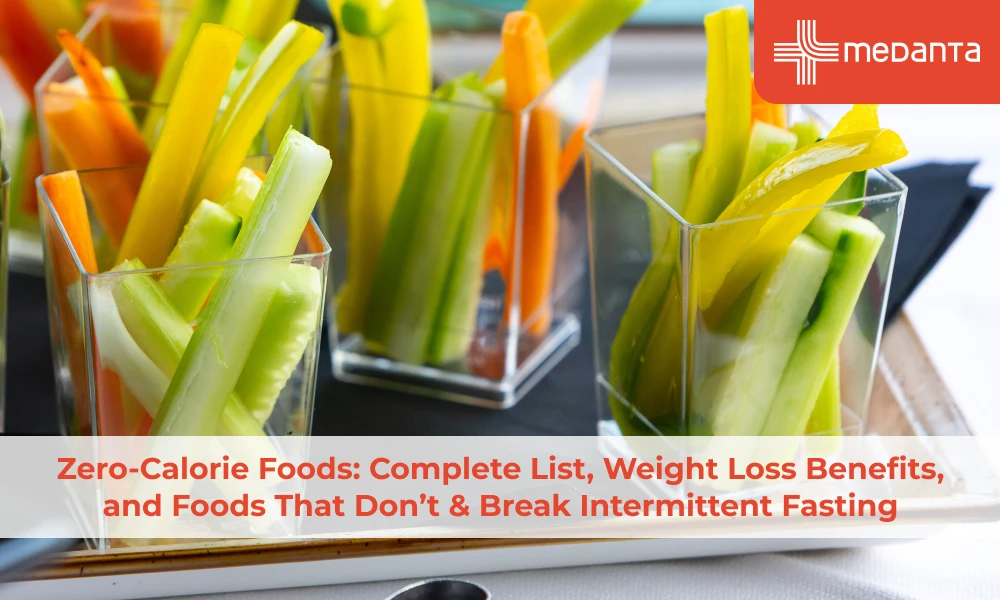
TABLE OF CONTENTS
- What Are Zero-Calorie Foods?
- Zero-Calorie Foods List
- Zero-Calorie Foods for Weight Loss
- Zero-Calorie Foods for Intermittent Fasting
- Drinks That Are Truly Zero Calorie
- Non-Calorie Foods vs Low-Calorie Foods
- How Zero-Calorie Foods Help in Weight Loss
- Best Ways to Use Zero-Calorie Foods in a Daily Diet
- Myth: Negative-Calorie Foods
- Precautions & Side Effects of Eating Too Many Low-Cal Foods
- Conclusion
- FAQs
Zero or low calorie foods are powerful allies in weight management and healthy eating. They are so low in calories that they have a negligible impact on your overall intake. Whether you are trying to shed a few kilos, curb hunger between meals, or simply eat smarter, these foods deserve a spot in your daily routine. Let's explore what zero-calorie foods are, which ones to eat, and how they fit into intermittent fasting.
What Are Zero-Calorie Foods?
Zero calorie foods are foods so low in calories that your body burns roughly the same amount of energy digesting them as they actually provide. Think crunchy cucumbers, crisp celery, leafy greens, and herbal teas foods that fill you up without piling on the numbers. They're mostly made up of water, fibre, and micronutrients, which means they keep you satisfied without adding any real caloric load to your day.
Zero-Calorie Foods List
Here's a breakdown of the best ones to know about:
Vegetables
Cucumber: just 16 kcal per 100 g, and 95% water
Celery: 14 kcal per 100 g, one of the crunchiest low-cal snacks out there
Lettuce: 15 kcal per 100 g, ideal as a salad base
Spinach: 23 kcal per 100 g, loaded with iron and magnesium
Zucchini (courgette): 17 kcal per 100 g
Asparagus: 20 kcal per 100 g
Radishes: 16 kcal per 100 g
Cabbage: 25 kcal per 100 g
Broccoli: 34 kcal per 100 g (not technically zero, but it has a high thermic effect)
Cauliflower: 25 kcal per 100 g
Tomatoes: 18 kcal per 100 g, packed with lycopene
Mushrooms: 22 kcal per 100 g, meaty texture with almost no calories/
Fruits
Watermelon: 30 kcal per 100 g, sweet and hydrating
Strawberries:32 kcal per 100 g, naturally low in sugar
Grapefruit: 42 kcal per 100 g, a metabolism-friendly citrus
Lemons and limes: 29 kcal per 100 g, great for flavouring water
Herbs and Flavourings
Parsley, basil, mint, cilantro: sprinkle as much as you like, they are virtually calorie-free
Garlic and ginger: intensely flavourful and negligible in small amounts.
Zero-Calorie Foods for Weight Loss
Hunger is often the biggest obstacle when you are trying to lose weight. People don't fail diets because they lack willpower they fail because they feel deprived and eventually cave. Zero-calorie foods solve that problem by letting you eat a genuinely satisfying amount of food without blowing your calorie budget.
When you fill half your plate with cucumber, spinach, and tomatoes, your stomach gets the volume it needs to feel full. Fibre also plays a big role here it slows digestion, steadies your blood sugar, and keeps cravings quiet for longer. A big leafy salad before your main course isn't just healthy theatre; it actually works.
Zero-Calorie Foods for Intermittent Fasting
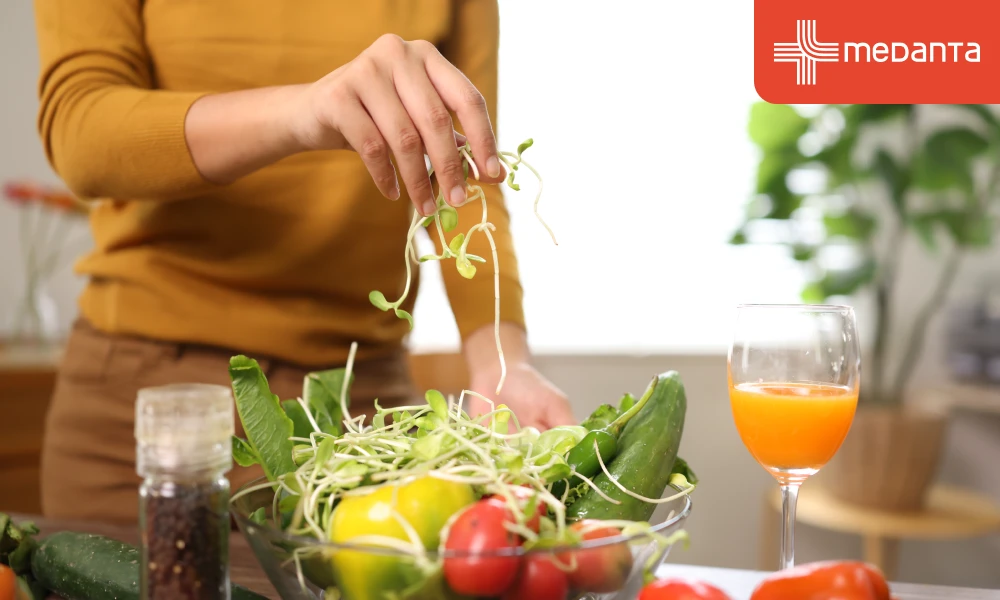
Intermittent fasting (IF) is built on one core idea: keep your insulin low during the fasting window so your body turns to stored fat for fuel. That means anything you eat or drink during a fast needs to be genuinely calorie-free and ideally non-insulinogenic.
The tricky part is that hunger doesn't always stick to your schedule. So what can you actually have without breaking the fast? During the fasting window, these are your safest bets:
Plain still or sparkling water
Black coffee (no milk, no sugar, no oat milk)
Plain green tea, black tea, or herbal teas
Apple cider vinegar diluted in water
Electrolyte drinks that contain zero calories and no sweeteners
Solid foods even zero-calorie ones like cucumber technically stimulate some digestive activity and should be saved for your eating window. When that window opens, load up on leafy greens, cucumbers, tomatoes, and mushrooms. They'll fill your plate without touching your calorie allowance.
Drinks That Are Truly Zero Calorie
Drinks are where a lot of people silently sabotage themselves. Here's what's actually safe:
Water
Sparkling water
Black coffee
Plain herbal, green, or black tea
The ones to avoid? Fruit juices (even 'natural' ones), sweetened coffees, energy drinks, and flavoured teas. These can rack up 50 to 200+ calories a glass without you even registering it as food.
Non-Calorie Foods vs Low-Calorie Foods
It's worth clearing something up: there is no such thing as a truly calorie-free solid food. Every vegetable, every fruit, every grain of rice contains some energy. The term 'zero-calorie' refers to foods so low in calories (typically under 20 to 30 kcal per 100 g) that they're functionally negligible in any diet.
Low-calorie foods sit in the next tier up, usually between 30 and 100 kcal per 100 g. Things like most fruits, legumes, and whole grains fall here. Both groups are genuinely useful for weight management, but zero-calorie foods give you the most room to move — you can eat them in large quantities without any real concern about numbers.
How Zero-Calorie Foods Help in Weight Loss
It's not just about the calories (or lack of them). These foods help you lose weight through several different pathways at once:
Volume eating: You can eat a genuinely large portion and still stay within your daily target. A 400-gram salad can have fewer calories than a single biscuit.
Fibre's slow burn: Soluble fibre absorbs water and becomes gel-like in your gut, slowing digestion and keeping you fuller for longer.
Hydration from food: Most people don't drink enough water. Eating water-rich vegetables quietly tops up your hydration, which supports metabolism and reduces bloating.
Micronutrient density: Vitamins, minerals, and antioxidants from plants support hormonal balance, energy levels, and cellular repair all of which matter for sustainable weight loss.
Blood sugar stability: With no significant sugar load these foods don't spike your insulin. No spike means no crash, and no crash means fewer cravings an hour later.
Best Ways to Use Zero-Calorie Foods in a Daily Diet
A few smart swaps and additions can make a real difference day-to-day:
Start every main meal with a big salad (lettuce, cucumbers, tomatoes, radishes) before your main dish.
Keep a container of celery or cucumber sticks in the fridge for when you need something to munch on.
Bulk up cooked meals with mushrooms, zucchini, or spinach.
Use fresh herbs generously. A handful of basil or mint adds flavour and freshness without a single meaningful calorie.
When you'd normally reach for crisps or biscuits in the afternoon, try sliced watermelon, a handful of strawberries, or some cucumber with a pinch of salt and lime.
Drink a large glass of water or herbal tea about 20 minutes before a meal. It sounds almost too simple, but it reliably reduces how much you eat.
Myth: Negative-Calorie Foods
You've probably seen this claim floating around: celery is a 'negative-calorie food' because your body burns more energy chewing and digesting it than the celery itself contains. Unfortunately, it's mostly not true.
The thermic effect of food (TEF) is real. Your body does use energy to break down and process what you eat. But for most foods, including vegetables, that thermic effect is somewhere between 5-30% of their total calorie content. Celery has about 10 calories per 100 g; digesting it might cost you 1 to 3 calories. That's not a net negative it's just very close to zero.
In practice, though, the distinction barely matters. Whether celery gives you 7 net calories or 10, the effect on your diet is essentially nothing.
Precautions & Side Effects of Eating Too Many Low-Cal Foods
Zero-calorie foods are genuinely good for you, but consuming too much can create problems. These include:
Nutrient gaps: A plate of cucumbers and lettuce doesn't give your body the protein, essential fats or complex carbs it needs to function well.
Bloating and gas: Broccoli, cabbage and cauliflower are notorious for causing digestive discomfort in some people, particularly when eaten in large amounts.
Electrolyte imbalance: Eating very few calories combined with drinking a lot of water can dilute sodium and potassium levels. This can cause fatigue, muscle cramps, and brain fog.
An unhealthy mindset: Becoming fixated on only eating zero-calorie foods can tip into disordered thinking. Food is meant to nourish and, yes, also to be enjoyed. Balance matters.
The smartest approach is to use these foods alongside proper portions of lean protein, healthy fats, and whole grains.
Conclusion
Zero-calorie foods won't magically fix your diet on their own, but they're one of the most practical and underused tools available to anyone who wants to eat better without feeling constantly deprived. Cucumber, celery, spinach, zucchini, tomatoes, mushrooms, and strawberries are genuinely tasty, versatile, and endlessly useful, whether you're building a weight loss plan, navigating an intermittent fasting schedule, or simply trying to crowd out the junk with something that actually does your body good. Use them freely or pair them with a balanced diet.
FAQs
What are zero-calorie foods?
Zero-calorie foods are foods so low in calories usually under 20 to 30 kcal per 100 g. They contribute almost nothing to your total daily intake. Most are water-rich vegetables, certain fruits, and some beverages like plain tea and black coffee.
Are there foods with absolutely no calories?
Every whole food contains at least some energy - even a leaf of lettuce. The term 'zero-calorie' is a practical shorthand for foods that are so close to zero that they're not worth counting. Plain water is the only true zero-calorie option.
Which foods are included in the zero-calorie foods list?
The best ones are cucumber, celery, lettuce, spinach, zucchini, tomatoes, radishes, mushrooms, and cauliflower on the vegetable side. For fruits, look to strawberries, watermelon, lemons, limes, and grapefruit. Fresh herbs like parsley, basil, and mint are also essentially zero.
Can zero-calorie foods help with weight loss?
Yes, and quite meaningfully so. They let you eat large, satisfying portions without going over your calorie target. The fibre keeps you full, the water keeps you hydrated, and the overall effect makes it much easier to eat less without feeling like you're starving.
What are the best 0-calorie foods to eat during intermittent fasting?
During your eating window, leafy greens, cucumbers, celery, and tomatoes are all excellent choices. During the fast itself, stick to plain water, black coffee, or unsweetened herbal teas.
Do zero-calorie foods break a fast?
Solid foods even ultra-low-calorie ones can stimulate digestion and a small insulin response, which technically disrupts the fasted state. If you're strictly fasting, stick to plain liquids. Save the vegetables for when your eating window begins.
Is a cucumber a zero-calorie food?
Yes cucumber has just 16 kcal per 100 g and is made up of roughly 95% water. It's crunchy, refreshing, filling, and genuinely one of the easiest zero-calorie snacks you can keep on hand.
Are there fruits without calories?
No fruit is completely calorie-free, but several are impressively low. Strawberries, watermelon, lemons, limes and grapefruit are solid choices for a low-calorie diet.
Which non-calorie foods can I eat freely for weight loss?
You can eat very generous amounts of cucumber, celery, lettuce, spinach, radishes, zucchini, tomatoes, and mushrooms without any real caloric concern. They're filling, nutritious, and versatile enough to work in almost any meal.
Is it safe to eat too many zero-calorie foods daily?
Generally yes but with one caveat. If zero-calorie foods become the entirety of what you're eating, you'll miss out on protein, essential fats, and key nutrients. Think of them as an excellent foundation to build a balanced diet on, not as a complete diet in themselves.