1068
1068
 Request Call Back
 Contact
 1068
1068
Why Are My Hands Shaking? Causes, Symptoms and Treatment of Hand Tremors
Published on: Sep 15, 2026
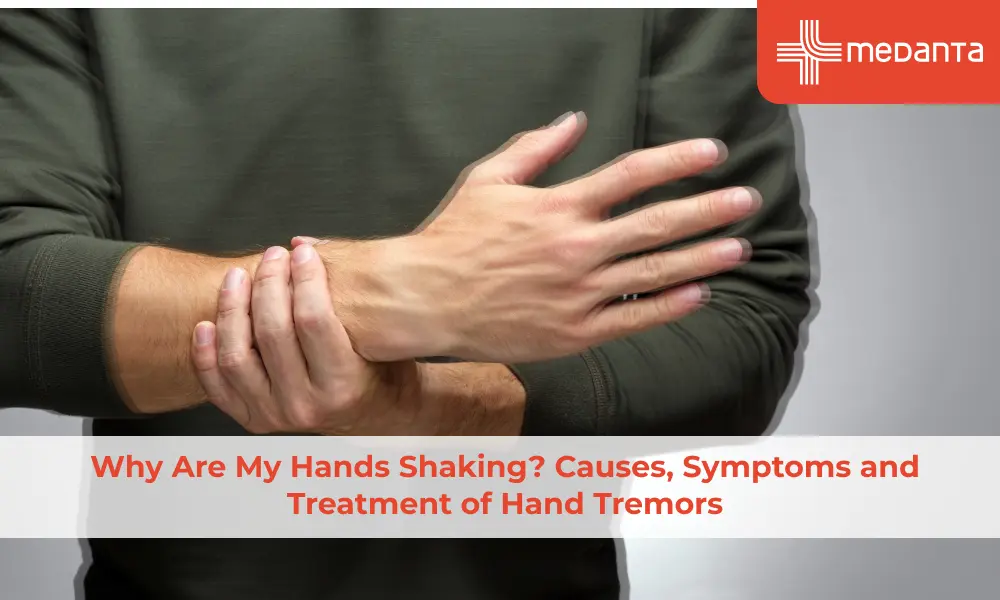
TABLE OF CONTENTS
- What Is Hand Shivering / Hand Tremor
- Common Reasons for Shaky Hands
- Medical Causes of Hand Tremors
- Symptoms That Often Accompany Shaking Hands
- When Hand Shivering Signals a Bigger Problem
- Diagnosis - How Doctors Identify the Cause
- Treatment Options for Hand Tremors
- Lifestyle Tips to Reduce Shaky Hands
- When to See a Doctor
- Conclusion
- FAQs
- References
Hand tremors are one of the most common movement complaints seen by doctors in India and worldwide. Most people experience their hands shaking at some point in their lives whether from nervousness before an exam, too much chai, low blood sugar after a missed meal or extreme fatigue. Occasional hand shaking is completely harmless and resolves on its own. However persistent or progressively worsening hand tremors can signal an underlying medical condition that needs attention. This article explains what hand tremors are, why they happen, when they are a cause for concern and what can be done about them.
What Is Hand Shivering / Hand Tremor
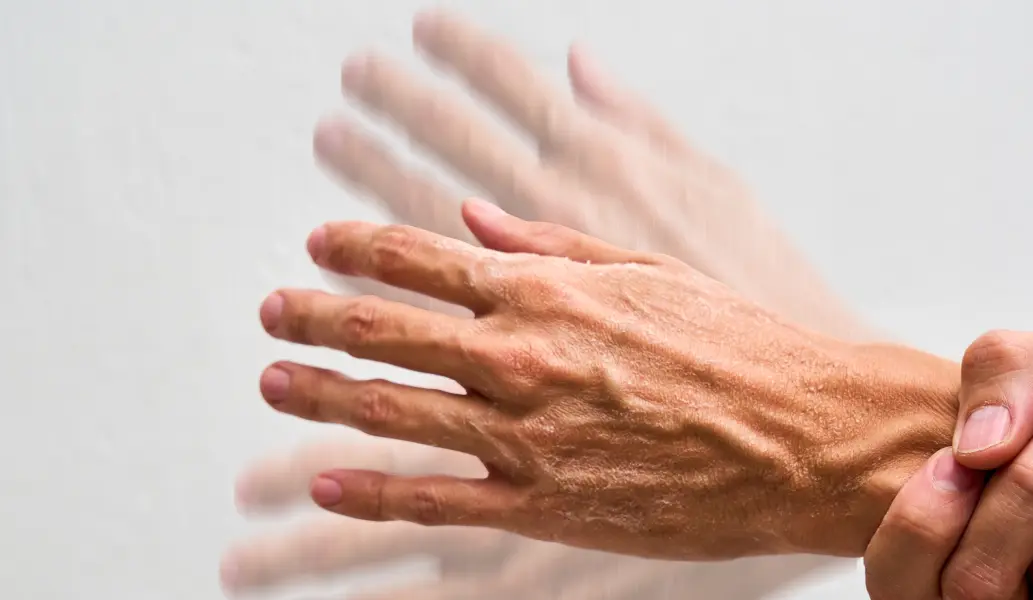
A hand tremor is an involuntary, rhythmic muscle movement that causes the hand, fingers or wrist to shake without any conscious effort or control, involving a regular, repetitive oscillating movement rather than a random or jerky one. Tremors are classified by when they occur.
Resting tremor: Appears when the hand is relaxed characteristically associated with Parkinson's disease.
Action tremor: Appears during voluntary movement and includes postural tremors (such as holding a cup of tea) and intention tremors (which worsen as the hand approaches a target).
Common Reasons for Shaky Hands
The majority of hand tremors have everyday, non-serious causes that resolve once the triggering factor is addressed. They are:
Anxiety and stress: When the body is anxious, the adrenal glands release adrenaline, causing muscles including those of the hands to tense and tremble.
Caffeine excess: Caffeine is a central nervous system stimulant that can cause fine tremor of the hands particularly at high doses or when consumed on an empty stomach. Cutting down on coffee or energy drinks typically resolves caffeine related shaking.
Low blood sugar (hypoglycaemia): When blood glucose falls below normal levels the body releases adrenaline, causing hand shaking along with sweating, a fast heartbeat and weakness. This is common in people with diabetes who take insulin without eating enough, and in non-diabetic people who skip meals.
Fatigue and alcohol withdrawal: Muscle fatigue impairs fine motor control and produces a mild tremor. In people with alcohol dependence, sudden cessation of alcohol causes a severe tremor alongside sweating, raised blood pressure and in severe cases, seizures.
Certain medicines: Several medicines can cause hand tremors as a side effect, including valproate (for epilepsy and bipolar disorder), lithium (for bipolar disorder), salbutamol inhalers (for asthma), SSRIs and high doses of corticosteroids.
Medical Causes of Hand Tremors
Several medical conditions cause persistent hand tremors that do not resolve on their own and require specific diagnosis and treatment. They are:
Essential tremor is the most common tremor disorder worldwide. It typically affects both hands, worsens with age, and runs in families.
Parkinson's disease is caused by the degeneration of dopamine-producing cells in the brain. The characteristic resting tremor (most visible when the hand is at rest) is accompanied by muscle stiffness, slowness of movement and a shuffling gait.
Hyperthyroidism an overactive thyroid gland produces a fine, fast tremor of the outstretched hands alongside weight loss, palpitations, excessive sweating, heat intolerance and anxiety. It is particularly common in women.
Multiple scleroin leads to inflammatory patchers and brain and this can present on tumors sometimes
Symptoms That Often Accompany Shaking Hands
The symptoms that accompany hand tremors provide important clues to the underlying cause and help doctors make the correct diagnosis. They are:
Sweating, palpitations and hunger along with hand shaking suggest hypoglycaemia or an anxiety-related adrenaline release.
Weight loss, heat intolerance and a rapid heartbeat with fine hand tremor suggest hyperthyroidism.
Slowness of movement, muscle stiffness, a shuffling gait and a resting tremor visible when the hand is relaxed strongly suggest Parkinson's disease.
Tremor that worsens as the hand approaches a target with balance problems or visual changes suggests cerebellar disease or multiple sclerosis.
When Hand Shivering Signals a Bigger Problem
Most hand tremors are benign and temporary. However, certain characteristics of a tremor should prompt medical evaluation without delay. They are:
A tremor that is progressively getting worse over weeks or months.
A tremor accompanied by other neurological symptoms such as weakness, difficulty speaking, vision changes or balance problems.
A resting tremor visible when the hand is at rest particularly in someone over the age of 55.
Diagnosis - How Doctors Identify the Cause
There is no single test that diagnoses all types of tremor. The diagnosis is clinical based on a careful history & physical examination with targeted investigations to identify specific underlying conditions:
Medical history and clinical assessment: The doctor asks when the tremor started, whether it is present at rest or during movement, whether it is worsening and what medicines you are taking. The doctor will examine the tremor at rest, with arms outstretched and during movements like pointing at a target.
Blood tests: Thyroid function (TSH and Free T4), blood glucose, full blood count, kidney & liver function and serum calcium are ordered to identify metabolic or hormonal causes of tremor such as hyperthyroidism, hypoglycaemia or electrolyte disturbances.
Brain imaging and DaTscan: An MRI of the brain looks for structural causes of tremor such as stroke, tumour or multiple sclerosis. A DaTscan measuring the density of dopamine transporters in the brain can distinguish Parkinson's disease tremor from essential tremor in clinically unclear cases.
Treatment Options for Hand Tremors
Treatment of hand tremors depends entirely on the underlying cause. There is no single universal treatment for all tremors:
Essential tremor: First-line drug treatments include propranolol (a beta-blocker) and primidone (an anticonvulsant), both reducing tremor severity in the majority of patients. Deep brain stimulation (DBS) is an option for severe essential tremor at large tertiary centres in India.
Parkinson's disease: The tremor of Parkinson's disease responds to dopaminergic medicines and anticholinergics and DBS in advanced stages.
Hyperthyroidism and drug-induced tremors: Treating the overactive thyroid with antithyroid medicines, radioactive iodine or thyroid surgery resolves the associated tremor. Drug-induced tremors typically resolve when the causing medicine is stopped or reduced under medical supervision.
Anxiety-related tremors: Cognitive behavioural therapy (CBT), lifestyle modifications and anti-anxiety medicines effectively reduce anxiety-related hand tremors.
Multiple sclerosis: management of underlying disease & symptomatic treatment with anti-tremor drugs.
Lifestyle Tips to Reduce Shaky Hands
For mild or non-medical tremors several practical lifestyle measures can significantly reduce hand shaking. They are:
Cutting down on chai, coffee and energy drinks often reduces hand tremor within a few days.
Regular meals including protein-rich foods such as dal, eggs, paneer and nuts prevent the blood glucose dips that trigger hand shaking.
Pranayama, yoga, regular physical activity and adequate sleep all reduce stress-related tremor.
Reducing or stopping alcohol reduces tremor.
Weighted utensils, non-slip mats, cups with lids and voice-to-text software can significantly reduce the impact of tremor on daily activities.
When to See a Doctor
Occasional mild hand shaking related to caffeine, anxiety, fatigue or a missed meal does not require a medical consultation. See a doctor promptly if any of the following are present:
The tremor persists for more than a few weeks without a clear trigger (caffeine, stress or fatigue).
The tremor is progressively getting worse over time.
The tremor is accompanied by slowness of movement, muscle stiffness, weight loss, palpitations or balance problems.
The tremor is interfering with writing, eating, drinking or other activities of daily life.
Conclusion
Hand tremors are common and in most cases they are caused by everyday factors such as anxiety, caffeine, fatigue or low blood sugar that resolve without treatment. Understanding the pattern of the tremor like when it occurs, what makes it better or worse and what other symptoms accompany it helps determine whether the shaking is benign or requires medical investigation. Effective treatments are available for most causes. Early diagnosis allows earlier treatment, which can significantly improve quality of life. If your hands have been shaking persistently or if the shaking is accompanied by other symptoms consult a doctor without delay.
FAQs
Why are my hands shaking for no reason?
Most apparently unexplained hand tremors have an identifiable cause once examined carefully. Common causes include anxiety, too much caffeine, fatigue, missed meals causing low blood sugar or a medicine side effect. If shaking persists for more than a few weeks without a clear trigger a medical evaluation is needed.
What are the common causes of hand tremors?
The most common causes are anxiety and stress (which trigger adrenaline release), caffeine excess, low blood sugar, fatigue, alcohol withdrawal and medicine side effects. Essential tremor and hyperthyroidism are the most common medical causes.
Is hand shivering a symptom of anxiety?
Yes anxiety is one of the most common causes of hand shaking. The body releases adrenaline when anxious, causing muscles of the hands and fingers to tremble. Managing anxiety through therapy, breathing exercises, yoga and adequate sleep helps reduce anxiety related tremors.
Can low blood sugar cause shaking hands?
When blood glucose falls below normal the body releases adrenaline, causing hand shaking alongside sweating, palpitations, hunger and weakness. This is common in people with diabetes who take insulin without eating enough and in non-diabetic people who skip meals for long periods.
What medical conditions cause hand tremors?
Essential tremor is the most common medical cause, followed by Parkinson's disease, hyperthyroidism, multiple sclerosis and cerebellar disorders.
How is a hand tremor treated?
Treatment depends on the cause. Essential tremor is treated with beta-blockers and anticonvulsants. Parkinson's disease tremor responds to dopaminergic medicines. Hyperthyroidism is treated with antithyroid medicines. Drug-induced tremors resolve when the offending medicine is stopped under medical supervision.
Are shaky hands a sign of Parkinson's disease?
Shaky hands can be a sign of Parkinson's disease but it is not the most common cause. The characteristic Parkinson's tremor is a resting tremor and is accompanied by slowness of movement, muscle stiffness and a shuffling gait.
Can too much caffeine cause hand shivering?
Caffeine (through chai, coffee and energy drinks) increases nerve firing and can cause fine tremor of the hands particularly at high doses or when consumed on an empty stomach.
Is hand tremor in fingers normal with age?
A mild increase in tremor with age is common. Many elderly people develop essential tremor that becomes more noticeable over time. However, a new or worsening tremor in older adults particularly one accompanied by slowness, stiffness or balance problems should be evaluated by a doctor to rule out Parkinson's disease.
When should I worry about shaking hands?
Be concerned if the tremor persists for more than a few weeks without a clear trigger, if it is progressively getting worse or if it is accompanied by slowness, stiffness, weight loss, palpitations, balance problems or vision changes. A tremor appearing with confusion and sweating also requires prompt medical evaluation.
References
1. Louis ED, Ferreira JJ. How common is the most common adult movement disorder? Update on the worldwide prevalence of essential tremor. Mov Disord. 2010;25(5):534–41. https://doi.org/10.1002/mds.22838
2. Bhatia KP, Bain P, Bhatt M, et al. Consensus Statement on the classification of tremors. from the task force on tremor of the International Parkinson and Movement Disorder Society. Mov Disord. 2018;33(1):75–87. https://doi.org/10.1002/mds.27121
3. Deuschl G, Raethjen J, Hellriegel H, Elble R. Treatment of patients with essential tremor. Lancet Neurol. 2011;10(2):148–61. https://doi.org/10.1016/S1474-4422(10)70322-7
4. Bhidayasiri R. Differential diagnosis of common tremor syndromes. Postgrad Med J. 2005;81(962):756–62. https://doi.org/10.1136/pgmj.2005.032979
5. Jankovic J. Parkinson's disease: clinical features and diagnosis. J Neurol Neurosurg Psychiatry. 2008;79(4):368–76. https://doi.org/10.1136/jnnp.2007.131045