1068
1068
 Request Call Back
 Contact
 1068
1068
White Tongue: Causes, Symptoms and Home Remedies to Get Rid of It
Published on: Sep 29, 2026
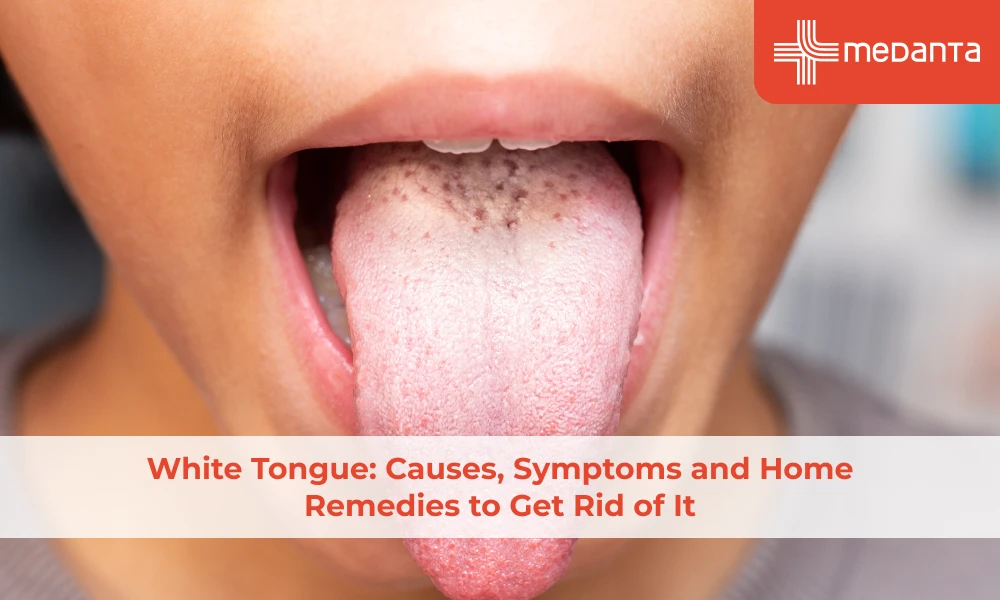
TABLE OF CONTENTS
- What Causes White Patches/Coating on the Tongue
- Common Symptoms That Come With a White Tongue
- Is White Tongue a Sign of Dehydration?
- Medical Conditions Linked to White Tongue
- White Tongue in Children and Babies
- Home Remedies to Get Rid of White Tongue Naturally
- Medical Treatment Options for White Tongue
- How to Prevent White Tongue Permanently
- When to See a Doctor
- Conclusion
- FAQs
- References
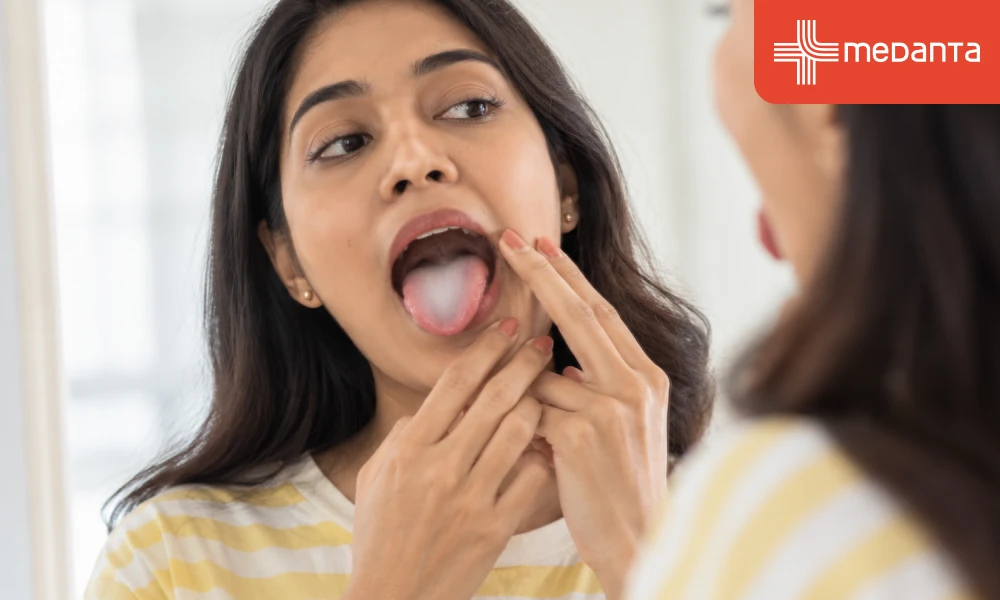
A healthy tongue is pink, moist and lightly textured. When a white coating or white patches appear on the tongue, it almost always signals a change in oral hygiene, hydration or the balance of bacteria and fungi in the mouth. In most cases white tongue is harmless and temporary.
The white appearance is usually caused by an overgrowth of dead cells, bacteria, food debris or fungi trapped between the tiny projections covering the tongue surface. In some cases, white patches can signal an underlying condition such as oral thrush, oral lichen planus or leukoplakia (abnormal white patches that require medical evaluation). Knowing the difference between a simple coating that clears with oral hygiene and a persistent patch that does not scrape off determines when home remedies are enough and when a doctor needs to be seen.
What Causes White Patches/Coating on the Tongue
White tongue can result from several different causes ranging from everyday factors (poor oral hygiene and dehydration) to specific infections and medical conditions. They are:
Poor oral hygiene is the most common cause of a white coating on the tongue. Dead cells, bacteria, and food particles accumulate between the papillae, creating a white or yellowish coating.
Oral thrush is caused by the yeaast Candida albicans and appears as creamy white patches that can be wiped off to reveal a red, raw surface underneath. It is more common in infants, people who have recently taken antibiotics or inhaled corticosteroids and those with weakened immune systems or poorly controlled diabetes.
Dehydration and dry mouth reduce saliva flow, allowing bacteria and dead cells to accumulate on the tongue surface and creating a white or thick coating.
Tobacco use including smoking and smokeless forms such as gutkha, khaini and paan masala irritates the oral lining and promotes the overgrowth of cells on the tongue surface that can become precancerous.
Common Symptoms That Come With a White Tongue
White tongue itself is a visible sign rather than a symptom but it is often accompanied by other changes in the mouth that help identify its cause. They are:
White patches that scrape off to reveal redness beneath suggest oral thrush. Patches that cannot be removed at all suggest leukoplakia, which requires medical evaluation.
Bad breath (halitosis) frequently accompanies white tongue caused by poor oral hygiene or oral thrush.
A burning or sore sensation on the tongue particularly when eating spicy foods or acidic drinks such as tamarind-based chutneys, is common in oral thrush and oral lichen planus.
Is White Tongue a Sign of Dehydration?
Dehydration is one of the most commonly overlooked causes of a white or coated tongue. When fluid intake is inadequate, saliva production decreases, allowing bacteria and dead cells to accumulate on the tongue surface.
In the summer months across India, when temperatures can exceed 40°C, dehydration-related white tongue is particularly common. Drinking at least 2 to 3 litres of water per day and increasing fluid intake during heat, exercise or illness usually resolves a dehydration-related white coating within 24 hours.
Medical Conditions Linked to White Tongue
Several medical conditions can cause white tongue as a symptom. They are:
HIV/AIDS: People with HIV are highly susceptible to oral thrush and oral hairy leukoplakia - white, corrugated patches on the sides of the tongue.
Diabetes: High blood glucose in poorly controlled diabetes promotes Candida overgrowth, making diabetic patients significantly more likely to develop oral thrush.
Iron deficiency anaemia and vitamin B12 deficiency: Both are extremely common in India particularly among women and vegetarians. Both conditions can cause glossitis - inflammation of the tongue presenting as a white-coated, swollen or smooth tongue with altered taste.
White Tongue in Children and Babies
White tongue is very common in newborns and young infants. It is usually caused by milk residue on the tongue (which wipes off easily with a clean, damp cloth) or oral thrush (which does not wipe off easily and may cause fussiness during feeding). Oral thrush in infants is treated with oral antifungal drops, prescribed by a paediatrician. If a breastfeeding mother has sore, red nipples along with the baby's oral thrush, both mother and baby may need antifungal treatment to prevent passing the infection back and forth.
Home Remedies to Get Rid of White Tongue Naturally
For mild white tongue caused by poor oral hygiene, dry mouth or a simple Candida overgrowth, several safe and practical home remedies can be effective. They are:
Tongue scraping: Using a tongue scraper or the back of a clean spoon to scrape the white coating off the tongue each morning is the single most effective home remedy for poor-hygiene white tongue. It removes dead cells, bacteria, and food debris and significantly reduces bad breath.
Salt water rinsing: Rinsing the mouth with warm salt water (half a teaspoon of salt in a glass of lukewarm water) two to three times per day reduces oral bacterial populations and controls the overgrowth of organisms that cause white coating.
Oil pulling: Swishing a tablespoon of coconut oil around the mouth for 10 to 15 minutes before spitting it out is a traditional Ayurvedic practice shown in some clinical studies to reduce oral bacteria particularly Candida.
Probiotic foods and adequate hydration: Curd and buttermilk help restore the natural balance of beneficial bacteria in the mouth and gut, reducing Candida overgrowth. Drinking at least 2 to 3 litres of water per day maintains normal saliva production and prevents dry mouth.
Medical Treatment Options for White Tongue
When white tongue is caused by an underlying medical condition rather than simple oral hygiene issues home remedies alone are not sufficient and medical treatment is needed. Treatment options are:
Antifungal medicines for oral thrush: Nystatin oral suspension is the first line treatment for mild oral thrush in children and adults. For moderate to severe cases or in patients with weakened immune systems oral fluconazole is used for 7 to 14 days.
Biopsy for leukoplakia: White patches that cannot be scraped off and persist for more than two to three weeks require a biopsy to check for dysplasia (precancerous change). Tobacco cessation is the most important step in management.
How to Prevent White Tongue Permanently
Most cases of white tongue can be permanently prevented by adopting good oral hygiene habits and addressing the lifestyle factors that promote white coating. These are:
Brush teeth and tongue twice daily and use a tongue scraper each morning. A tongue scraper removes dead cells and bacteria from the tongue surface more effectively than a toothbrush alone.
Drinking 2 to 3 litres of water per day maintains normal saliva production and prevents dry mouth.
Avoid excessive alcohol and caffeinated drinks, which contribute to dehydration.
Quitting tobacco is the single most impactful step for prevention of tobacco-related oral lesions.
Manage blood sugar if you have diabetes, and have regular dental check-ups every six months to identify early oral changes.
When to See a Doctor
Most cases of white tongue resolve within a few days. See a doctor or dentist if any of the following apply:
White patches persist for more than two to three weeks despite good oral hygiene and adequate hydration
White tongue is accompanied by difficulty swallowing, numbness or pain that does not resolve.
An infant is fussy during feeding and has white patches that do not wipe off easily with a damp cloth.
A tobacco user has noticed a persistent new white patch inside the mouth.
Conclusion
White tongue is a common and usually harmless condition that responds well to improved oral hygiene, adequate hydration and simple home remedies such as tongue scraping and salt water rinsing. In most people a white coating reflects the accumulation of dead cells, bacteria and food particles rather than a serious underlying disease.
Persistent white patches that do not clear with oral hygiene measures, or a white tongue in a person with a weakened immune system or a history of tobacco use should be evaluated by a doctor or dentist without delay. Good oral hygiene, adequate water intake, a diet rich in curd, fruit and vegetables, and avoiding tobacco are the most reliable long-term strategies for a healthy, pink tongue.
FAQs
Why is my tongue white all of a sudden?
A sudden white tongue is most often caused by dehydration, poor oral hygiene or a rapid change in oral bacteria after illness or antibiotics. It usually resolves within a day or two with hydration and tongue scraping.
How do I get rid of a white tongue fast?
Use a tongue scraper each morning, rinse with warm salt water two to three times per day and drink plenty of water. Hygiene-related white tongue usually clears within 24 to 48 hours.
Is a white tongue a sign of vitamin deficiency?
Yes deficiency of iron, vitamin B12 or folate can cause glossitis, which presents as a white or pale, swollen or smooth tongue.
What deficiency causes a white tongue?
Iron deficiency and vitamin B12 deficiency are the most common nutritional causes of tongue changes, producing a pale, swollen, or smooth and painful tongue with altered taste.
Can dehydration cause a white tongue?
Yes dehydration reduces saliva production, allowing dead cells, bacteria and food debris to accumulate and create a white coating. Drinking adequate water usually resolves dehydration-related white tongue within 24 hours.
Does a fungal infection cause a white tongue?
Oral thrush (caused by the yeast Candida albicans) produces creamy white patches that scrape off to reveal a red surface beneath. Oral thrush requires antifungal treatment.
What home remedies work best for a white tongue?
Tongue scraping each morning, salt water rinsing two to three times daily, adequate water intake and probiotic foods such as curd and buttermilk are the most effective home remedies for mild white tongue.
When should I worry about a white tongue?
Seek medical advice if white patches persist for more than two to three weeks, cannot be scraped off, cause pain or bleeding, or appear along with difficulty swallowing. Tobacco users with a new white patch should see a doctor promptly.
Can smoking or tobacco cause a white tongue?
Smoking, gutkha, khaini and paan masala irritate the oral lining and can cause leukoplakia - white patches that may be precancerous. Quitting tobacco is essential for both prevention and treatment.
How can I prevent my tongue from turning white again?
Brush the tongue twice daily, use a tongue scraper each morning, drink 2 to 3 litres of water per day, eat curd and chaas, avoid tobacco and have dental check-ups every six months.
Can antibiotics cause a white tongue?
Yes antibiotics reduce normal oral bacteria, allowing Candida to overgrow and cause oral thrush. White patches appearing after a course of antibiotics should be evaluated by a doctor. Eating curd during and after antibiotics helps restore oral flora.
References
1. Samaranayake LP. Essential Microbiology for Dentistry. Churchill Livingstone. 2012:4th ed. https://doi.org/10.1016/B978-0-7020-3410-6.00001-6
2. Neville BW, Damm DD, Allen CM, Chi AC. Oral and Maxillofacial Pathology. Elsevier. 2016:4th ed. https://doi.org/10.1016/B978-1-4557-7052-6.00001-7
3. Pappas PG, Kauffman CA, Andes DR, et al. Clinical Practice Guideline for the Management of Candidiasis: 2016 Update by the Infectious Diseases Society of America. Clin Infect Dis. 2016;62(4):e1–50. https://doi.org/10.1093/cid/civ933
4. Warnakulasuriya S, Johnson NW, van der Waal I. Nomenclature and classification of potentially malignant disorders of the oral mucosa. J Oral Pathol Med. 2007;36(10):575–80. https://doi.org/10.1111/j.1600-0714.2007.00582.x
5. Asokan S, Emmadi P, Chamundeswari R. Effect of oil pulling on plaque induced gingivitis: a randomized, controlled, triple-blind study. Indian J Dent Res. 2009;20(1):47–51. https://doi.org/10.4103/0970-9290.49067