1068
1068
 Request Call Back
 Contact
 1068
1068
Understanding Polytrauma: Causes, Symptoms, and Treatment Options
Published on: Dec 19, 2025
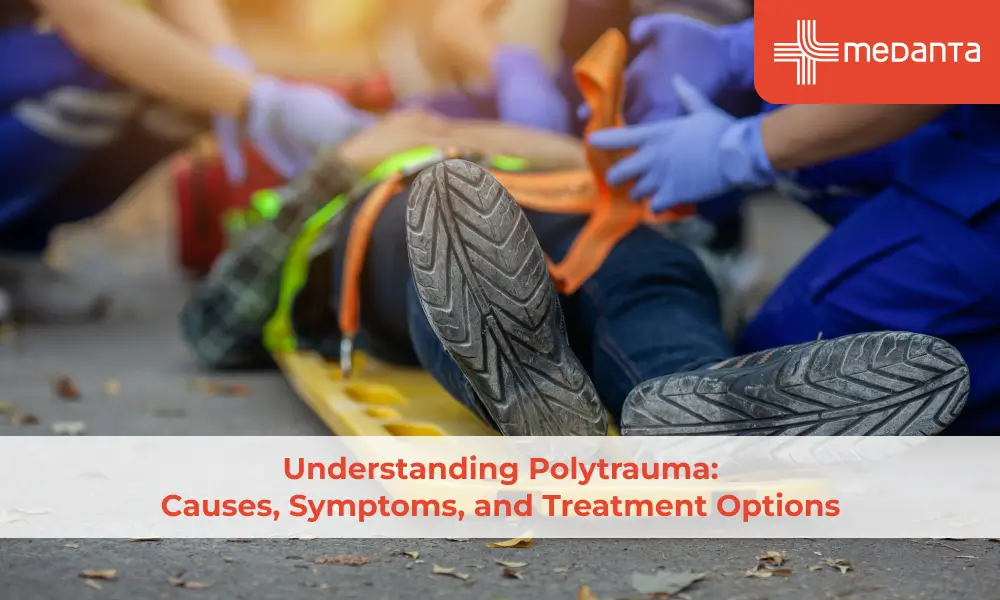
TABLE OF CONTENTS
Polytrauma ranks among the world's 3rd leading cause of death (taking a devastating toll on human lives). Most of these multiple severe injuries result from motor vehicle accidents, falls, blasts and homicides. The grim reality shows that trauma claims the majority of its victims within just hours after injury, usually from traumatic brain injuries or severe blood loss.
Modern emergency medical care has advanced significantly, yet death rates continue to rise because of sepsis and systemic inflammatory immune responses that often trigger multiple organ failure. Death patterns typically show three distinct peaks: immediate deaths from severe neurological or vascular damage, fatalities during the crucial "Golden Hour," and deaths that occur days or weeks later due to complications. This article helps readers understand everything in polytrauma, from symptom identification to treatment options and recovery expectations.
What Is Polytrauma?
Doctors have changed their views on what polytrauma means over the last several years. A polytrauma patient has multiple injuries affecting different body regions or organ systems. These injuries can lead to major disabilities and might put the patient's life at risk.
Polytrauma occurs when a patient has injuries with an Abbreviated Injury Scale (AIS) score of 3 or higher in at least two body regions. The patient must also show one of these five physical signs:
Hypotension (blood pressure ≤ 90 mmHg)
Unconsciousness (Glasgow Coma Scale ≤ 8)
Acidosis (base excess ≤ −6.0)
Coagulopathy (abnormal blood clotting)
Age (70 years or older)
This differs from isolated trauma where the patient suffers just one injury. Patients with polytrauma face higher complication risks than what you'd expect by adding up the risks of each separate injury.
Some hospitals call it polytrauma when a patient's Injury Severity Score (ISS) reaches 16 or more. This approach has its problems since it might include severe injuries to just one body system that aren't really polytrauma cases. "The Golden Hour" (crucial 60 minutes after injury) can make the difference between life and death.
Common Types of Injuries Seen in Polytrauma
Patients with polytrauma suffer severe injuries that affect multiple systems in their body. The table below shows common injury patterns doctors observe in these complex cases.
Body Region | Common Injuries | Prevalence/Characteristics |
Head and Brain | Traumatic brain injury, skull fractures, intracranial bleeding | More common in the elderly (due to falls) compared to younger patients |
Thorax/Chest | Rib fractures, collapsed lung, internal bleeding, heart injury | Higher in younger patients versus the elderly |
Abdomen | Damage to the liver, spleen, kidneys; perforation of hollow organs | More prevalent in younger patients than in the elderly |
Spine | Vertebral fractures, spinal cord damage, nerve injuries | Common in the age 18–59 years |
Extremities | Complex fractures, soft tissue injuries | Overall prevalence up to 60% |
Upper Extremities | Mainly clavicle, radius, humerus fractures | Present in many polytrauma cases |
Lower Extremities | Mainly femur, tibia, ankle/foot fractures | Occur in 19% of polytrauma cases |
Pelvic | Fractures with potential for massive bleeding | Often life-threatening |
Vascular | Tears or ruptures in major blood vessels | Can lead to rapid exsanguination |
Burns/External | Thermal injuries affecting skin, airways, internal organs | more common in younger patients than in elderly |
Research shows that doctors miss many injuries in polytrauma patients, with most being musculoskeletal. Patients involved in motor vehicle accidents show a higher rate of midfoot injuries compared to non-polytrauma cases.
How Doctors Diagnose Polytrauma
Polytrauma diagnosis requires a systematic approach because multiple injuries just need quick assessment. Medical teams use the Advanced Trauma Life Support (ATLS) protocol with its well-laid-out primary survey to explore five vital areas:
Airway: Physicians check for obstructions while protecting the cervical spine.
Breathing: Clinicians assess chest movement and listen for breathing sounds to identify injuries like pneumothorax.
Circulation: Doctors check pulse, blood pressure and signs of shock while controlling haemorrhage.
Disability: Teams measure neurological function using the Glasgow Coma Scale to determine consciousness level.
Exposure: Complete undressing helps find hidden injuries.
Medical teams complete this primary assessment within minutes of arrival often during the original resuscitation. Doctors typically order a "trauma series" of X-rays (lateral cervical spine, chest and pelvis) among other FAST (Focused Assessment with Sonography for Trauma) ultrasound scans to detect internal bleeding. Patients undergo a complete head-to-toe examination with additional imaging (like CT scans) after stabilisation. Whole body CT provides speed and accuracy in diagnosing vascular injuries.
The tertiary survey happens 12-24 hours after admission, as doctors miss some injuries initially. This well-laid-out approach has reduced missed injuries by a lot.

How Doctors Treat Multiple Injuries at Once
Medical teams work together to manage multiple life-threatening injuries when treating polytrauma patients. The "Golden Hour" - the first 60 minutes after injury - plays a significant role in determining if a patient will survive.
Medical teams prioritise treatment based on this hierarchy:
Severe bleeding that threatens life (like major haemorrhage from limbs)
Injuries that could cause permanent disability (like unstable spine injuries)
Conditions that might lead to limb loss (compartment syndrome or vascular injuries)
Injuries affecting how the body works (peripheral nerve damage)
Teams use the ABCDE approach from Advanced Trauma Life Support protocols: Airway, Breathing, Circulation, Disability & Exposure. This quick way helps teams tackle the most critical problems first.
Doctors often wait to fix fractures permanently when patients have unstable vital signs or need brain surgery.
A team of physiotherapists, occupational therapists, speech therapists and social workers cooperate during recovery. This team-based approach helps achieve the best possible outcomes in these complex cases.
Challenges in Treating Polytrauma Patients
Medical teams face unique challenges when treating polytrauma patients at every stage of care. The deadliest challenge comes from a dangerous combination known as the "lethal triad"—acidosis, coagulopathy, and hypothermia. Severe bleeding triggers this condition and leads to organ failure. Death follows quickly without immediate intervention.
The challenges start before patients reach the hospital. Emergency responders must work in hostile environments and make split-second decisions about fluid administration. They need to balance quick transport with patient stabilisation. Recent studies show that IV fluids can actually harm patients by disrupting their natural clotting mechanisms. Hospital care brings its own complex coordination needs. A polytrauma patient's survival depends on trauma surgeons, orthopaedic specialists, neurosurgeons and other experts (working seamlessly together). Despite excellent protocols, many preventable deaths happen in the first "Golden Hour”.
Facial trauma makes airway management exceptionally difficult. Broken jaws, active bleeding, and loose teeth complicate the process. The risks increase when using positive pressure ventilation through an endotracheal tube, which can cause life-threatening tension pneumothorax if chest injuries go unnoticed.
Elderly trauma patients add another dimension of complexity. Traditional protocols don't deal very well with the unique physiological challenges of an ageing trauma population.
Psychological trauma affects most patients and is a vital part of recovery. Many develop PTSD, depression, and anxiety. Each case needs its own tailored approach to pain management.
Recovery and Outlook
Each patient's experience to recovery after polytrauma follows a unique path. Most patients improve faster in the first three months to a year. Progress continues at a slower pace for years after that. Recovery patterns show significant variation among patients which makes exact predictions challenging.
Patients start a well-laid-out rehabilitation process once they become medically stable. The process aims to restore physical function, mental health, and overall quality of life. This detailed approach has:
Physical therapy to rebuild strength and movement
Occupational therapy for daily living activities
Cognitive rehabilitation for brain injury recovery
Emotional and psychological support
Patients need up to 24 months to return to work. During this time, many patients struggle with their work-related abilities.
Recovery outcomes depend heavily on several factors. Age, gender, pre-existing conditions, and education level play crucial roles. Social support and coping strategies maybe even matter more.
Conclusion
Polytrauma stands among the toughest medical emergencies our healthcare teams face today. Multiple severe injuries need quick action, expert coordination and specialised treatment protocols. The "Golden Hour" concept remains the lifeblood of trauma care (quick intervention substantially improves a patient's chances of survival).
Recovery extends way beyond the hospital stay for many patients. The first year often brings remarkable progress, but healing slows down after that. Long-term care plans must include physical therapy, occupational rehabilitation, and psychological support.
Medical science keeps advancing in trauma care. You have ATLS protocols that give your doctors a well-laid-out system to tackle life-threatening conditions. Treatment options like Early Total Care and Damage Control Orthopaedics can be tailored to each patient's needs. A strong support network becomes crucial for polytrauma survivors.
FAQs
What is considered polytrauma?
Polytrauma happens when someone has multiple traumatic injuries that affect two or more body systems or organs. At least one of these injuries must be life-threatening. These injuries can affect how a person functions physically, mentally, emotionally, or socially.
What causes polytrauma most often?
Car accidents are the main reason people get polytrauma in everyday life. People also get polytrauma from falls, workplace accidents, sports injuries, violent attacks, and explosions.
How do doctors prioritise treatment in polytrauma?
Doctors work through a specific order:
First they stop life-threatening bleeding
Then treat injuries that could cause permanent disability
Next they focus on saving limbs and finally address other bodily functions.
This step-by-step approach makes sure the most critical problems get immediate attention.
Can someone fully recover from polytrauma?
Recovery looks different for everyone. Research shows that only 45% of patients feel completely recovered after a year. People usually get better fastest in the first three months to a year, and then improvement continues more slowly over several years.
Why do doctors need to work as a team for polytrauma?
Multiple serious injuries need experts of all types working together. A typical team has trauma surgeons, orthopaedic specialists, neurosurgeons, anesthesiologists, critical care specialists, physiotherapists, occupational therapists, psychologists, and social workers.
What complications do polytrauma patients face?
The biggest problems include delirium, pneumonia, electrolyte imbalances, organ failure, blood clots, infections, and brain issues like stroke. Additionally, many patients develop PTSD, depression, and anxiety from the psychological trauma.
How long does it take to recover from polytrauma?
Recovery can take years, though patients see the most important improvements in the first three months to a year. Many patients take about two years to get back to work.
Do all polytrauma patients need rehabilitation?
Rehabilitation is a vital part of recovery. Patients work with physical therapists, occupational therapists, speech therapists, psychologists, nutritionists, and social workers. Patients who skip proper rehabilitation risk staying disabled longer.
How do doctors manage pain for polytrauma patients?
Each patient needs their own pain management plan. Doctors use medications, physical exercises, and alternative treatments like acupuncture. The majority of polytrauma patients deal with chronic pain.
How do families help with polytrauma recovery?
Family support is vital for rehabilitation. When families actively participate, patients have better outcomes and quality of life. But family members should watch out for compassion fatigue - they can become physically and emotionally exhausted from long periods of caregiving.