1068
1068
 Request Call Back
 Contact
 1068
1068
Tofu vs Paneer: Nutrition, Protein & Which Is Better for Health
Published on: May 06, 2026
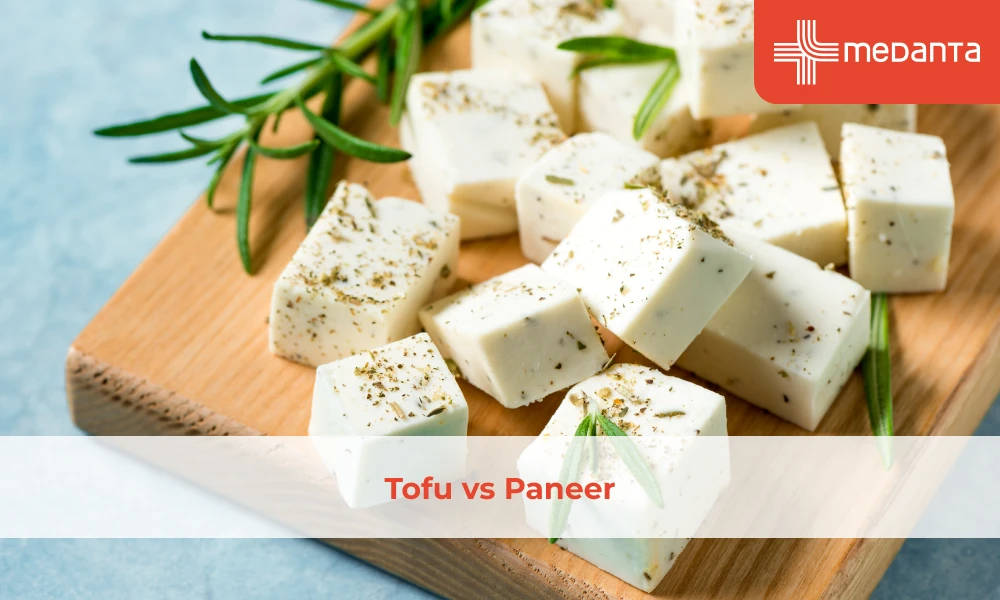
TABLE OF CONTENTS
- What Is Paneer?
- What Is Tofu?
- Tofu vs Paneer: Key Differences
- Tofu vs Paneer Nutrition (Per 100g)
- Tofu vs Paneer: Protein Content
- Tofu vs Paneer: Taste & Texture
- Health Benefits of Paneer
- Health Benefits of Tofu
- Tofu vs Paneer: Which Is Better for Weight Loss?
- Which Is Better for Muscle Building & High-Protein Diets?
- Which One Should You Choose
- Conclusion
- FAQs
Choosing between paneer and tofu is a question our clinical nutrition team at Medanta encounters across patient groups - from newly diagnosed diabetics rethinking their diet to athletes managing protein intake on a plant-based plan. The answer is rarely the same twice. Each food has a distinct nutritional identity, and understanding that distinction is more useful than a blanket recommendation.
What follows is a comparison grounded in clinical evidence: protein density, fat composition, micronutrient profile, and the specific patient contexts where one option is demonstrably better suited than the other.
What Is Paneer?
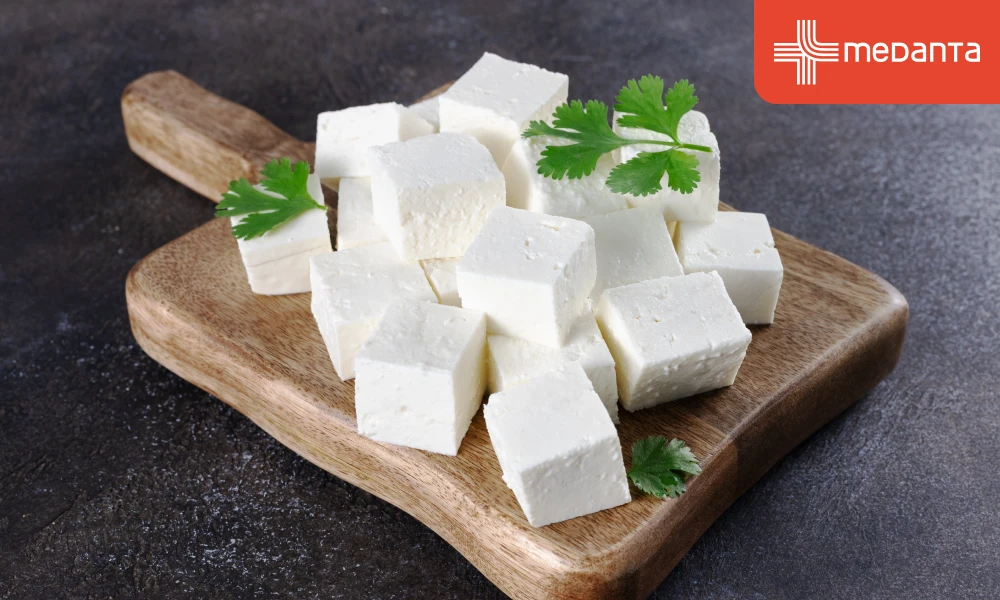
Made by acidifying hot full-fat or toned milk typically with lemon juice or vinegar and pressing the separated curds into a firm block, paneer requires no rennet, no ageing, and no fermentation. The result is a fresh cheese that retains the milk's native fat, protein, calcium, and fat-soluble vitamins almost entirely intact. Nutritional composition shifts with milk source and fat percentage, so full-fat paneer differs meaningfully from low-fat commercial variants.
What Is Tofu?
White, mild, and available in textures ranging from silken to extra-firm, tofu is produced by coagulating soy milk with food-grade salts (most commonly calcium sulphate or magnesium chloride) then pressing the curds into blocks. Silken tofu sets to a soft, smooth consistency suited to blending; firm varieties hold their shape through high-heat cooking. As a soy-derived food, tofu supplies all nine essential amino acids and contains no lactose or dietary cholesterol.
Tofu vs Paneer: Key Differences
Feature | Paneer | Tofu |
|---|---|---|
Source | Dairy (cow/buffalo milk) | Plant (soybean milk) |
Lactose | Present | Absent |
Cholesterol | Present (~70 mg/100g) | None |
Protein type | Animal - complete | Plant - complete |
Fat | Higher; mostly saturated | Lower; mostly unsaturated. |
Calcium | High (natural) | Moderate (varies by coagulant) |
Suitable for | Lacto-vegetarians | Vegans & lactose-intolerant. |
Tofu vs Paneer Nutrition (Per 100g)
Nutrient | Paneer | Firm Tofu |
|---|---|---|
Calories | ~265 kcal | ~76 kcal |
Protein | ~18 g | ~8 g |
Total Fat | ~20 g | ~4.8 g |
Saturated Fat | ~13 g | ~0.7 g |
Carbohydrates | ~2.7 g | ~1.9 g |
Calcium | ~480 mg | ~200 mg |
Iron | ~0.3 mg | ~1.6 mg |
Cholesterol | ~70 mg | 0 mg. |
Tofu vs Paneer: Protein Content
The protein gap is significant. Paneer delivers approximately 18g per 100g and firm tofu delivers roughly 8g. Where paneer holds a clear quantitative edge, quality is another matter - both are complete proteins, meaning both supply all nine essential amino acids in usable ratios. For post-surgical patients, older adults managing sarcopenia or anyone with elevated daily protein targets paneer's density is a practical clinical advantage. Tofu can close the gap when portion sizes are adjusted upward or combined with complementary plant proteins throughout the day.
Tofu vs Paneer: Taste & Texture
Tofu, in its unseasoned state, contributes almost no flavour of its own which is both its limitation and its versatility. Marinated and pan-fried, it can stand in for paneer in most Indian preparations with minimal adjustment. Paneer, by contrast, has a recognisable mild dairy flavour and a firm, non-melting texture that holds up through high-heat cooking, making it well suited to dishes like palak paneer, tikka, and kadhai preparations. Pressing excess water from firm tofu before cooking narrows the textural difference considerably.
Health Benefits of Paneer
Nutritionally, paneer’s strengths are concentrated in three areas: protein density, bone-supporting minerals, and fat-soluble vitamins.
Calcium content of approximately 480mg per 100g supports bone mineralisation particularly relevant in post-menopausal women and adolescents
High protein concentration supports muscle protein synthesis and sustained satiety
Vitamins A and D, retained from milk, contribute to immune function and calcium absorption
Phosphorus content reinforces bone and dental health
Low carbohydrate load makes it compatible with low-glycaemic dietary plans.
Health Benefits of Tofu
Where paneer’s benefits centre on density, tofu’s centre on profile: lower total fat, zero cholesterol, and a set of bioactive compounds absent in dairy.
Contains no dietary cholesterol that is a clinically meaningful advantage for patients managing dyslipidaemia or elevated cardiovascular risk
Isoflavones present in soy have been associated with modest LDL-cholesterol reduction and hormonal balance support, particularly in perimenopausal women
Saturated fat content of 0.7g per 100g versus paneer's 13g makes tofu the appropriate choice in cardiac-protective dietary plans
Iron at 1.6mg per 100g exceeds paneer’s 0.3mg; relevant for patients with iron-deficiency anaemia
Dairy-free and lactose-free by composition; suitable across a range of dietary restrictions.
Tofu vs Paneer: Which Is Better for Weight Loss?
A 100g serving of paneer carries approximately 265 kcal; the same weight of firm tofu provides around 76 kcal. That threefold difference in energy density is the governing factor for patients managing body weight. Tofu permits meaningfully larger portions within a caloric deficit supporting satiety without proportional increases in energy intake. Paneer remains viable within a weight reduction plan but its caloric density demands precise portion management.
Which Is Better for Muscle Building & High-Protein Diets?
For patients where total daily protein intake is the primary variable like athletes, those recovering from surgery, or older adults managing muscle loss - paneer is the more efficient vehicle. Achieving a daily target of 80 to 100g of protein requires substantially less food volume when paneer is the primary source compared with tofu. Tofu is an effective alternative and pairing it with legumes, curd or other plant proteins across meals can achieve comparable daily totals.
Which One Should You Choose
Your Clinical or Dietary Priority | Recommended Choice |
|---|---|
Weight management / caloric restriction | Tofu |
Maximum protein per 100g | Paneer |
Cardiovascular health / low saturated fat. | Tofu |
Bone health and calcium intake | Paneer |
Iron-deficiency anaemia | Tofu |
Lactose intolerance or a vegan diet | Tofu |
Post-surgical recovery (lacto-vegetarian) | Paneer |
Flexibility across Indian recipes | Either with seasoning adjustments. |
Conclusion
Neither paneer nor tofu is categorically superior. The clinical evidence supports a context-dependent choice: paneer for protein density, calcium, and fat-soluble vitamins; tofu for caloric efficiency, cholesterol-free composition, and iron content. Patients managing cardiovascular disease, lactose intolerance, or weight are better served by tofu. Those prioritising bone health, muscle repair, or high-protein intake will find paneer more practical.
Incorporating both across a varied diet is a sound strategy for most patients. Medanta's clinical nutrition team offers personalised dietary planning for patients who require structured guidance on protein sources aligned with their treatment plan.
FAQs
What is the main difference between tofu and paneer?
Paneer is an unfermented dairy cheese; tofu is coagulated soy milk pressed into blocks. Paneer contains lactose, dietary cholesterol, and roughly twice the protein per 100g. Tofu is free of both lactose and cholesterol and is appropriate for vegan and dairy-restricted diets. The amino acid profiles of both are complete.
Which has more protein: tofu or paneer?
Paneer provides approximately 18g per 100g; firm tofu provides around 8g. Paneer's protein density is higher, though tofu can achieve equivalent daily totals when consumed in larger portions alongside other plant proteins.
Which is healthier, tofu or paneer?
This depends entirely on the patient’s clinical profile. For cardiovascular disease, weight management, or iron deficiency, tofu is the more appropriate choice. For bone health, muscle protein synthesis, and high-protein dietary requirements, paneer is better suited. Neither food is universally superior.
What is the nutritional value of tofu vs paneer?
Per 100g:
Paneer: Calories approximately 265 kcal, 18g protein, 20g total fat (13g saturated), 480mg calcium, 0.3mg iron and 70mg cholesterol.
Firm tofu: Calories approximately 76 kcal, 8g protein, 4.8g total fat (0.7g saturated), 200mg calcium, 1.6mg iron, zero cholesterol.
Does tofu taste like paneer?
Not in its natural state. Tofu is largely neutral in flavour and takes on the character of its marinade or cooking medium. Paneer carries a mild dairy note and a firmer texture. In adequately spiced preparations like tikka, bhurji, or palak the two become more interchangeable.
Which is better for weight loss: tofu or paneer?
Given tofu's significantly lower caloric density approximately 76 kcal per 100g versus 265 kcal for paneer, it allows greater food volume within a caloric deficit. For patients on structured weight management programmes, tofu is a more practical protein source. Paneer remains an option but requires careful portion discipline.
Which is better for muscle gain: tofu or paneer?
Paneer is more efficient per gram of food consumed. Its higher protein density simplifies meeting elevated daily targets. Tofu can support muscle gain effectively, though achieving equivalent protein intake requires proportionally higher consumption and complementary plant protein sources.
Is tofu better for lactose-intolerant people?
Tofu contains no lactose and is produced entirely from soy milk. It is appropriate for patients with lactose intolerance or dairy allergies. Paneer is a milk-derived product and will provoke gastrointestinal symptoms in lactose-intolerant individuals.
Can paneer be replaced with tofu in recipes?
In most Indian preparations, firm or extra-firm tofu substitutes adequately for paneer. Pressing the tofu before cooking reduces the moisture content and brings the texture closer to paneer's. Flavour differences diminish substantially once spices, marinades, or sauces are applied in dishes like palak, bhurji, and tikka.
Is tofu safer or more natural than paneer?
Both have established safety profiles under standard dietary use. Paneer made from good-quality pasteurised milk is nutritionally sound. Tofu from non-GMO soy is equally safe. The concept of one being more ‘natural’ than the other is not a clinically meaningful distinction; selection should be based on nutritional need and individual health goals.