1068
1068
 Request Call Back
 Contact
 1068
1068
Radish Benefits: Nutrition, Uses, and Health Advantages
Published on: Apr 08, 2026
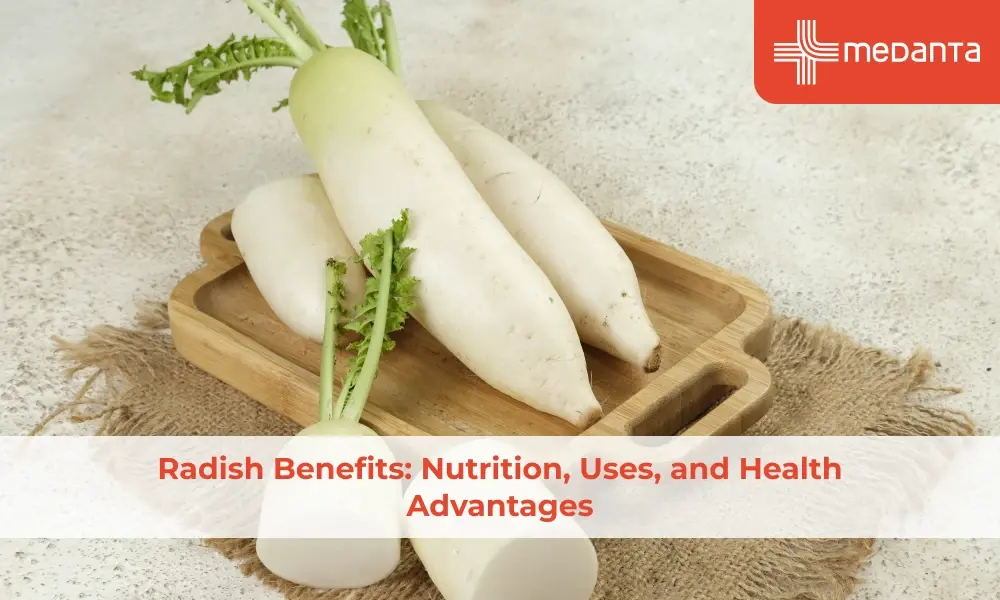
TABLE OF CONTENTS
Radish root, leaves, juice, seeds and oil each carry distinct benefits, and the range of conditions radish supports is longer than most people expect. Used for centuries across Indian, East Asian and Mediterranean diets as both food and medicine, it deserves more attention than it gets. Let's explore what nutrients are in radish, what it does, how to use it and what to watch for.
Radish Nutrition Overview
At roughly 16 calories per 100 grams, radish is nutrient-dense without the caloric weight. It provides Vitamin C, folate, potassium, calcium and B vitamins, and glucosinolates (the sulphur compounds also found in broccoli that drive its detoxifying properties). Fibre supports gut motility and cholesterol management. Water content exceeds 93% making it a hydrating food that contributes to daily fluid intake.
Health Benefits of Radish
Benefits are:
The liver benefits most visibly. Glucosinolates activate detoxification enzymes and stimulate bile production (supporting fat digestion and waste clearance).
The kidneys benefit from its mild diuretic action, which increases urine output and helps flush the renal system.
Potassium regulates blood pressure.
Anthocyanins in red radish lower cardiovascular risk.
Low glycaemic index makes it suitable for blood sugar management.
Isothiocyanates inhibit inflammatory pathways.
Raphanin, a compound specific to radish, has demonstrated antibacterial and antifungal activity in research.
Benefits of Eating Radish Daily
Daily consumption keeps digestion moving, supports liver enzyme activity and replenishes Vitamin C consistently. Fibre manages cholesterol over time. Eaten before meals it stimulates digestive secretions and reduces appetite through bulk and water content.
Raw Radish Benefits: Eating it raw preserves the full enzyme profile and glucosinolate content, both of which degrade with heat. The unprocessed fibre acts more aggressively on the gut, and the crunch mechanically stimulates the gums. Best eaten before a meal for digestive and appetite-related benefits.
White Radish Benefits: Mooli or white radish or daikon is the most therapeutically versatile variety. High glucosinolate content, strong enzyme support for fat digestion and a reliable diuretic effect. Eaten raw, cooked in dal or sabzi, or juiced each preparation has a slightly different benefit profile.
White Radish Juice Benefits: Juicing concentrates liver-supportive compounds for faster absorption. Fifty to 100 ml on an empty stomach is a traditional approach to managing jaundice, sluggish bile flow and gallstone-related discomfort. Mixed with honey and ginger it soothes the respiratory mucous membranes - an effective remedy for coughs and congestion.
Red Radish Benefits: The colour comes from anthocyanins that are antioxidants linked to reduced cardiovascular risk, lower inflammation and improved insulin sensitivity. Milder in flavour than white radish, crisp, and requiring no preparation. A simple daily addition to salads.
Radish Benefits for Skin: Vitamin C supports collagen production and slows visible ageing. Zinc assists in sebum regulation and wound healing. Topically, radish juice is used in traditional practice to brighten skin tone, reduce pigmentation and calm inflammation. Gradual effects, internal nutrition and occasional topical use together produce the best outcome.
Benefits of Radish Leaves (Radish Greens)
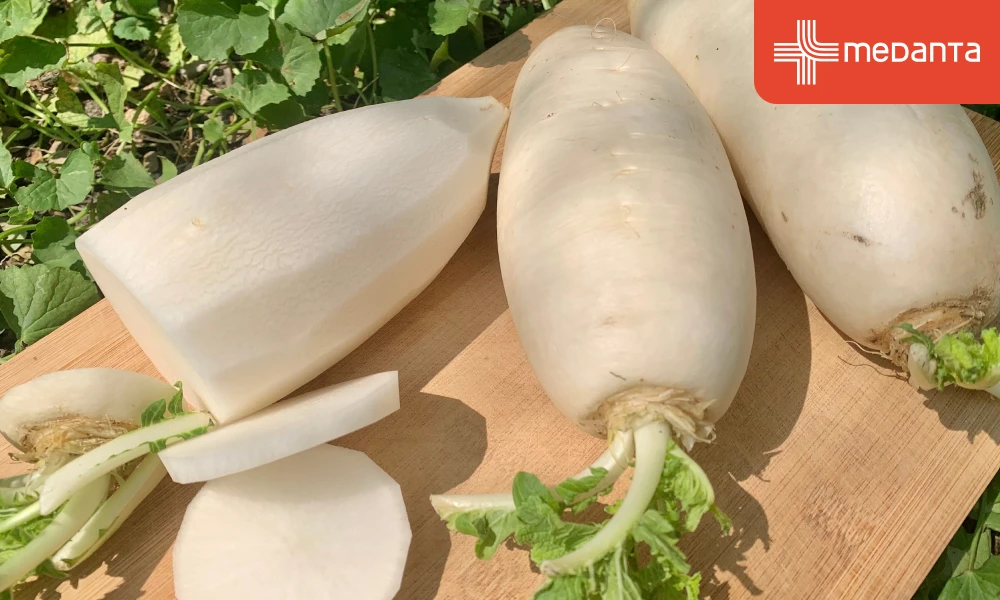
The greens are nutritionally denser than the root in several respects like higher Vitamin C, Vitamin A, iron, calcium and folate. Anti-inflammatory, supportive of haemoglobin levels and traditionally used for jaundice and anaemia. Sauteed with garlic they are palatable and worth using rather than discarding.
Radish Seeds Benefits: Concentrated glucosinolates and, when sprouted, high sulforaphane content with documented anti-inflammatory properties. Radish sprouts are the most accessible form. When added to salads or sandwiches, they deliver micronutrient density that the root does not match gram for gram.
Radish Oil Benefits: Cold-pressed from the seeds, radish oil strengthens hair, reduces dandruff and improves follicle circulation. For skin it provides mild antimicrobial and moisturising properties as a carrier oil. Available through Ayurvedic suppliers rather than mainstream retail.
White Radish Benefits for Liver: Glucosinolates activate the liver’s phase II detoxification enzymes, which are responsible for neutralising toxins before excretion. Bile production is stimulated, reducing hepatic load and supporting fat digestion. For early fatty liver or mildly elevated enzymes, regular white radish consumption, particularly as juice, is a practical dietary support measure.
How to Use Radish in Your Daily Diet
Raw in salads with lemon and salt is the simplest entry point. White radish works in dal, stuffed parathas or as a cooked sabzi. The leaves saute well with garlic. Juice can be taken in 50 to 100 ml amounts before meals. For those put off by the sharpness, raita or yoghurt-based dressings make it considerably more approachable.
Precautions & Side Effects
Thyroid: Goitrogenic compounds can interfere with iodine uptake in large raw amounts. Hypothyroid patients should moderate their intake and prefer cooked radish.
Gallstones: Bile stimulation can aggravate existing gallstone symptoms.
Digestive sensitivity: Large amounts of raw radish cause gas and bloating in some people. Start small and build up.
Conclusion
The root, leaves, juice, seeds and oil each contribute something distinct. Liver detoxification, digestive health, cardiovascular protection, and skin support. The evidence across these areas is real and consistent. Nutrition specialists help patients use food strategically within a broader health plan. If you have an existing condition speak with a specialist before making significant dietary changes.
FAQs
What are the top health benefits of radish?
Liver detoxification, digestive support, blood pressure regulation, blood sugar management and anti inflammatory activity. Benefits accumulate with regular daily use rather than occasional consumption.
Is white radish good for the liver?
Yes. Glucosinolates activate detoxification enzymes and stimulate bile production. White radish juice on an empty stomach is a traditional and practically applied liver support measure.
Are radish leaves healthy?
More so than the root in several respects. They are higher in Vitamin C, A, iron, calcium and folate. Use them within a day or two of purchase before nutrients degrade.
What are the benefits of drinking radish juice?
Concentrated liver support, respiratory soothing and faster glucosinolate absorption. Start with 50 ml and mix with lemon or ginger to manage the flavour.
Does radish improve skin health?
Vitamin C builds collagen, zinc regulates sebum and the water content hydrates internally. Topically, radish juice brightens and calms mild inflammation. Gradual, not immediate.
What are the benefits of red radish?
Anthocyanins reduce cardiovascular risk and inflammation. Milder flavour than white radish, no preparation needed. Easy to add to salads daily.
Is raw radish good for digestion?
Yes raw radish stimulates digestive secretions, adds fibre and the crunch triggers digestive readiness. Eat it before meals. Large amounts at once can cause gas in sensitive individuals.
What are the benefits of radish seeds?
Concentrated glucosinolates and high sulforaphane are present when sprouting. Anti-inflammatory, traditionally used for flatulence and skin conditions. Sprouts are the most accessible form.
Does radish oil help in skin or hair care?
For hair it reduces dandruff and strengthens the shaft. For skin, mild antimicrobial and moisturising properties as a carrier oil.
Is it safe to eat radish every day?
For most healthy adults, yes. One serving daily is well within safe limits. Those with hypothyroidism, gallstones, or a sensitive gut should moderate their intake or cook rather than eat it raw.