1068
1068
 Request Call Back
 Contact
 1068
1068
Magnesium Rich Foods: Top Sources, Indian Vegetarian Options and Food Chart
Published on: Apr 08, 2026
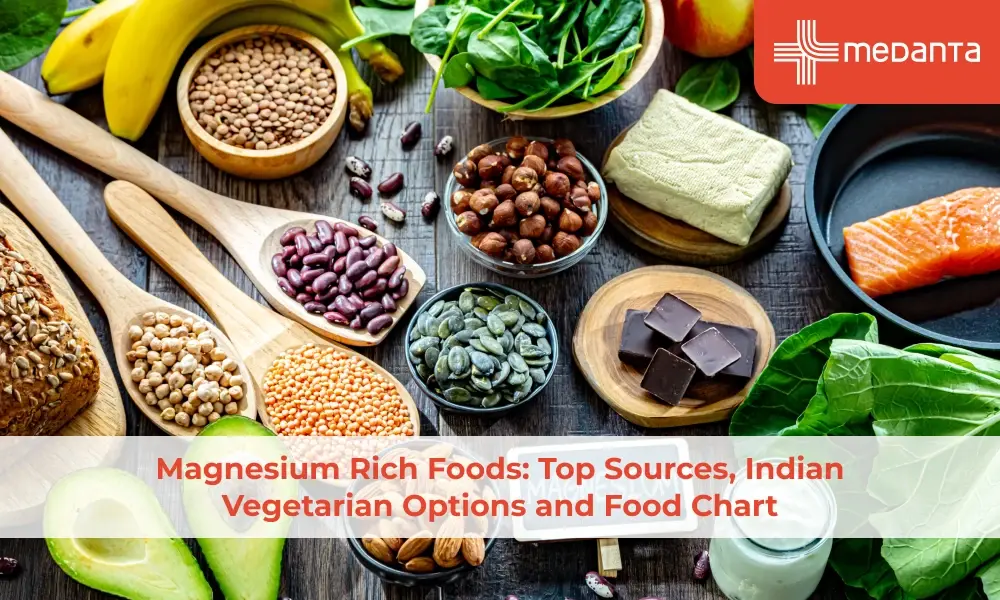
TABLE OF CONTENTS
- Why Your Body Needs Magnesium
- Top Magnesium-Rich Foods (Global List)
- Magnesium Rich Foods in India
- Magnesium-Rich Vegetarian and Vegan Foods
- Foods High in Magnesium for Deficiency Correction
- Magnesium-Rich Foods Chart
- How to Increase Magnesium Naturally
- Best Food Combinations for Better Absorption
- Signs of Magnesium Deficiency
- Who Needs More Magnesium?
- Conclusion
- FAQs
Magnesium is an essential mineral that keeps your heart beating steadily, helps your muscles contract and relax, supports nerve function, and plays a role in over 300 enzyme reactions inside your body. Yet studies consistently show that a large portion of the population does not meet the daily requirement through diet alone. The good news is that magnesium is widely available in everyday foods.
Why Your Body Needs Magnesium
Magnesium is involved in energy production at the cellular level. Without it, your body cannot convert food into usable fuel efficiently. It also regulates blood sugar, supports bone density, and helps control blood pressure. Low magnesium has been linked to muscle cramps, fatigue, sleep disturbances, anxiety, and increased risk of type 2 diabetes and cardiovascular disease. Getting enough from food is the safest and most sustainable approach.
Top Magnesium-Rich Foods (Global List)
Foods rich in magnesium are:
Pumpkin seeds
Dark chocolate (70% or higher)
Almonds
Spinach
Cashews
Black beans
Edamame
Avocado
Tofu
Salmon
Brown rice
Magnesium Rich Foods in India
Indian cuisine is naturally well-positioned for magnesium intake. Indian foods rich in magnesium are:
Rajma (kidney beans)
Chana (chickpeas)
Moong dal
Urad dal
Masoor dal
Bajra (pearl millet)
Ragi (finger millet)
Methi (fenugreek)
Spinach
Drumstick leaves
Til (sesame seeds)
Groundnuts.
Magnesium-Rich Vegetarian and Vegan Foods
Plant-based eaters have no shortage of options. Legumes, seeds, leafy greens, and whole grains are all excellent sources.
Pumpkin seeds deliver around 150mg per 30g serving, one of the highest concentrations in any single food. Hemp seeds and flaxseeds are strong alternatives. Cooked spinach provides roughly 78mg per half cup. Edamame, tofu, and black beans round out a vegan diet effectively.
Foods High in Magnesium for Deficiency Correction
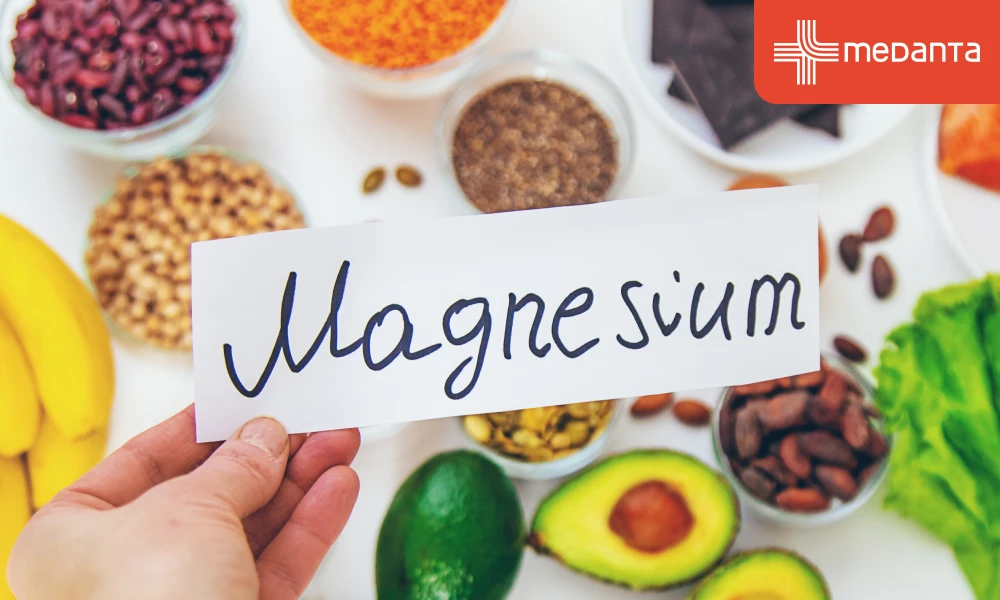
When deficiency is a concern, concentration matters. These foods deliver the most magnesium per serving and should be prioritised:
Pumpkin seeds (raw or roasted)
Boiled spinach
Black beans or rajma
Almonds and cashews
Cooked quinoa
Dark chocolate
Bajra roti or porridge
Ragi preparations
Eating two or three of these daily, consistently, will meaningfully improve magnesium levels over four to six weeks.
Magnesium-Rich Foods Chart
Food | Serving Size | Magnesium (approx.) |
Pumpkin seeds | 30g | 150mg |
Dark chocolate (70%+) | 30g | 65mg |
Almonds | 30g | 77mg |
Boiled spinach | ½ cup | 78mg |
Cashews | 30g | 74mg |
Black beans (cooked) | ½ cup | 60mg |
Edamame (cooked) | ½ cup | 50mg |
Rajma (cooked) | ½ cup | 55mg |
Brown rice (cooked) | 1 cup | 84mg |
Quinoa (cooked) | 1 cup | 118mg |
Bajra (cooked) | 1 cup | 77mg |
Tofu | 100g | 53mg |
Avocado | 1 medium | 58mg |
Salmon | 100g | 30mg |
Banana | 1 medium | 32mg |
How to Increase Magnesium Naturally
No supplement required if you plan your meals thoughtfully. Switch white rice to brown rice or add bajra to your rotation. Use sesame seeds and groundnuts as everyday additions to dal, salads, or chutneys. Snack on a small handful of almonds or pumpkin seeds instead of processed foods. Eat spinach or methi several times a week, cooked or raw. These are small, low-effort changes that add up.
Best Food Combinations for Better Absorption
Magnesium absorption improves with vitamin D and vitamin B6. Pair magnesium-rich foods with eggs, sunlight exposure or fortified foods where possible. Avoid consuming large amounts of calcium at the same meal as calcium competes with magnesium for absorption. Phytates in raw legumes and whole grains can reduce absorption; soaking and cooking neutralise most of this effect. Fermented foods like idli and dosa may aid gut conditions that support better mineral uptake.
Signs of Magnesium Deficiency
Early signs are easy to dismiss. Muscle twitches, leg cramps at night, unexplained fatigue, and difficulty sleeping are among the first signals. As deficiency deepens, symptoms can include:
Irregular heartbeat
Numbness
Tingling in the hands and feet
Mood disturbances including anxiety and low mood.
High blood pressure and increased cardiovascular risk.
Who Needs More Magnesium?
Certain groups absorb less or lose more. They are:
Older adults experience reduced absorption from the gut.
People with type 2 diabetes lose more magnesium through urine.
People with gastrointestinal conditions like Crohn's disease or celiac disease absorb it poorly.
Chronic stress depletes stores faster.
Heavy alcohol use increases urinary losses.
Athletes and people who sweat heavily also need to pay closer attention.
Conclusion
Magnesium is not difficult to get from food. It is present in the ingredients already common to Indian cooking like dal, millet, leafy greens, seeds, and nuts. The gap between requirement and intake is usually a matter of consistency, not availability. Building a few reliable magnesium sources into daily meals is far more effective long-term than sporadic supplementation.
FAQs
What foods are richest in magnesium?
Pumpkin seeds, boiled spinach, almonds, cashews, black beans, quinoa, and dark chocolate are among the highest. Pumpkin seeds top most lists at around 150mg per 30g serving.
Which Indian foods are high in magnesium?
Rajma, chana, moong dal, urad dal, bajra, ragi, spinach, methi, drumstick leaves, til, and groundnuts are all excellent Indian sources.
What are the best vegetarian sources of magnesium?
Pumpkin seeds, boiled spinach, dark chocolate, edamame, tofu, black beans, almonds, cashews, quinoa, and bajra cover vegetarian and vegan needs well.
Can magnesium-rich foods help with deficiency?
Yes mild to moderate deficiency responds well to dietary correction. Eating concentrated sources like pumpkin seeds, leafy greens, and legumes daily for four to six weeks typically improves levels. Severe deficiency may need supplementation under medical guidance.
What is a magnesium foods chart?
A magnesium foods chart lists common foods alongside their magnesium content per standard serving size. It helps identify which foods to prioritise based on how much magnesium they deliver relative to portion size.
Do nuts and seeds contain high magnesium?
Yes. Pumpkin seeds, almonds, cashews, and sesame seeds are all high in magnesium. A small 30g handful provides between 65mg and 150mg depending on the type.
Are fruits rich in magnesium?
Fruits are generally moderate sources. Avocado (58mg) and banana (32mg) are the better options. Most other fruits provide under 20mg per serving, so they should complement rather than replace other sources.
How much magnesium do we need daily?
For adult men: 400–420mg per day.
For adult women: 310–320mg per day.
Pregnant women: 350–360mg per day.
Requirements increase slightly with age, illness, or high physical activity.
Can I get enough magnesium from diet alone?
Most healthy adults can, provided they eat a varied diet including whole grains, legumes, nuts, seeds, and leafy greens consistently. Those with absorption issues, chronic illness, or high losses may need supplementation.
Which foods improve magnesium absorption?
Foods rich in vitamin D and vitamin B6 support better magnesium uptake. Fermented foods may help. Soaking and cooking legumes and grains reduces phytates that otherwise block absorption. Avoiding excess calcium at the same meal also helps.