1068
1068
 Request Call Back
 Contact
 1068
1068
Jeera Water Benefits: Weight Loss, Digestion, Skin Health & Jeera–Ajwain–Saunf Water Uses
Published on: Apr 08, 2026
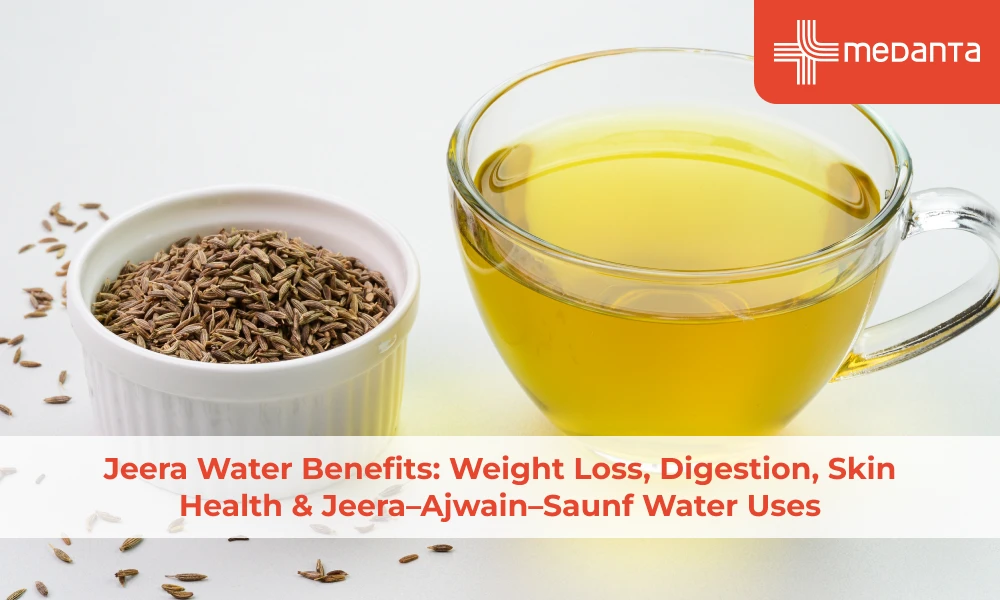
TABLE OF CONTENTS
Most Indian kitchens have jeera sitting in a small box near the stove. It goes into the tadka, into the rice, into the dal. What fewer people think about is soaking it overnight and drinking the water. That practice - jeera water, has been a fixture in Ayurvedic and household health traditions for generations, and the reasons it persists are not merely cultural. Cumin contains compounds that genuinely influence digestion, metabolism, inflammation and skin health. Simple to prepare, inexpensive and easy to sustain as a daily habit.
What Is Jeera Water?
Jeera water is made by soaking cumin seeds in water overnight for a cold preparation, or briefly boiling for a hot version. Soaking causes the seeds to release their active compounds into the water: thymoquinone, cuminaldehyde, flavonoids and essential oils that carry most of the health activity. The result is a mildly earthy, slightly bitter drink that is low in calories and easy on the stomach. It is not a supplement or a medicine in the clinical sense but it is a functional food preparation with a real but modest effect profile.
Potential Benefits of Jeera Water
Digestion is where jeera water earns its strongest reputation. Cuminaldehyde stimulates the secretion of digestive enzymes in the pancreas, which accelerates the breakdown of food and reduces the bloating and gas that follow poorly digested meals. It also stimulates bile release from the gallbladder.
For weight management, the mechanism is indirect but real. Jeera water reduces post-meal bloating, which reduces abdominal distension that is sometimes mistaken for fat. More substantively, thymoquinone has anti-obesity effects in research settings; it reduces fat cell formation and improves lipid metabolism. These are not dramatic effects, but compounded over weeks they contribute.
Anti-inflammatory activity comes from the flavonoids and volatile oils. Chronic low-grade inflammation is implicated in insulin resistance, skin conditions, joint disease and fatigue. Iron content in cumin is notable: a teaspoon of seeds provides around 1.4 mg, making jeera water a minor but consistent source for people whose diets are iron-light.
For skin, the antioxidant compounds neutralise free radicals that accelerate skin ageing. Vitamin E present in cumin supports collagen integrity. People who drink it regularly often report clearer skin over several weeks as the internal anti-inflammatory effect reduces the redness and congestion that drives mild acne.
Best Time to Drink Jeera Water
Morning on an empty stomach is the most commonly used timing and probably the most effective as digestive enzymes are primed, absorption is faster and the anti-inflammatory compounds reach circulation without competing with a full digestive load. Before meals is the second-best window, particularly for people who experience bloating or sluggish digestion after eating. Avoid it late at night as the mild diuretic effect can disrupt sleep.
How to Prepare Jeera Water

Cold method: soak one teaspoon of cumin seeds in a glass of water overnight, strain in the morning and drink on an empty stomach.
Hot method: add one teaspoon of seeds to 500 ml of water, bring to a boil, simmer for five minutes, strain and cool slightly before drinking.
The hot version extracts more of the volatile oils and is more potent; the cold version is gentler and better suited to people with a sensitive stomach. Either works. The key is consistency rather than method.
Jeera Water Variations (Jeera–Ajwain–Saunf Water)
Combining jeera with ajwain (carom seeds) and saunf (fennel seeds) produces a drink with a broader digestive and metabolic effect than any of the three alone. Ajwain adds thymol - a potent antispasmodic that relieves cramping and flatulence more aggressively than cumin alone. Saunf adds anethole, which soothes the intestinal lining, reduces inflammation and has a mild oestrogenic effect that some women find helpful for menstrual discomfort. The combination is traditionally used for bloating, acidity, slow digestion and detoxification. Soak equal parts of all three overnight in water, strain and drink in the morning. The taste is more complex than plain jeera water and most people find it more palatable.
Jeera–ajwain water is a sharper medicinal combination used for acute digestive complaints. The thymol in ajwain acts quickly on gas and cramping; paired with cumin's enzyme stimulation, the combination clears digestive discomfort faster than either seed alone.
Side Effects of Jeera Water
Excess intake: More than two to three glasses daily can cause heartburn, acidity and excessive belching in some individuals. One glass is the right daily amount for most people.
Pregnancy: Jeera in food amounts is safe. Large medicinal doses of jeera water are best avoided during pregnancy without medical advice as high cumin intake has been traditionally associated with uterine stimulation.
Blood sugar: Cumin has mild glucose-lowering effects. People on diabetes medication should monitor their readings when adding jeera water daily.
Surgery: Cumin may slow blood clotting. Discontinue therapeutic use at least two weeks before any planned surgical procedure.
Conclusion
Jeera water is not a cure or a shortcut. What it is consistently and without overstatement is a practical, low-effort daily habit that supports digestion, reduces inflammation, contributes to weight management and improves skin health over time. The variations with ajwain and saunf extend those benefits further. One glass a day, made the night before, is a habit most people can sustain without it costing anything significant in time or money. If you have an existing medical condition, speak with a specialist before making jeera water a daily therapeutic practice.
FAQs
What are the health benefits of jeera water?
Improved digestion through enzyme stimulation, reduced bloating and gas, anti-inflammatory activity, modest weight management support, better iron absorption and clearer skin over time with consistent daily use.
Does jeera water help with weight loss?
Indirectly. It reduces bloating, improves fat metabolism through thymoquinone activity and curbs appetite when taken before meals. A supporting habit within a caloric deficit.
Is jeera water good for skin health?
Yes. Antioxidants reduce free radical damage that accelerates skin ageing. The anti-inflammatory effect lowers the systemic inflammation behind mild acne. Visible improvement typically takes three to four weeks of daily use.
What is the best time to drink jeera water?
Morning on an empty stomach for best absorption and digestive priming. Before meals if the goal is reducing post-meal bloating. Avoid late evenings due to mild diuretic activity.
Can I drink jeera water on an empty stomach?
Yes that is actually the recommended approach. Absorption is more efficient before food, and the enzyme-stimulating effect prepares the digestive system for the day's first meal.
What are the benefits of jeera–ajwain–saunf water?
A broader digestive combination than jeera alone. Ajwain relieves cramping and flatulence; saunf soothes intestinal inflammation and eases menstrual discomfort. Together they address bloating, acidity and sluggish digestion more completely.
What are the benefits of jeera and ajwain water?
A sharper, more acute digestive remedy. Thymol from ajwain and cuminaldehyde from jeera together relieve gas, cramping and indigestion faster than either seed alone. Useful for acute episodes as well as daily digestive maintenance.
Is hot jeera water better than normal jeera water?
Hot extraction pulls more volatile oils and produces a more potent drink. Cold-soaked jeera water is gentler and better for sensitive stomachs. Both are effective the method matters less than consistency.
How often can I drink jeera water safely?
Once daily is appropriate and sufficient for most healthy adults. Two glasses a day is the upper practical limit. More than that regularly risks acidity and digestive irritation.
Who should avoid drinking jeera water?
Pregnant women in large doses, people on blood-thinning medication or insulin-based diabetes management, and anyone scheduled for surgery within two weeks. Those with acid reflux should also start with small amounts to assess tolerance.