1068
1068
 Request Call Back
 Contact
 1068
1068
Itchy Breast: Top Causes, Warning Signs & When to Worry
Published on: Jan 13, 2026
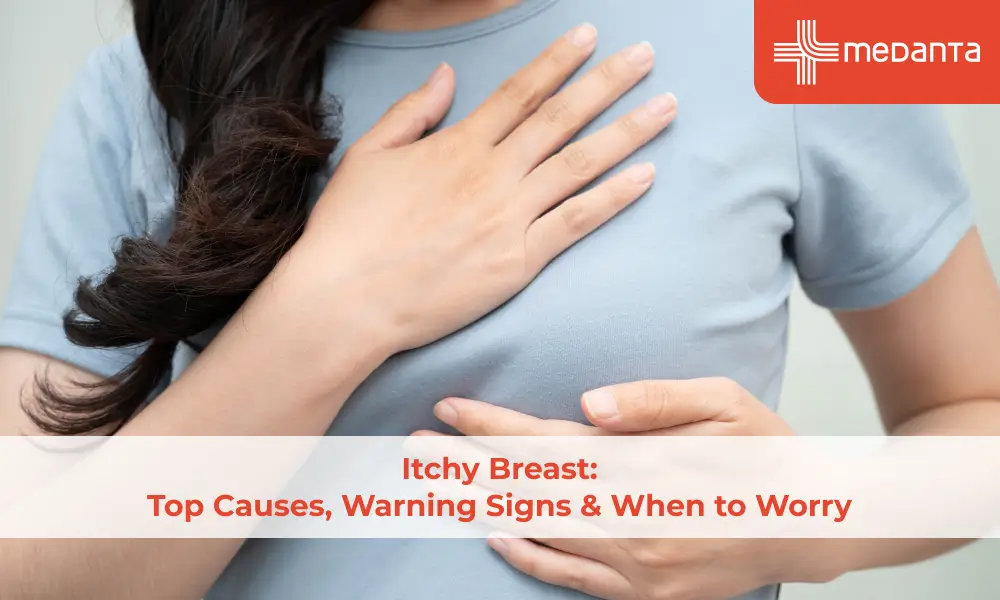
TABLE OF CONTENTS
Breast itching may affect many women. It can happen throughout their lives. The sensation can range from mild discomfort to a sign of serious health issues. Your body might signal why it happens through occasional itching, which is normal, but persistent or intense irritation needs attention. The sensation can range from mild discomfort to a sign of serious health issues. Your body might signal why it happens through occasional itching, which is normal, but persistent or intense irritation needs attention.
Simple factors like dry skin, hormonal changes or clothing friction cause most cases of itchy breasts. Rarely, the condition might indicate more serious issues like Inflammatory Breast Cancer (IBC) or Paget's Disease of the breast.
Women should know when breast itching requires medical attention. This article explains what are the causes of breast itching, warning signs, and different treatment options.
Common Causes of Itchy Breast
Many women deal with this discomfort but hesitate to talk about it openly. Many factors can cause breast itchiness. These include:
Dry skin is the biggest problem especially after hot showers or time in the sun.
Your skin might react to fabrics, detergents, or skincare products.
Heat rash in warm weather can create prickly sensations under or between the breasts.
Skin stretching from breast growth during puberty, pregnancy, or weight gain can also lead to itchiness.
Breast diseases linked to itchy breasts:
Inflammatory Breast Cancer, though rare, causes redness, swelling, and itching.
Paget's Disease affects the nipple area and creates persistent itchiness and scaling that would not improve with treatment.
Fibrocystic breast changes can sometimes cause itching.
Infections like bacterial skin infection and mastitis (breast tissue infection) also cause itchiness.
Skin diseases like contact dermatitis, eczema, psoriasis, or fungal infections can also cause itchiness.
Hormonal fluctuation during menstruation, pregnancy, or menopause causes itching or breast sensitivity.
Medical conditions like diabetes, autoimmune conditions, liver or kidney diseases cause breast skin inflammation and itching.
Symptoms and Warning Signs
Symptoms are:
Skin-related symptoms:
Persistent or occasional itching on one or both breasts
Redness or pink patches on the skin
Dry, flaky, or scaly skin
Rash or small bumps
Cracked or peeling skin, especially around the nipple
Swelling or mild inflammation
Warmth over the affected area
Nipple-specific symptoms:
Itchy nipples or areola
Crusting, oozing, or scabbing around the nipple
Sensitivity or burning sensation
Colour changes of the nipple or areola
Sensation-related symptoms
Tingling or prickly feeling
Burning or stinging sensation
Discomfort that worsens with sweat, friction, or tight clothing
Associated symptoms (depending on cause)
Pain or tenderness
Foul-smelling discharge (possible infection)
Fever (rare, but may indicate infection)
Thickened or puckered skin (needs medical evaluation)
Home Remedies and Self-care for Itchy Breast
Several home remedies might help with itching. These are:
Cold compresses help reduce inflammation.
Aloe vera gel provides soothing relief.
Avoid hot water during bath instead use lukewarm water.
Use fragrance free moisturisers right after showering.
Keep the area dry to prevent fungal issues particularly after exercise.
Do not scratch (stretching further damages the skin and increases the risk of infection).

Lifestyle Tips to Maintain Breast Health
You can improve your breast health by adopting the below mentioned lifestyle tips:
Regular exercise to maintain a healthy weight
Drink enough water as it prevents skin dryness
Limit alcohol as it increases breast cancer risk
Choose cotton undergarments instead of synthetic fabrics to let your skin breathe
Manage your blood sugar at healthy levels
Do not use perfumes, deodorants, or powders on the breast area.
When to Consult a Doctor for Itchy Breast
Understanding breast itchiness that needs medical attention is a vital factor in your health outcomes. Most cases clear up on their own, but specific symptoms indicate you need professional evaluation.
You should get medical help immediately if you notice:
Persistent itching that lasts more than a week and doesn't improve with over-the-counter treatments
Severe itchiness that affects your daily activities or sleep patterns
Nipple or areola itchiness with discharge, flakiness, or sudden inversion
Pain, tenderness, or swelling with itching
Rash on, between, or under your breasts
Swelling in your armpit
Skin that looks thickened, dimpled, or has an orange peel texture (peau d'orange)
Bloody nipple discharge or unusual bleeding
These symptoms could point to serious conditions that need quick diagnosis.
Important: Itching accompanied by redness, warmth, skin thickening, or a dimpled orange-peel texture (peau d'orange) on the breast requires immediate evaluation by a doctor to rule out Inflammatory Breast Cancer. Do not delay.
Conclusion: Managing Itchy Breast Effectively
Dry skin or hormonal changes usually cause itchy breasts. Every woman should know the difference between normal irritation and warning signs. Your body sends clear signals that need attention so you should listen to these messages.
Self-examinations of your breasts help detect changes early. On top of that, it helps to wear breathable fabrics, maintain good hygiene, and use gentle skincare products to avoid common causes of itchiness. Simple home remedies fix most cases, but you need a doctor's evaluation if symptoms persist.
Note that you shouldn't let embarrassment keep you from getting medical help. Serious conditions are rare but early detection gives you the best chance of recovery. Doctors handle these concerns every day and support their patients without judgement.
You can spot the difference between temporary discomfort and medical problems by taking charge of your breast health. Your body needs attention so address symptoms quickly and see doctors when needed.
FAQs
What causes itchy breasts?
Itchiness in the breast can occur due to several causes. They are:
Dry skin
Allergic reactions to soaps or detergents
Hormonal changes during menstruation or pregnancy
Fungal infections
Skin conditions like eczema and psoriasis
Can itchy breasts indicate a serious health problem?
Serious conditions are rare but possible. A red, scaly rash on the nipple might point to Paget's Disease of the breast. Redness, swelling, and itchiness could be signs of inflammatory breast cancer. These serious conditions usually show up with other symptoms besides itching.
Are there home remedies for itchy breasts?
Yes! Cold compresses help reduce inflammation. You can apply aloe vera gel for quick relief. Make sure to keep the area dry after exercise. If you have allergic reactions, anti-allergy medications might help.
How can I prevent breast skin irritation?
Cotton bras work better than synthetic materials. You should wash under your breasts twice daily with mild soap. A hairdryer on a cool setting or gentle patting works well to dry the skin. Always use fragrance-free moisturisers.
Can itchy nipples be a sign of breast cancer?
Yes, they can be. Paget's Disease makes your nipple persistently itchy, red, and scaly - and these symptoms don't get better with treatment. This rare condition often signals underlying breast cancer. Your skin might also get itchy with inflammatory breast cancer.
When should I see a doctor for itchy breasts?
You need medical help if the itching lasts more than two weeks or doesn't improve with home treatments. Watch out for redness, discharge, lumps, swelling or changes in breast shape or if you notice nipple discharge or inversion with itching.
Are allergic reactions a common cause of itchy breasts?
They sure are! Your breasts might itch because of allergic reactions to laundry detergents, perfumes, soaps, deodorants or metal bra clasps. You might feel intense itching even without seeing a rash.
How can lifestyle changes help with itchy breast symptoms?
A healthy weight helps reduce skin folds where moisture collects. Your circulation improves with regular gentle exercise. Well-fitting cotton bras let your skin breathe better. Stress management techniques can help too, since psychological stress might make itching worse.