1068
1068
 Request Call Back
 Contact
 1068
1068
Endoscopy & Colonoscopy: Everything You Were Afraid to Ask
Published on: Jul 28, 2026
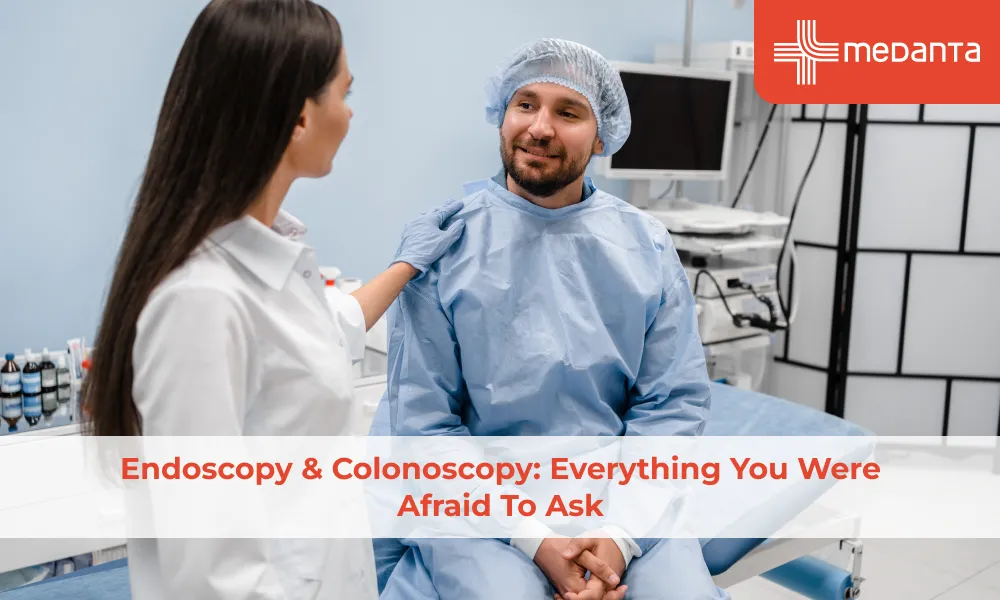
TABLE OF CONTENTS
- What Are Endoscopy and Colonoscopy?
- Endoscopy vs Colonoscopy: What's the Difference?
- Why Might Your Doctor Recommend These Procedures?
- Common Symptoms and Conditions Evaluated by Endoscopy and Colonoscopy
- How to Prepare for an Endoscopy or Colonoscopy
- What Happens During the Procedure?
- Are Endoscopy and Colonoscopy Painful? Addressing Common Fears
- Recovery, Risks, and When to Expect Results
- Conclusion
- FAQs
- References
For many people, the thought of undergoing an endoscopy or colonoscopy can feel intimidating. Much of this anxiety comes from misconceptions, uncertainty, or stories shared by others rather than the procedures themselves. Both are common gastroenterology procedures, generally quick, and performed under sedation that removes most of what people fear in advance. Understanding what actually happens tends to dissolve most of that anxiety before the appointment even arrives.
What Are Endoscopy and Colonoscopy?
Both procedures use a thin, flexible tube with a camera to examine the digestive tract directly. An endoscopy looks at the upper digestive system including the oesophagus, stomach and the first part of the small intestine. A colonoscopy examines the lower end instead, covering the large intestine and rectum.
Endoscopy vs Colonoscopy: What's the Difference?
Entry point differs entirely - endoscopy goes in through the mouth whereas colonoscopy through the rectum
Preparation requirements diverge sharply, with colonoscopy needing thorough bowel cleansing beforehand
Sedation depth tends to run lighter for endoscopy, deeper for colonoscopy given the longer duration
Both, despite the different routes share the same underlying goal: direct visual inspection of tissue that imaging alone can't fully assess.
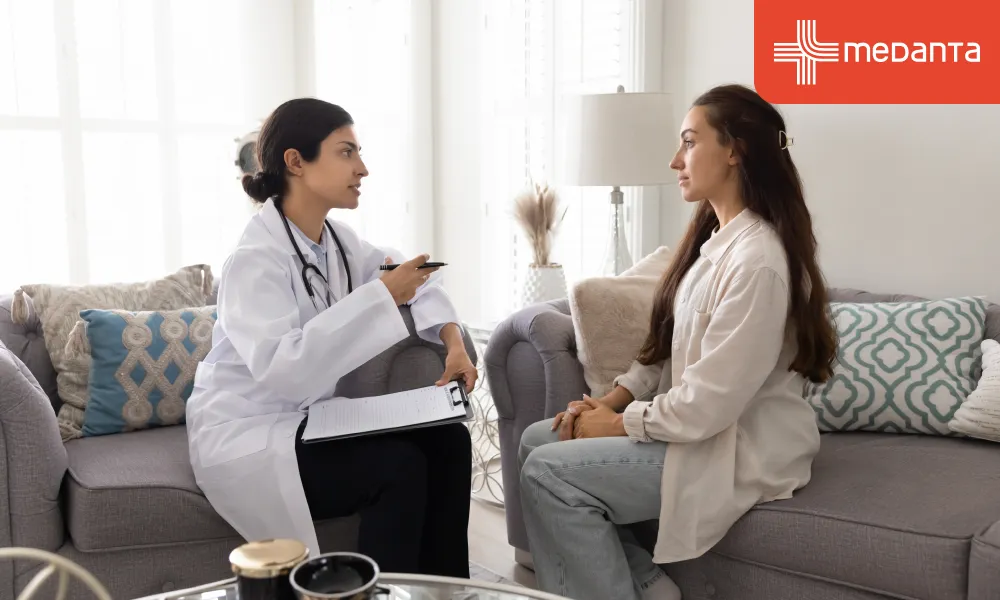
Why Might Your Doctor Recommend These Procedures?
Doctors recommend endoscopy for:
Persistent heartburn unresponsive to medication
Difficulty swallowing
Unexplained weight loss
Doctors recommend a colonoscopy for:
Rectal bleeding
Family history of colorectal cancer
Routine screening past age 45.
Sometimes both get ordered together when symptoms don't clearly point to one end of the digestive tract.
Common Symptoms and Conditions Evaluated by Endoscopy and Colonoscopy
Gastritis, ulcers, and GERD show up clearly on endoscopy, as does coeliac disease through a small tissue biopsy taken during the procedure. Colonoscopy identifies polyps (small growths) along with inflammatory bowel disease, diverticulosis and early-stage colorectal cancer, often before any symptom would have appeared at all.
How to Prepare for an Endoscopy or Colonoscopy
Endoscopy prep is simple: fasting for roughly six to eight hours beforehand. Colonoscopy prep takes real commitment - a clear liquid diet the day before, paired with a prescribed laxative solution that clears the bowel completely. Skipping or rushing this step is the single biggest reason colonoscopies sometimes need repeating so following the instructions precisely matters more than people expect.
What Happens During the Procedure?
Sedation goes in through an IV line first. The scope passes through the mouth or rectum, the doctor examines the lining carefully on a monitor and biopsies or polyp removal happen in the same sitting if needed. Endoscopy usually wraps up in 15 to 20 minutes. Whereas colonoscopy runs closer to 30 to 45.
Are Endoscopy and Colonoscopy Painful? Addressing Common Fears
Sedation handles the vast majority of discomfort and most patients describe waking up surprised at how uneventful it felt. Mild bloating or a sore throat afterward is common. The bowel preparation beforehand tends to bother people more than the colonoscopy itself, which says something about where the real discomfort actually sits.
Recovery, Risks, and When to Expect Results
Grogginess from sedation lasts a few hours, so driving and making important decisions should wait until the next day. Serious complications like perforation or significant bleeding are rare. Visual findings come immediately; biopsy results, when taken, typically arrive within a week to ten days.
Conclusion
Endoscopy and colonoscopy remain some of the most valuable tools available for detecting, evaluating, and in some cases even treating digestive disorders. It is normal to feel some anxiety before either procedure. But knowing what the proce
ss actually involves and what to expect at each step can take away much of the apprehension and make the experience feel far more manageable.
FAQs
Will I be awake during an endoscopy or colonoscopy?
Technically yes but sedation makes most patients unaware of much happening. Some describe drifting in and out and very few recall the procedure itself in any detail.
How embarrassing is a colonoscopy really?
Far less than imagined beforehand. Medical staff perform these routinely, treat it entirely clinically and the sedation means most patients aren't even conscious for the parts they'd worry about.
What if the doctor finds something abnormal during the procedure?
Polyps usually get removed on the spot, painlessly, during the same procedure. Anything needing biopsy gets sampled then too, with results following within a week to ten days.
Can I go home alone after the procedure?
No sedation impairs judgment and reflexes for several hours afterwards, so a companion needs to accompany you home and ideally stay for a few hours after arrival.
How do I manage anxiety before an endoscopy or colonoscopy?
Asking the doctor direct questions beforehand removes a lot of the uncertainty driving the anxiety. Most centres also allow a brief conversation with the anaesthesia team right before the procedure, which helps considerably.
Is the bowel preparation worse than the colonoscopy itself?
Most patients say yes. The laxative solution causes frequent bathroom trips and general discomfort.
How soon can I eat normally after the procedure?
Usually within a few hours, starting with something light. Full normal eating resumes by the next meal for most people, barring any biopsy or polyp removal requiring brief dietary caution.
Do I need an endoscopy or colonoscopy if my symptoms come and go?
Intermittent symptoms still warrant evaluation particularly if they have persisted over weeks or keep recurring. Sporadic doesn't mean harmless - some serious conditions present exactly this way.
How often should I undergo these tests if my results are normal?
Routine colorectal cancer screening typically repeats every ten years after a normal colonoscopy, sooner with polyps or family history. Endoscopy frequency depends entirely on the original reason for testing.
Can endoscopy or colonoscopy help detect cancer before symptoms appear?
Yes and this is precisely their biggest value. Polyps and early tumours often produce no symptoms at all until much later, which is exactly why screening guidelines exist independent of how someone feels.
References
1. Quintero E, et al. Colonoscopy versus fecal immunochemical testing in colorectal-cancer screening. N Engl J Med. 2012;366(8):697–706. DOI: 10.1056/NEJMoa1108895
https://doi.org/10.1056/NEJMoa1108895
2. Siegel RL, et al. Cancer statistics, 2023. CA Cancer J Clin. 2023;73(1):17–48. DOI: 10.3322/caac.21763
https://doi.org/10.3322/caac.21763
3. Hassan C, et al. Bowel preparation for colonoscopy: European Society of Gastrointestinal Endoscopy (ESGE) guideline. Endoscopy. 2019;51(8):775–794. DOI: 10.1055/a-0959-0505
https://doi.org/10.1055/a-0959-0505
4. Barkun AN, et al. International consensus recommendations on the management of patients with nonvariceal upper gastrointestinal bleeding. Ann Intern Med. 2010;152(2):101–113. DOI: 10.7326/0003-4819-152-2-201001190-00009
https://doi.org/10.7326/0003-4819-152-2-201001190-00009
5. Reumkens A, et al. Post-colonoscopy complications: a systematic review, time trends, and meta-analysis of population-based studies. Am J Gastroenterol. 2016;111(8):1092–1101. DOI: 10.1038/ajg.2016.234
https://doi.org/10.1038/ajg.2016.234
6. US Preventive Services Task Force. Colorectal cancer: screening. JAMA. 2021;325(19):1965–1977. DOI: 10.1001/jama.2021.6238