1068
1068
 Request Call Back
 Contact
 1068
1068
Dragon Fruit Benefits
Published on: May 06, 2026
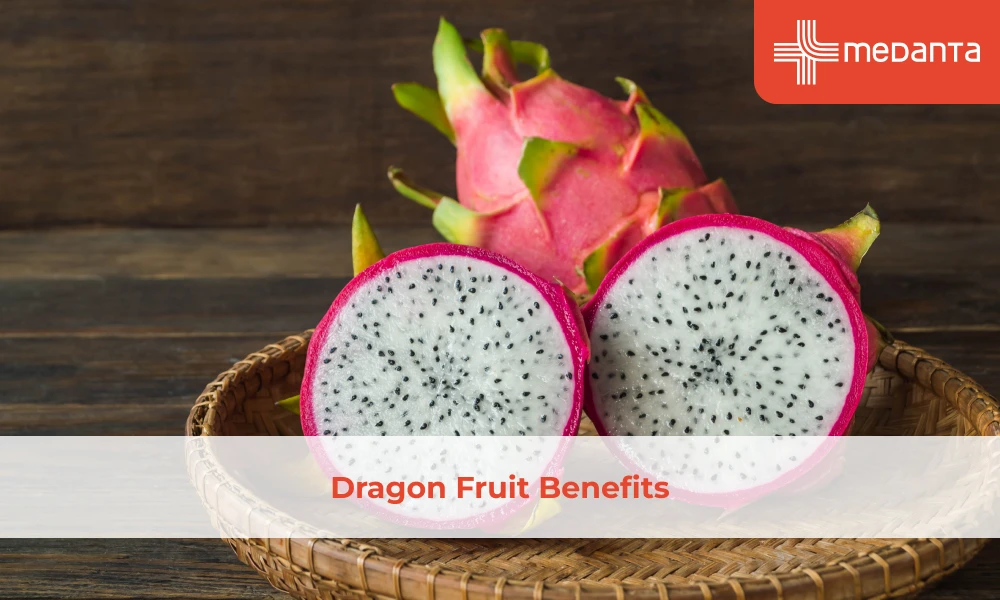
TABLE OF CONTENTS
- What Is Dragon Fruit?
- Dragon Fruit Nutrition & Calories
- Health Benefits of Dragon Fruit
- Red Dragon Fruit Benefits
- Benefits of Eating Dragon Fruit Daily
- Dragon Fruit Seeds Benefits
- Dragon Fruit Juice Benefits
- Dragon Fruit in Pregnancy: Safety & Advantages
- Dragon Fruit Uses in Diet & Recipes
- How to Eat Dragon Fruit
- Dragon Fruit Side Effects
- Conclusion
- FAQs
Over the past decade, dragon fruit has transitioned from an unfamiliar import to a fruit many people regularly ask about. The questions range from basic - 'Is it actually good for you?’ to more specific ones around diabetes management, pregnancy safety, and daily consumption. Given how frequently it now appears in Indian households it is time to put together a clinically grounded answer.
This guide covers what dragon fruit delivers nutritionally, where the evidence is strong, where it is still developing, and the few situations where caution is appropriate.
What Is Dragon Fruit?
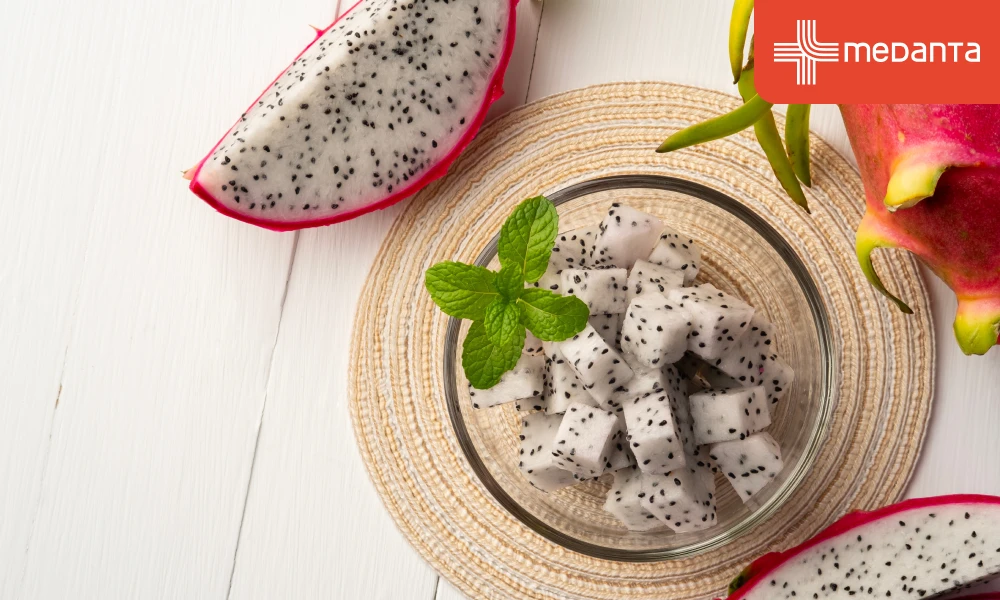
Dragon fruit is the edible fruit of climbing cacti belonging to the Hylocereus family, originally native to Central America and Mexico. It is now cultivated commercially across Southeast Asia - Vietnam, Thailand, and the Philippines are among the largest producers and increasingly in India, particularly in Maharashtra, Karnataka, and Gujarat. Three varieties reach Indian markets with any regularity: the white-fleshed pink-skinned type (most widely available and mildest in flavour), the red-fleshed pink-skinned type (richer in specific antioxidants, slightly earthier), and the yellow-skinned variety with white flesh, which tends to be the sweetest but remains difficult to source consistently.
Dragon Fruit Nutrition & Calories
At roughly 60 kcal per 100g, dragon fruit sits comfortably in the low-calorie category without sacrificing nutritional density. A standard serving (approximately half a medium fruit) provides the following:
Nutrient | Per 100g Serving |
|---|---|
Calories | ~60 kcal |
Carbohydrates | ~13 g |
Natural Sugars | ~8 g |
Dietary Fibre | ~3 g |
Protein | ~1.2 g |
Fat | ~0.4 g |
Vitamin C | ~3 mg |
Iron | ~0.65 mg |
Magnesium | ~18 mg |
Calcium | ~8.5 mg |
B vitamins, phosphorus, and trace zinc are also present.
Health Benefits of Dragon Fruit
Gut Health: Dragon fruit contains prebiotic oligosaccharides that selectively feed Lactobacillus & Bifidobacterium strains. These bacteria are well known for improving digestion, strengthening gut barrier function, and reducing systemic inflammation. For patients dealing with irregular bowel habits or post-antibiotic gut imbalance, this is clinically meaningful. The combination of soluble prebiotic fibre and insoluble bulk fibre makes it one of the more gut-supportive fruits available in the Indian market.
Immune Function: Vitamin C works alongside betalains and hydroxycinnamates (antioxidant compounds present in dragon fruit) to neutralise free radicals and support cellular repair mechanisms. The vitamin C content alone is modest (approximately 3mg per 100g), but the synergistic effect with other antioxidants makes the immune contribution more meaningful than the isolated figure suggests.
Blood Sugar Management: Dragon fruit's glycaemic index is moderate by fruit standards, and its dietary fibre slows glucose entry into the bloodstream (relevant for those with prediabetes or insulin resistance).
Cardiovascular Health: The seeds are a source of omega-3 and omega-6 polyunsaturated fatty acids, which support lipid balance and vascular health. In the red-fleshed variety betalain pigments have demonstrated LDL-cholesterol-reducing and anti-inflammatory effects under controlled conditions. Dragon fruit carries no dietary cholesterol, making it a sound inclusion in cardiac-protective diets.
Skin Health: More than 80% of dragon fruit by weight is water making it a hydrating food in a way that concentrated supplements are not. Vitamin C drives collagen synthesis, and the antioxidant load may slow skin ageing related to UV and environmental oxidative stress. These effects accumulate gradually rather than appearing acutely.
Red Dragon Fruit Benefits
Among the available varieties, the red-fleshed type stands apart for one principal reason: betalain concentration. Betalains are the nitrogen-containing pigments responsible for the deep crimson colour (found also in beetroot) and they have a well-established anti-inflammatory and antioxidant profile that the white-fleshed variety simply does not match. Studies examining betalain bioavailability have found the compounds reach circulation and remain active, rather than being degraded by digestion as some plant pigments are.
Lycopene - the same carotenoid found in tomatoes and linked in long-term studies to reduced cardiovascular risk and lower rates of certain cancers - is also present in higher concentrations in red dragon fruit. If both varieties are accessible at comparable cost, the red is the stronger nutritional choice.
Benefits of Eating Dragon Fruit Daily
A daily portion of 150 to 200g (roughly one small fruit) delivers consistent prebiotic fibre, sustained antioxidant exposure, and useful hydration without a high caloric cost. For patients managing weight, blood sugar, or cardiovascular risk factors, this makes dragon fruit a practical and sustainable dietary habit. It is not a therapeutic intervention in isolation, but as part of a structured dietary approach, it earns its place.
Dragon Fruit Seeds Benefits
The small black seeds embedded throughout the flesh are edible, and more patients should know that. They contain linoleic acid (omega-6) and linolenic acid (omega-3). Both are essential fatty acids that the body cannot synthesise independently. These fatty acids support cell membrane function and play a regulatory role in inflammatory signalling. An additional gram or so of fibre comes with them as well. No preparation is needed; consuming the fruit normally is sufficient.
Dragon Fruit Juice Benefits
Freshly prepared dragon fruit juice retains most of its vitamin and antioxidant content and is, for many people, easier to digest than the raw fruit. It works well combined with lime, ginger, or fresh mint, and adds genuine nutritional value as a hydration option - particularly for individuals who find adequate fluid intake difficult.
That said, juicing eliminates the majority of dietary fibre. For patients where glycaemic control or bowel regularity is a priority, we would recommend the whole fruit over juice. Juice is better positioned as a supplement to, rather than a replacement for, whole fruit consumption.
Dragon Fruit in Pregnancy: Safety & Advantages
Dragon fruit is safe during pregnancy and carries several benefits that are directly relevant to the clinical picture. Folate (important for neural tube development in the first trimester) is present. Iron contributes incrementally to anaemia prevention, which remains a common concern among pregnant women in India. High water content supports hydration requirements that increase across trimesters, and the fibre reliably helps with pregnancy-associated constipation.
Gestational diabetes changes the calculation somewhat. Natural sugars still contribute to glycaemic load, and portion control matters. Washing the outer skin before cutting is standard food hygiene practice regardless of trimester.
Dragon Fruit Uses in Diet & Recipes
Dragon fruit is versatile and adapts to several dietary contexts without requiring effort:
Smoothies - blends with banana, curd, and coconut water for a balanced breakfast drink
Breakfast bowls - diced over overnight oats or set yoghurt with a drizzle of honey
Fruit chaat - tossed with chaat masala, pomegranate seeds, and a squeeze of lime
Salads - pairs well with cucumber, fresh mint, and a light citrus dressing
Infused water - two or three cubes added to a water bottle significantly improves hydration compliance in patients who dislike plain water.
How to Eat Dragon Fruit
Preparation takes under two minutes:
Look for a fruit with even, vibrant skin colour and slight give under gentle pressure (similar to a ripe avocado)
Rinse the exterior under running water
Cut lengthwise through the centre with a sharp knife
Use a large spoon to scoop the flesh from the skin - it separates cleanly without pulling
Dice or eat directly from the skin; the seeds stay in.
An uncut fruit can be stored at room temperature for 2 to 3 days. Once cut, refrigerate and consume within 48 hours.
Dragon Fruit Side Effects
Most adults tolerate dragon fruit without issue. A small number of individuals may experience the following:
Gastrointestinal discomfort like bloating or loose stools if consumed in very large quantities
Allergic reactions (rare)
Pseudohaematuria - the red-fleshed variety can temporarily discolour urine and stools pink
Glycaemic impact - patients with type 2 diabetes should monitor post-prandial glucose when first incorporating dragon fruit regularly into their diet
May interact with anticoagulants so patients on anticoagulant therapy should mention this to their doctor.
Conclusion
Dragon fruit is among the more nutritionally well-rounded fruits now accessible in India. It is low in calories, supportive of gut health, and carries an antioxidant profile that strengthens with regular consumption. The red-fleshed variety offers the more substantial benefits, particularly for cardiovascular and anti-inflammatory support, though both types are clinically sound dietary choices.
For patients with diabetes, gestational complications, or anticoagulant therapy, a conversation with a Medanta doctor or dietitian before daily use is advisable. For the majority of healthy adults, it is a simple addition to a balanced diet - one that holds up well under clinical scrutiny.
FAQs
What are the top health benefits of dragon fruit?
Gut health is arguably the strongest benefit - the prebiotic fibre supports beneficial bacterial populations with documented downstream effects on immunity and inflammation. Beyond that: moderate blood sugar response, cardiovascular support from seed fatty acids and betalains (in the red variety), hydration from high water content, and immune support via vitamin C and associated antioxidants. Weight management is a secondary benefit given its low caloric density.
Is red dragon fruit healthier than white dragon fruit?
For antioxidant purposes, yes. The red variety carries substantially more betalains and lycopene, both of which have anti-inflammatory and cardiovascular protective properties not matched by the white-fleshed type. White dragon fruit remains nutritious, but where choice exists, red is the clinically stronger option.
Is dragon fruit safe during pregnancy?
Yes. Folate, iron, fibre, and hydration are all relevant to pregnancy, and dragon fruit provides all four in useful quantities. The qualification is gestational diabetes - natural sugars require monitoring and portion guidance from a physician or dietitian.
What is the nutritional value of dragon fruit?
Per 100g:
Calories: Approximately 60 kcal
Carbohydrates: 13g
Fibre: 3g
Protein: 1.2g
Fat: under 0.5g
Key micronutrients include vitamin C, iron, magnesium, calcium, and B vitamins. Antioxidant compounds (betalains, hydroxycinnamates, flavonoids) contribute additional functional value beyond basic nutrition.
How many calories are in dragon fruit?
Approximately 60 kcal per 100g. A medium serving of 150-200g yields 90 to 120 kcal placing it among the lower-calorie whole fruit options available.
How should I eat dragon fruit?
Halve it lengthwise, scoop the flesh with a spoon, and eat it directly or dice it for recipes. No peeling is required (just cut and scoop). Seeds are edible and nutritious; there is no reason to remove them. Avoid the skin.
What are the benefits of dragon fruit seeds?
The seeds supply linoleic acid (omega-6) and linolenic acid (omega-3) which are essential fatty acids involved in cell membrane structure and inflammation regulation. They also add dietary fibre. Since they are embedded throughout the flesh, no special preparation is needed to obtain these benefits.
Are there any side effects of eating dragon fruit?
Uncommon, but a few are worth knowing. Large quantities may cause bloating or loose stools. The red-fleshed variety can produce temporary pink discolouration of urine and stools (alarming in appearance but entirely harmless). Allergic reactions are rare. Diabetic patients should track post-meal glucose. Those on blood thinners should inform their doctor.
What are the benefits of drinking dragon fruit juice?
Juice retains the vitamins and antioxidants and is easier to digest for those with gastrointestinal sensitivity. The trade-off is fibre loss, which is clinically significant if blood sugar management or bowel health is the primary concern. Whole fruit is preferable in those cases; juice works well as an occasional hydration option.
Can I eat dragon fruit every day?
For most healthy adults, yes - 150 to 200g daily is safe and beneficial. It adds fibre, antioxidants, and hydration at a low caloric cost. Those managing diabetes or specific medical conditions should confirm appropriate daily quantities with their doctor.