1068
1068
 Request Call Back
 Contact
 1068
1068
Dermatitis: Types, Causes, Symptoms and Effective Home Remedies
Published on: Mar 27, 2026
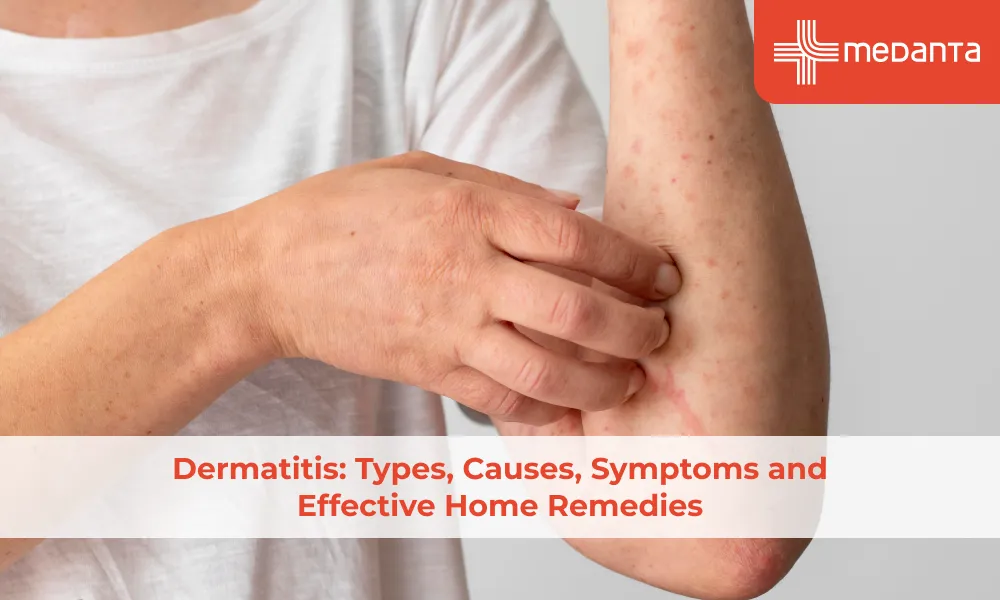
TABLE OF CONTENTS
- What Is Dermatitis?
- Different Types of Dermatitis
- Common Causes and Triggers of Dermatitis
- Symptoms of Dermatitis: How to Identify Skin Irritations
- How Dermatitis Affects Daily Life
- Home Remedies to Soothe Dermatitis Naturally
- Dietary and Lifestyle Tips for Dermatitis Management
- When Over-the-Counter Treatments Can Help
- Medical Treatments for Severe Dermatitis
- Preventive Measures to Avoid Recurrence of Dermatitis
- FAQs
Dermatitis or skin inflammation is a common skin problem that happens to people of all ages from kids to seniors. It shows up with signs like itchy rashes, blisters, and dry skin, which can interfere with normal daily life and comfort. The condition appears in various types like eczema, contact dermatitis, atopic dermatitis & seborrheic dermatitis.
This detailed guide describes what dermatitis is, its different types, what causes it, and how to treat it. Treatment options cover home remedies, changes in daily habits, and medicines.
What Is Dermatitis?
The dermatitis meaning breaks down into two parts: "derm" refers to skin while "itis" signals inflammation. This condition represents your skin's inflammatory response to various triggers. The affected skin becomes swollen, irritated and uncomfortable though it poses no serious harm to your body.
Different Types of Dermatitis
Several types of dermatitis exist each with distinct characteristics. They are:
Atopic dermatitis: Mostly Affects infants & young children. It often develops due to allergies.
Contact dermatitis: Accounts for the majority of all occupational skin diseases. It develops when the skin reacts to irritants or allergens like chemicals, soaps, metals, or cosmetics.
Seborrheic dermatitis: Produces yellowish scaly patches, especially on the scalp.
Dyshidrotic eczema: Forms fluid-filled blisters on the hands and feet.
Stasis dermatitis: Develops due to poor blood circulation & tends to show up on the lower legs.
Common Causes and Triggers of Dermatitis
Certain factors can cause dermatitis. These include:
Genetics: If close family members like parents or siblings have eczema or allergies, it may make someone more likely to develop dermatitis.
Overactive immune system: An overactive immune system might react to harmless substances, which can cause skin inflammation.
Infections: Certain bacteria, viruses or fungi can cause dermatitis to start or make it worse.
Allergies: Coming into contact with allergens might lead to red, itchy, or irritated skin.
Common triggers include:
Nickel in jewellery
Contact with poison ivy, perfumes, soaps and detergents
Prolonged water exposure
Stress
Hormonal changes
Certain medical conditions can also provoke flare-ups.
Symptoms of Dermatitis: How to Identify Skin Irritations
Dermatitis symptoms begin with itchiness and redness. Other symptoms are:
Your skin may develop a rash that appears red on lighter skin tones or darker brown, purple or grey on darker complexions
Skin blisters (sometimes they ooze fluid)
You may also notice dry, cracked or scaly patches.
How Dermatitis Affects Daily Life

Sleep disturbance is common among children with dermatitis during flare-ups. This causes daytime drowsiness and irritability. Adults experience reduced work productivity, with some even facing unemployment due to moderate or severe cases.
Home Remedies to Soothe Dermatitis Naturally
Inflamed skin doesn't always need a doctor's visit. Some home remedies are also effective at soothing inflammation. These are:
Coconut oil works as a natural moisturiser and reduces dryness and itchiness.
Aloe vera provides cooling relief during flare-ups.
Colloidal oatmeal baths soothe redness and irritation well.
Cool compresses offer instant itch relief when applied to affected areas.
Dilute bleach baths (½ cup in a 40-gallon tub) can decrease bacteria and reduce symptoms when used 2-3 times weekly.
Dietary and Lifestyle Tips for Dermatitis Management
Your plate influences your skin more than you might think. To curb inflammation include these food products in your diet:
Fatty fish rich in omega-3s
Quercetin-packed foods like apples
Probiotic-rich yoghurt
Stress management through meditation
Adequate sleep improves skin barrier function by a lot.
Cotton clothing and fragrance-free detergents prevent unnecessary irritation.
When Over-the-Counter Treatments Can Help
Hydrocortisone cream (1%) applied twice daily provides quick anti-inflammatory relief. Antihistamines like diphenhydramine curb itching especially when you have trouble at night. Fragrance-free moisturisers applied after bathing lock in hydration.
Medical Treatments for Severe Dermatitis
Prescription-strength corticosteroids and calcineurin inhibitors (tacrolimus, pimecrolimus) offer relief for moderate to severe cases. Biologics such as dupilumab do the same. JAK inhibitors like upadacitinib and phototherapy represent newer treatment options.
Preventive Measures to Avoid Recurrence of Dermatitis
Effective preventive measures are:
Identify your personal triggers and avoid them.
Use mild skincare products.
Moisturise daily and avoid harsh soaps.
Protect skin from extreme temperatures.
Wear soft, breathable clothes to prevent skin irritation.
Emollients applied between flare-ups maintain skin barrier integrity.
FAQs
What are the common types of dermatitis?
You will encounter several distinct forms, each with unique patterns. They are:
Atopic dermatitis or eczema ranks as the most widespread.
Contact dermatitis splits into allergic and irritant varieties when skin touches triggering substances.
Nummular dermatitis creates round, coin-shaped patches.
Perioral dermatitis appears as red bumps around the mouth and affects women aged 20 to 60 most often.
Stasis dermatitis develops on lower legs due to poor circulation.
Neurodermatitis causes intense localised itching.
What causes dermatitis flare-ups?
Common causes are:
An overactive immune system
Chronic stress
Harsh fabrics like wool.
Skincare products with fragrances
Environmental pollutants
Hormonal fluctuations during pregnancy.
Skin infections spark flare-ups on occasion.
Can dermatitis be cured completely?
Dermatitis remains a chronic condition that comes and goes without warning. Treatments manage symptoms but cannot eliminate them for good.
Are there natural remedies for dermatitis?
Effective home remedies are:
Natural oils like coconut and mineral oil improve dry skin
Dietary additions such as olive oil and fatty acids may reduce inflammation.
Which foods can worsen dermatitis?
Common triggers include:
Dairy products
Eggs
Gluten
Processed foods and trans fats
High-sugar items
Food allergies affect one-third of moderate-to-severe cases.
Can stress trigger dermatitis?
Your skin gets affected by your emotions more than you might realise. Your body's fight-or-flight response gets activated by stress and floods your system with cortisol and other hormones that spark inflammation beneath the surface. Itch nerve fibres in your skin get activated directly by stress and make you scratch more. Many people with atopic skin disease battle anxiety or depression. This creates a relentless cycle where flare-ups stimulate stress, which then triggers more flare-ups.
Is dermatitis contagious?
Absolutely not. Touch or close contact cannot spread any form of dermatitis. You cannot catch it from someone else nor can you pass it along. Be that as it may, the substance causing contact dermatitis (like poison ivy resin) can transfer between surfaces and cause new reactions in sensitive individuals.
When should I see a dermatologist for dermatitis?
You should schedule an appointment as soon as symptoms disrupt your sleep or daily activities. Skin that cracks, bleeds, or shows infection signs like pus needs attention. Flare-ups that worsen or show minimal improvement with simple moisturisers warrant professional evaluation.
Are creams and ointments safe for long-term use?
Intermittent topical corticosteroid use appears safe for up to five years. But continuous daily application can trigger withdrawal reactions after just two months in children.
How can I prevent dermatitis from coming back?
You can track your triggers through journaling. Apply moisturiser immediately after showering, avoid scorching water and maintain indoor humidity. Regular relaxation practises reduce recurrence risk by a lot when you manage stress.