1068
1068
 Request Call Back
 Contact
 1068
1068
Boils and Carbuncles: Causes, Prevention, and Care Tips
Published on: Dec 04, 2025
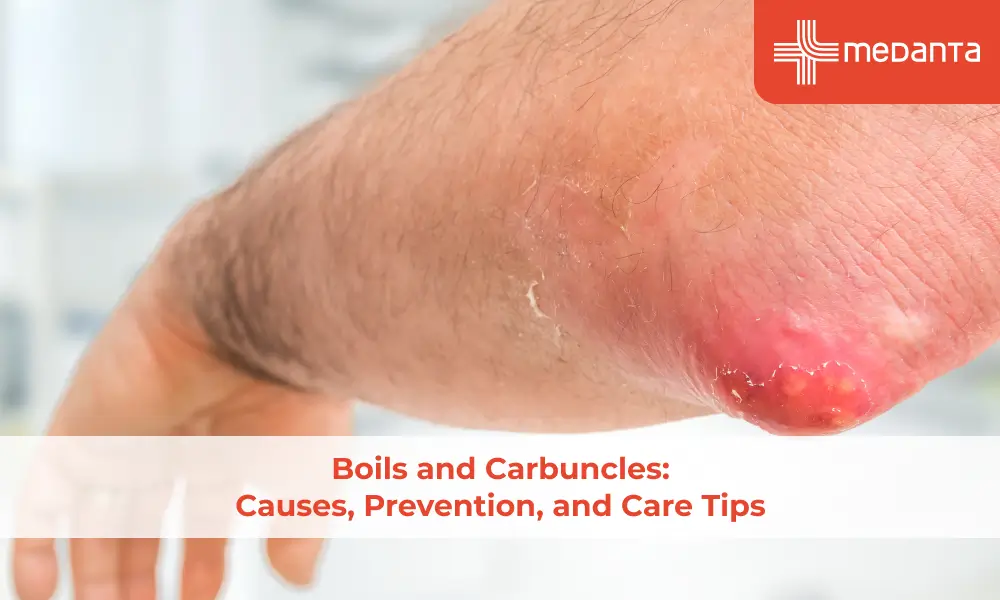
TABLE OF CONTENTS
Boils appear as painful, pus-filled bumps under the skin. These uncomfortable skin infections start as small, reddish or purplish tender spots and quickly grow bigger while filling with pus. Multiple boils can cluster together and create a more severe infection known as a carbuncle.
These painful infections can show up anywhere on your body but they mostly occur in areas where skin touches skin or where you sweat. Staphylococcus aureus (staph) bacteria usually cause these painful bumps. People face a higher risk of getting these skin infections, especially when they have diabetes, obesity or a weakened immune system.
Most boils heal and clear up within two to three weeks if you care for them properly. People who learn about what causes these skin infections and how to treat them can manage their symptoms better and prevent them from coming back. This article explains everything about boils and carbuncles—from identifying symptoms to learning about treatment options and ways to prevent them.
What Are Boils and Carbuncles?
Doctors call them furuncles, but boils are painful, pus-filled bumps that form under your skin when bacteria infect hair follicles. These red, swollen lumps show up on your face, neck, armpits, buttocks, and thighs - places where hair grows and skin rubs together often. A carbuncle forms when several boils group together creating a bigger, connected infection area under the skin. These serious infections usually appear at the back of the neck and go deeper into the tissue.
Causes and Risk Factors
Staphylococcus aureus causes most boils and carbuncles. This germ enters through small cuts or hair follicles. Your immune system responds by sending white blood cells that mix with damaged skin to create pus. You're more likely to get them if you have:
Medical conditions: Diabetes, compromised immunity, or cancer
Other skin issues: Eczema, acne, or conjunctivitis
Physical factors: Obesity or excessive sweating
Environmental exposure: Close contact with infected people or contaminated items
Geographic location: Hot, humid climates
Common Symptoms
A boil starts as a hard, painful bump about the size of a pea. Within days, it becomes:
Bigger, softer, and more painful
Red or purple around the centre
Full of yellowish-white pus
Warm to the touch
Ready to burst and drain
Carbuncles bring fever, fatigue, and make you feel sick. The infection might spread to nearby lymph nodes, making your neck, armpits, or groin swell.
How Boils Differ from Carbuncles
Feature | Boils (Furuncles) | Carbuncles |
Formation | Single infected hair follicle | Multiple connected boils |
Size | Small to moderate | Larger, deeper |
Depth | Superficial | Penetrates deeper into the tissue |
Systemic symptoms | Rarely causes fever | Often causes fever and fatigue |
Scarring | Minimal | More likely to leave scars |
Healing time | 2-3 weeks typically | Longer healing period |
When to Seek Medical Help
You should see a doctor right away if your boil or carbuncle:
Shows up on your face, especially near the eyes or the nose
High fever (over 101°F/38.3°C)
Grows faster or becomes very painful
Doesn't heal within two weeks
Keeps coming back
Spreads with visible red streaks from the site
Diagnosis
Doctors can spot boils by their distinct appearance. Additional tests become needed only when infections are severe or keep coming back.
Lab cultures help identify the exact bacteria.
Treatment
Small boils respond well to warm compresses applied 15 to 20 minutes several times each day - this helps drain the pus naturally. However, bigger boils or carbuncles need a doctor's care.
Professional treatment usually includes:
Making an incision to drain the pus
Antibiotics when cases are severe or the immune system is weak
Pain relief medications
Note that squeezing a boil yourself can spread the infection - don't do it.
Preventing Boils and Carbuncles
These steps help reduce future outbreaks:
Clean your hands really well with antibacterial soap
Keep wounds covered until they heal
Don't share personal items like towels or razors
Complications
If not treated on time these skin infections can cause:
Cellulitis
Scarring of the underlying tissues
Spread to nearby structures like lymph nodes or bones
The infection can enter your bloodstream (sepsis) and affect vital organs like your heart, bones and brain.
Skin Care Tips for Faster Healing and Prevention
Your skin care routine can help heal boils and stop them from coming back. The right treatment makes a huge difference in how fast you recover and feel better.
Apply warm compresses to speed up healing. A clean cloth soaked in warm water should be held against the affected area for 10-15 minutes, three to four times daily. This method boosts blood flow around the boil and helps more infection-fighting white blood cells reach the area.
Never squeeze or lance a boil yourself because bacteria can spread to nearby areas or the infection might go deeper. Let boils drain naturally.
After a boil drains you should:
Cover it with sterile gauze or a dressing to stop infection from spreading
Wash your hands really well before and after touching the area
Clean the skin around it with antibacterial soap
You can prevent infection spread by:
Using separate personal items like towels, washcloths, and bedding
Washing clothes and bedding in hot water and drying them at high heat
Disposing used dressings and bandages carefully
Pain relief comes from over-the-counter medications like paracetamol or ibuprofen.
Good hygiene helps prevent future boils
A balanced diet and regular exercise strengthen your immune system, which helps people who often get boils. Weight loss might help if you get boils between skin folds.
Conclusion
Boils and carbuncles might look like minor skin issues, but they definitely need proper attention and care. Most of these infections heal within a few weeks with correct treatment. Larger infections may require medical intervention (drainage procedures or antibiotics). These infections can lead to serious complications if left untreated, especially in people with diabetes or weakened immunity.
Skin care doesn't require complex routines. Simple hygiene practices, proper wound care, and quick response to early infection signs will help you avoid these bacterial invaders' pain and discomfort.
FAQs
What are boils and carbuncles?
Boils (also called furuncles) are painful, pus-filled bumps that form under your skin after bacteria infect hair follicles. You'll see them as red, swollen lumps that get bigger and fill with pus. A carbuncle forms when several boils cluster together, which creates a deeper and more serious infection under the skin.
What causes boils and carbuncles to form?
Bacteria called Staphylococcus aureus usually cause these skin infections. The germs get in through small cuts or hair follicles. Your body fights back by sending white blood cells, which create pus. You're more likely to get these infections if you:
Have diabetes
Have a weak immune system
Deal with skin conditions like eczema
Are obese or malnourished
Come in contact with the infected person
How can I tell the difference between a boil and a carbuncle?
A boil shows up as one painful bump with a single opening. A carbuncle, on the other hand, is a group of connected boils with many openings on your skin's surface. Carbuncles go deeper, are bigger, and often make you feel feverish and tired. They also leave worse scars than single boils.
Are boils and carbuncles contagious?
The boils themselves won't spread, but the pus inside has bacteria that can. You can spread it by:
Touching someone's infected skin
Using the same towels
Getting the fluid on your hands and touching other areas
What are the symptoms of a carbuncle infection?
Common symptoms are:
Several boils grouped together
Pus coming out from multiple spots
Fever over 38°C
Feeling very tired
Pain at the site of infection
Swollen lymph nodes close by
How are boils and carbuncles treated?
Treatment depends on how bad the infection is:
Small boils might drain on their own with warm compresses
A doctor needs to drain larger infections
You might need antibiotics for bad or recurring infections
Pain medicine can help with discomfort
Can I treat boils at home safely?
For small boils, put warm compresses on them for 10-15 minutes several times a day to help them drain. Don't try to squeeze or pierce a boil yourself - this can make the infection spread. You should see a doctor if your boil gets bigger, hurts too much, causes fever, or doesn't get better within a week.
When should I see a doctor for a boil or carbuncle?
You should call your doctor right away if your boil:
Shows up on your face, nose or spine
Becomes bigger and feels soft and spongy
Stays unhealed for more than two weeks
Makes you feel feverish or sick
Gets bigger fast or becomes very painful
Has red streaks moving away from the area
Why do some people get recurring boils?
Boil infections come back within a year in many people. These recurring boils often mean you might carry Staphylococcus aureus bacteria on your skin or inside your nose. You become more likely to get them if you have:
Diabetes or obesity
Autoimmune conditions
A weak immune system
Other skin problems like eczema or acne
How can I prevent boils and carbuncles in the future?
Here's how to lower your risk:
Use mild antibacterial soap to wash your hands often
Clean all cuts really well, even tiny ones
Keep wounds covered with sterile bandages until they heal
Build your immunity with good food and exercise
Don't share towels, clothing or bedding
Take regular baths, especially after you sweat