1068
1068
 Request Call Back
 Contact
 1068
1068
Back Acne (Bacne): Causes, Prevention, and Best Treatment Options
Published on: Dec 04, 2025
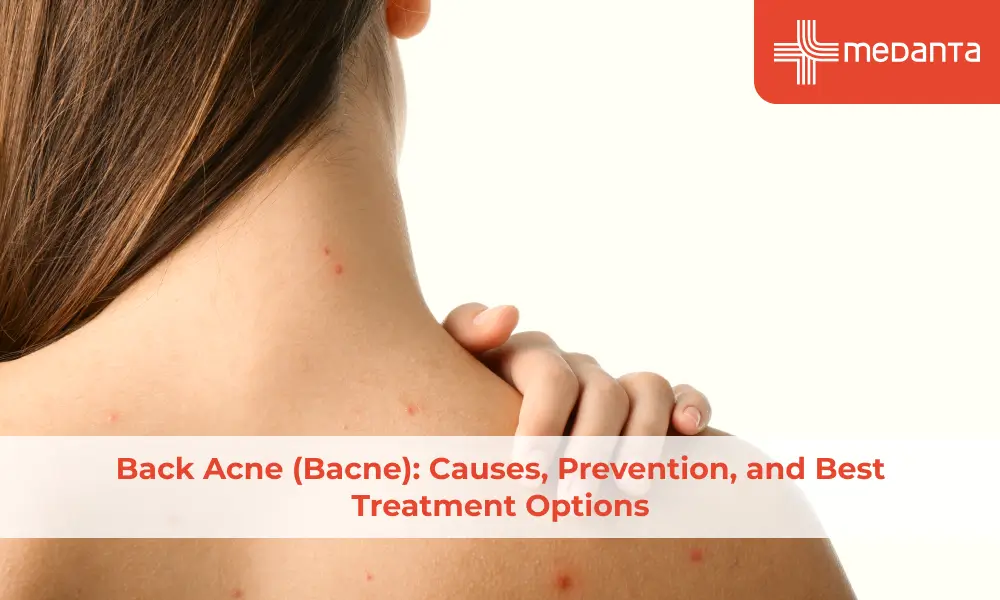
TABLE OF CONTENTS
Back acne can affect anyone, whatever their age or gender. It hits many people aged 11 to 30. People commonly call it "bacne," and it's actually the most common skin condition. Millions of people deal with breakouts that show up not just on their faces but also on their backs, shoulders, and chests.
The problem starts when oil, dead skin cells, and bacteria clog the pores on your back. While bacne looks like facial acne, it's nowhere near as easy to treat because of where it shows up on your body. Your back can break out by a lot if you wear tight clothes that trap sweat.
Back acne ranges from mild occasional pimples to more severe inflammatory papules. The good news is that many treatment options are available for everyone - from those with grade 1 (mild) cases to people with more serious forms.
Causes of Back Acne
Clogged hair follicles (tubules that hold hair strands) are the main cause of back acne. The following are common causes of blockage:
Too much sebum (oil) from overactive sebaceous glands
Dead skin cells that stick around
Bacterial growth, especially Cutibacterium acnes
Sweat that gets trapped between skin and clothing
Risk Factors
Your chances of getting back acne go up with:
Hormonal changes during puberty, pregnancy, or menstruation
Your family's history - your parents' acne makes you more likely to get it too
Friction from backpacks, sporting equipment, or tight clothes
Medications like corticosteroids or testosterone therapy
Foods high in sugar or too much dairy
Stress that raises cortisol levels and makes more oil
Symptoms
Back acne appear as:
Blackheads - plugged pores with dark tops
Whiteheads - plugged pores with white tops
Papules - small red bumps without a "head"
Pustules - pus-filled pimples
Nodules - hard lumps under the skin
Cysts - painful, fluid-filled lumps
These spots can appear on your shoulders and upper back or spread across your entire torso. Many people notice their bacne gets worse during summer as heat and humidity rise.
Medical Treatments and Dermatologist Options
When stubborn bacne doesn't improve with over-the-counter products, you'll need professional help. Here's what dermatologists typically prescribe:
Topical retinoids to keep pores clear
Oral antibiotics that fight bacteria and reduce inflammation
Isotretinoin for severe cases
Hormone therapy that works well for women with hormone-triggered acne
Cortisone injections that make painful cysts shrink faster
Advanced treatments like chemical peeling or laser therapy might help some patients.
Skincare Tips to Prevent Bacne
Your first line of defence against back breakouts starts with good skin hygiene:
Take a shower right after you sweat and use gentle, non-comedogenic cleansers
Put on a benzoyl peroxide wash and let it stay on your skin for 2-5 minutes
Skip harsh scrubbing since it makes inflammation worse
Clean sheets and towels need weekly washing to stop bacteria from building up
Diet and Lifestyle Factors Affecting Back Acne
You can control breakouts better with these lifestyle changes:
Cut back on high glycemic foods like white bread, pasta, and sugary drinks
You might want to eat less dairy
Choose loose-fitting clothes that let your skin breathe
Keep stress levels down through regular exercise, meditation or enough sleep
Home Remedies for Back Acne
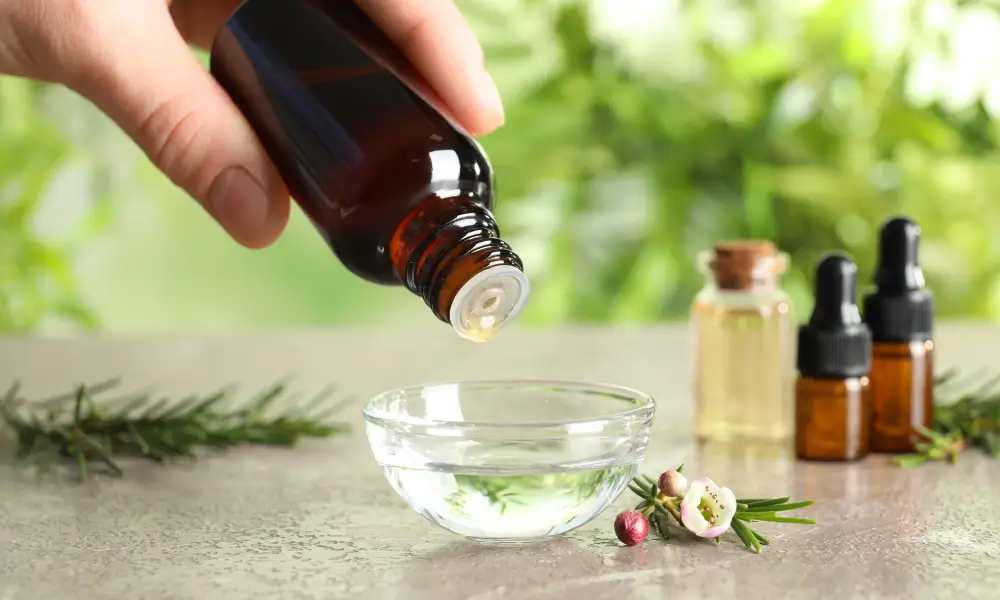
Natural approaches might help, though they haven't been studied as much as medical treatments:
Tea tree oil works as a natural antibacterial
Aloe vera helps calm inflammation
Diluted apple cider vinegar can balance your skin's pH
However, you should check with your doctor before trying home remedies, especially if you have severe acne.
When to See a Doctor for Bacne
Home treatments work well for most mild back acne, but some cases need professional medical attention.
A doctor should examine your condition if:
Your back acne becomes severe or returns after clearing up
You develop hard, painful nodules or deep pimples under your skin
The area becomes extremely painful or inflamed
You develop signs of infection with fever
Six weeks of over-the-counter treatments show no results
Your skin becomes irritated, itchy or discoloured from current treatments.
Cystic acne - deep, pus-filled bumps that hurt - always needs a doctor's care.
Conclusion
Back acne can be tough to manage, but the right care can make a big difference. The frustrating bumps on your back appear when pores get clogged from excess oil, bacteria, and sweat. A consistent skincare routine brings relief to most people. Remember that bacne affects millions of people whatever their age or gender, so you're not alone in this. While over-the-counter treatments work for mild cases stubborn or severe bacne might need a doctor's help.
Your skin and mental wellbeing both need attention. Bacne might feel embarrassing, but treatments exist that work for everyone. Patience and consistent care lead to clearer skin, whether you get occasional spots or frequent breakouts. Simple changes today can make a difference. Just give each treatment enough time before trying something new. Your trip to smoother skin starts when you understand the condition and take positive steps to heal.
FAQs
What causes back acne (bacne)?
Your back breaks out because pores get clogged with oil from overactive glands and dead skin cells that stick around too long. Bacteria then grow in these blocked follicles. Tight clothes and backpacks make things worse by creating friction. Your hormones play a big role too - changes during puberty, pregnancy, or menstruation can trigger breakouts. Stress kicks up oil production and creates the perfect environment for spots.
How is back acne different from facial acne?
Your back's skin is thicker than your face's skin, which makes bacne tough to treat. Back acne spots are usually larger, with bigger pustules and more painful cysts. On top of that, it's harder for treatments to work through this thick skin.
Can diet affect back acne?
Yes, it is true - the food you eat affects your skin's health:
Foods with a high glycemic index like white bread or sugary drinks can trigger breakouts
Dairy products (milk in particular) might worsen acne as they contain whey proteins that boost insulin secretion
Foods enriched in omega-3 fatty acids can lower inflammation
What are the best home remedies for bacne?
You can choose between these home remedies:
Tea tree oil - dilute it with carrier oil before applying it
A thin layer of aloe vera gel soothes irritation
Apple cider vinegar (ACV) - dilute it before applying
Are there effective over-the-counter treatments for back acne?
Benzoyl peroxide washes (5.3%-10%) kill acne-causing bacteria quickly - just leave them on for a minute before rinsing. After your shower, try applying adapalene, an OTC retinoid that helps clear clogged pores. You'll see the best results by using both products with gentle, fragrance-free skincare products.
How can I prevent back acne from recurring?
You need consistent habits to keep back acne away. Take a shower right after workouts and change your sweaty clothes quickly. Cotton or sweat-wicking fabrics let your skin breathe, so choose loose-fitting clothes made from these materials. Dead skin cells need regular removal with gentle scrubs that contain salicylic acid. The temptation to pick or pop spots is strong, but this makes acne worse and leaves scars.
Can exercise or sweat worsen bacne?
Sweat trapped against your skin creates perfect conditions for bacteria to grow. Your pre-workout and post-workout routine matters a lot. Remove makeup and wear clean, breathable clothes before exercising. Use a clean towel to pat off sweat and wipe down shared equipment during your workout. A mild cleanser and an immediate shower work best afterwards. Salicylic acid pads can help clean affected areas if you can't shower right away.
When should I see a dermatologist for back acne?
See a dermatologist when:
Over the counter treatments for 6-8 weeks do not show any improvement
Your acne are bad or comes back after clearing up
You feel hard sore lumps deep under your skin
You have signs of infection like a fever
Are there medications or therapies for severe back acne?
Skin doctors can prescribe:
Oral antibiotics like tetracycline or macrolides
Hormonal treatments such as spironolactone or certain oral contraceptives.
Isotretinoin treatment
Prescription-strength topical treatments with retinoids or antibiotics.
Does back acne leave scars and how can I prevent them?
Deep or repeatedly inflamed acne tends to leave scars. Early and effective treatment of active acne prevents scarring best. Using a broad-spectrum sunscreen with SPF 30 or higher every day helps protect skin that's healing. For scars that are already there, treatments like laser therapy, microneedling, and chemical peels can make them look better. These methods work by getting the skin to make more collagen and improving its texture.
References
Bhate K, Williams HC. Epidemiology of acne vulgaris. Br J Dermatol. 2013;168(3):474–485. DOI: 10.1111/bjd.12149
https://doi.org/10.1111/bjd.12149
Dréno B, et al. The skin microbiome: a new actor in inflammatory acne. Am J Clin Dermatol. 2020;21(suppl 1):18–24. DOI: 10.1007/s40257-020-00531-1
https://doi.org/10.1007/s40257-020-00531-1
Bagatin E, et al. Adult female acne: a guide to clinical practice. An Bras Dermatol. 2019;94(1):62–75. DOI: 10.1590/abd1806-4841.20198203
https://doi.org/10.1590/abd1806-4841.20198203
Sardana K, et al. Seasonal variation in acne vulgaris. J Dermatol. 2002;29(8):484–488. DOI: 10.1111/j.1346-8138.2002.tb00314.x
https://doi.org/10.1111/j.1346-8138.2002.tb00314.x
Zaenglein AL, et al. Guidelines of care for acne vulgaris. J Am Acad Dermatol. 2016;74(5):945–973. DOI: 10.1016/j.jaad.2015.12.037
https://doi.org/10.1016/j.jaad.2015.12.037
Sagransky M, et al. Benzoyl peroxide: a review. Expert Opin Pharmacother. 2009;10(15):2555–2562. DOI: 10.1517/14656560903277228
https://doi.org/10.1517/14656560903277228
Melnik BC. Linking diet to acne metabolomics. Clin Cosmet Investig Dermatol. 2015;8:371–388. DOI: 10.2147/CCID.S69135
https://doi.org/10.2147/CCID.S69135
Enshaieh S, et al. Efficacy of 5% topical tea tree oil gel in acne. Indian J Dermatol Venereol Leprol. 2007;73(1):22–25. DOI: 10.4103/0378-6323.30646
https://doi.org/10.4103/0378-6323.30646
Sandby-Møller J, et al. Epidermal thickness at different body sites. Acta Derm Venereol. 2003;83(6):410–413. DOI: 10.1080/00015550310015419
https://doi.org/10.1080/00015550310015419
Lim HW, et al. Photoprotection: sunscreens and beyond. Dermatol Clin. 2022;40(4):395–410. DOI: 10.1016/j.det.2022.06.003