1068
1068
 Request Call Back
 Contact
 1068
1068
Baby Milestones Month-by-Month Guide
Published on: Jul 15, 2026
TABLE OF CONTENTS
- Newborn to 1 Month: Early Growth and Reflexes
- 2-3 Months: Developing Head Control and Social Smiles
- 4-5 Months: Improving Movement and Sensory Skills
- 6-7 Months: Sitting, Reaching and Exploring
- 8-9 Months: Crawling and Increased Mobility
- 10-11 Months: Standing and Early Communication Skills
- 12 Months: First Steps and Growing Independence
- Factors That Influence Baby Milestone Achievement
- When to Consult a Paediatrician About Developmental Delays
- FAQs
No two babies hit the same milestone on the same day, which is exactly why charts like this work better as a rough map than a strict schedule. Skills stack on top of each other in a fairly fixed order like head control has to come before sitting & sitting before crawling and the range around each one is wider than most new parents expect. What follows traces that typical progression month by month through the first year.
WHO growth standards and Indian paediatric guidelines broadly agree on these same windows even though real world variation between individual babies stays wide and entirely expected. Let's understand each of these.
Newborn to 1 Month: Early Growth and Reflexes
Reflexes run the show entirely at this stage. Rooting, sucking and startle reflex when a sudden sound or movement catches the baby off guard show in 1st month. Vision barely reaches past 20-30cm so a newborn really only tracks faces held close, nothing across the room. And sleep occupies most of the day anyway, scattered into short stretches that never quite match anyone else's clock.
2-3 Months: Developing Head Control and Social Smiles
By now the neck has usually strengthened enough for brief head lifts during tummy time - worth practising daily even on the days it clearly tires the baby out. Something else shifts too: smiling stops being reflexive & starts becoming a genuine response to a familiar face. Cooing sounds tend to show up around this period as well.
4-5 Months: Improving Movement and Sensory Skills
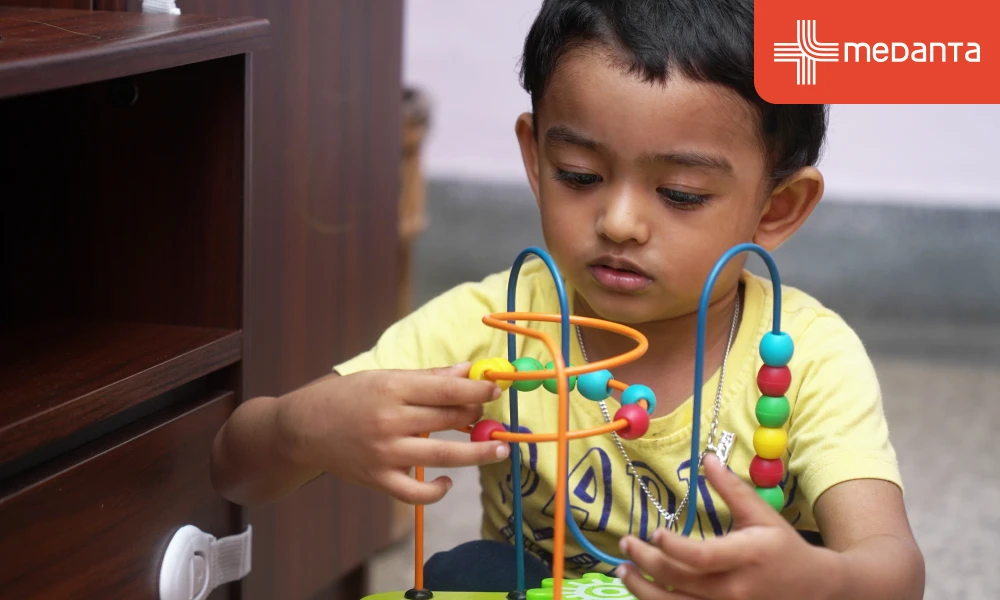
Tummy-to-back rolling usually arrives first with back-to-tummy following a little later
Reaching turns deliberate and hands aim for objects now instead of swiping randomly
Real, delighted belly laughs tend to show up somewhere in this stretch
Drooling picks up noticeably here too, often the first sign that teething has quietly started underneath the gums.
6-7 Months: Sitting, Reaching and Exploring
Unsupported sitting tends to firm up around now, freeing both hands for what becomes a baby's main occupation: grabbing absolutely everything within reach. Solids usually enter the picture too, starting near six months like mashed dal, soft khichdi, pureed fruit all work well early on. Babbling gets more complex as well, stringing consonants together until it starts sounding almost like real conversation rhythm.
8-9 Months: Crawling and Increased Mobility
There's no single right way to crawl. Some babies go classic hands and knees, others scoot on their bottom and a few skip the whole crawling phase and head straight to standing later instead. Pulling up using furniture often starts around here too. Stranger anxiety tends to show up in this same window that is entirely normal.
10-11 Months: Standing and Early Communication Skills
Holding onto furniture while standing grows noticeably steadier now and some babies start edging sideways along the sofa. Waving, pointing and reaching up to be picked up: these all count as real communication, well before any actual word shows up. Speaking of which, "mama" or "baba" sometimes appears around here too, often without the deliberate meaning it'll carry a bit later.
12 Months: First Steps and Growing Independence
First birthday with first independent steps that's the classic timing, though plenty of babies wait until 14 or 15 months and stay completely within normal range either way. The pincer grasp, thumb and forefinger working as a team, usually solidifies by now too, making finger foods considerably easier to manage. Some babies add their first real word beyond mama or baba around this point though that timing varies a lot from child to child.
Factors That Influence Baby Milestone Achievement
Certain factors affect a baby's milestone achievement. They are:
A premature birth pushes the whole timeline back, roughly proportional to how early the baby arrived which is why paediatricians work off adjusted age rather than the actual birth date.
Genetics matter too; family patterns around walking or talking age tend to repeat more than people expect.
Simple opportunity counts for something as well like enough tummy time or enough floor play tends to smooth out certain physical milestones.
When to Consult a Paediatrician About Developmental Delays
Worth flagging rather than waiting out: no head control by 4 months, no sitting by 9 months or no babbling by 9 months. Losing a skill the baby already had matters more than a simple delay does and that always deserves prompt attention regardless of age. Most of what looks like a missed date, though still falls comfortably within normal range and the overall pattern matters more than any single point on a chart.
FAQs
Do all babies reach milestones at the same age?
Not at all and that's completely normal. These charts mark typical ranges, not fixed deadlines - a few weeks' or even months' difference rarely means anything on its own.
What should I do if my baby misses a milestone?
Bring it up at the next paediatric visit rather than jumping to worry right away. One missed milestone, especially within a reasonable window, often sorts itself out given a bit more time.
Can premature babies achieve milestones later than expected?
Yes paediatricians use adjusted age for premature babies - counting from the due date instead of the birth date and that accounts for most apparent delays.
How can I encourage my baby's development at home?
Tummy time, lots of talking and singing through the day and plenty of unstructured floor play - all of it genuinely helps. Responding warmly to coos and babbles supports early communication too.
Are growth spurts linked to developmental milestones?
Sometimes. Rapid physical growth and new-skill bursts do occasionally line up, though the connection isn't perfectly consistent from one baby to the next.
Which milestones are most important during the first year?
Head control, sitting and early babbling or social smiling stand out in particular. Together they reflect physical and neurological development moving forward as expected.
Can screen time affect a baby's development?
Yes paediatric guidance generally discourages much screen exposure before 18 months since it crowds out interactive play and conversation that actually stimulate early development.
How often should developmental milestones be monitored?
Routine well-baby visits already build this in typically around 2, 4, 6, 9, 12, 15, and 18 months with milestone checks as a standard part of each appointment.
What are the signs of a possible developmental delay?
A few things indicate a developmental delay. They are:
Missing several milestones at once
Losing a skill already gained
Showing little interest in interacting with caregivers.
When should I seek professional advice about my baby's progress?
If you notice any clear regression or a consistent delay spanning multiple areas at once consult a doctor immediately rather than waiting until the next scheduled check-up.