1068
1068
 Request Call Back
 Contact
 1068
1068
Weil-Felix Test: What It Means, Normal Range and Interpretation
Published on: Sep 25, 2026
TABLE OF CONTENTS
The Weil-Felix test is a blood test used to detect and diagnose rickettsia infections - bacterial diseases transmitted to humans through the bites of ticks, mites, lice and fleas. In India rickettsia infections such as scrub typhus, murine typhus, and Indian tick typhus are endemic in several states and the Weil-Felix test is one of the most widely used screening tools for these diseases in settings where modern diagnostic tests are not available.
What Is the Weil-Felix Test?
The Weil-Felix test is a blood test typically used as an initial screening tool for rickettsial infections. It works by detecting antibodies that react with specific Proteus bacteria, a reaction that happens because these bacteria happen to share similar antigens with Rickettsia. The strength of this antibody reaction (titre) helps support the diagnosis.
In India the Weil-Felix test is used as an initial screening test for suspected rickettsia infections, most commonly scrub typhus (Orientia tsutsugamushi), murine typhus (Rickettsia typhi), and Indian tick typhus (Rickettsia conorii). It is not a confirmatory test and must be interpreted alongside clinical findings and other investigations.
Weil-Felix Reaction – How the Test Works
The Weil-Felix reaction is based on tube agglutination. A blood sample is collected, the serum is separated and then serially diluted with saline. Each dilution of serum is mixed with a suspension of one of three Proteus strains - OX-2, OX-19 or OX-K and incubated at 37°C for 18 to 24 hours. The titre is recorded as the highest dilution at which agglutination is still visible to the naked eye.
The pattern of reactivity across the three Proteus strains helps identify which Rickettsia species is likely responsible.
OX-19 agglutination is strongly positive in epidemic typhus and murine typhus (Rickettsia typhi).
OX-2 agglutination is positive in spotted fever group rickettsiae, including Indian tick typhus.
OX-K agglutination is strongly positive in scrub typhus (Orientia tsutsugamushi) that is one of the most common rickettsia infections in India.
Normal Range of Weil-Felix Test
The Weil-Felix test result is reported as a titre - the highest serum dilution at which agglutination is still visible.
Titre less than 1:20 - Negative (normal): No detectable antibodies against the Proteus strains used in the test. This is the expected finding in a person with no Rickettsia infection.
Titre 1:20 to 1:80 - Low positive or borderline: May indicate early or mild infection, a non-specific cross-reaction or residual antibodies from a past illness.
Titre 1:160 or above - Significant positive: Probable active Rickettsia infection. Most laboratories in India use a titre of 1:80 to 1:160 as the cut-off for a clinically significant positive result though this may vary between laboratories.
Fourfold or greater rise in titre between two blood samples taken 7 to 14 days apart (paired serology) is the most reliable criterion for confirming an active Rickettsia infection.
What Does a Positive Weil-Felix Test Mean?
A positive Weil-Felix test - with a titre of 1:160 or above or a fourfold rise on paired testing indicates an antibody response against Proteus antigens that cross-react with Rickettsia organisms, strongly suggesting an active or recent Rickettsia infection.
A strongly positive OX-K titre (1:160 or above) alongside fever, a generalised rash, and an eschar (a blackened, painless scab at the site of a mite bite) is highly suggestive of scrub typhus.
A strongly positive OX-19 titre alongside fever, headache, and a rash is suggestive of murine typhus (Rickettsia typhi), transmitted by rat fleas.
A strongly positive OX-2 titre alongside fever and a rash following a tick bite is suggestive of Indian tick typhus (Rickettsia conorii), transmitted by dog ticks.
A positive Weil-Felix test is presumptive, not confirmatory. The test can produce false positive results in patients with leptospirosis, liver disease, urinary tract infections caused by Proteus, and certain autoimmune conditions. Clinical correlation and repeat testing are always necessary.
How to Interpret Weil-Felix Test Results
Correct interpretation requires integrating the titre result with the clinical presentation, the history of possible exposure and the results of other investigations such as a complete blood count, liver function tests, and chest X-ray.
A patient with fever of 5 to 7 days' duration, severe headache, a maculopapular rash and an eschar in a scrub typhus-endemic region with a positive OX-K titre of 1:160 or above should be treated immediately without waiting for confirmatory tests.
A patient with a borderline titre of 1:80 who is unwell should have a repeat blood sample taken after 7 to 10 days. A fourfold rise in titre confirms active Rickettsia infection.
A negative Weil-Felix test does not rule out Rickettsia infection. The test may be negative in the first 7 to 10 days before antibodies have developed and a negative test in a patient with a strongly suggestive clinical picture should not delay treatment.
Treatment After a Positive Weil-Felix Test
Treatment should be started without delay when the Weil-Felix test is positive and rickettsia infection is clinically suspected. Rickettsia infections can deteriorate rapidly and become life-threatening if treatment is delayed.
Doxycycline is the treatment of choice for all Rickettsia infections. The standard adult dose is doxycycline 100 mg twice daily for 7 to 14 days.
Azithromycin is the alternative treatment for scrub typhus in children under 8 years (in whom doxycycline is generally avoided because of the risk of tooth discolouration and bone growth effects) and in pregnant women. Azithromycin 500 mg once daily for 5 days is the standard regimen used in India for these patient groups.
Supportive care alongside antibiotic treatment is important. Patients with severe rickettsia infections may require hospitalisation for intravenous fluids, management of complications such as liver failure, pneumonia, ARDS, or encephalitis, and monitoring of vital signs and organ function.
Limitations and Accuracy of the Test
The Weil-Felix test has significant limitations that must be understood when interpreting its results. They are:
Low sensitivity: The Weil-Felix test misses a significant proportion of confirmed Rickettsia infections
Low specificity: The test produces false positive results in patients with urinary tract infections caused by Proteus mirabilis, leptospirosis, liver disease and some autoimmune conditions.
Timing matters: The Weil-Felix test is most likely to produce a positive result between 7 and 21 days after the onset of illness and testing in the first week frequently produces a false negative result.
More specific tests are available. The indirect immunofluorescence assay (IFA) is the gold standard for diagnosing Rickettsia infections and is far more sensitive and specific than the Weil-Felix test. PCR performed on blood or an eschar swab can confirm Rickettsia infection rapidly and with high accuracy.
Conclusion
The Weil-Felix test is a widely used and inexpensive screening tool for rickettsia infections particularly scrub typhus, murine typhus, and Indian tick typhus. It detects cross-reactive antibodies in the patient's blood that agglutinate specific strains of Proteus bacteria. A titre of 1:160 or above, or a fourfold rise in titre on repeat testing 7 to 14 days later, is considered a significant positive result indicating probable active Rickettsia infection. Treatment should not be delayed in a patient with a clinically convincing presentation.
FAQs
Is the Weil-Felix test painful?
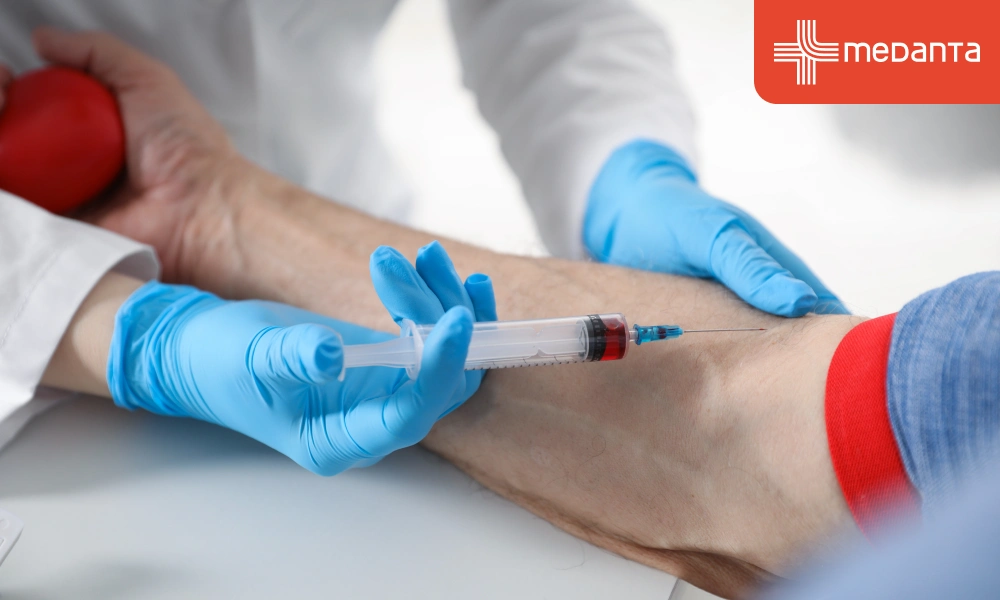
The Weil-Felix test requires a blood sample collected by needle from a vein in the forearm. Most patients experience only a brief, mild pinching sensation at needle insertion and slight soreness afterwards. The procedure takes less than 5 minutes and requires no sedation or special preparation.
Do I need to fast before taking a Weil-Felix test?
No fasting is not required before the Weil-Felix test. You can eat and drink normally before attending the laboratory.
How long does it take to get the Weil-Felix test results?
The Weil-Felix test typically takes 24 to 48 hours, because the serum must be incubated with Proteus bacterial suspensions for 18 to 24 hours before agglutination can be read. Results are reported as a titre value for each of the three Proteus strains (OX-2, OX-19, and OX-K).
Which doctor should I consult after a positive Weil-Felix test?
A positive Weil-Felix test result should be discussed with the doctor who ordered the test most commonly a general physician, internal medicine specialist, or infectious disease specialist.
Can children undergo the Weil-Felix test?
Yes children can safely undergo the Weil-Felix test. The blood collection technique is the same as for adults, using a smaller needle (paediatric phlebotomy needle) and a smaller blood volume. For children under 8 years who test positive, azithromycin is preferred over doxycycline for treatment.
Can pregnant women safely take the Weil-Felix test?
Yes the Weil-Felix test involves only a routine blood draw and is completely safe during pregnancy. Rickettsia infections such as scrub typhus can be more severe in pregnancy, so prompt diagnosis and treatment are particularly important.
How much does the Weil-Felix test cost in India?
The cost of the Weil-Felix test in India typically ranges from Rs 100 to Rs 400. It is available free of charge at government hospitals under the National Vector Borne Disease Control Programme and at AIIMS-affiliated hospitals in endemic states.
Is a prescription required for the Weil-Felix test?
In most diagnostic laboratories, a doctor's prescription is not strictly required to request a Weil-Felix test at private diagnostic centres. However, because the results require careful clinical interpretation and must be integrated with the history and other investigations, it is strongly recommended that the test be ordered by a doctor.
Can I take my regular medicines before the Weil-Felix test?
Your regular medicines will not affect the result of the Weil-Felix test and you can take them as usual. However, if you have already started taking doxycycline, azithromycin or chloramphenicol for a suspected Rickettsia infection, this may suppress the antibody response and lead to a false negative result.
Where can I get a Weil-Felix test done?
The Weil-Felix test is widely available across India at government district hospitals and community health centres. It is also offered by major private diagnostic laboratories including Dr Lal PathLabs, SRL Diagnostics and Metropolis Healthcare. Many private laboratories also provide the convenience of home blood sample collection for this test.
References
1. Weil E, Felix A. Zur serologischen Diagnose des Fleckfiebers. Wien Klin Wochenschr. 1916;29:33–5. https://pubmed.ncbi.nlm.nih.gov/
2. Parola P, Paddock CD, Socolovschi C, et al. Update on tick-borne rickettsioses around the world: a geographic approach. Clin Microbiol Rev. 2013;26(4):657–702. https://doi.org/10.1128/CMR.00032-13
3. Mahajan SK, Rolain JM, Sankhyan N, et al. Pediatric scrub typhus in Indian Himalayas. Indian J Pediatr. 2008;75(9):947–9. https://doi.org/10.1007/s12098-008-0191-4
4. Chrispal A, Boorugu H, Gopinath KG, et al. Scrub typhus: an unrecognised threat in South India — clinical profile and predictors of mortality. Trop Doct. 2010;40(3):129–33. https://doi.org/10.1258/td.2010.090452
5. Sharma PK, Ramakrishna J, Bhattacharya D. Scrub typhus in India: a review of the literature. J Assoc Physicians India. 2012;60:32–4. https://pubmed.ncbi.nlm.nih.gov/23029867