1068
1068
 Request Call Back
 Contact
 1068
1068
Watermelon Seed Benefits: Why You Should Stop Throwing Them Away
Published on: Aug 19, 2026
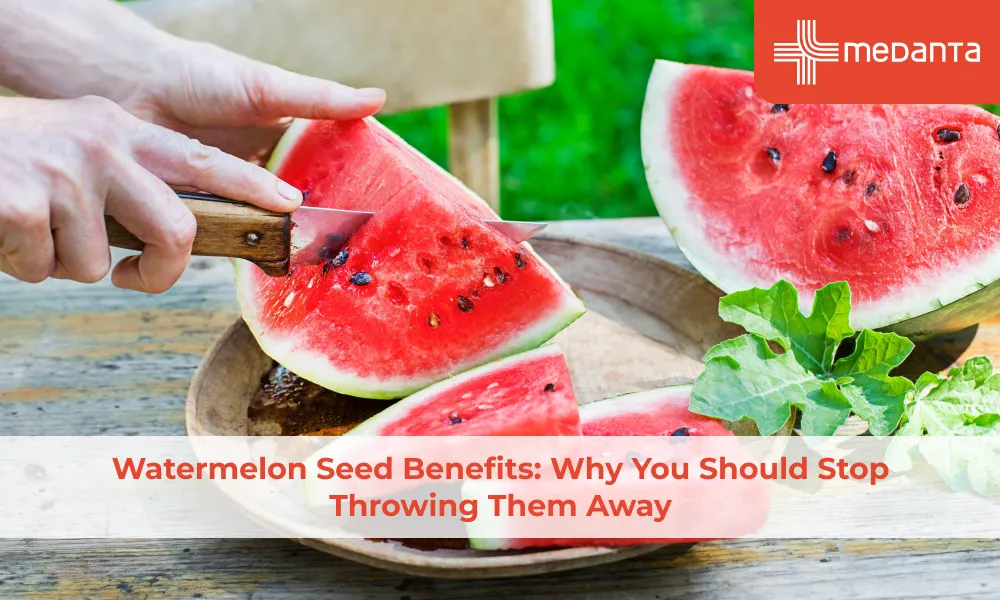
TABLE OF CONTENTS
- Nutritional Value of Watermelon Seeds per Serving
- Top Health Benefits of Eating Watermelon Seeds
- Watermelon Seeds for Hair and Skin
- Roasted vs Raw Watermelon Seeds: Which Is Better
- How to Eat Watermelon Seeds
- Is It Safe to Swallow Watermelon Seeds Whole?
- Watermelon Seed Oil Uses and Benefits
- Who Should Be Careful About Eating Watermelon Seeds?
- How Many Seeds Should You Eat Per Day?
- Buying and Storing Watermelon Seeds
- Conclusion + Easy Ways to Add Them to Your Diet
- FAQs
- References
Introduction - Are Watermelon Seeds Actually Nutritious?
Watermelon seeds get discarded by reflex - spat out or picked around without a second thought. Dried or roasted seeds are protein-dense, rich in magnesium and zinc, and have been used in traditional cooking across parts of the Indian subcontinent for generations. This article explains the nutritional value of watermelon seeds and their specific health benefits.
Nutritional Value of Watermelon Seeds per Serving
A 28g serving of dried watermelon seeds provides myriad of nutrients. They are
Protein: Approximately eight to ten grams.
Unsaturated fat: 13 g (primarily linoleic acid alongside oleic acid).
Carbohydrate: 4 g.
Energy: Around 150 calories.
Micronutrients: Magnesium, zinc, iron, folate, niacin and thiamine.
Top Health Benefits of Eating Watermelon Seeds
Key advantages are:
Heart: With magnesium your blood pressure and cardiac rhythm becomes normal. Linoleic acid contributes to a favourable lipid profile when replacing saturated fat. Zinc supports endothelial function & has anti- inflammatory properties relevant to cardiovascular health.
Immunity: Zinc supports T-lymphocyte development and inflammatory mediator production (a 28g serving provides roughly 25% of what you need on daily basis)
Blood sugar: Magnesium improves insulin sensitivity and magnesium-rich diets are associated with lower type 2 diabetes risk.
Skin and wound healing: Zinc contributes to collagen synthesis and barrier repair; deficiency is associated with impaired healing and acne prone skin.
Watermelon Seeds for Hair and Skin
Zinc deficiency is well-documented as a cause of hair thinning and adequate zinc supports the hair follicle growth cycle. Protein, healthy fats, zinc, iron, magnesium and vitamin E help strengthen strands and reduce breakage. The improvement applies mainly to those who are zinc-deficient, which is common in vegetarian diets in India.
For skin, zinc and linoleic acid together have reasonable mechanistic support. Linoleic acid is a structural skin barrier component and its adequate intake supports hydration and integrity.
Roasted vs Raw Watermelon Seeds: Which Is Better
Raw seeds are edible but mildly bitter, making useful quantities difficult to eat. Roasting improves palatability without significantly altering protein or mineral content. High-temperature extended roasting can oxidise the linoleic acid content, so dry roasting at 160 to 180°C for ten to fifteen minutes preserves most nutritional value while improving taste and digestibility.
Sprouting before drying reduces phytic acid, which binds zinc and reduces its bioavailability. Sprouted seeds are nutritionally superior for mineral absorption, though less practical to prepare than simply roasting.
How to Eat Watermelon Seeds
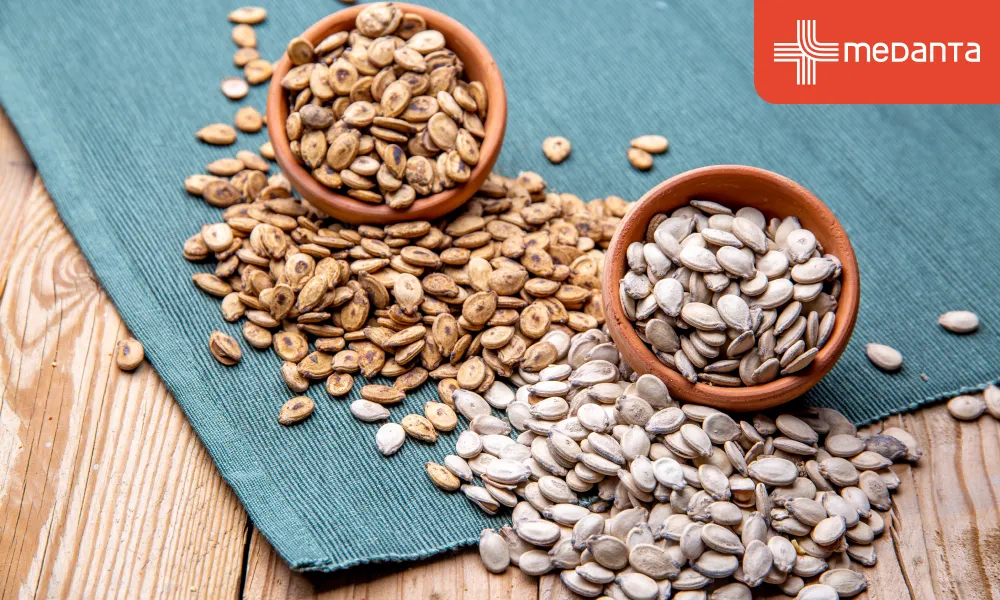
You can include watermelon seeds as:
Dry roasted with rock salt and chaat masala - a simple snack that works well as a nutritious alternative to fried munchies
Ground into seed powder and added to atta before making roti - adds protein and mineral content without altering the texture significantly
Stirred into raita, curd, or smoothies as a crunchy topping - pairs naturally with the flavours common in Indian kitchens
Blended into chutneys or added to dry masalas where their neutral base flavour carries spice well
Watermelon seeds sold commercially in India - often labelled as magaj or tarbooz ke beej are pre-dried and ready to roast, available at most dry fruit vendors.
Is It Safe to Swallow Watermelon Seeds Whole?
Swallowed seeds pass through intact without harm. The idea that they can cause appendicitis is folklore. What does happen is that nutritional content is largely unabsorbed when swallowed whole as the seed coat resists digestive enzymes. Chewing or consuming ground seeds is significantly more nutritious.
Watermelon Seed Oil Uses and Benefits
Cold-pressed watermelon seed oil has a high linoleic acid content and non-comedogenic profile that suits most skin types. It absorbs well and provides barrier support comparable to rosehip or grapeseed oil. Evidence for oral consumption is limited; as a cooking oil it is nutritionally reasonable but not superior to other unsaturated vegetable oils available in India at lower cost.
Who Should Be Careful About Eating Watermelon Seeds?
Certain groups should avoid watermelon seeds. They are:
People with kidney disease: Watermelon seeds are moderately high in potassium and phosphorus; those on dialysis or a renal diet should check quantities with their nephrologist or dietitian
Those managing caloric intake carefully: At approximately 150 calories per 28g, portions add up; seeds are nutritionally dense but calorically significant if eaten in large amounts
Individuals on zinc supplementation: Doubling up on dietary zinc from seeds alongside supplemental zinc risks exceeding the tolerable upper intake level of 40mg per day over time
How Many Seeds Should You Eat Per Day?
One to two tablespoons daily (roughly 15 to 30g) delivers a good quantity of magnesium and zinc without excessive calories. This is consistent with how pumpkin, sunflower or flax seeds are typically consumed. More is not necessarily better; their primary value is as a nutrient-dense addition to an adequate diet, not a stand-alone health remedy.
Buying and Storing Watermelon Seeds
Commercially available seeds in India are sold shelled or unshelled. Shelled seeds (the white kernel) are easier to eat but have shorter shelf life given exposed fat. Store in an airtight container away from heat and light as linoleic acid oxidises in India's humidity within months. Refrigeration extends shelf life to six months or more. Buying in small quantities reduces rancidity risk.
Conclusion + Easy Ways to Add Them to Your Diet
Watermelon seeds are nutritionally real - protein-dense, rich in magnesium and zinc and versatile in Indian cooking. The evidence for dramatic health claims is modest but their value as a whole-food mineral source for diets that are commonly short on zinc and magnesium is genuine. A tablespoon roasted as a snack, added to atta or stirred into curd contributes meaningfully to daily nutrient targets.
FAQs
Is it safe to eat watermelon seeds directly?
Yes both raw and roasted seeds are safe to eat. Roasted seeds are more palatable with similar nutritional content. Swallowing whole is harmless but extracts far less nutritional benefit than chewing or grinding.
What nutrients are found in watermelon seeds?
A 28g serving provides approximately 8 to 10g of protein, meaningful magnesium and zinc plus iron, folate, niacin and predominantly unsaturated fats including linoleic and oleic acid.
Can watermelon seeds help with blood sugar control?
Magnesium improves insulin sensitivity and magnesium-rich diets are associated with lower type 2 diabetes risk. Watermelon seeds are a useful magnesium source, not a diabetes treatment and should sit within a broader dietary approach.
Are roasted watermelon seeds a healthy snack?
Yes dry roasted with minimal salt, they are protein and mineral-dense, preferable to most fried alternatives. Portion size is the main consideration given caloric density.
Do watermelon seeds help with hair growth?
Zinc deficiency is a documented cause of hair loss and watermelon seeds are a good zinc source. Adequate intake may help those with deficiency-related thinning. Evidence for benefit in zinc-sufficient individuals is weak.
Can children eat watermelon seeds?
Roasted and ground seeds are safe for children above one year. Whole seeds present a choking risk for young children. Ground seed powder in dal, porridge or roti is the practical approach.
What happens if you swallow too many watermelon seeds?
Nothing harmful as they pass through intact, providing minimal nutritional benefit since the seed coat resists digestion. Very large quantities in ground form could deliver excess calories or elevated zinc (but this is not a realistic concern with normal consumption).
Is watermelon seed oil good for the skin?
Cold-pressed watermelon seed oil is non-comedogenic, absorbs well and supports the skin barrier. It suits oily and acne-prone skin. Evidence for oral use is limited and its value is primarily topical.
Do watermelon seeds have more protein than the fruit itself?
Considerably more. Watermelon fruit is 91% water and provides under 1g of protein per 100g. Dried seeds provide around 28g per 100g - far higher than the fruit.
Can diabetic patients eat watermelon seeds?
Yes. Seeds have a low glycaemic impact and provide magnesium that supports insulin sensitivity. The fruit is higher in sugar; the seeds are a distinct food and do not carry the same glycaemic concern.
Are watermelon seeds safe for children?
Roasted and ground seeds are safe from around one year. Whole seeds present a choking risk under age four. Ground seed powder in food is the safest and most practical approach for young children.
References
1. Hussain A, Kausar T, Sehar S, et al. Utilization of watermelon seed kernel flour as partial replacement of wheat flour for the production of nutrient-enriched crackers. J Food Process Preserv. 2022;46(1):e16154. https://doi.org/10.1111/jfpp.16154
2. Olayinka AS, Adeola AJ. Phytochemistry and biological activities of watermelon (Citrullus lanatus) seed and its oil. Afr J Food Sci. 2018;12(6):121–9. https://doi.org/10.5897/AJFS2018.1631
3. Pravina P, Sayaji D, Avinash M. Calcium and its role in human body. Int J Res Pharm Biomed Sci. 2013;4(2):659–68. https://www.academia.edu/download/56060042/659-668.pdf
4. Prasad AS. Zinc in human health: effect of zinc on immune cells. Mol Med. 2008;14(5–6):353–7. https://doi.org/10.2119/2008-00033.Prasad
5. Barbagallo M, Dominguez LJ. Magnesium and type 2 diabetes. World J Diabetes. 2015;6(10):1152–7. https://doi.org/10.4239/wjd.v6.i10.1152