1068
1068
 Request Call Back
 Contact
 1068
1068
Vitamin B6 Rich Foods: Best Dietary and Vegetarian Sources
Published on: Sep 10, 2026
TABLE OF CONTENTS
- What Is Vitamin B6 and Why You Need It
- Top Vitamin B6 Rich Foods List
- Best Vegetarian Sources of Vitamin B6
- Which Foods Contain the Most Vitamin B6 per 100g?
- Signs of Vitamin B6 Deficiency
- Vitamin B6 and Pregnancy
- How Much Vitamin B6 Do You Need Daily?
- Vitamin B6 Foods to Add to Your Diet Plan
- Conclusion
- FAQs
- References
Vitamin B6 quietly does a lot. It plays a key role in neurotransmitter production, protein metabolism, red blood cell formation, and immune defence - over 100 enzymatic reactions depend on it. Yet most people could not name a single food that contains it.
Deficiency is not common when diets are varied, but it does appear in older adults, people on restrictive diets and those taking certain medications. For Indian vegetarians in particular, knowing which plant foods deliver reliable B6 is worth knowing.
What Is Vitamin B6 and Why You Need It
Vitamin B6 is water-soluble, meaning the body does not store it in large amounts so daily intake matters. Its active form, pyridoxal 5-phosphate (PLP), functions as a coenzyme in reactions that affect almost every system in the body.
Neurotransmitter synthesis: B6 is required to produce serotonin, dopamine, GABA and norepinephrine. Low B6 can contribute to low mood, poor sleep and anxiety
Protein and amino acid metabolism: B6 helps the body process and interconvert amino acids, which matters especially when protein intake is high.
Haemoglobin production: B6 is needed to synthesise heme, the iron-carrying part of haemoglobin. Deficiency can produce a form of anaemia even when iron levels are normal.
Homocysteine regulation: Together with folate and B12, B6 keeps homocysteine in check - a cardiovascular and stroke risk factor when elevated.
Immune function: Lymphocyte production and antibody responses both depend on adequate B6 intake.
Top Vitamin B6 Rich Foods List
B6 appears across a wide range of foods. Animal sources generally provide more per serving but plant sources can meet requirements comfortably when the right ones are chosen.
Chicken breast: Around 0.9 mg per 100g cooked - one of the most efficient single sources available.
Tuna and salmon: Canned tuna and salmon provide 0.8 to 0.9 mg per 100g, along with omega-3 fatty acids.
Pistachio nuts (pista): At approximately 1.7 mg per 100g pistachios are the highest plant source of B6 per unit weight. A small handful provides 0.4 to 0.5 mg.
Potato (aloo): A medium potato with skin provides 0.5 to 0.7 mg of B6. Consumed daily in aloo sabzi, paratha and curry, it is one of the most quietly significant B6 sources in the Indian diet.
Banana: A medium banana provides around 0.4 mg of B6 - roughly 24% of the adult daily requirement.
Sunflower seeds (surajmukhi ke beej): Around 0.8 mg per 100g, with vitamin E and magnesium alongside.
Chickpeas (chana): Cooked chickpeas provide approximately 0.5 mg per 100g - chana masala, chole and sundal all count.
Best Vegetarian Sources of Vitamin B6
Plant-based B6 is slightly less bioavailable than B6 from animal foods, so variety matters more. These are the most practical sources for Indian vegetarians.
Pistachio nuts (pista): The single highest plant source at 1.7 mg per 100g.
Potato (aloo): Highly underrated as a micronutrient source - consumed in the quantities typical in Indian cooking, potatoes provide more B6 than most people realise.
Banana: Widely available, affordable and provides 0.4 mg per fruit with no preparation required.
Chickpeas and lentils (chana and dal): Chickpeas, masoor dal, toor dal, and moong dal provide meaningful amounts.
Sunflower seeds: A useful snack option or salad addition.
Dark leafy vegetables: Palak, methi and sarson provide around 0.2 mg per 100g cooked, alongside iron and folate.
Whole grains: Jowar, bajra and whole wheat contribute small amounts daily through roti and bhakri, which adds up over time.
Which Foods Contain the Most Vitamin B6 per 100g?
Food | Vitamin B6 per 100g (mg) | % Adult RDI |
Pistachio nuts (pista) | 1.70 | 100% |
Chicken breast (cooked) | 0.90 | 53% |
Tuna (canned) | 0.90 | 53% |
Salmon (cooked) | 0.80 | 47% |
Sunflower seeds | 0.80 | 47% |
Potato with skin | 0.50 | 29% |
Chickpeas (cooked) | 0.50 | 29% |
Soybeans (cooked) | 0.40 | 24% |
Banana | 0.37 | 22% |
Dal/lentils (cooked) | 0.20-0.30 | 12-18% |
Spinach/palak (cooked) | 0.20 | 12% |
Adult RDI based on ICMR 2020 recommendation of 1.7 mg per day for Indian adults aged 19 to 50.
Signs of Vitamin B6 Deficiency
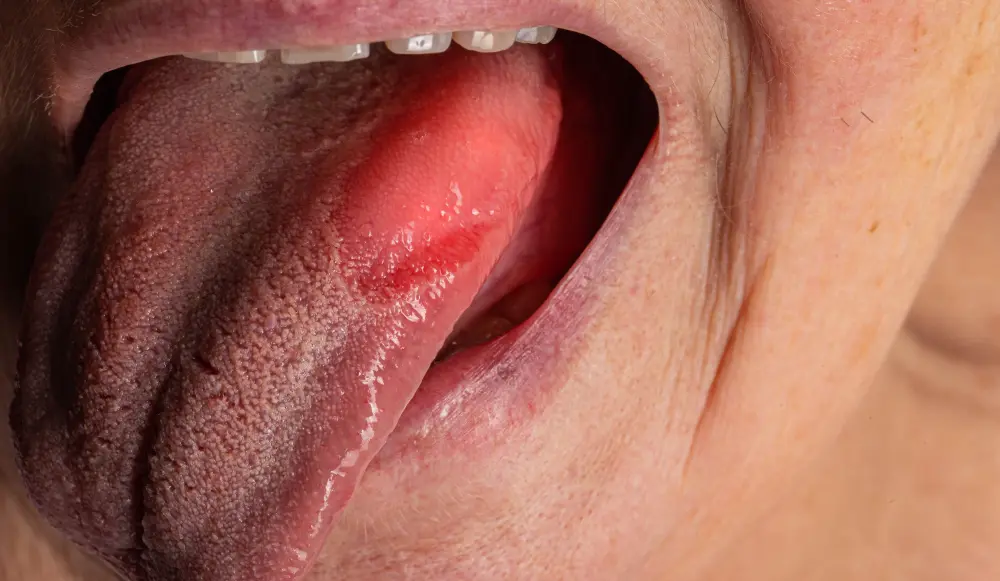
B6 deficiency rarely occurs in isolation. When it does appear, it tends to show up across multiple systems.
Peripheral neuropathy: Tingling, numbness or burning in the hands and feet
Skin changes: A seborrhoeic rash around the face, cracked lips (cheilosis) and a smooth, sore tongue (glossitis)
Mood disturbances: Because B6 is needed to make serotonin and dopamine, low mood, irritability, and disrupted sleep can appear
Reduced immunity: Increased susceptibility to infections from impaired lymphocyte production
Microcytic anaemia: Small, pale red blood cells that look like iron deficiency but do not respond to iron supplementation.
Vitamin B6 and Pregnancy
Requirements increase to 1.9 mg per day during pregnancy and 2.0 mg per day during lactation (ICMR 2020). B6 supports foetal brain development, haemoglobin production, and newborn immune development.
Pregnant Indian women following vegetarian diets should pay particular attention to including banana, potato, chickpeas, dal and pista daily to support the increased requirement.
How Much Vitamin B6 Do You Need Daily?
Adults (19 to 50 years): 1.7 mg per day
Adults above 51: 1.5 to 1.7 mg per day
Pregnancy: 1.9 mg per day.
Lactation: 2.0 mg per day.
Children (1 to 8 years): 0.5 to 0.6 mg per day.
The upper tolerable limit is 100 mg per day from all sources. Toxicity occurs only with high-dose supplements, not with food and is reversible when supplementation is stopped.
Vitamin B6 Foods to Add to Your Diet Plan
Meeting the daily requirement through food is simple within a typical Indian diet.
Breakfast: A medium banana with a small handful of pista provides roughly 0.8 to 0.9 mg of B6.
Lunch: Aloo sabzi with two medium potatoes, toor dal and whole wheat roti can cover 70 to 100% of the adult daily B6 requirement.
Dinner: A serving of chana masala or rajma provides 0.4 to 0.6 mg of B6.
Snacks: A 30g serving of sunflower seeds or a small portion of pista between meals adds 0.2 to 0.4 mg of B6.
Conclusion
Vitamin B6 may not get as much attention as iron or vitamin D, but its role in mood, nerve function, immunity and red blood cell production makes it worth taking seriously. The good news is that meeting the daily requirement through food is genuinely easy particularly with Indian staples like aloo, chana, dal, banana, and pista already doing much of the work. Variety across these foods, eaten consistently, is enough for most healthy adults.
FAQs
What foods are highest in vitamin B6?
Pistachio nuts (pista) top the list. Chicken breast, canned tuna, salmon and sunflower seeds are also good sources of vitamin B6. Among everyday Indian plant foods, pista, potato, and banana are the most practical high-B6 choices.
What are good vegetarian sources of vitamin B6?
The most useful vegetarian sources are pistachio nuts (pista), potato, banana, chickpeas (chana), all varieties of dal (toor, masoor, moong), sunflower seeds, dark leafy vegetables including palak and methi and whole grains including jowar and bajra. Together these cover the daily requirement without needing animal foods.
What are the signs of vitamin B6 deficiency?
The most recognisable signs are tingling or numbness in the hands and feet (peripheral neuropathy), a seborrhoeic rash around the face, cracked lips, a smooth sore tongue, low mood and irritability, microcytic anaemia and increased susceptibility to infections.
How much vitamin B6 should I eat daily?
Adults aged 19 to 50 need 1.7 mg per day (ICMR 2020). Requirements rise to 1.9 mg during pregnancy and 2.0 mg during lactation. The upper tolerable limit from supplements is 100 mg per day; toxicity is not achievable through food alone.
Why is vitamin B6 important for the body?
Vitamin B6 participates in over 100 enzymatic reactions: the synthesis of serotonin, dopamine, GABA, and norepinephrine; haemoglobin production; amino acid and protein metabolism; homocysteine regulation; and immune cell development. Deficiency affects mood, cognition, cardiovascular health and immunity.
Can vitamin B6 deficiency cause nerve problems?
Peripheral neuropathy, presenting as tingling, numbness or burning in the hands and feet, is one of the most characteristic features of B6 deficiency. Patients taking isoniazid (INH) for tuberculosis are at particular risk because INH acts as a B6 antagonist. Pyridoxine (vitamin B6) supplements are routinely co-prescribed with INH to prevent this complication.
What fruits are rich in vitamin B6?
The banana is the most practical B6-rich fruit, providing approximately 0.4 mg per medium fruit. Avocado provides a similar amount per fruit. Guava, papaya and mango contribute modest amounts of B6 along with their vitamin C and carotenoid content.
Are bananas a good source of vitamin B6?
Yes a medium banana provides around 0.4 mg of vitamin B6, representing approximately 24% of the adult daily requirement. For a single fruit consumed as a snack, that is a meaningful contribution. Bananas are available year-round across India at very low cost, making them one of the most practical B6 sources for vegetarians and those on modest food budgets.
Can too much vitamin B6 be harmful?
Only from high-dose supplements, not from food. Chronic supplemental intake well above 100 mg per day can cause sensory neuropathy (tingling and impaired proprioception), known as pyridoxine toxicity. It is reversible when supplementation is stopped. Food-based intake never reaches harmful levels.
What is the best dietary source of vitamin B6?
Pistachio nuts are the most concentrated single source at 1.7 mg per 100g. For everyday eating, chicken breast is the most efficient animal source and potato is the most practical vegetarian source. For Indian vegetarians, the daily combination of banana, pista and potatoes provides a strong foundation for meeting the daily B6 requirement.
References
1. Stach K, Stach W, Augoff K. Vitamin B6 in health and disease. Nutrients. 2021;13(9):3229. https://doi.org/10.3390/nu13093229
2. Indian Council of Medical Research. Nutrient requirements for Indians: recommended dietary allowances and estimated average requirements. ICMR-NIN. 2020. https://www.nin.res.in/RDA_2020.html
3. Niebyl JR. Clinical practice: nausea and vomiting in pregnancy. N Engl J Med. 2010;363(16):1544–50. https://doi.org/10.1056/NEJMcp1003896
4. Paul L, Ueland PM, Selhub J. Mechanistic perspective on the relationship between pyridoxal 5'-phosphate and inflammation. Nutr Rev. 2013;71(4):239–44. https://doi.org/10.1111/nure.12014
5. Coburn SP. A kinetic model of vitamin B-6 metabolism. J Nutr. 1990;120(Suppl 11):1503–6. https://doi.org/10.1093/jn/120.suppl_11.1503