1068
1068
 Request Call Back
 Contact
 1068
1068
Pelvic Bone Pain: Anatomy, Common Causes, Injuries and Relief Options
Published on: Aug 17, 2026
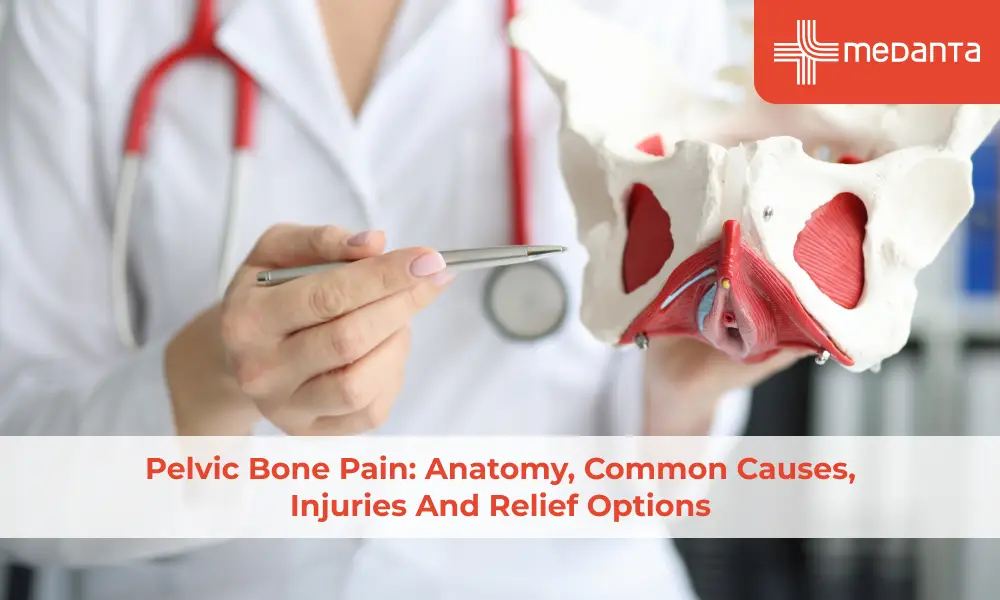
TABLE OF CONTENTS
- Anatomy of the Pelvic Girdle
- Male vs Female Pelvic Bone Structure – Key Differences
- Functions of the Pelvic Bone in the Body
- What Causes Pelvic Bone Pain?
- Pelvic Pain During Pregnancy – When Is It Normal?
- How Is Pelvic Pain Diagnosed?
- Treatment Options
- Exercises to Strengthen the Pelvic Region
- When Pelvic Pain Signals a Serious Condition
- Conclusion + Red Flags That Need Immediate Attention
- FAQs
- References
Introduction – What Is the Pelvic Bone
The pelvis is a bony basin at the base of the spine connecting the trunk to the lower limbs, supporting the upper body and protecting the bladder, bowel, uterus and prostate. Pelvic bone pain can arise from bone, joint, muscle, nerve, or organ causes so identifying which is involved is the essential first step.
Anatomy of the Pelvic Girdle
The pelvic girdle consists of two hip bones - each formed from the ilium, ischium & pubis and the sacrum. These connect at two SI joints at the back and the pubic symphysis at the front. The coccyx below the sacrum is frequently involved in tailbone pain from falls or prolonged sitting.
Male vs Female Pelvic Bone Structure – Key Differences
The female pelvis is broader and shallower, adapted for childbirth. The inlet is wider and more oval in women; narrower and heart-shaped in men. The subpubic angle is typically above 90 degrees in women, under 90 in men.
These differences carry clinical significance beyond pregnancy - the female pelvis distributes forces differently, contributing to greater susceptibility to pubic ramus stress fractures and higher rates of pelvic girdle pain.
Functions of the Pelvic Bone in the Body
Key functions are:
Weight-bearing and force transmission: The pelvis transfers upper body weight from the lumbar spine to the femoral heads and into the lower limbs
Protection and muscle attachment: The bony walls protect the pelvic organs; trunk, hip and thigh muscles originate or insert on the pelvic bones
Obstetric function: Pelvic outlet dimensions determine whether vaginal delivery is anatomically feasible.
What Causes Pelvic Bone Pain?
Musculoskeletal causes are most common: SI joint dysfunction produces lower back and buttock pain; pubic symphysis dysfunction causes groin and inner thigh pain; hip joint pathology produces anterior hip pain. Stress fractures of the pubic ramus or sacrum occur in distance runners, military recruits and postmenopausal women.
Gynaecological causes including endometriosis, ovarian cysts and PID produce cyclic or constant pain frequently misidentified as musculoskeletal. Bladder infection, interstitial cystitis, and kidney stones refer pain to the lower pelvis.
In men, prostatitis produces perineal and pelvic pain. Locally advanced cervical, endometrial, colorectal or bladder cancer may also present as pelvic pain.
Pelvic Pain During Pregnancy – When Is It Normal?
Some pelvic girdle discomfort in pregnancy is common as relaxin loosens pelvic ligaments to allow pelvic expansion for delivery. FOGSI recognises pelvic girdle pain as a distinct condition requiring assessment rather than reassurance. When pain limits walking, stair climbing or turning in bed, SPD warrants physiotherapy, a pelvic support belt and activity modification.
Sharp, one-sided pain with fever, vaginal bleeding or unusual discharge is not normal pelvic girdle discomfort as it may indicate placental abruption, ectopic pregnancy complications, or infection and requires immediate obstetric review.
How Is Pelvic Pain Diagnosed?
Clinical history and examination identify the likely source. Investigations are:
X-ray identifies bony pathology.
MRI provides detailed soft tissue assessment of the SI joints, symphysis pubis, pelvic floor, and pelvic organs and is preferred when pelvic pain does not respond to initial treatment.
Ultrasound is first-line for gynaecological causes.
Blood and urine tests screen for infection.
In women, a gynaecological review alongside musculoskeletal assessment is often necessary as the two causes are difficult to distinguish without investigation.
Treatment Options
Physiotherapy: Physiotherapy is the cornerstone for musculoskeletal pelvic pain as exercises strengthen deep stabilisers, manual therapy addresses SI joint restriction and activity modification reduces provocative loading. A pelvic support belt reduces SI joint and symphyseal movement in pregnancy related pelvic girdle pain.
Medication: Analgesics manage acute pain. Corticosteroid injection into the SI joint or symphysis is used for persistent pain not responding to physiotherapy.
Surgery: Surgery is reserved for unstable ring disruptions.
Gynaecological causes are treated by specific diagnosis like antibiotics for PID, hormonal therapy or laparoscopic surgery for endometriosis.
Exercises to Strengthen the Pelvic Region
Effective exercises are:
Kegel exercise or pelvic floor contractions: Contract the pelvic floor for five seconds and release; builds muscular support underlying the pelvic bones
Bridging: Lying on the back with knees bent, lifting the hips while keeping the pelvis level; strengthens gluteal and deep hip muscles that stabilise the SI joints
Clamshells: Lying on the side with hips bent, opening the top knee while keeping feet together; targets hip abductors that support pelvic stability
Bird-dog pose: From hands and knees, extending opposite arm and leg simultaneously; trains deep trunk and pelvic stabiliser co-contraction
During pregnancy or active pelvic pain, exercise should remain within a pain-free range under physiotherapist guidance. Single-leg exercises loading one SI joint asymmetrically should be avoided in SPD.
When Pelvic Pain Signals a Serious Condition
Fever above 38°C with pelvic pain suggests PID, appendicitis, or tubo-ovarian abscess need same-day assessment. Sudden severe pelvic pain with haemodynamic instability suggests ruptured ectopic pregnancy or ovarian cyst that is an emergency. New pelvic pain in a person over 50 without musculoskeletal history, or pelvic pain with unexplained weight loss, rectal bleeding, or urinary difficulty, warrants urgent investigation.
Conclusion + Red Flags That Need Immediate Attention
Pelvic bone pain is rarely a single-cause problem because the pelvis is at the intersection of musculoskeletal, gynaecological, urological and gastrointestinal systems. Red flags requiring immediate attention: sudden severe pelvic pain, pain with fever, pain after trauma and haemodynamic instability. Pain persisting beyond two weeks or limiting daily function deserves clinical assessment.
FAQs
What does pelvic bone pain feel like?
Fracture pain is sharp and precisely located, worsened by weight-bearing. SI joint pain is a deep buttock and lower back ache. Symphysis pubis pain is felt at the groin, worsened by walking. Gynaecological pain is diffuse and crampy often relating to the menstrual cycle.
Is pelvic pain always related to reproductive organs?
No. Most pelvic pain in men and a significant proportion in women is musculoskeletal ranging from the SI joints, pubic symphysis, hip joint or pelvic floor. Urological, gastrointestinal and neurological causes produce pelvic pain without reproductive organ involvement.
Can walking or sitting too long cause pelvic bone pain?
Yes. Prolonged sitting loads the coccyx, producing tailbone and lower pelvic pain. Extended walking or running loads the SI joints and symphysis repetitively, producing stress reaction or fracture in susceptible individuals. Both improve with rest and position change.
What is symphysis pubis dysfunction (SPD) during pregnancy?
SPD is excessive painful movement at the pubic symphysis from hormonal ligament relaxation. It produces sharp groin and inner thigh pain with walking, stair climbing and changing positions in bed. Physiotherapy, a pelvic support belt and avoiding single-leg loading manage it. Most cases resolve after delivery.
How is a pelvic bone fracture treated without surgery?
Low-energy pubic ramus fractures in older adults after a fall are managed with analgesics, early mobilisation with walking aids and physiotherapy. Bone health and osteoporosis treatment are assessed. Most heal within six to twelve weeks.
Can pelvic floor exercises help reduce pelvic bone pain?
Yes, for musculoskeletal causes strengthening the pelvic floor and deep hip stabilisers reduces load on the SI joints and symphysis. Pelvic floor exercises alone are insufficient for bony pathology or gynaecological causes.
What is the difference between hip pain and pelvic pain?
Hip joint pain is felt in the groin and front of the thigh, worsened by hip rotation. Pelvic pain is more diffuse including lower abdomen, buttock, or perineum and may relate to the menstrual cycle or urination. The two overlap: hip pathology mimics pelvic pain; SI joint dysfunction mimics hip pain.
Can pelvic pain be a symptom of something serious like cancer?
Cervical, endometrial, ovarian, colorectal and bladder cancers produce pelvic pain when locally advanced. Pelvic pain in a postmenopausal woman with unexplained weight loss, rectal bleeding, haematuria or a palpable mass warrants urgent assessment.
How long does pelvic bone pain last after childbirth?
Pelvic girdle pain resolves in most women within three months of delivery. However some have persistent symptoms. Early physiotherapy and pelvic floor rehabilitation improve recovery outcomes.
Which doctor should I see for pelvic bone pain?
Musculoskeletal pain: physiotherapist or orthopaedic surgeon. Gynaecological: gynaecologist. Urological: urologist. Pregnancy-related: obstetrician and physiotherapist. When the cause is unclear consult a general physician for triage.
Can sitting too long cause pelvic bone pain?
Yes hard surface sitting loads the coccyx and ischial tuberosities, producing tailbone and lower pelvic pain in office workers, students and long-distance drivers. A coccyx-relief cushion, standing breaks and gluteal strengthening reduce recurrence.
References
1. Vleeming A, Albert HB, Ostgaard HC, Sturesson B, Stuge B. European guidelines for the diagnosis and treatment of pelvic girdle pain. Eur Spine J. 2008;17(6):794–819. https://doi.org/10.1007/s00586-008-0602-4
2. Stuge B, Laerum E, Kirkesola G, Vollestad N. The efficacy of a treatment program focusing on specific stabilising exercises for pelvic girdle pain after pregnancy: a randomised controlled trial. Spine. 2004;29(4):351–9. https://doi.org/10.1097/01.BRS.0000090827.16926.1D
3. Kanakaris NK, Roberts CS, Giannoudis PV. Pregnancy-related pelvic girdle pain: an update. BMC Med. 2011;9:15. https://doi.org/10.1186/1741-7015-9-15
4. Wu WH, Meijer OG, Uegaki K, et al. Pregnancy-related pelvic girdle pain (PPP), I: terminology, clinical presentation, and prevalence. Eur Spine J. 2004;13(7):575–89. https://doi.org/10.1007/s00586-003-0615-y
5. Becker I, Woodley SJ, Stringer MD. The adult human pubic symphysis: a systematic review. J Anat. 2010;217(5):475–87. https://doi.org/10.1111/j.1469-7580.2010.01300.x