1068
1068
 Request Call Back
 Contact
 1068
1068
Peanut Allergies: Symptoms, Risks and Safety Tips
Published on: Mar 05, 2026
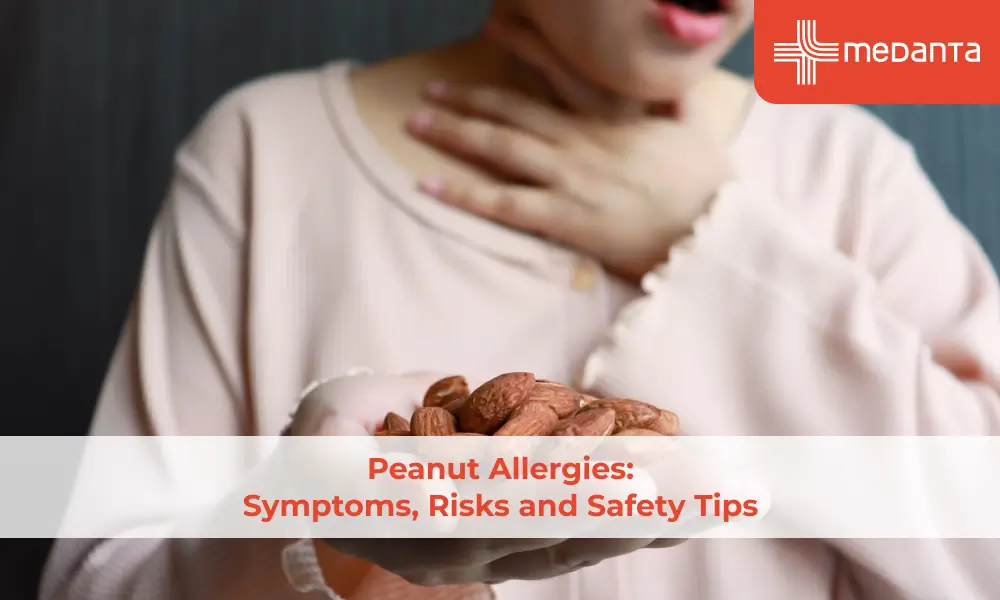
TABLE OF CONTENTS
- Common Symptoms of Peanut Allergies – Mild to severe reactions
- Causes and Risk Factors
- Diagnosis of Peanut Allergies
- Treatment Options
- Managing Peanut Allergies in Daily Life
- Preventive Measures and Lifestyle Tips
- Emergency Response for Severe Reactions
- Peanut Allergies in Children vs Adults
- Living Safely with Peanut Allergies
- FAQs
Peanut allergies can trigger reactions ranging from mild rashes to life-threatening anaphylaxis. This makes them especially dangerous if you have this condition. These allergies remain the leading food-related cause of anaphylaxis that needs immediate medical care. The condition affects roughly 1-2% of the global population and cases have tripled in the last 20 years because of changes in diet and environment.
Your body (immune system) incorrectly sees peanut protein as a threat during an allergic reaction. Symptoms usually show up within two hours after eating peanuts, which often catches people unprepared. While this condition typically starts during childhood and stays through adulthood, there's some good news - about 20% of children eventually outgrow their peanut allergies, most of them by age 8.
Knowledge about peanut allergy's causes and warning signs is a vital part of managing this condition. Lives can be saved through proper understanding of triggers, symptoms, and emergency responses, regardless of whether you're managing your own allergy or caring for someone else with this sensitivity.
Common Symptoms of Peanut Allergies – Mild to severe reactions
Peanut allergies happen when your immune system mistakes peanut proteins for harmful invaders. Your body fights what it sees as a threat, which triggers an allergic reaction.
You'll usually see allergic reactions within two hours after eating peanuts. Mild symptoms are:
Itching around the mouth and throat
Runny nose and sneezing
Stomach discomfort or nausea
Severe reactions affect multiple body systems and can get worse fast. You might experience throat tightness, trouble breathing, repeated vomiting, and life-threatening anaphylaxis. Note that even if you had a mild reaction before, future contact with peanuts could cause severe responses.
Causes and Risk Factors
Genetics: Your genes play a big role in peanut allergies (risk becoming higher if your parent or sibling is allergic). According to a few studies on twins, similar twins have a much higher match rate than fraternal twins.
Environmental factors: Babies exposed to air pollution have higher chances of getting and keeping peanut allergies through childhood. On top of that, kids with eczema face bigger risks because allergens can get through their skin's weakened barrier.

Diagnosis of Peanut Allergies
Doctors start by checking your medical history and doing a physical exam to diagnose peanut allergies. They often recommend:
Skin prick tests - Doctors place tiny amounts of peanut protein on your skin before pricking it with a needle. A raised bump shows a positive result.
Blood tests - Look for immunoglobulin E (IgE) antibodies that signal an allergic response. These tests help but can't tell how severe your reaction might be.
Oral food challenge - This is the most reliable way to diagnose peanut allergy. This test comes with some risks (but gives the clearest answer).
Treatment Options
People with peanut allergies need quick treatment and smart prevention strategies.
Treatment options are:
Epinephrine is your first defence against severe peanut reactions. This medication saves lives by opening airways and reducing swelling.
Antihistamines help with mild symptoms (like hives and itching) but they are not a substitute for epinephrine.
A newer treatment called immunotherapy helps build peanut tolerance through controlled exposure.
Managing Peanut Allergies in Daily Life
Label reading is a vital part of staying safe therefore look for warnings like "contains peanuts" & hidden ingredients like "arachis oil" (peanut oil). Products can change their ingredients at any time (so check the labels each time you buy).
You can prevent cross-contamination by following below mentioned steps:
Washing hands before and after meals
Using separate utensils and prep areas
Keeping shared containers separate (no jelly jars that touched peanut butter)
Using commercial detergents to clean surfaces, not just water
Preventive Measures and Lifestyle Tips
New guidelines suggest giving babies peanut foods between 4-11 months to help prevent allergies. Talk to your doctor first, especially if your baby has eczema or other food allergies.
Emergency Response for Severe Reactions
When anaphylaxis strikes, use the epinephrine auto-injector on the outer thigh right away and call emergency services. Keep the person flat unless they struggle to breathe - then help them sit up. You might need a second dose if symptoms don't improve after five to fifteen minutes.
Peanut Allergies in Children vs Adults
Peanut allergies affect children and adults in different ways. The differences show up in how common they are, what symptoms appear, and how they might change over time. Understanding these variations helps create better treatment plans for different age groups.
Aspect | Children | Adults |
Prevalence | Higher (peaks at 10% at age 2) | Lower (affects 1-2% of adults) |
Most Common Age of Onset | Typically between 4-24 months | Adult-onset in about 1 in 6 cases |
Common Co-allergens | Milk and eggs in early years; peanut becomes dominant at ages 6-10 | Shellfish, milk, and tree nuts |
Gender Pattern | More common in boys | More common in women |
Outgrowing Possibility | About 20% outgrow by adolescence | Rarely outgrow adult-onset allergies |
Reaction Severity | Variable, but can be severe | Often more severe |
Treatment Approaches | FDA-approved immunotherapy options available for ages 4-17 | Fewer approved therapies; many adult-onset cases remain undiagnosed |
Prevention Strategies | Early introduction guidelines (4-11 months) showing a reduced incidence | Primarily avoidance strategies; less research on prevention |
Children and adults face unique challenges with peanut allergies. Childhood allergies may go away with time but adult onset cases usually last forever. Your doctor does careful customisation based on your specific needs (age dependent).
Living Safely with Peanut Allergies
Peanut allergies are one of the most challenging food sensitivities people deal with today. Both sufferers and caregivers just need to understand this condition well. The rates keep rising worldwide, but improved diagnosis methods and treatment approaches give us hope.
Good awareness helps prevent serious reactions. Parents should watch for early warning signs and talk to doctors about safely introducing peanuts to infants between four to eleven months. This simple step could prevent allergies from developing.
Life with a peanut allergy needs watchfulness but doesn't mean giving up enjoyable activities. Reading food labels, asking about ingredients at restaurants, and carrying emergency medication become routine habits. These practices create a safety net that protects affected individuals.
Each person's allergy experience is different from others. Children might outgrow their sensitivities but adults rarely see this improvement. Individual-specific management plans work best to handle this condition.
Medical advances bring promising developments.
The growing allergy-aware community has reshaped the scene of food safety. Schools, airlines and food manufacturers show more care for people with peanut sensitivities. This radical alteration makes daily life safer for affected individuals.
Note that quick action during severe reactions saves lives. Using epinephrine auto-injectors correctly matters (as much as prevention strategies). People with peanut allergies can lead full, active lives with proper knowledge and preparation, despite this challenge.
FAQs
What are the most common symptoms of a peanut allergy?
Most people notice peanut allergy reactions within two hours after eating peanuts. The early warning signs include:
Skin reactions like hives, rashes or swelling
Tingling mouth and throat
Stomach problems including nausea, vomiting or cramps
Runny nose and sneezing
Serious symptoms signal anaphylaxis:
Breathing difficulties
Throat tightness
Rapid heartbeat
Sudden drops in blood pressure
Can peanut allergies develop in adulthood?
Peanut allergies aren't just a childhood condition. Research shows that many people with peanut allergies developed them as adults. These adult-onset allergies usually show up between ages 30-39. People who already have allergic conditions like eczema, asthma, or latex allergies have a higher chance of developing new allergies later in life.
How is a peanut allergy diagnosed?
Doctors use multiple methods to confirm peanut allergies.
Detailed discussion about your symptoms and medical history
Skin-prick test
Blood tests
Oral food challenge under medical supervision
Is there a cure for peanut allergies?
No permanent cure exists right now. New immunotherapy treatments help reduce reaction severity by desensitising the immune system. FDA-approved oral immunotherapy helps some patients build tolerance and handle small accidental exposures with less risk. Many children naturally outgrow their peanut allergy.
How can I prevent accidental peanut exposure?
Staying safe requires constant watchfulness. Read food labels really carefully since ingredients change often. Check every food item for peanut content. Pay attention to warnings like "made with peanuts." Tell the restaurant staff clearly about your allergy. Keep emergency medication with you always, including backup auto-injectors that haven't expired.
What should I do if my child has a severe peanut reaction?
Give epinephrine with an auto-injector into the outer thigh and call emergency services right away. Medical care remains crucial even if symptoms improve because reactions can return hours later. Here's what to do while help arrives:
Keep your child calm
Lay them flat unless they have trouble breathing
Use epinephrine before antihistamines in severe cases
Can someone outgrow a peanut allergy?
About 20% of children outgrow their peanut allergies. Most kids who beat this allergy do so by age 8. Children with milder symptoms and lower antibody levels stand a better chance of outgrowing it.
Are peanut oils safe for people with peanut allergies?
The safety depends on the oil type. Highly refined peanut oil has proteins removed that trigger reactions, making it generally safe. However, unrefined peanut oil (cold-pressed, gourmet, or expeller-pressed) contains allergens and poses a danger.
How common are peanut allergies worldwide?
Food allergies especially peanut allergies are not rare. Children are more vulnerable to this allergy compared to adults.
What foods commonly contain hidden peanuts?
Look out for below mentioned unexpected sources:
Asian cuisine (egg rolls, sauces)
Baked goods
Ice cream
Energy bars
Mole sauce
Gravy
Some salad dressings