1068
1068
 Request Call Back
 Contact
 1068
1068
Macrocephaly in Children: Causes, Symptoms, Diagnosis, and Treatment
Published on: Dec 19, 2025
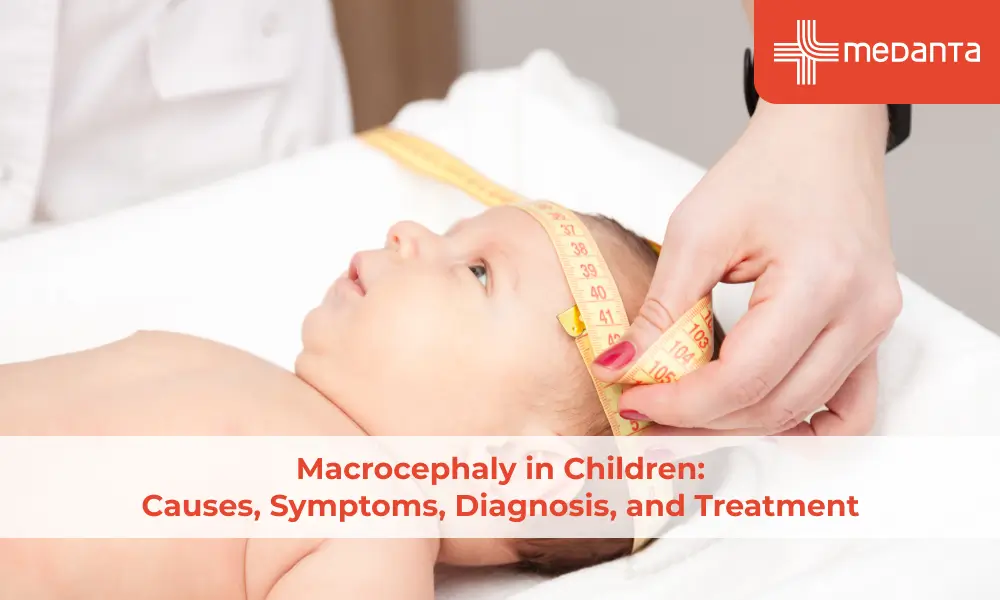
TABLE OF CONTENTS
Children with macrocephaly have head measurements that are larger than other children of the same age and sex.
When a baby is born you will notice their head looks big compared to their body. This is normal. But when a head measurement is above the 97th percentile it indicates macrocephaly. This condition can be benign or due to any medical conditions.
Doctors can detect this condition through prenatal ultrasound tests or head measurements after birth. Knowledge about macrocephaly helps parents understand their child's development and recognise the right time to ask for medical guidance.
What is Macrocephaly?
The word macrocephaly originates from Greek - "macro" means large and "cephaly" means head. Doctors diagnose this condition when a baby's head circumference goes beyond two standard deviations or above the 97th percentile of the average for their age and sex. This condition affects about 2-3% of the population. Boys show this condition more frequently than girls, with a ratio of 4 to 1.
Causes and Risk Factors
Benign familial macrocephaly tops the list of causes (about half of all cases) which means large heads run in certain families. Other causes include:
An enlarged brain (megalencephaly)
Fluid buildup in the brain (hydrocephalus)
Brain tumours or bleeding
Genetic disorders like Sotos syndrome or Fragile X
Infections during pregnancy

Signs and Symptoms of Macrocephaly
The biggest problem is an unusually large head. Some children only show this single symptom if the condition is benign. Other children might experience:
Developmental delays
Bulging soft spot on the head
Unusual eye movements
Irritability or sleepiness
High-pitched crying
Types of Macrocephaly
Doctors recognise two main types:
Disproportionate: The child's head appears larger than appropriate for body size
Proportionate: The head matches a large body size
On top of that, it can be present at birth (congenital) or develop later (postnatal).
Diagnosis
A doctor's first step in diagnosing macrocephaly involves careful measurement of head circumference. These measurements are compared with growth charts specific to children's age and sex.
The diagnostic process includes:
Looking into family history to identify hereditary patterns
Examining fontanelles (soft spots) and veins through physical assessment
Using imaging tests like ultrasound through open fontanelles, CT scans, or MRI
Treatment Options for Macrocephaly
The treatment approach depends on why it happens:
Benign familial macrocephaly needs only monitoring
Children with genetic conditions might benefit from physical, occupational, or speech therapy
Surgical placement of shunts helps drain excess fluid in hydrocephalus cases
Brain tumours might require surgery, chemotherapy, or radiation
Living with Macrocephaly
Regular check-ups help monitor growth and development in children with macrocephaly. Parents should observe developmental milestones and collaborate with healthcare teams that include neurologists, rehabilitation specialists and geneticists.
Prevention and Early Detection
Early detection remains crucial even though macrocephaly isn't always preventable. This happens through:
Head measurements during regular well-child visits
Close observation of head growth patterns
Genetic counselling for families with a history
When to See a Paediatrician or Neurologist
Medical attention becomes urgent if you notice:
Your infant's soft spot bulging
Your child seems unusually sleepy or irritable
Problems with feeding or vomiting
Strange eye movements
Conclusion
Parents can better direct their child's healthcare when they understand macrocephaly. A larger head size is usually inherited from family members. These children need only routine check-ups to ensure they develop properly. This simple fact often helps reduce parents' concerns.
Proper management depends on regular monitoring. Your paediatrician will track head growth and other developmental milestones during well-child visits. These measurements help doctors identify any concerning patterns early.
Medical science has improved our understanding of macrocephaly with better diagnostic tools and treatment approaches. We have a long way to go, but we can build on this progress. Parents who notice unusual head growth should contact doctors instead of waiting or worrying needlessly.
FAQs
What is a large head in a newborn?
A newborn's head usually measures 13 3/4 inches (35 cm) at birth. Doctors say a head is large when its circumference goes beyond the 97th percentile for babies of the same age and sex. This means your baby's head size is larger than 97% of other infants.
What causes a baby to have macrocephaly?
Common macrocephaly causes are:
Family traits
Fluid buildup in the brain (hydrocephalus)
Genetic syndromes like Fragile X or Sotos syndrome
Brain tumours or bleeding
Infections during pregnancy
Is macrocephaly always a sign of a serious condition?
Not at all. In fact, family traits explain most cases. Your baby might just inherit a larger head size and grow up perfectly normal. The doctors will keep tracking head growth carefully because some cases need treatment.
How is macrocephaly diagnosed in infants?
Doctors measure head circumference at each wellness visit. They look at your family history, check the soft spots on the head, and compare measurements with growth charts. They might recommend MRI scans if they notice anything unusual.
Can macrocephaly be inherited from parents?
Yes! We see macrocephaly running in families quite often. About 50% of cases come from family genetics. Usually, at least one parent has a larger head size too.
What are the common symptoms of macrocephaly?
An enlarged head circumference stands out as the main symptom. Other symptoms are:
The child has developmental delays
The baby shows abnormal muscle tone
Some babies experience seizures
The child exhibits behavioural issues
A bulging soft spot appears on the skull
The baby's eyes move unusually or gaze downward
Are there treatments available for babies with macrocephaly?
The treatment path depends on why it happens:
Doctors just monitor benign familial macrocephaly
Hydrocephalus usually requires surgical intervention with shunts that drain fluid
Children with genetic conditions benefit from movement and speech therapies
Surgeons may need to remove brain tumours
How can parents monitor their baby's head growth at home?
Parents should follow these steps to measure correctly:
Select a non-stretchable measuring tape
Place it around the head's widest part—above the eyebrows and the prominent back area
Take three measurements and record the largest one
Track growth patterns by comparing with previous measurements
What complications can arise from untreated macrocephaly?
The complications vary based on the cause:
The child may develop seizures or epilepsy
Developmental disabilities can emerge
Neurological deficits might appear
Brain stem compression occurs in rare cases
Changes in vision or hearing may develop
When should I take my baby to a doctor for macrocephaly concerns?
Your baby needs immediate medical care if you notice:
The head size increases rapidly
Your baby vomits persistently
Your child seems excessively sleepy or irritable
You observe unusual lethargy or high-pitched crying
The soft spot bulges
Your baby shows feeding problems or reduced appetite