1068
1068
 Request Call Back
 Contact
 1068
1068
Left Eye Twitching: Causes, Meaning, Remedies & When to Worry
Published on: Jun 26, 2026
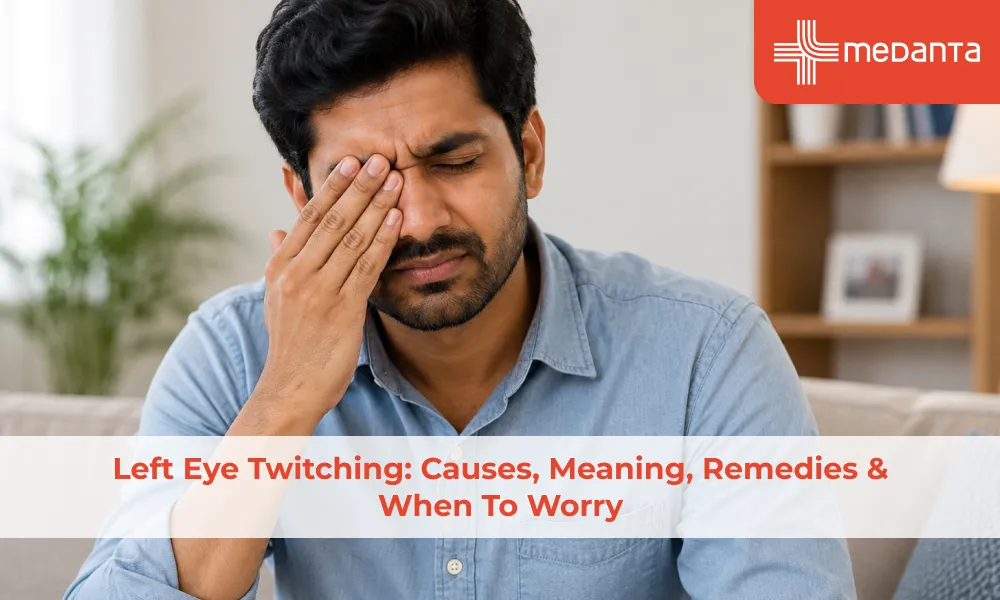
TABLE OF CONTENTS
Left eye twitching or myokymia when it involves the eyelid is one of the most common, benign, and universally experienced neurological quirks. Almost everyone will experience an involuntary eyelid twitch at some point in their life. The muscle involved is the orbicularis oculi. When small groups of fibres within this muscle fire spontaneously and repetitively, the eyelid flickers or twitches without conscious control.
In the vast majority of cases, left eye twitching is harmless, self-limiting, and directly linked to lifestyle factors (particularly fatigue, caffeine, stress and prolonged screen use). It may take hours to days to resolve without any treatment. Understanding why it happens, what makes it worse and the rare circumstances in which it signals a neurological problem is the clinically useful knowledge this article provides.
What Is Left Eye Twitching?
Eye twitching refers to involuntary, repetitive contractions of the orbicularis oculi muscle - the circular muscle that encircles the eye socket and controls eyelid closure. Twitching is almost always confined to one eye at a time (unilateral) and typically affects the lower eyelid, though the upper eyelid can also be involved. The twitch is felt and often visible as a rapid, rhythmic flicker.
Myokymia specifically refers to spontaneous, localised muscle fibre firing in the eyelid - a benign form of twitching with a well-understood physiological basis. It is distinguished from more serious conditions by its unilateral nature, its absence of any other neurological signs, and its clear link to identifiable lifestyle triggers. Benign essential blepharospasm (BEB) is a different and more serious condition involving forceful, involuntary closure of both eyelids and requires specialist neurological assessment.
Common Causes and Risk Factors of Left Eye Twitching
Left eye twitching results from the spontaneous firing of motor nerve fibres supplying the orbicularis oculi. The triggers are almost always lifestyle-related in benign cases:
Fatigue and sleep deprivation - The most common trigger; insufficient sleep increases the excitability of motor neurons making eyelid muscles more prone to twitching
Caffeine excess - High caffeine intake raises neural excitability and muscle irritability, directly lowering the threshold for spontaneous muscle fibre firing; coffee, tea, energy drinks, cola, and chocolate all contribute
Stress and anxiety - Psychological stress elevates stress hormones, disrupts sleep, increases muscle tension throughout the body, and sensitises the nervous system
Prolonged screen use and digital eye strain - Sustained close-focus work on screens causes reduced blink rate, causing dry eyes, ocular surface irritation, and eye muscle fatigue
Dry eyes - Eye dryness or irritation can stimulate the eyelid muscles and trigger twitching
Nutritional deficiencies - Low levels of magnesium, vitamin B12, or potassium are frequently associated with muscle twitching
Alcohol - Alcohol disrupts sleep architecture, depletes magnesium, dehydrates the body, and sensitises the nervous system on the day after consumption
Tobacco - Nicotine acts as a stimulant and may worsen eyelid spasms
Allergies - Allergic conjunctivitis causes eye rubbing (from itching), which releases histamine around the eyelid and increases the tendency to twitch
Bright light and wind - Environmental irritants can over-stimulate the trigeminal nerve and reflexively activate the orbicularis oculi.

Left Eye Twitching in Men vs Women
Both men and women experience left eye twitching with similar frequency - myokymia does not preferentially affect either sex from a purely physiological standpoint. The causes and mechanisms are identical. However, some sex-specific factors influence presentation and patterns.
In women, hormonal fluctuations across the menstrual cycle, during pregnancy, and in the perimenopause (the transition into menopause) can affect neuromuscular excitability. Women are also statistically more likely to experience anxiety disorders, which are a significant trigger for eye twitching.
In men, higher rates of caffeine and alcohol consumption and differences in sleep patterns (men are more likely to be shift workers and to underreport sleep deprivation) may contribute to twitching patterns. Physiologically, however, the twitch mechanism, triggers, and management are the same for both sexes.
Home Remedies and Ways to Stop Eye Twitching
For the vast majority of benign left eye twitching cases, lifestyle modification is the most effective intervention and no medication is needed:
Prioritise sleep - 7 to 9 hours of quality sleep per night is the single most effective remedy for fatigue-related eye twitching
Reduce caffeine - Cutting daily caffeine intake below 200 mg (roughly two cups of coffee) and avoiding caffeine after midday reduces neural excitability
Apply warm compresses - A warm, damp cloth held over the closed eye for 5 to 10 minutes relaxes the orbicularis oculi muscle, soothes eye surface irritation, and provides immediate, temporary relief from twitching
Use artificial tear eye drops - Lubricating eye drops relieve dry eye irritation that reflexively triggers twitching
Manage screen time - Follow the 20-20-20 rule: every 20 minutes of screen work, look at something 20 feet away for 20 seconds. This resets blink rate and reduces orbicularis fatigue
Increase magnesium intake - Magnesium-rich foods include dark green leafy vegetables, nuts (almonds, cashews), legumes (dal, rajma), seeds, and whole grains
Stress management - Brief periods of diaphragmatic breathing, progressive muscle relaxation, and regular moderate exercise all lower cortisol and reduce the neuromuscular excitability that drives twitching.
Is Left Eye Twitching Dangerous?
In the vast majority of people, left eye twitching is entirely benign - a temporary, self-resolving nuisance caused by common lifestyle factors. However, a small minority of eye twitching presentations are symptoms of an underlying neurological condition that requires medical assessment. The key warning signs that distinguish benign twitching from a potentially serious cause are: twitching that involves both eyes simultaneously, twitching associated with facial muscle weakness, abnormal eye movements, difficulty speaking, or changes in vision, twitching that begins in the eyelid and then spreads downward across the cheek and jaw on the same side and twitching that is persistent, worsening, or progressive over weeks.
Tips to Prevent Eye Twitching
Most recurrent left eye twitching is preventable with consistent lifestyle habits:
Maintain a regular sleep schedule - Going to bed and waking at the same time daily stabilises circadian rhythm and reduces the neural fatigue that triggers twitching
Limit daily caffeine to less than 200 mg - Equivalent to two standard cups of coffee; avoid energy drinks and caffeine-containing soft drinks
Wear anti-reflective or blue-light filtering glasses for sustained screen work - Reduces glare-induced trigeminal nerve stimulation
Address underlying dry eye disease - Use a humidifier in air-conditioned rooms, blink consciously during screen work, and use lubricating drops twice daily if dry eyes are recurrent
Eat a balanced diet rich in magnesium, potassium, and B vitamins - Deficiencies in any of these are associated with increased neuromuscular excitability
Moderate alcohol consumption and avoid smoking - Both raise neuromuscular excitability and degrade sleep quality
Manage stress proactively - Regular exercise (at least 30 minutes of moderate activity five times per week), adequate rest, and stress-reduction techniques reduce the cortisol-driven neural sensitisation that worsens twitching.
When to See a Doctor for Eye Twitching
Most left eye twitching does not require medical attention. However, some presentations should prompt assessment without delay.
Twitching persisting for more than 3 weeks despite lifestyle modification
Twitching of both eyes, or twitching accompanied by forceful, involuntary eyelid closure
Twitching that spreads to involve the cheek, jaw, or neck on the same side
Twitching associated with any of the following: drooping eyelid (ptosis), double vision, facial weakness or asymmetry, difficulty swallowing or speaking, abnormal eye movements
Twitching in a patient with known multiple sclerosis, Parkinson's disease, Tourette's syndrome, or Bell's palsy.
FAQs
Can lack of sleep trigger left eye twitching?
Yes sleep deprivation increases motor neuron excitability, making the orbicularis oculi muscle more susceptible to spontaneous firing; even one night of insufficient sleep (under 6 hours) can cause twitching that persists throughout the following day.
Does excessive screen time contribute to eye twitching?
Yes - sustained screen use reduces blink rate from 15 to 20 per minute to as few as 5 to 7, causing dry eye surface irritation and orbicularis oculi fatigue; the 20-20-20 rule (look 20 feet away for 20 seconds every 20 minutes) significantly reduces screen-related twitching.
Can caffeine intake worsen eye twitching symptoms?
Yes - caffeine blocks adenosine receptors and raises neural and muscular excitability; reducing daily intake below 200 mg and avoiding caffeine after midday is one of the most reliably effective interventions for recurrent caffeine-related eye twitching.
How long does left eye twitching usually last?
Benign myokymia may last from a few minutes to a few days but you may experience twitching beyond 3 weeks despite correcting lifestyle triggers.
Can anxiety and fatigue cause eye twitching episodes?
Yes - both raise cortisol and adrenaline levels, increasing neuromuscular excitability; anxiety also disrupts sleep, compounds fatigue, and increases muscle tension - all of which independently contribute to eye twitching.
Are eye twitches linked to vitamin or mineral deficiencies?
Low magnesium is the most common which can hamper muscle relaxation at the neuromuscular junction. Sometimes vitamin B12 deficiency & low potassium also impair nerve conduction and may contribute to muscle twitching.
Can dry eyes lead to frequent eye twitching?
Yes - dry eye irritates the ocular surface, stimulating the trigeminal nerve, which reflexively activates the orbicularis oculi; lubricating eye drops, a humidifier, and conscious blinking during screen work can reduce dry-eye-related twitching.
What lifestyle changes may help reduce eye twitching?
Consistent sleep of 7 to 9 hours
Caffeine below 200 mg daily
Screen breaks every 20 minutes
Lubricating eye drops for dry eyes
Magnesium-rich diet, alcohol moderation and stopping smoking
Regular stress-reduction exercise
Is occasional left eye twitching considered normal?
Yes - benign myokymia is extremely common and experienced by almost everyone at some point; occasional, brief twitching with an identifiable trigger (poor sleep, caffeine, stress) that resolves spontaneously is normal and requires no medical intervention.
Can persistent eye twitching affect daily activities?
Benign myokymia is generally not disabling. However, benign essential blepharospasm (forceful bilateral eyelid closure) can significantly impair reading, driving and daily function and requires specialist treatment with botulinum toxin injections.