1068
1068
 Request Call Back
 Contact
 1068
1068
Laparoscopic Hysterectomy vs Open Surgery: Which Is Better?
Published on: Jul 15, 2026
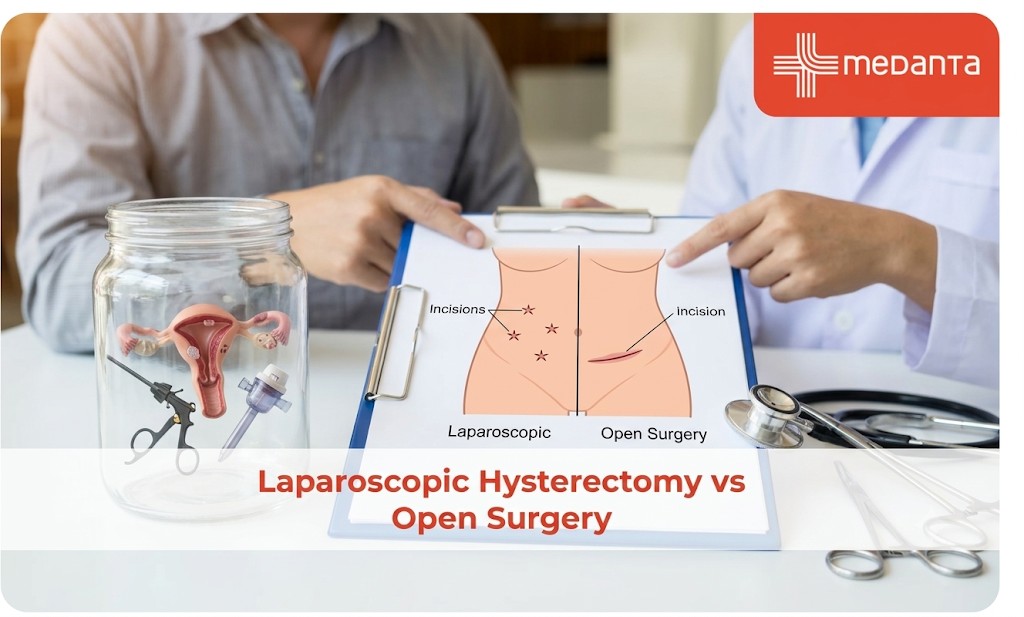
TABLE OF CONTENTS
- Understanding Laparoscopic Hysterectomy
- Understanding Open Hysterectomy Surgery
- Key Differences Between Laparoscopic and Open Hysterectomy
- Benefits of Laparoscopic Hysterectomy
- When Open Surgery May Be the Preferred Option
- Comparing Recovery Time, Pain and Hospital Stay
- Risks and Potential Complications of Both Procedures
- Factors That Help Determine the Best Surgical Approach
- Making an Informed Decision with Your Gynaecologist
- FAQs
Hysterectomy is one of the most commonly performed major gynaecological surgeries in India, and the surgical route (laparoscopic or open) significantly shapes the patient's experience from the operating table through to recovery. Neither approach is universally superior; the better option for any individual depends on the indication, uterine size, surgeon expertise and the patient's overall health. Getting a clear picture of both before surgery helps patients participate meaningfully in that decision.
Understanding Laparoscopic Hysterectomy
Laparoscopic hysterectomy is performed through three to four small incisions typically 5 to 10 mm each through which a camera and instruments are inserted. The abdomen is inflated with carbon dioxide gas to create working space. The surgeon operates viewing a magnified monitor image, completing removal through the vagina or a port site.
Robotic-assisted laparoscopic hysterectomy uses robotic arms for greater precision particularly useful in a narrow pelvis or severe endometriosis.
Understanding Open Hysterectomy Surgery
Open abdominal hysterectomy uses a single horizontal incision across the lower abdomen typically 10 to 15cm, giving direct access to the pelvic organs. Recovery is longer, but open surgery provides access and control that laparoscopy cannot always match in complex cases.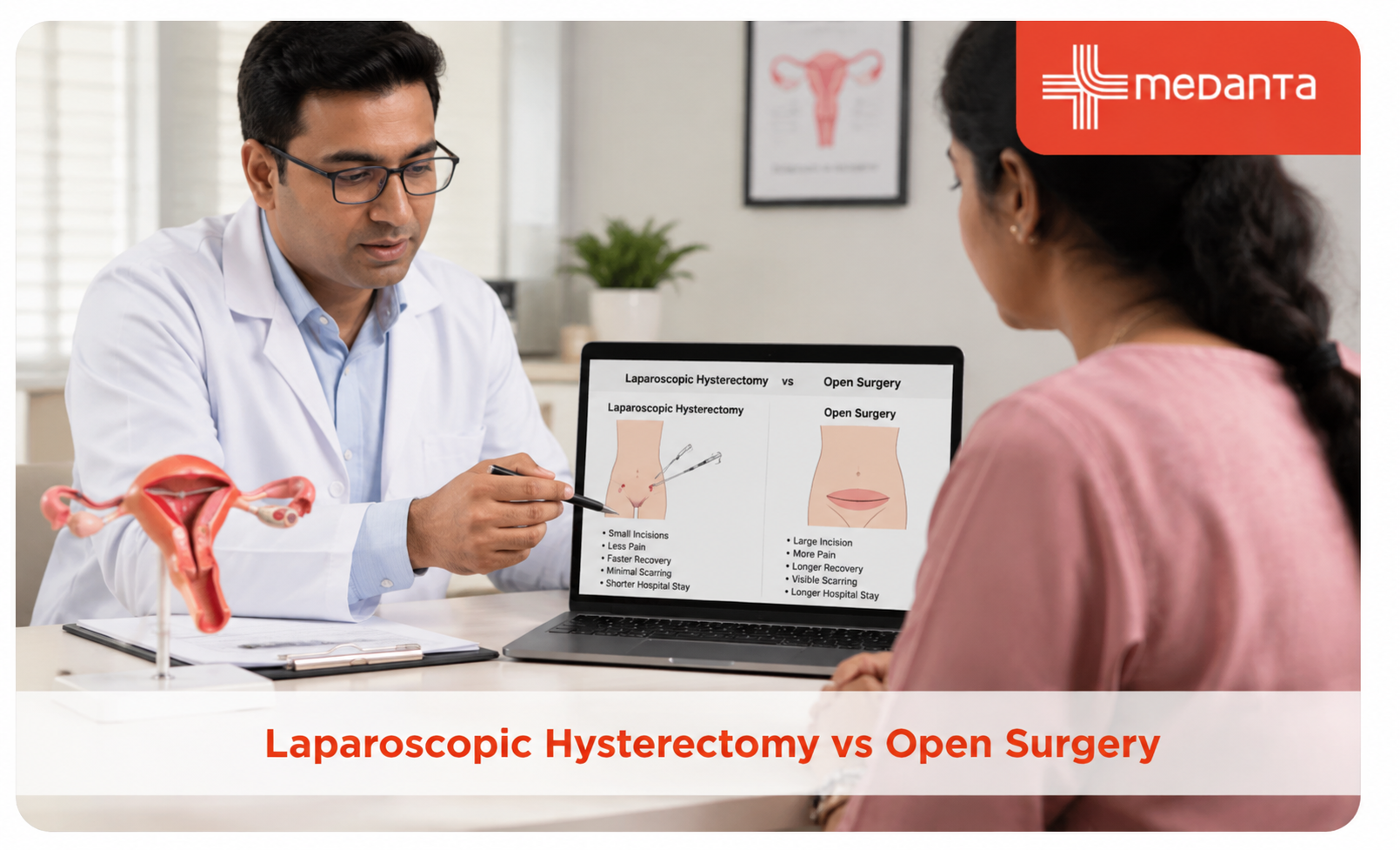
Key Differences Between Laparoscopic and Open Hysterectomy
Incision size: Laparoscopic uses multiple small ports versus one longer open incision
Visualisation: Laparoscopy provides a magnified camera view; open surgery gives direct visual and tactile feedback
Blood loss: Laparoscopic hysterectomy typically involves considerably less blood loss than open surgery
Hospital stay: One to two days for laparoscopic versus three to five days for open in most centres
Recovery time: Two to four weeks for laparoscopic versus six to eight weeks for open in most cases
Scar appearance: Multiple small port scars (often nearly invisible at one year) versus a longer lower abdominal scar
Benefits of Laparoscopic Hysterectomy
Shorter hospital stay and faster return to daily activities are the most consistently cited advantages. Women typically resume light activity within two weeks rather than six to eight, which matters considerably for those with active professional and family responsibilities. Blood loss is lower, which translates to lower transfusion rates and faster post-operative recovery. Post operative pain is significantly less because the abdominal wall muscles aren't cut or widely retracted. Infection risk is lower given the smaller wound surface area.
Magnification from the camera sometimes allows better visualisation of fine anatomical structures than open surgery in complex cases, particularly for identifying and preserving the ureters and bladder during dissection.
When Open Surgery May Be the Preferred Option
Despite the advantages of laparoscopy, open surgery remains appropriate and sometimes preferable in specific circumstances.
Very large uterus - fibroids enlarging the uterus beyond approximately 16 weeks size make laparoscopic removal technically challenging and time-consuming
Extensive adhesions from previous abdominal surgery or severe endometriosis may obscure anatomy laparoscopically and increase injury risk
Gynaecological cancer requiring wide lymph node dissection or staging sometimes demands an open approach for adequate access
Limited laparoscopic surgical expertise at the operating centre - a well-performed open hysterectomy is always safer than a difficult laparoscopic procedure pushed beyond the surgeon's skill
Certain cardiac or respiratory conditions may preclude safe creation of the pneumoperitoneum that laparoscopy requires.
Comparing Recovery Time, Pain and Hospital Stay
Laparoscopic recovery follows a predictable arc: discomfort for the first week, light activity by week two and desk work by four weeks. Recovery after open hysterectomy is more prolonged - wound pain lasting two to three weeks, light activity around week four and full recovery including lifting nearer to eight to twelve weeks.
Pain from day three onward is considerably lower after laparoscopy. Shoulder tip pain from residual carbon dioxide gas is a temporary discomfort unique to laparoscopic procedures usually resolving within 48 hours.
Risks and Potential Complications of Both Procedures
Both procedures carry the standard risks of major gynaecological surgery: bleeding, infection, injury to adjacent structures (bladder, ureter, bowel) and anaesthesia risk. In laparoscopic surgery, there is the small risk of trocar entry injury - inadvertent damage to blood vessels or bowel during the initial port placement. Open surgery carries higher rates of wound infection and incisional hernia.
Factors That Help Determine the Best Surgical Approach
Uterine size and pathology are primary determinants. Smaller, uncomplicated uteri are well-suited to laparoscopy while very large fibroids or suspected malignancy may require open access. Previous abdominal surgeries influence adhesion likelihood and operative complexity. The patient's body mass index affects laparoscopic working space. Surgeon training and volume experience with laparoscopic hysterectomy directly influence safety and outcomes.
Making an Informed Decision with Your Gynaecologist
An informed decision rests on three things: understanding the indication for surgery, understanding what each surgical route involves in practical terms, and understanding the surgeon's recommendation alongside their experience with each approach. Asking specifically whether laparoscopic surgery is feasible for your case, why or why not, and what the surgeon's personal volume of laparoscopic hysterectomies is. Second opinions are entirely appropriate when the recommendation isn't clear or the patient has doubts.
FAQs
Which type of hysterectomy has a faster recovery?
Laparoscopic hysterectomy consistently produces faster recovery and most women return to light activities within two weeks compared to four to six weeks with open surgery. Return to full normal activities follows at four versus eight to twelve weeks respectively.
Is laparoscopic hysterectomy less painful than open surgery?
Yes the absence of a large abdominal incision means far less wound pain from day three onward. Shoulder tip pain from residual gas is a temporary specific discomfort that most find mild and self-limiting within two days.
How long will I need to stay in the hospital after a hysterectomy?
One to two days for laparoscopic hysterectomy in uncomplicated cases at most centres. Three to five days for open hysterectomy. Both can vary depending on the complexity of surgery and post-operative course.
Can all women undergo laparoscopic hysterectomy?
Very large uteri, significant adhesion disease, certain cancers requiring staging and conditions precluding pneumoperitoneum may make open surgery more appropriate. Laparoscopic feasibility depends on individual anatomy, pathology and available surgical expertise.
Why might a doctor recommend open surgery instead of laparoscopy?
Uterine size beyond laparoscopic range, previous surgeries creating dense adhesions, gynaecological cancer requiring wide access or unavailability of adequate laparoscopic expertise at the centre are the most common reasons.
How soon can I return to work after a hysterectomy?
Desk based work typically resumes within three to four weeks after laparoscopic hysterectomy, six to eight weeks after open surgery. Physical or manual work takes longer for both and surgeon clearance should guide timing.
Will there be visible scars after laparoscopic hysterectomy?
Small port scars typically three to four, each under 1 cm that usually fade considerably within six to twelve months. Most are barely visible at one year. Open surgery leaves a longer lower abdominal scar that typically fades but remains permanently visible.
Is laparoscopic hysterectomy as safe as open surgery?
Yes outcomes are comparable for most indications and laparoscopy offers additional advantages in wound-related complications. In less experienced hands, laparoscopy carries higher risk of intraoperative complications. Surgeon experience is the most important safety variable, independent of the chosen approach.
What activities should I avoid during recovery?
Heavy lifting, strenuous exercise and sexual intercourse typically wait six weeks after either procedure. Driving waits until off prescription analgesia and reflexes have fully returned usually two to three weeks after laparoscopic, four to six after open. Light walking can begin within days of either.
How do I know which hysterectomy option is right for me?
The gynaecologist's recommendation based on your specific pathology, uterine size and surgical history. Asking directly whether laparoscopic surgery is feasible in your case and why the recommended approach is preferred, gives you the information needed to make an informed decision.