1068
1068
 Request Call Back
 Contact
 1068
1068
Collarbone Injury: Key Signs, Symptoms, and Treatment Options
Published on: Dec 18, 2025
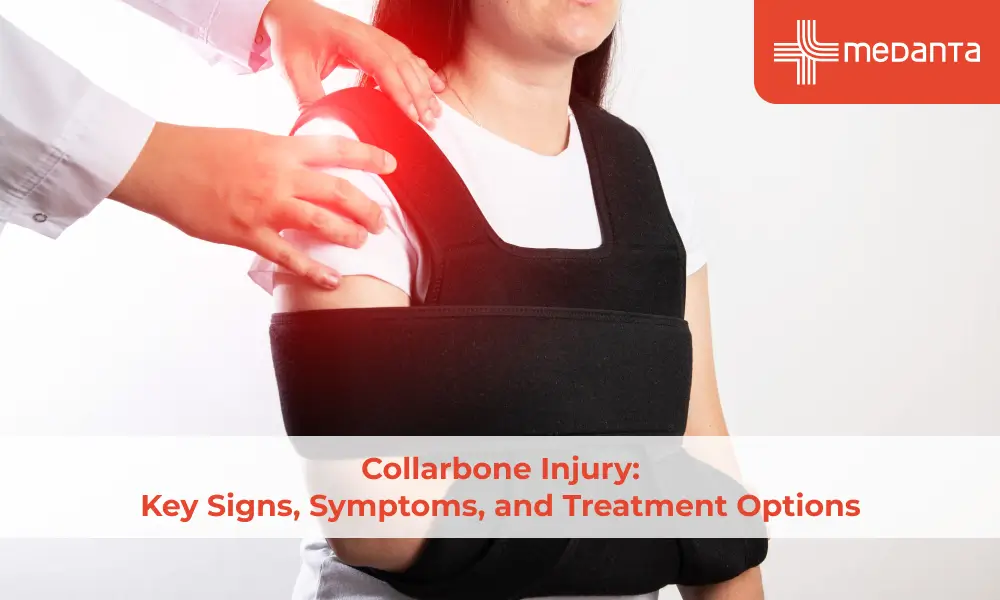
TABLE OF CONTENTS
Collarbone breaks rank among the most typical bone fractures accounting for about 5% of all adult fractures. Kids deal with these injuries even more often, with 10-15% of childhood fractures affecting the collarbone. Doctors call this a clavicle fracture. It occurs when the bone that connects your shoulder blade to your breastbone (clavicle) breaks after a hard hit to the shoulder. These painful breaks result from car accidents, rough contact sports like football and rugby or bad falls. People with a broken clavicle feel intense pain & struggle to move their arm. Sometimes, you can even see where the bone is broken by looking at the shoulder.
The good news is that most people heal completely without surgery. Recovery time depends on the patient's age. Adults need eight to twelve weeks to heal fully. Teenagers bounce back faster in six to eight weeks. Young children recover in three to six weeks, while babies heal amazingly fast - usually in about two weeks.
This article explains collarbone injuries, their symptoms, treatment choices, and how long recovery might take.
Overview of a Collarbone (Clavicle) Fracture
The clavicle is a vital connection between your shoulder blade and breastbone. This thin, S-shaped bone can break in three possible locations. Most breaks occur in the middle section (69% of cases). The shoulder joint area accounts for 28% of cases, while breaks near the breastbone are rare at 3%.
These injuries show two distinct age peaks - young men under 25 and adults over 55. The bone might develop a simple crack, or it could break into multiple pieces (comminuted fracture). Sometimes the broken pieces shift out of their normal position, creating a displaced fracture.
Common Causes of Collarbone Fractures
The collarbone breaks in several ways:
A direct hit to the shoulder
A fall onto an outstretched arm
Trauma from vehicle accidents
High-impact collisions during contact sports like football, rugby and hockey
Babies can experience this during birth if their shoulders get stuck in the birth canal
People with higher risk include:
Young males between 15-24 years
Women over 65
People with osteoporosis
Regular smokers and alcohol consumers
Those who sleep less than 7 hours each night
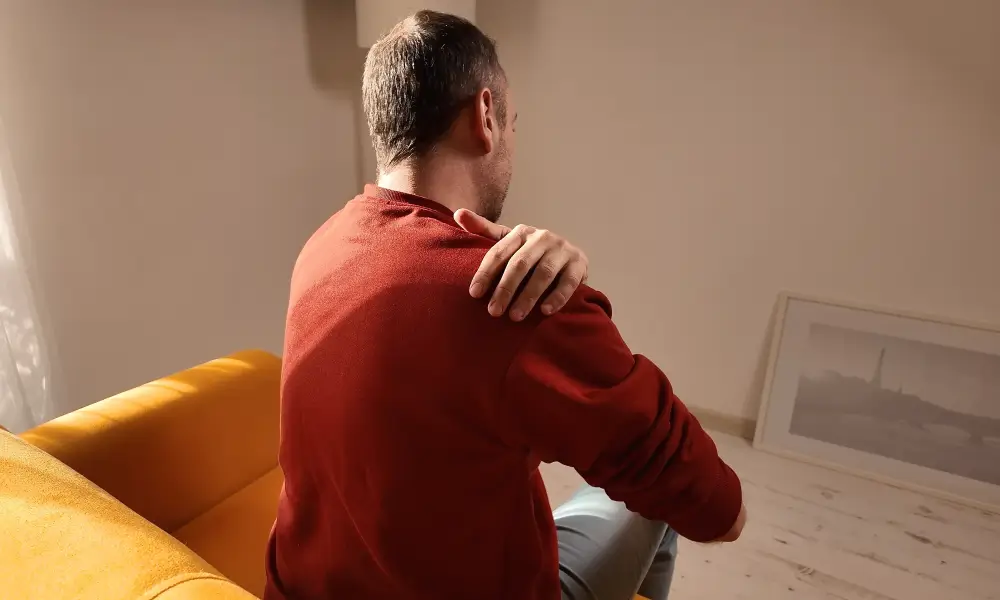
Immediate Signs and Symptoms of a Broken Collarbone
A broken collarbone causes clear symptoms right away. You'll know something's wrong quickly, and this helps you get the medical care you need.
Visible Deformities and Physical Changes: Your collarbone might show a visible bump or odd angle at the break point. Without proper support, the shoulder drops down and forward. The injury can be so severe that bone pieces might push against your skin or break through it, making a tent like shape.
Pain Patterns and Tenderness: The pain hits right after the injury and can be very intense. Touching the broken area causes a lot of pain. Simple actions like moving your arm, taking deep breaths, or picking things up make the pain much worse.
Limited Range of Motion and Difficulty Moving the Arm: Your natural response will be to keep the hurt arm close to your body. You might hear or feel a grinding sound when trying to lift your arm. The pain itself limits movement more than any physical blockage.
Swelling, Bruising, and Other Soft Tissue Changes: The area around the break swells up fast. You'll likely see bruising within a few hours. These changes happen as blood leaks from vessels near the broken bone.
How Symptoms Differ in Children vs Adults
Aspect | Children | Adults |
Healing time | 3-6 weeks | 6-12 weeks |
Pain expression | May not describe pain clearly | Can specify pain location |
Visible deformity | Often less pronounced | More noticeable |
Treatment needs | Typically non-surgical | May require surgery for displacement |
When to Seek Immediate Medical Attention
Seek medical help right away if:
Your shoulder's shape has changed
Bone is sticking through the skin
Heavy bleeding
Skin tenting (skin stretched tightly over bone)
You have breathing difficulties or chest pain
You're coughing up blood
Your arm feels numb or tingling
Shoulder becomes very painful, shows swelling or bruising, or you can't move your arm normally
Diagnosis
Physical exam: Doctors check for tenderness, swelling, deformity and test your shoulder's range of motion. They also check your neurovascular status to make sure nearby nerves and blood vessels aren't damaged.
X-rays are the primary tool doctors use to diagnose collarbone fractures. They take two different views:
Anteroposterior (AP) view
45-degree cephalic tilt view: This gives a clearer picture by removing overlapping structures
Complex cases need CT scans that show detailed 3D images of fracture patterns. These scans are valuable to assess comminution (fragmentation), shortening and possible vascular injuries.
Ultrasound has proven highly accurate in finding clavicle fractures and works especially well for children since it doesn't use radiation.
Conclusion
Collarbone injuries are among the most common bone fractures people experience, especially after falls, sports accidents, or vehicle collisions. These breaks cause intense pain and limit arm movement. You might also notice visible deformities where the injury occurred. Most clavicle fractures heal well with proper care.
The human body has amazing healing abilities, and this shows in how well most collarbone fractures heal. Patients who understand the recovery process tend to follow medical advice better. With the right care and patience most people return to their normal activities without any lasting effects.
FAQs
What does a broken collarbone feel like?
The pain from a broken collarbone is severe at the break point. The area hurts sharply if you touch it or move your shoulder. Your arm might make a grinding noise as you try to lift it.
How can I tell if my collarbone is broken or just bruised?
A break hurts much more than a bruise. You'll notice your shoulder drooping, a visible deformation, and you won't be able to lift your arm properly. While a bruise lets you move more freely, a break really limits your movement.
Is swelling always present with a broken collarbone?
Swelling happens with every collarbone fracture. The break causes blood vessels around and inside the bone to bleed.
Can I still move my arm if my collarbone is broken?
You can move it, but it will hurt. Most people keep their injured arm close to their body naturally. The pain makes movement difficult, though it's not physically impossible.
What causes the deformity or bump in a broken collarbone?
Bone fragments pushing against your skin or overlapping broken ends create a bump. This creates what doctors call a "tenting" appearance.
How soon after injury do symptoms appear?
The symptoms start right after the injury.
Are the symptoms of a broken collarbone different in children?
Children's bones heal faster than adults' bones (3-4 weeks versus 6-8 weeks). They might not explain their pain as well as adults do, but you'll see the same physical signs.
When should I see a doctor for a suspected collarbone fracture?
Head to emergency care right away if you notice:
Your shoulder looks different or a bone pushes through the skin
The fracture site shows heavy bleeding or tented skin
You have trouble breathing or chest pain
Your arm feels numb or tingling
You cough up blood
Can a broken collarbone heal on its own?
Your collarbone will usually heal naturally with the right support.
A visit to an orthopaedic specialist is essential, especially if you have a severe collarbone injury. Your doctor will assess whether surgery might help or if conservative treatment will work better for your specific fracture.
What tests confirm a broken collarbone?
Diagnostic tests are:
Physical examination to check pain, deformity, and how well your shoulder moves
X-rays (AP view and 45-degree cephalic tilt view) show location and severity of the fracture
CT scans that give a full picture of complex fractures