1068
1068
 Request Call Back
 Contact
 1068
1068
Bowlegs in Kids: Signs, Early Detection, and Treatment Options
Published on: Dec 18, 2025
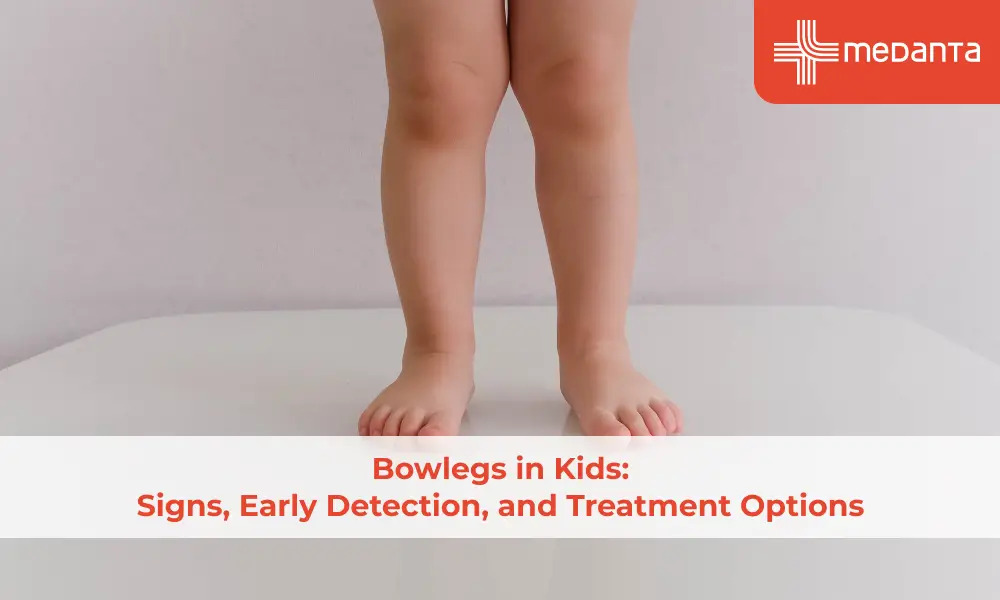
TABLE OF CONTENTS
Most children don't need treatment for bow legs, since the condition usually resolves on its own. Babies come into the world with bowed legs and their legs straighten up by the time they're 18-24 months old. The natural fix happens as kids start standing and walking, and their legs become straight between 12 to 18 months.
A child should see an orthopaedic specialist if their legs still curve outward at the knees while their feet and ankles touch around age 2 or 3. Kids who don't outgrow this condition naturally might need splints, casts, braces or surgery.
This article explains the signs of bow legs in babies and children, what causes them, and the right time to ask for medical advice.
What Are Bowlegs (Genu Varum)?
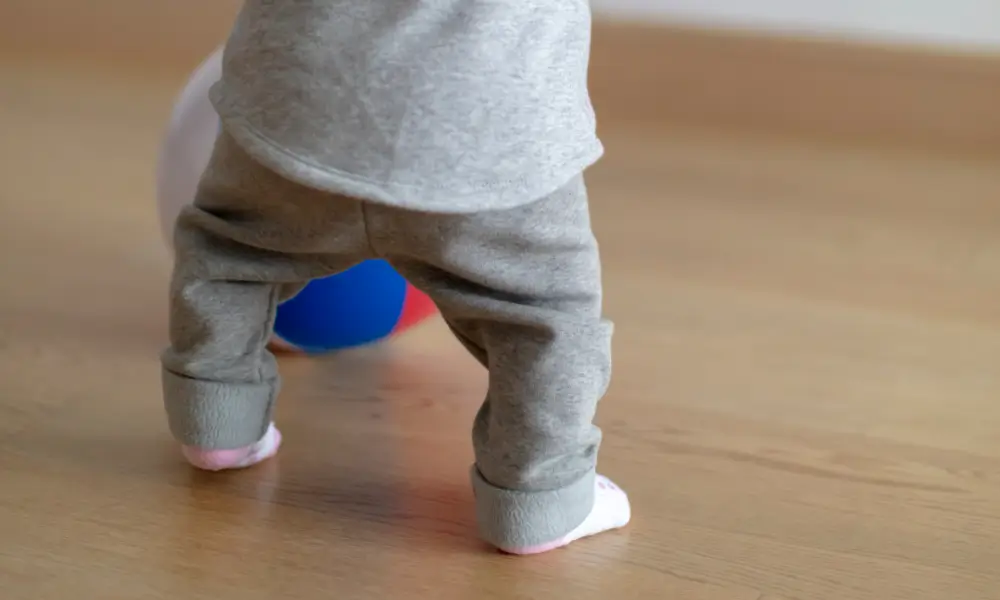
Genu varum, the medical term for bowlegs, is a condition that makes legs curve outward at the knees. A child's knees stay far apart even when their feet and ankles touch, which creates a bow-like shape. You can notice this curve more easily when the child walks.
Causes of Bowlegs
Children under 2 years most commonly have physiologic genu varum. This natural condition develops because babies stay in a cramped position before birth.
Here are other important causes:
Blount's disease: A growth disorder that affects the shin bone's growth plate and occurs more often in overweight children
Rickets: This happens due to calcium, phosphorus, or vitamin D deficiency that makes bones soft
Bone conditions: These include dwarfism (achondroplasia), poorly healed fractures, or bone dysplasia
Environmental factors: Lead or fluoride poisoning can sometimes play a role
Signs and Symptoms to Watch For
The legs' outward curve is the most obvious sign. Parents should also look for:
Changes in walking patterns or a waddling gait
Shoes that wear unevenly, which shows that pressure isn't distributed well
Intoeing (pigeon-toed walking) that often comes with bowlegs
Hip, knee, or ankle pain, especially in older children who still have bowed legs
Most toddlers who have bowlegs can walk with normal coordination and learn to walk on schedule.
Diagnosing Bowlegs
Physical examination: Doctors measure the gap between knees when ankles touch and watch for unusual walking patterns. Doctors usually recommend observation for children under 2 who show symmetrical bowing. Children need additional testing if symptoms continue past age 2.
Diagnostic tests are:
Standing alignment X-rays or EOS imaging from hip to ankle
Blood tests to check vitamin D levels
Goniometer measurements to determine how severe the bowing is
Treatment Options
The original treatment depends on why it happens.
Non Surgical Treatments
Careful observation is enough for physiological bowing. Non-surgical options include:
Bracing helps children under 3 with Blount's disease
Vitamin D and calcium supplements treat rickets
Physical therapy strengthens muscles and improves walking
Surgical Options for Severe Cases
Patients need surgery when conservative treatments fail or cases become severe. Common procedures include:
Guided Growth Surgery - Metal plates or staples temporarily stop growth on the bone's healthy side, which lets the affected side catch up.
Tibial Osteotomy - Surgeons reshape the shin bone below the knee to fix alignment and secure it with plates and screws.
Bowlegs in Children vs Adults
This condition affects children and adults differently. Common differences include:
Aspect | Children | Adults |
Natural correction | Usually fixes itself before age 3 | No natural correction occurs |
Primary treatment | Observation, bracing, nutrition | Surgery if symptoms show |
Surgical approach | Guided growth surgery protects growth plates | Osteotomy or joint replacement |
Recovery time | Heals faster with better results | Takes longer to recover |
Long Term Effects
If left untreated, bow legs can cause numerous complications. These are (including but not limited to):
Early arthritis and knee deterioration
Extra stress on knees, feet, ankles, and hips
Possible knee replacement needed at a younger age
Changes in walking patterns and movement
Preventive Measures and Nutritional Support
Vitamin D intake from diet and sunlight helps bone health
Calcium-rich foods support proper bone development
Regular exercise promotes healthy bone growth
A healthy weight reduces pressure on growing bones
Early doctor visits matter if bowing continues past age 2
Recovery and Rehabilitation After Treatment
Recovery after correcting bowlegs takes time and hard work. At first, people might need crutches or walkers to help them walk for 4-6 weeks. They start with easy exercises to move their legs then shift to exercises that make their thigh and back of thigh muscles stronger.
Most people can do their usual day-to-day things after 6-8 weeks but it takes 3-6 months to heal. Regular rehabilitation exercises improve long-term outcomes. Proper nutrition (rich in calcium and vitamin D) helps bones heal during this important time of getting better.
Conclusion
Parents can guide their children through bowlegs with confidence instead of worry.
Most babies are born with curved legs because of how they were positioned in the womb. These curves usually straighten on their own as babies start standing and walking. Parents should look out for any bowing that stays past age 3, particularly if their child shows unusual walking patterns or complains of pain.
Your parental instincts are your best guide. While bowlegs usually fix themselves naturally, what you notice matters most. Regular visits during your child's early years give you the perfect chance to share concerns with doctors. Quick action and proper awareness help children with bowlegs grow into healthy, active lives without lasting complications.
FAQs
What causes bowlegs in children and adults?
Three main factors lead to bowlegs:
Normal development (common in babies)
Blount's disease (a growth plate disorder)
Nutritional deficiencies like rickets
Sometimes lead poisoning, fluoride poisoning, or poorly healed fractures can cause this condition.
Are bowlegs normal in toddlers?
Yes, they are! Babies naturally have bowed legs before they start walking. Their legs start to straighten around 18 months and become completely straight between ages 2-3. Doctors rarely suggest treatment for toddlers under two who show even bowing in both legs.
How are bowlegs diagnosed?
The doctor watches how a child walks and measures the space between their knees when ankles touch. Children over 2½ years need standing X-rays to check how severe the condition is and what causes it. Blood tests can show vitamin D deficiency if the doctor suspects rickets.
Can bowlegs correct themselves naturally?
Most children's bowlegs fix themselves by age 3-4. Doctors keep an eye on the condition until this age unless the bowing gets worse or looks uneven on both sides.
When is surgery necessary for bowlegs?
Your child needs surgery if:
Bracing doesn't help and bowing continues past age 4
The condition keeps getting worse
Blount's disease doesn't improve with other treatments
The child feels pain or has trouble moving
What exercises help improve bowlegs?
Helpful exercises strengthen hip abductors and quadriceps, stretch hamstrings, and improve balance. These exercises make muscles around the knees more stable but won't completely fix bone deformities.
How long does recovery take after corrective surgery?
Recovery from bow leg surgery happens in stages. Children usually go home after 3-5 days. They need crutches to walk for about six weeks. The healing process takes roughly two months. However, some complex cases might need up to six months to recover. During this time, kids need:
Regular physiotherapy sessions
Pain management
Proper nutrition to boost bone healing
Can nutrition prevent bowlegs?
Yes! Nutrition is a vital factor in preventing rickets-related bow legs. Children need enough vitamin D from their diet or sunlight exposure. Foods rich in calcium help bones develop properly. Babies who are exclusively breastfed might need vitamin D supplements because breast milk alone may not provide enough.
Are bowlegs painful or harmful long-term?
Most children with bowed legs feel no pain during early childhood. However severe cases without treatment can cause discomfort in the hips, knees, and ankles. Arthritis remains the biggest long-term risk, which could develop earlier than usual. Changes in walking patterns might also occur with persistent bowing.
How can I support my child if they have bowlegs?
Stay positive. Nature takes care of this condition in most children. Regular check-ups help monitor progress effectively. Older children might feel self-conscious and need emotional support. Medical advice should be followed consistently when treatment becomes necessary.
References
Heath CH, Staheli LT. Normal limits of knee angle in white children. J Pediatr Orthop. 1993;13(2):259–262. DOI: 10.1097/01241398-199303000-00022
https://doi.org/10.1097/01241398-199303000-00022
Sabharwal S. Blount disease. J Bone Joint Surg Am. 2009;91(7):1758–1776. DOI: 10.2106/JBJS.H.01614
https://doi.org/10.2106/JBJS.H.01614
Pettifor JM. Nutritional rickets: deficiency of vitamin D, calcium, or both? Am J Clin Nutr. 2004;80(6 Suppl):1725S–1729S. DOI: 10.1093/ajcn/80.6.1725S
https://doi.org/10.1093/ajcn/80.6.1725S
Stevens PM. Guided growth for angular correction. J Pediatr Orthop. 2007;27(3):253–259. DOI: 10.1097/BPO.0b013e31803433a1
https://doi.org/10.1097/BPO.0b013e31803433a1
Sharma L, et al. The role of knee alignment in disease progression. JAMA. 2001;286(2):188–195. DOI: 10.1001/jama.286.2.188